
Liverpool City Council has allocated £12 million to remediate and rescue stalled housing sites across Everton and Kensington, left unfinished when private developers collapsed into administration between 2019 and 2022.
The spending is the clearest practical test yet of whether the council's post-Caller spending controls can protect public funds. Following the 2021 Best Value Inspection report by Max Caller, which exposed widespread governance failures in property deals and regeneration procurement, the local authority has been overhauling how its capital expenditure is tracked.

The government-appointed commissioners, who oversaw key municipal departments until their exit in June 2024, mandated the creation of a centralized asset register. The council's audit committee now monitors all commercial transactions exceeding £100,000. For wider background on decision-making bodies and ward representation, see our guide on how Liverpool local government works.
The £12 million allocated for the 2025-2026 financial year is specifically targeted at cleaning up and securing the half-built sites that blighted residential streets when private builders walked away.
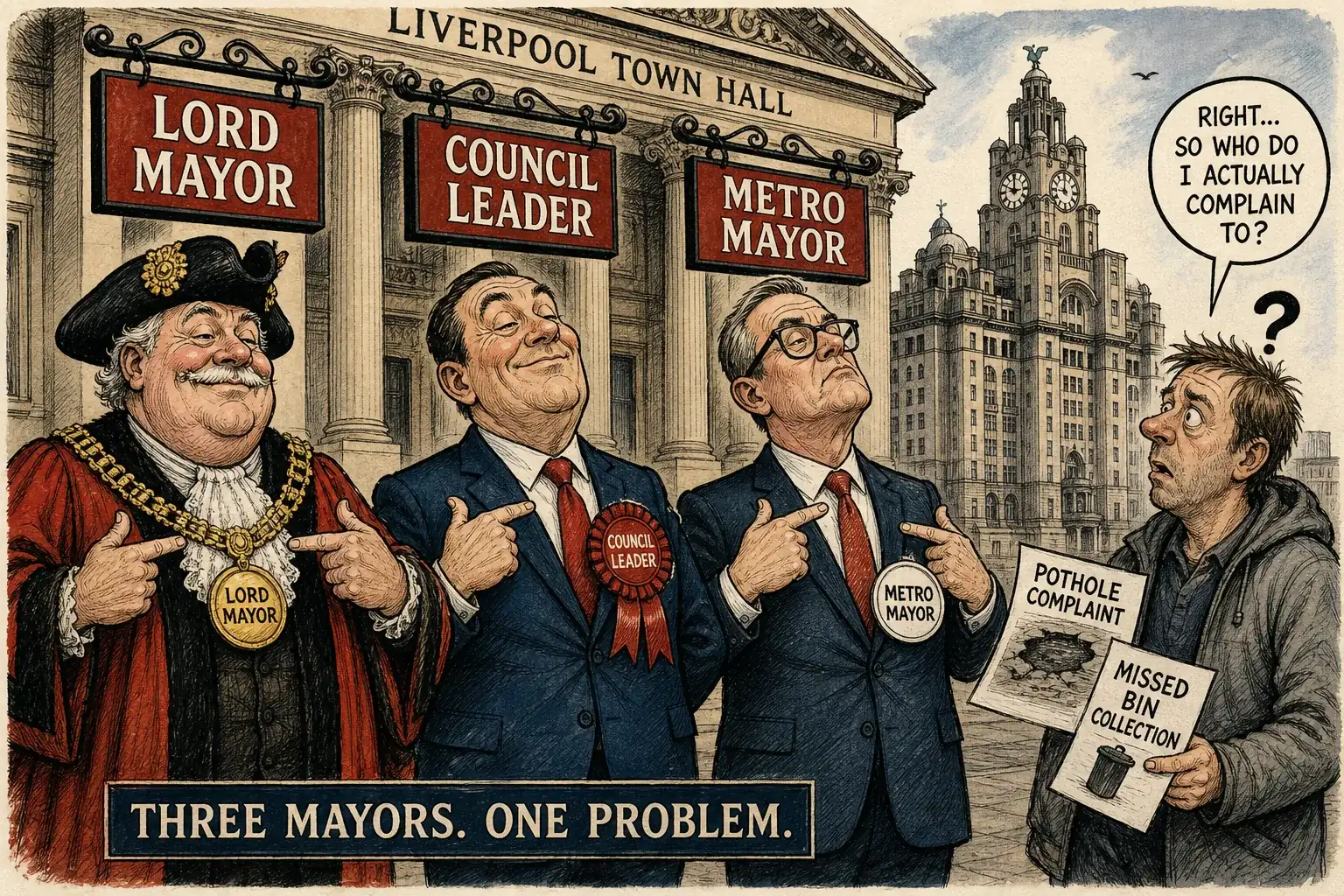
Under the new council leader, Liam Robinson, the local authority has established the Liverpool Housing Partnership. This entity is designed to coordinate residential building initiatives with registered social housing providers, bypassing the previous reliance on unregulated private developers.
The council's finance department reported in March 2026 that municipal debt had stabilized at £720 million. However, interest payments on outstanding loans require 8% of the annual revenue budget (see our breakdown of what Liverpool council does with your council tax).
With commissioners gone and new protocols in place, will the council's internal scrutiny mechanisms be sufficient to prevent further procurement irregularities in future regeneration schemes?
Comments
Join the conversation with your L1Local Community account. Keep it civil and on topic.