Best Liverpool Areas for a First Visit
Not sure where to start in Liverpool? This guide breaks down the four areas that give first-time visitors the clearest, most rewarding entry into the city.
Liverpool works best when you treat it as a collection of distinct places rather than one city to cover in order. Most first-time visitors get this wrong — not because the city is difficult, but because the instinct is to keep moving. Keep moving here and you will cover distance without actually seeing much. Pick a base, spend time in it, and you will start to understand what the city actually is.
These are the five areas worth knowing on a first visit, ranked by how much they reward staying put.
City Centre and the Waterfront
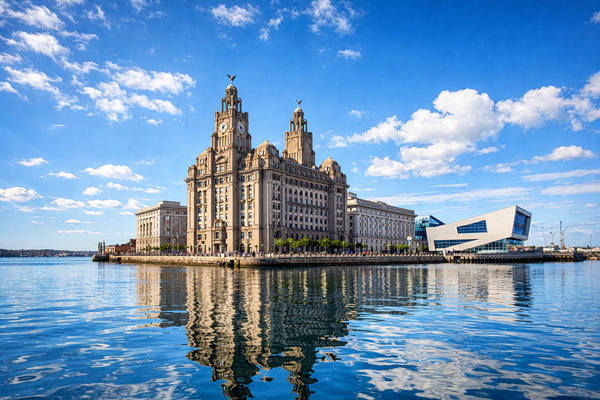
Start here because it gives you the easiest orientation. The Pier Head, the Albert Dock, and the museums form a walkable cluster that takes a full half-day if you do it properly. The Liver Building at the waterfront is the obvious landmark, but the Albert Dock — the largest collection of Grade I listed buildings in the UK — is where most people find their feet. Walk around the dock basin slowly before going into any of the museums.
The Tate Liverpool and the Museum of Liverpool are both free and both worth the time. The shopping core of the city centre is ten minutes north on foot. Bold Street, which runs south from the shopping area, is where the city changes character. That transition — retail to independent, chain to local — is one of the sharper edges in the city and worth noticing.
Baltic Triangle
Five minutes on foot from the Albert Dock, but a different city entirely. The Baltic Triangle was derelict warehousing twenty years ago and is now the most concentrated stretch of independent bars, restaurants, studios, and venues in Liverpool. It is not polished. That is the point.
Come here for an evening rather than a morning. The area comes alive from mid-afternoon. If you only have one dinner out, this is the right neighbourhood. Cains Brewery Village sits at the centre of it and gives the whole area a focal point that other parts of the city lack.
Georgian Quarter and Hope Street
The stretch of Hope Street between the two cathedrals — Liverpool Metropolitan at one end, Liverpool Anglican at the other — is the most architecturally coherent street in the city. The Georgian Quarter surrounding it is quiet, residential, and very good for a morning walk when you want to get away from crowds.
The Philharmonic Dining Rooms on Hope Street is a Victorian pub worth going into even if you do not drink — the interior is genuinely extraordinary and is one of the few Grade I listed pubs in England.
Lark Lane and Sefton Park
Sefton Park is the city's best green space. It is not a short journey from the centre — the Merseyrail to St Michaels takes about ten minutes — but it is worth the trip if you want an afternoon that feels like a different speed. Over 200 acres, proper paths, a Victorian Palm House, and a boating lake. Exit onto Lark Lane for food and coffee afterwards.
Lark Lane is a single street of independent restaurants, coffee shops, and bars that has been doing the same thing for decades without trying to reinvent itself. It is reliably good for lunch.
Ropewalks
Ropewalks is the area between Bold Street and the Baltic Triangle — roughly the grid of streets around Seel Street and Concert Square. It is Liverpool's nightlife district and does not need to be on your itinerary during the day. At night it is loud, busy, and worth at least one walk through. Concert Square can feel like a hen party staging ground on a Friday but the side streets around it are better and give you a more honest picture of how the city spends its evenings.
The practical version
- Day one: Waterfront in the morning, Baltic Triangle for dinner.
- Day two: Hope Street and the Georgian Quarter in the morning, Lark Lane and Sefton Park in the afternoon.
- If you only have one day: Waterfront to Albert Dock, Bold Street for lunch, Baltic Triangle for the evening.
The city is compact enough that these areas can bleed into each other. The walk from the Albert Dock to the Baltic Triangle is eight minutes. From Baltic to Bold Street is five. You do not need to plan it like a military operation. You just need a clear first move and enough time to let the next thing happen naturally.
Enjoying this? Get new guides, local news and what's on — straight to your inbox.
Subscribe free →