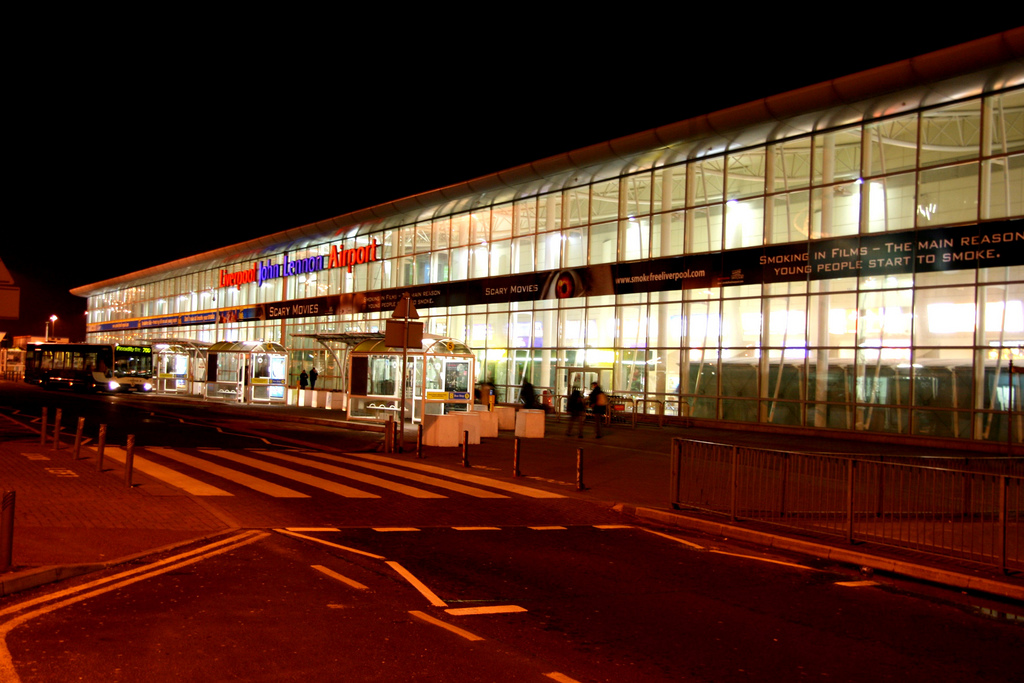
Liverpool John Lennon Airport handled more than 5.6 million passengers in 2025, the highest annual total in its 92-year history.
Passenger numbers were around 11 per cent higher than in 2024. The growth followed Jet2 opening a Liverpool base, while easyJet and Ryanair continued to add aircraft, routes and extra flights, according to the Growth Platform report on LJLA's 2025 passenger record.
The record matters, but the airport's history is more interesting than a passenger table. The site developed on land once belonging to a Tudor estate. It became one of Britain's early municipal airports, served as RAF Speke during the Second World War and helped assemble aircraft delivered through Liverpool's docks.
Key dates at Speke airport
1930: scheduled passenger flights began from Liverpool.
1933: Liverpool's municipal airport at Speke officially opened.
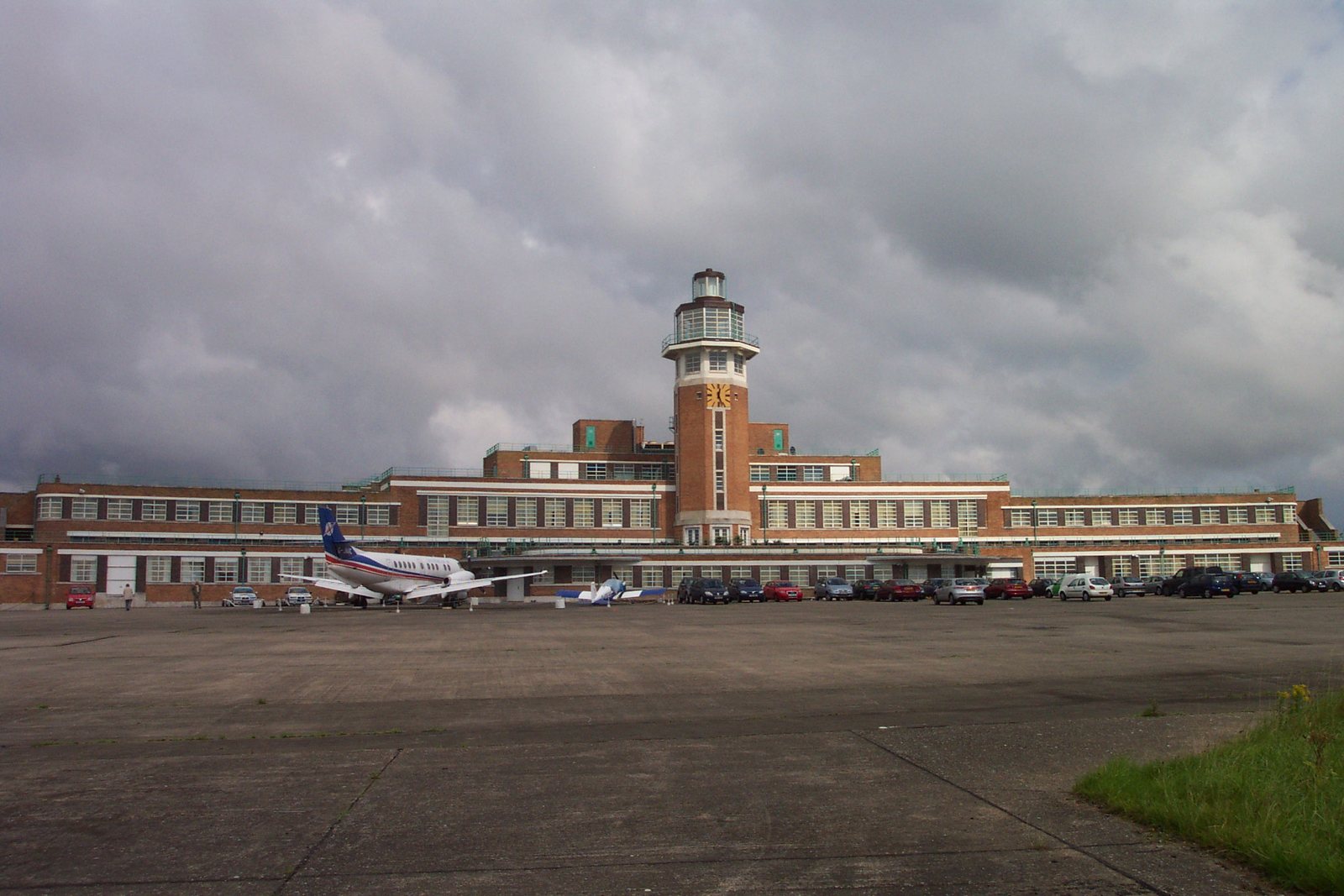
1937: the Art Deco terminal and control tower opened.
1939 to 1945: the site operated as RAF Speke and supported aircraft production.
2001: the airport was renamed Liverpool John Lennon Airport.
Long before the first passenger aircraft arrived, much of the land formed part of the wider Speke Hall estate.
Speke Hall is a timber-framed Tudor house whose oldest surviving sections date from the 1500s. The house stands close to the River Mersey, just beyond the modern airport boundary.
After the death of Adelaide Watt, the estate's last private owner, in 1921, trustees sold large sections of land to Liverpool Corporation. The National Trust says those sales gave space for a new airport and the creation of a new town at Speke. The surviving Speke Hall estate passed to the National Trust in 1943.
The relationship between the airport and the hall has not always been comfortable. An earth embankment, known as the Bund, was built in the 1960s to reduce the visual and noise impact of airport activity. Today, visitors walking around Speke Hall's grounds can still see aircraft using the modern runway.
Liverpool's first scheduled flights
Scheduled passenger services from Liverpool began in 1930, before the airport had been formally opened.
Early flights operated between Liverpool and Croydon, then London's main airport, with stops at places including Barton near Manchester and Castle Bromwich near Birmingham.
Liverpool Airport was officially opened on 1 July 1933. It was commonly known as Speke Airport because of its location, although it was developed as Liverpool's municipal airport.
Municipal airports were owned or supported by local authorities. During the 1920s and 1930s, several British cities invested in aviation because councils believed air travel would become important for business, mail and passenger transport.
Building the Art Deco terminal
Liverpool Corporation wanted Speke to be more than a basic airfield.
Council representatives examined major European airports, including facilities in Berlin, Amsterdam and Hamburg. The design of Hamburg's Fuhlsbuttel Airport influenced the plans prepared for Liverpool.
Construction of a new terminal, control tower and hangars began during the second half of the 1930s. The control tower and terminal were designed by E.H. Bloomfield, who worked in Liverpool Corporation's Land Steward and Surveyor's office.
The main terminal and the first hangar officially opened in June 1937. The building used a curved design facing a wide aircraft apron, with terraces from which visitors could watch aircraft arrive and depart.
The former Speke terminal is now the Crowne Plaza hotel. Photo: Chris j wood (CC BY-SA 3.0), Wikimedia Commons
The surviving terminal is now protected as a Grade II* listed building. Historic England describes it as a former airport terminal and control tower, now a hotel, built in 1937 to 1940 and altered later.
Grade II* is a higher level of protection than the more common Grade II status. It is used for particularly important buildings considered to be of more than special interest.
Historic England says the Speke complex is one of the most complete surviving groups of early civil aviation buildings in England. The terminal and two large hangars were designed as one connected architectural group.
RAF Speke and the fastest victory
Civil passenger flights were only one part of the airport's story.
During the Second World War, the site operated as RAF Speke and became part of the air defence system protecting Liverpool, Birkenhead, the Mersey docks and surrounding factories.
One of the best-known incidents at RAF Speke happened on 8 October 1940.
Flight Lieutenant Denys Gillam had just taken off in a Hawker Hurricane when a German Junkers Ju 88 crossed close to the airfield. Gillam attacked while his aircraft's undercarriage was still retracting.
The Junkers was brought down, with the victory shared by Gillam and two Czechoslovak pilots from 312 Squadron, Alois Vasatko and Josef Stehlik. The RAF Museum's 312 Squadron history records the squadron's role in Britain after the occupation of Czechoslovakia.
Gillam later recalled that the complete flight, from take-off to landing, lasted about eight minutes. The Imperial War Museums holds a recorded interview with Denys Gillam in which he discusses the incident and his time at Speke.
The Czechoslovak pilots at Speke
The role of Vasatko and Stehlik is sometimes reduced to a footnote, but their presence was part of a larger wartime story.
No. 312 Squadron was staffed mainly by Czechoslovak airmen who had escaped the German occupation of their country. Many had travelled through Poland, France or North Africa before reaching Britain.
The squadron moved to Speke in September 1940 to help defend Merseyside. Its pilots flew Hawker Hurricanes and operated as part of RAF Fighter Command.
Their contribution gives the airport's wartime history an international dimension. RAF Speke was not defended solely by pilots from Britain. It was also protected by airmen whose own countries had already been occupied.
Speke's wartime aircraft factories
The airport was not just a fighter base. It was also an aircraft production and assembly centre.
The Rootes motor manufacturing group operated a shadow factory beside the airfield. A shadow factory was a government-backed production plant intended to expand military manufacturing and reduce reliance on a small number of established factories.
Rootes initially produced Bristol Blenheim aircraft at Speke before moving into production of Handley Page Halifax bombers. More than 1,000 Halifax aircraft were built at the Speke plant during the war.
Lockheed also used facilities at Speke to assemble American-built aircraft arriving in sections through Liverpool's docks. A Hansard question from November 1938 confirmed that Lockheed aircraft shipped from California were to be assembled in Liverpool's municipal hangars and workshops.
This connection between the docks and the airport was practical. Large aircraft could not simply be flown across the Atlantic in the early years of the war. Aircraft or major components were transported by ship, unloaded at Liverpool and moved to assembly sites before entering service.
Returning to civilian aviation
Civil passenger operations resumed after the war.
For a time, Liverpool handled more passengers than Manchester, but the balance shifted as Manchester invested heavily in longer runways and larger passenger facilities.
Speke's original grass airfield also placed limits on the size and type of aircraft that could use it. As airliners became heavier and faster, Liverpool needed a longer paved runway.
A new runway opened in 1966 on land south-east of the old airfield. The change gradually moved operational activity away from the 1930s terminal and towards the present airport site.
A replacement passenger terminal opened beside the newer runway in 1986. The original terminal, control tower and apron were then left without their original purpose.
The airport changes direction
Liverpool Airport struggled during parts of the 1970s, 1980s and early 1990s.
Manchester Airport offered a much larger selection of scheduled and long-haul services. Liverpool's terminal was smaller, its route network was limited and many passengers from Merseyside travelled to Manchester instead.
The position began to change with the expansion of low-cost flying during the late 1990s and early 2000s.
Airlines such as easyJet and Ryanair were prepared to operate direct European services from smaller regional airports. Their model depended on quick aircraft turnarounds, high passenger loads and passengers booking directly rather than through traditional travel agents.
Liverpool's size became an advantage in some respects. Passengers could move from the entrance to security and the departure gates without navigating several terminals or travelling long distances between buildings.
Annual passenger numbers increased from fewer than 700,000 in 1997 to more than five million a decade later. This growth was not steady. Passenger totals later fell after the 2008 financial crisis, during airline route changes and again during the COVID-19 pandemic.
Partner offer
I use YouFibre's full-fibre broadband myself and rate the speed. Order with my code WE5AZL and you can both get a reward, up to £100 depending on the package and current terms.
The old terminal becomes a hotel
The original terminal did not return to airport use.
Several original architectural features remain, although the interior was extensively altered during the conversion. Historic England notes that the original staircases survive but much of the internal plan was changed to create hotel bedrooms, meeting rooms and other facilities.
The former arrivals hall is now used as part of the hotel, while guests can see vintage aircraft standing on the old apron.
The apron is home to the Speke Aerodrome Heritage Group, a registered charity that preserves aircraft and objects connected to the airport's history.
The conversion saved an important building that might otherwise have continued to deteriorate. However, it also means the old terminal is a working commercial hotel rather than a conventional public aviation museum.
Why the airport was named after John Lennon
Liverpool Airport was renamed Liverpool John Lennon Airport in 2001.
It became the first UK airport to be officially named after an individual. The name connected the airport with one of Liverpool's best-known cultural figures. The Guardian reported in 2001 that the airport logo would use a Lennon self-portrait and the words "Above us only sky", taken from Imagine.
A seven-foot bronze statue of Lennon, created by Liverpool sculptor Tom Murphy, was later unveiled in the terminal. The sculpture shows Lennon walking forward rather than standing in a formal pose.
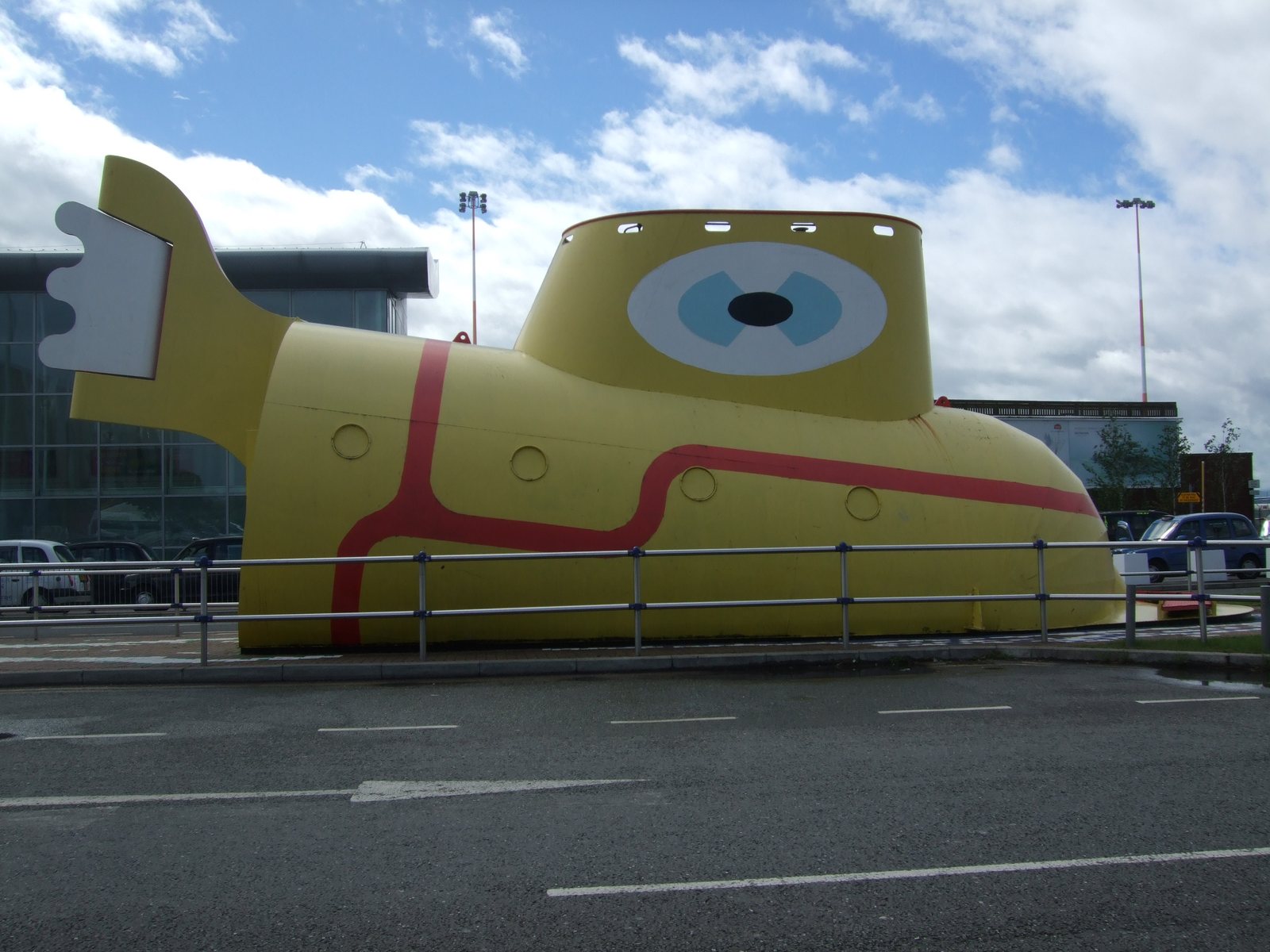
The Yellow Submarine sculpture stands near the airport entrance. Photo: Richard Hoare (CC BY-SA 2.0), Wikimedia Commons
A large Yellow Submarine sculpture was installed near the airport entrance in 2005. It now stands on the roundabout approached from Speke Hall Avenue and Speke Road.
The Lennon branding is difficult to miss, but the airport is still regularly called Speke Airport by local residents. Its official abbreviation is LJLA, although "JLA" is also widely used in Liverpool.
Growth returns after the pandemic
Passenger numbers fell sharply during the pandemic, when international travel was restricted and airlines reduced their schedules.
The recovery gathered pace after 2022.
In March 2024, Jet2 launched flights from a new Liverpool base. Jet2 said its Liverpool programme began with four based aircraft and a wide choice of destinations across Spain, the Canaries, the Balearics, Greece, Turkey, Bulgaria, Portugal, Madeira and Cyprus.
EasyJet also expanded its Liverpool operation, while Ryanair added capacity and routes.
More than five million passengers used the airport in 2024, making it the airport's busiest year since 2011. That record lasted only a year.
More than 5.6 million passengers travelled through Liverpool John Lennon Airport during 2025. The total passed the previous annual record set during the low-cost aviation boom of 2007.
The airport currently lists its direct destinations on the Liverpool Airport destinations page, although routes change between summer and winter schedules.
What the record does and does not mean
The 2025 passenger record shows that demand for flying from Liverpool is strong.
More routes allow passengers from Liverpool, Wirral, Sefton, Knowsley, St Helens, Halton, Cheshire and North Wales to travel without first going to Manchester.
Growth can also support jobs at the airport, in ground handling, security, retail, catering, transport and aircraft servicing.
However, higher passenger numbers also create trade-offs.
More flights can mean more aircraft noise for communities beneath flight paths. More passengers can increase road traffic around Speke Hall Avenue, Speke Road and the A561. Aviation also produces substantial carbon emissions, most of which cannot be removed simply by making the terminal itself more energy efficient.
The airport publishes environmental information and passenger guidance on its own website. Its airport development still has to balance the economic case for growth with the effect on nearby residents and the wider environment.
Passenger growth should therefore not be treated as automatically positive or negative. It provides more travel choices and supports employment, but it also creates costs that affect nearby residents and the wider environment.
The missing rail connection
Liverpool John Lennon Airport does not have a railway station at the terminal.
Liverpool South Parkway is the nearest major rail interchange. Passengers arriving there must transfer to a bus for the final part of the journey.
Merseytravel airport information lists the 80A and 86A between Liverpool South Parkway and the airport. It gives a journey time of about 17 minutes for the 80A and about 15 minutes for the 86A.
From Liverpool ONE, Merseytravel lists several direct buses to the airport, including the 82A, 86A and 500. The final journey time depends on route, traffic and time of day.
The lack of a direct rail station remains one of the airport's main transport weaknesses. It increases reliance on buses, taxis, private cars and airport parking.
Seeing the airport's history for yourself
The John Lennon statue
Tom Murphy's bronze statue stands in the public check-in hall inside the current terminal.
You do not normally need a boarding pass to enter this part of the building, although access arrangements can change during security incidents or major works.
The Yellow Submarine
The Yellow Submarine sculpture stands outside the airport on the main approach roundabout.
Stopping on the roundabout is neither safe nor permitted. Anyone wanting a closer look should use a proper pedestrian route or view it while travelling as a passenger.
The original terminal
The former 1930s terminal is now the Crowne Plaza hotel on Speke Aerodrome.
Visitors can book a room, use the restaurant or attend events there. Parts of the original airport structure remain visible, but it is a private hotel rather than a freely accessible museum.
The heritage aircraft
Vintage aircraft are kept on the original apron by the Speke Aerodrome Heritage Group.
The group depends on volunteers and donations. Public access is not guaranteed every day, so check the heritage group's website before making a journey specifically to see the collection.
Speke Hall
Speke Hall is next to the airport and is managed by the National Trust.
Opening days and admission prices vary by season. The estate has a car park, gardens, woodland walks and places from which visitors can watch aircraft using the runway. Check the National Trust's Speke Hall page before travelling.
Liverpool Airport timeline
1930: Scheduled passenger flights begin from Liverpool.
1 July 1933: Liverpool's municipal airport at Speke officially opens.
1937: The new Art Deco terminal, control tower and first major hangar open.
1939 to 1945: The site operates as RAF Speke and supports aircraft production and assembly.
8 October 1940: Denys Gillam, Alois Vasatko and Josef Stehlik share the destruction of a Junkers Ju 88 shortly after taking off from Speke.
1966: The airport's present paved runway opens south-east of the original airfield.
1986: A replacement passenger terminal opens beside the newer runway.
1999 to 2001: The original terminal is restored and converted into a hotel.
2001: The airport is renamed Liverpool John Lennon Airport.
2002: The expanded passenger terminal officially opens and Tom Murphy's Lennon statue is unveiled.
2005: The Yellow Submarine sculpture is installed near the entrance.
2007: Passenger numbers reach a record of almost 5.5 million before later falling.
2020 and 2021: Passenger traffic collapses during the COVID-19 pandemic.
2024: Jet2 opens a Liverpool base and annual passenger numbers rise above five million.
2025: More than 5.6 million passengers use the airport, setting a new annual record.
From municipal airfield to modern regional airport
Liverpool John Lennon Airport has changed location, architecture and purpose several times without leaving Speke.
The original grass airfield became an RAF station and aircraft production centre. Its Art Deco terminal became a hotel. A new runway shifted flight operations across the site, while low-cost airlines changed Liverpool from a relatively quiet regional airport into a base offering dozens of direct routes.
The record passenger figures of 2025 are the latest stage of that history, not its conclusion.
Future growth will depend on airlines continuing to base aircraft in Liverpool, passengers choosing Speke over Manchester and the airport dealing credibly with transport, noise and environmental concerns.
The old control tower still overlooks an apron filled with historic aircraft. A few minutes away, passengers queue beneath a statue of John Lennon before flying on modern Airbus and Boeing aircraft.
Those two scenes explain the airport better than the passenger total alone.
To see the old airport buildings, check access to the former terminal and view the surviving Speke complex from public areas. Use the airport's live site for current passenger information.


Comments
Join the conversation with your L1Local Community account. Keep it civil and on topic.