Liverpool Parks: What Each One Is Actually Good For
Four parks, four completely different moods. Sefton Park, St James Mount, Everton Park, and Calderstones — what each one delivers and when to go.
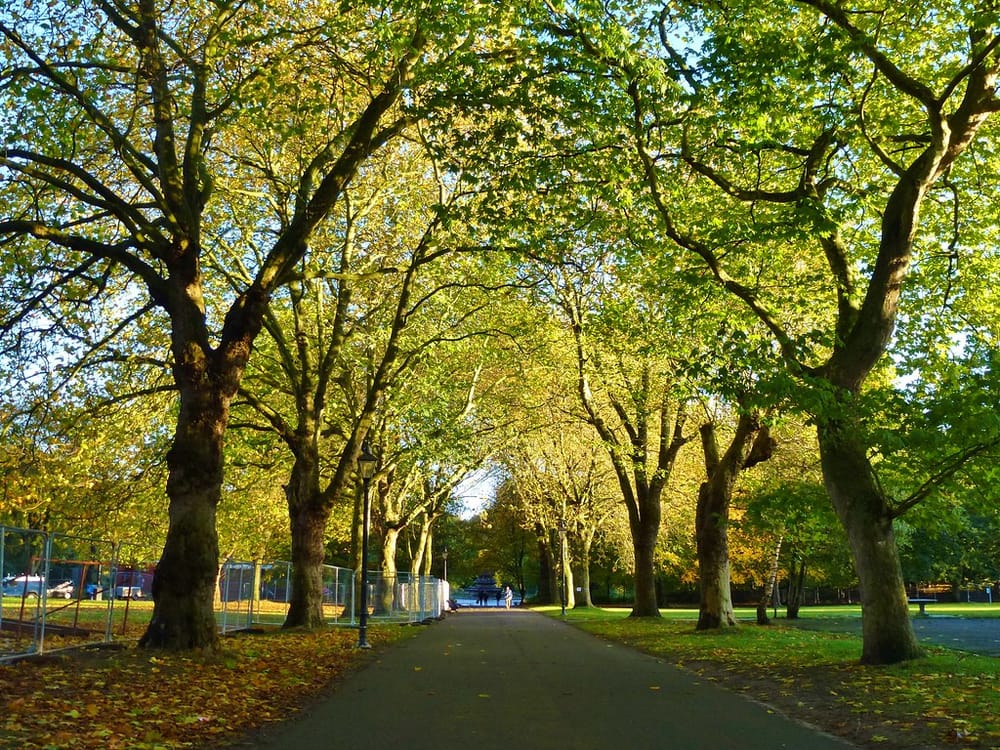
There is a "hidden gem" pitch for every city: a list of places that only a true local knows about that is usually published three weeks after everyone else publishes the same list. That framing isn't necessary for Liverpool's parks. They are not secret. They are all very good, and the four listed below are all excellent in their own right.
Sefton Park: For when you need the city to feel big
Sefton Park has a way of making you feel like you have left Liverpool without actually leaving Liverpool. Walk in off Aigburth Road and within two minutes the city noise has dropped to a low hum and you are surrounded by 200 acres of Victorian parkland that manages to feel simultaneously designed and slightly wild.
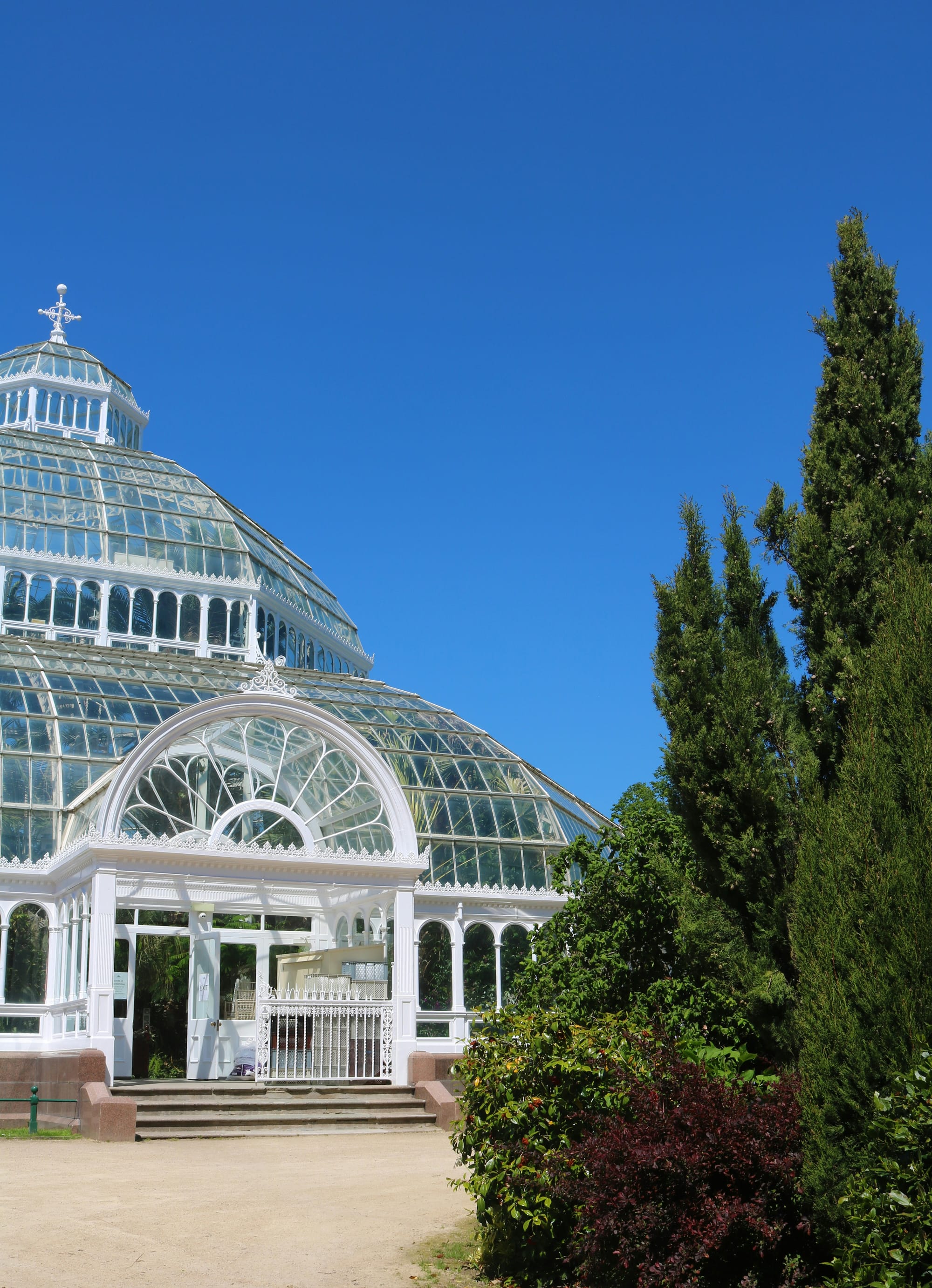
The Palm House sits roughly at the centre: a beautifully restored Victorian glasshouse that looks slightly surreal in a South Liverpool park, like someone left it there on the way to somewhere else. On a winter morning when the light is flat and grey, the warm glow from the Palm House across the frost is one of those Liverpool views that nobody puts on a postcard but probably should.
The boating lake is worth a loop. The broad paths through the middle of the park are where dog walkers and runners do their thing in a companionable parallel universe. On a summer Sunday afternoon the whole place is busy in that relaxed, everyone-welcome way that is hard to manufacture and easy to ruin. Sefton Park has somehow avoided ruining it.
Get the Merseyrail to St Michaels rather than driving. The walk from the station into the park takes about eight minutes and sets the pace nicely. Exit onto Lark Lane for coffee afterwards. The lane is a five-minute walk from the Aigburth Road gate and reliably delivers.
St James Mount: For when you need ten minutes of actual quiet
This one requires a small act of faith: you have to walk down into it. St James Mount and Gardens sits in a sunken bowl immediately below Liverpool Cathedral, which means it is hidden in the most literal sense. Invisible from street level, invisible from the map unless you are looking for it, and apparently invisible to most of the thousands of people who walk past the entrance every day without going in.
Step through the gate and the city disappears. Not metaphorically. The noise actually drops. The gardens are built into a former quarry, the walls are several metres high, and the combination of stone and depth means you can sit on a bench here on a busy Tuesday lunchtime and hear birds. In Liverpool city centre. On a Tuesday.
There is something a bit melancholy and a bit beautiful about the place. It started life as a cemetery and the memorials are still there among the trees and paths. It does not feel morbid. It feels like somewhere the city stores its quieter feelings. Worth twenty minutes of anybody's afternoon, and free.
Everton Park: For when you want to understand where you are
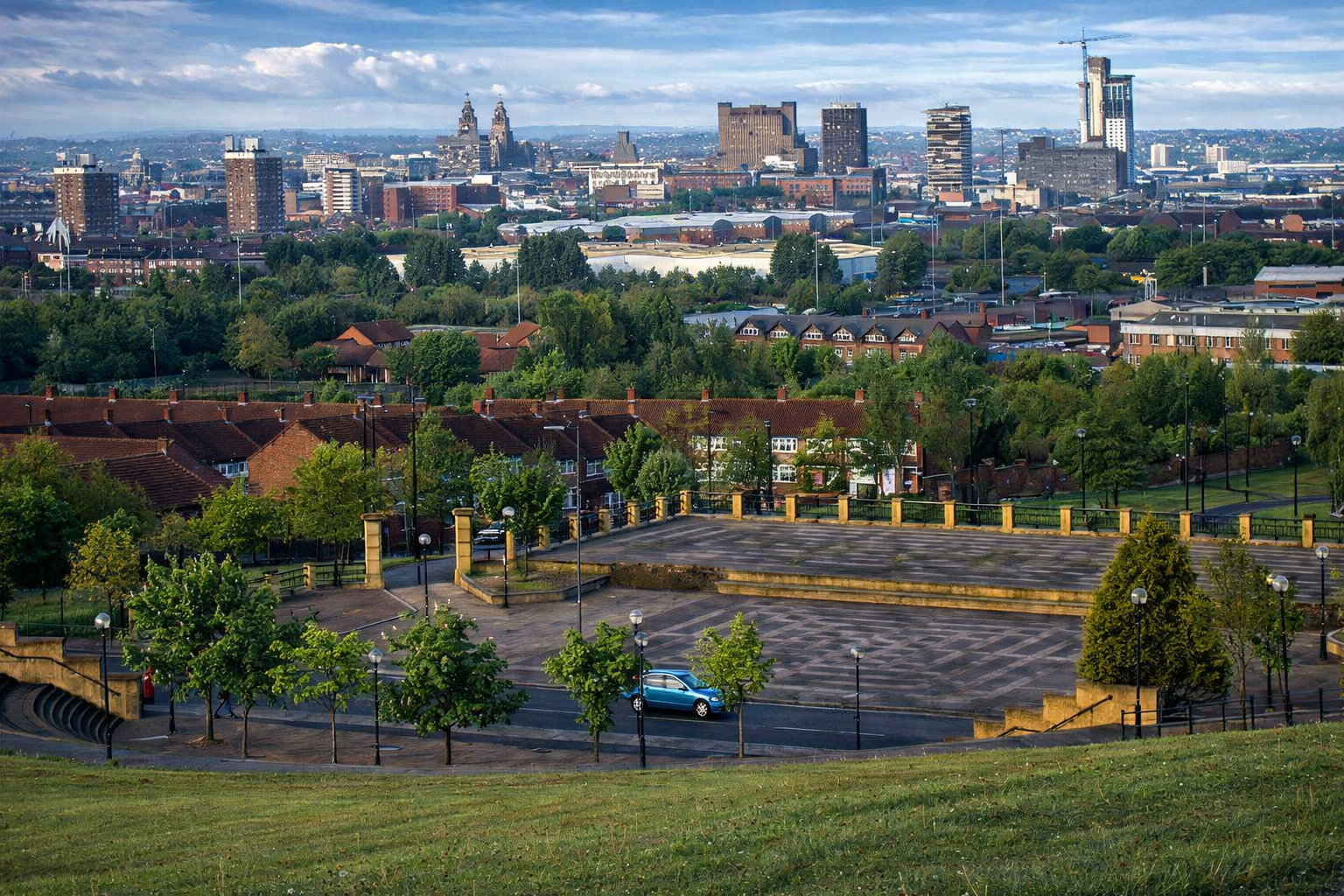
Everton Park will sort you out if you have been in Liverpool for two days and still cannot quite get the geography of the place straight in your head. Take the hill, reach the top, and suddenly everything makes sense.
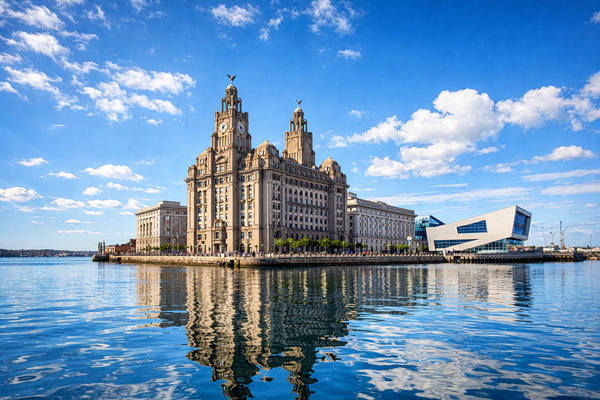
From the upper ridge you can see the whole city laid out below you: the centre, the docks stepping north along the waterfront, the Liver Building small in the distance, and the Mersey wide and silver beyond it with the Wirral on the other side. It is a proper panoramic view and it reorients you completely. After this, you know where north is. You understand why the docks matter. The city clicks into place.
The park itself is rougher around the edges than the Victorian showpieces further south. It was built on the site of a demolished housing estate in the 1980s and has that slightly DIY quality of a park that is loved by the people who use it rather than the people who designed it. That is not a criticism. It gives the place an honesty that some of the polished parks lack. Bring a jacket because the wind off the river up here is not playing games.
Calderstones Park: For a slow morning with somewhere good to sit
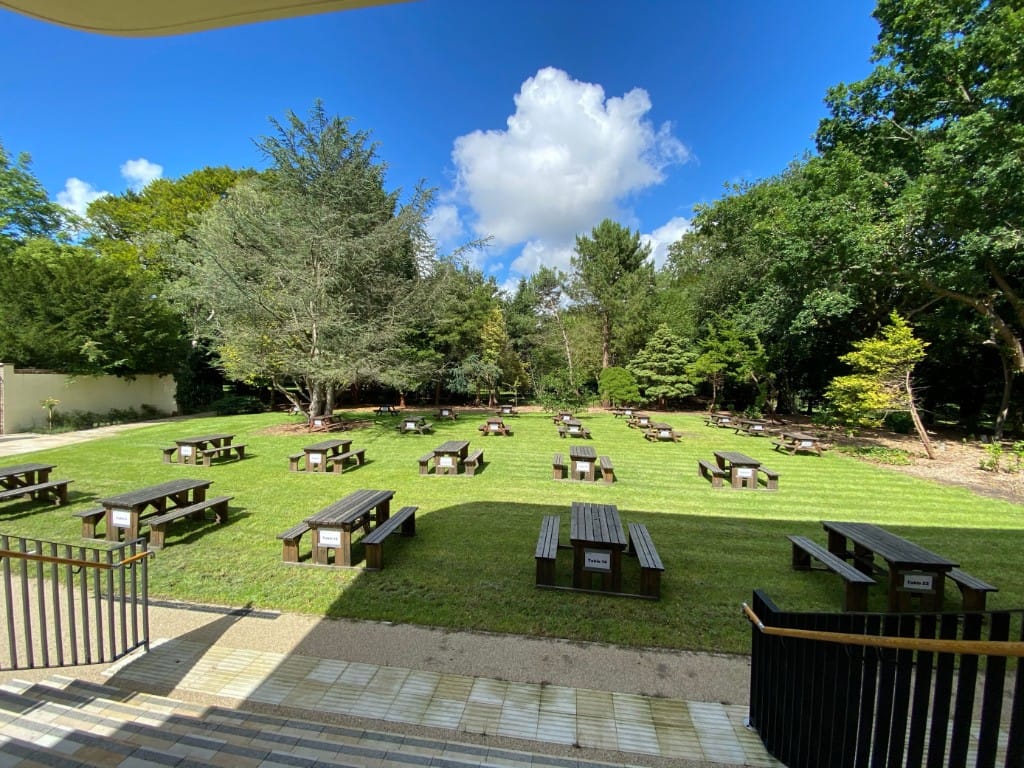
If Sefton Park is for getting proper exercise and Everton Park is for views, Calderstones is for ambling. It has a different pace built into it: mature trees that have been there long enough to feel established, paths that loop through woodland rather than marching you anywhere in particular, and a walled garden that feels like someone's private garden you have been kindly allowed into.
The Reader café sits inside the park in a converted building and is one of the better café stops in South Liverpool on a weekday morning. It is the kind of place where people bring laptops and stay for two hours, which tells you something about the atmosphere. On a grey morning when you want to walk for forty minutes and then sit with something hot, Calderstones is the park that delivers.
The Calderstones themselves are in a glasshouse near the main entrance. Six prehistoric megalithic stones, around 4,000 years old, completely unannounced in a South Liverpool park. They are easy to miss and worth not missing. Liverpool is full of this kind of thing.
One note on timing
Park cafés on sunny weekends: expect queues, bring patience, or bring your own flask. The parks are free, the coffee is fine, but the logistics of a sunny Saturday afternoon have defeated better-organised people than both of us. Any of these parks on a weekday morning is a completely different and considerably calmer experience.
None of these places need you to treat them as a destination. They are just good parks in a city that is better than its reputation for having good parks. Go to the one that fits the day and see what happens.
Enjoying this? Get new guides, local news and what's on — straight to your inbox.
Subscribe free →