Anfield
Around Anfield, simple plans are still the best ones. Matchday energy works better when you stop trying to fit too much around it.

Most people come to Anfield for the same reason: the stadium.
Fair enough. It dominates the area physically, financially and emotionally. On a matchday, the whole place starts to lean towards kick-off. Scarves appear in windows. Sellers line the approaches. Voices carry down Walton Breck Road. Streets that look ordinary on a quiet morning begin to behave like part of the event.
But that is only half the story.
The mistake most quick guides make is treating Anfield as if it is only a football destination. It is not. It is a neighbourhood that lives in the shadow of one of the most famous grounds in the world, and that has shaped everything around it: the shops, the trade, the murals, the pubs, the park, and the long, difficult history of housing around the ground.
That is what makes Anfield interesting. Not that it is somehow separate from football, because it plainly is not. It is that football here does not stop at the turnstiles. It spills into the streets and sits awkwardly, vividly and permanently alongside ordinary life.
Start with the ground, because everything else does too
The LFC Stadium Tour and Museum is still the obvious place to begin. The ground sets the scale of the area. Even outside it, you can feel how much of the district is arranged around it.
That is why any honest piece about Anfield has to start there.
But it should not stop there.
The streets tell you more than the concourse does
Walk around Anfield properly and the first thing you notice is not simply the stadium but the mix around it. Terraced houses. Painted walls. Flags. Traffic. Matchday traders. Quiet residential stretches that suddenly funnel into football routes.
The murals around Anfield are part of that landscape now. Some are tributes. Some are acts of memory. Some are statements of identity, plain and blunt. At their best, they do what the better bits of Anfield do generally: they show that support here is not neatly contained inside the stadium bowl. It settles into brick, paint and routine.
Buy something local, not just official
One of the easiest ways to understand the area properly is also one of the simplest.
Do not spend all your money inside the club shop.
Buy a hat, scarf or badge from one of the independent sellers outside. Stop at a local place for food. Put some money into the streets around the ground rather than treating them as a corridor between the car and the turnstile.
That sounds small. It is not small.
Because Anfield is not only a venue district. It is a lived-in part of Liverpool, and local trade matters more here than glossy visitor guides tend to admit.
Homebaked tells the story the stadium tour does not
One of the clearest examples is Homebaked, on Oakfield Road opposite the Kop.
It would be easy to mention it lazily as a good bakery near the ground and leave it there. That would miss the point.
Homebaked matters because it is tied to the wider story of what Anfield has been dealing with for years. Its roots sit in local efforts to hold onto buildings, businesses and neighbourhood life in an area shaped by demolition plans, housing-market renewal, empty homes and long-promised regeneration. The bakery is part of the much bigger Homebaked Community Land Trust story, and that is exactly why it belongs in any proper article about the area.
It is one of the places around. Anfield that reminds you the neighbourhood has had to fight to remain a neighbourhood.
So yes, go in. Buy something. Not because it makes for a nice “support local” line, but because places like this carry part of the real weight of the area.
The housing history is part of Anfield whether guides like it or not
This is the bit most softer write-ups step around.
For years, the streets around the ground were bound up in arguments about clearance, empty properties, demolition and regeneration. You do not need to bog a local guide down in policy language to say something basic and true: the expansion and pull of a major football ground has existed alongside a much messier residential reality.
That tension is part of Anfield. It is built into the look and feel of the place.
And once you see that, the area becomes more than a stadium with a few pubs attached. It becomes a place where football wealth, local trade, civic failure, community stubbornness and ordinary housing all meet each other at close range.
Stanley Park gives the whole area some breathing space
Between Anfield and Goodison, Stanley Park changes the tempo.
It is the nearest thing the area has to a reset button. The paths open out. The air feels different. The whole district briefly stops pressing in on itself.
That matters because without the park, the area could feel like one long extension of matchday. With it, you get a better sense of the wider geography of north Liverpool and the unusual closeness of two great football grounds. For decades, Liverpool and Everton sat almost side by side here, and even now Goodison remains worth seeing for anyone interested in the history of football stadiums, not least because it has entered a new chapter as the home of Everton Women.
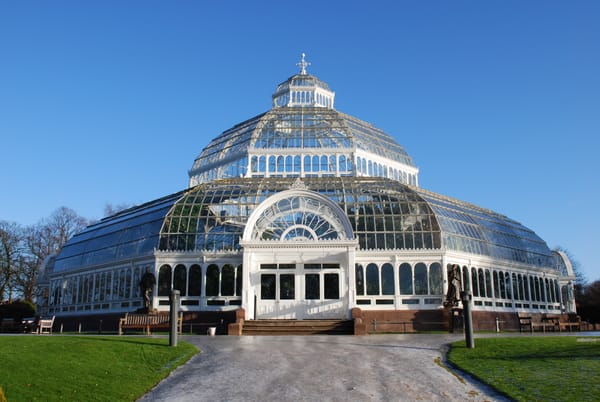
The Isla Gladstone Conservatory adds another layer to that, giving the park one of its most distinctive landmarks and one of the few nearby buildings that feels elegant in a completely different register from the football streets.
The Sandon still earns its place
There are plenty of pubs around the ground, but The Sandon is the one that genuinely belongs in the article.
Not because it is convenient, and not just because people know the story, but because it gives you something tangible: a proper sense of how football history in this part of Liverpool began in ordinary rooms before it became a global spectacle. It is worth a visit for the atmosphere, the surviving links to the club’s early years, and the feeling that you are in a pub that still belongs to the area rather than a stop designed only for visitors.
That is what you want from a place like this.
There is older Liverpool here as well
A short distance away, Anfield Cemetery widens the frame again.
While not a common "tourist" spot
The scale, layout and Victorian design all remind you that this part of the city has a history much older than the football economy now attached to it. It is one of the few nearby places that changes the mood completely, and because of that it helps the area make more sense.
So what is really around Anfield?
The honest answer is not “loads to do” in the usual tourist sense. The City Centre is a 15 minute Number 17 bus away for that.
It is something more specific than that.
Around Anfield, there are stadium tours, murals, pubs, parkland, badge sellers, scarf stalls, local food, terraced streets, and one bakery that tells you more about the place than most official leaflets ever will. There is also a harder background story about housing and regeneration, which is part of why the area feels the way it does.
So yes, come for the ground.
But do not leave thinking the ground is the whole place.
The real Anfield is what has grown around it, survived beside it, traded off it, and in some cases struggled because of it. That is the version worth noticing.