Liverpool Mysteries: The Tunnels, Legends and Strange Stories That Still Cling to the City
Liverpool has the kind of landscape that makes strange stories feel believable. Tunnels run below Edge Hill.
A cemetery lies in a quarry below the cathedral. Bold Street still carries a story about people slipping into another decade. Some of it is history. Some of it is legend. All of it adds to the city’s uneasy charm.
Liverpool can make ordinary reality feel unreliable.
You feel it in a sealed door that looks as though it should lead somewhere important.
In the fact that an old dock sits under a shopping district.
Or that a cemetery opens below the cathedral.
The city already has enough real strangeness.
Some of these stories stand on solid historical ground.
Some belong to folklore.
Some have been stretched by the internet.
That is where the fun starts.
Liverpool’s best-known mysteries at a glance
- Williamson Tunnels: a real underground network in Edge Hill with no fully settled explanation.
- St James's Cemetery: a former quarry below the cathedral that feels eerie even before the folklore starts.
- Underground Liverpool: buried dock history, vaults, basements, and sealed spaces that feed bigger myths.
- Newsham Park Hospital: a huge derelict former orphanage and hospital whose scale, decay, and history make it one of Liverpool’s strongest spooky sites.
- The waterfront: a port landscape built around movement, danger, and stories with missing edges.
- Bold Street time-slip lore: Liverpool’s best-known urban legend, strong on atmosphere and weak on proof.
- Cathedral and wartime rumours: stories that grow where access, scale, and history leave room for speculation.
Why Liverpool suits mystery so well
Liverpool has the right setting for it.
Tunnels. Quarries. Hidden basements. Old vaults. Lost dock spaces. Streets where one level sits awkwardly above another.
It is also a port city.
Port cities collect half-finished stories. People arrive, vanish, leave fragments behind, and move on.
Then there is everything the city has lost. Bombing. Clearance. Redevelopment. Whole layers of old Liverpool partly buried by what came next.
Add a strong local habit of retelling a good story, and the mood almost builds itself.
The Williamson Tunnels feel like the city hiding something
If one Liverpool mystery really lands, it is the Williamson Tunnels.
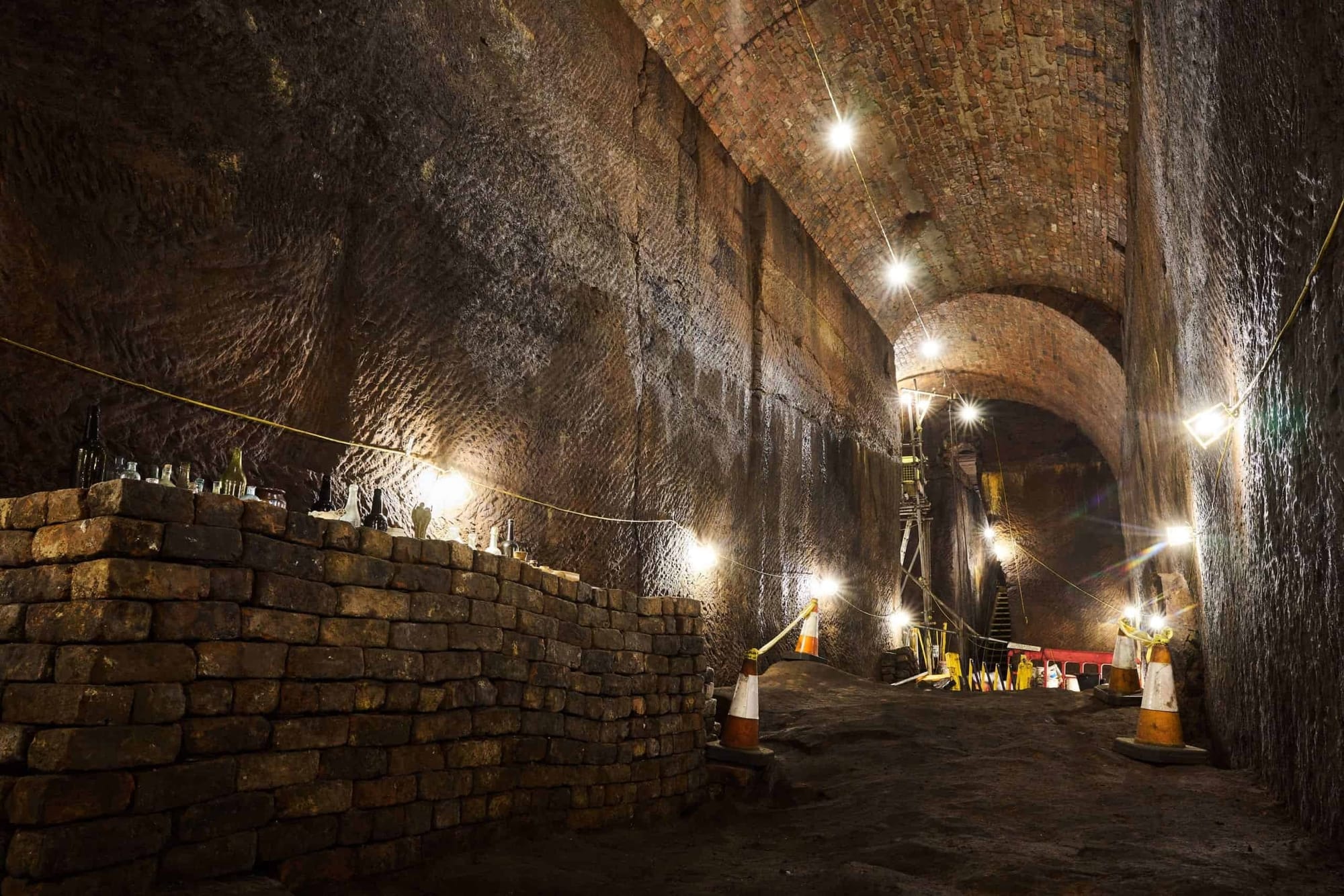
They are real. Beneath Edge Hill, Joseph Williamson oversaw major excavation in the early nineteenth century. What survives includes brick-lined passages, chambers, arches, and filled sections. The heritage centre is the best place to start.
The thrill is not whether they exist.
It is why they exist.
The strongest explanations are practical. Williamson may have been providing paid work while preparing land above for development. Some parts may also have helped manage unstable ground and older quarrying.
But the setting keeps pulling people further than that. The brickwork. The darkness. The sense that the tunnel continues just out of sight.
That is why the wilder theories survive.
Secret routes. Hidden chapels. Escape systems.
You do not have to believe them to see why they stick.
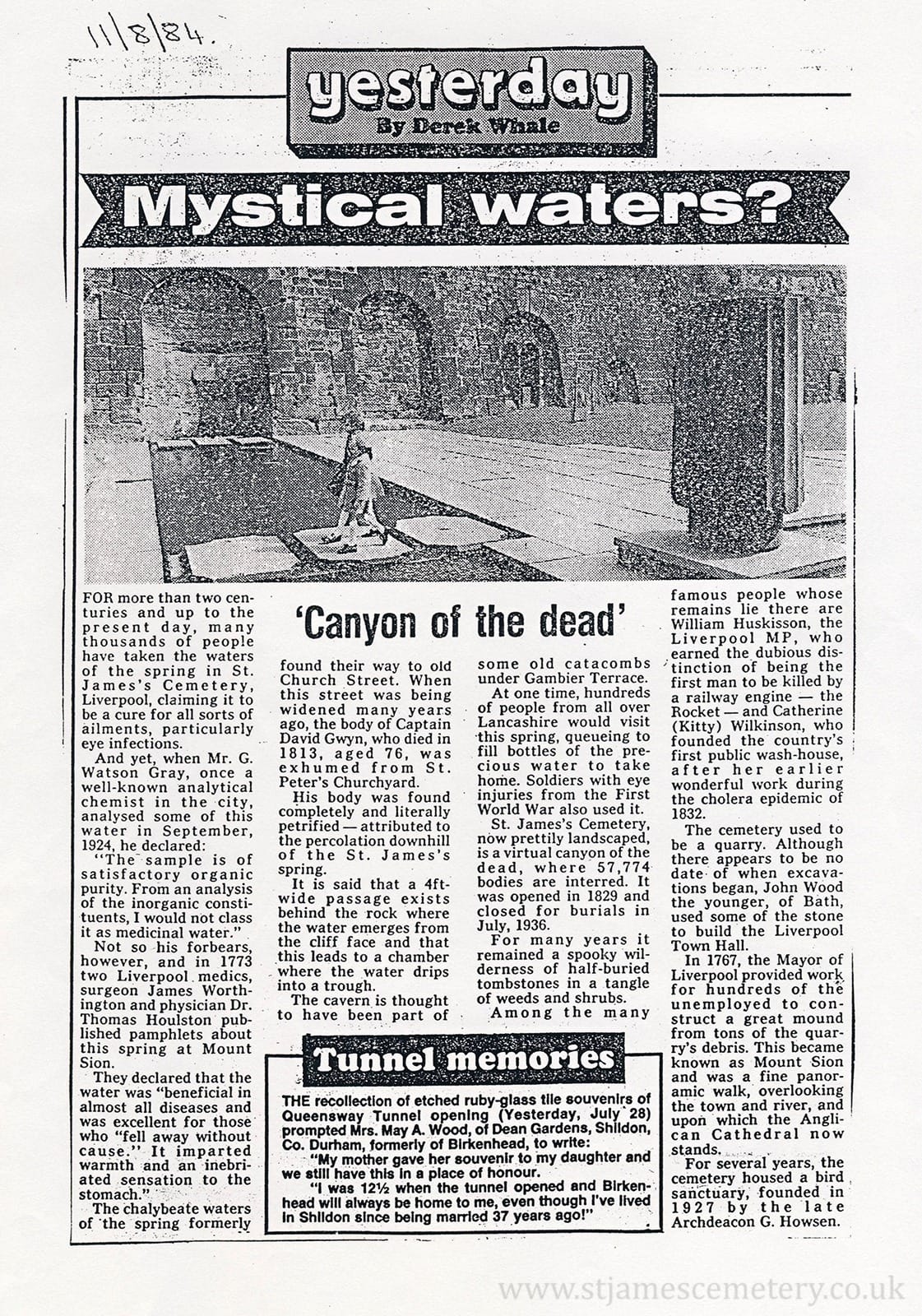
St James's Cemetery has the right kind of unease
St James's Cemetery earns its reputation because the place already feels uncanny before the folklore starts.
It is a former quarry laid out as a cemetery in the late 1820s. Historic England’s entry shows why it leaves such a mark: steep embankments, carriage ramps, catacombs cut into the rock, and the cathedral rising above it.
From above, it feels half-hidden.
From below, it feels cut off.
The quarry walls hold the whole place in. Sound changes. The city feels suddenly further away.
That is exactly the sort of setting that breeds stories.
Apparitions. Cold spots. Mourning figures. Feelings of being watched.
Whether or not you believe any of that, the atmosphere is real.
Underground Liverpool keeps feeding the imagination
People love the idea of a hidden second Liverpool below the one they know.
The reality is less tidy, but still strange.
What people call underground Liverpool is really a mix of tunnels, basements, warehouse vaults, buried street levels, dock structures, railway cuttings, shelters, and sealed spaces.
The Old Dock, preserved below the shopping district, is the best example. National Museums Liverpool describes it as the world’s first enclosed commercial wet dock.
That alone is enough to shift the mood.
Once you know older Liverpool still sits under later Liverpool, the city starts to feel less settled.
Every sealed cellar, blocked arch, and half-seen void starts suggesting another story.
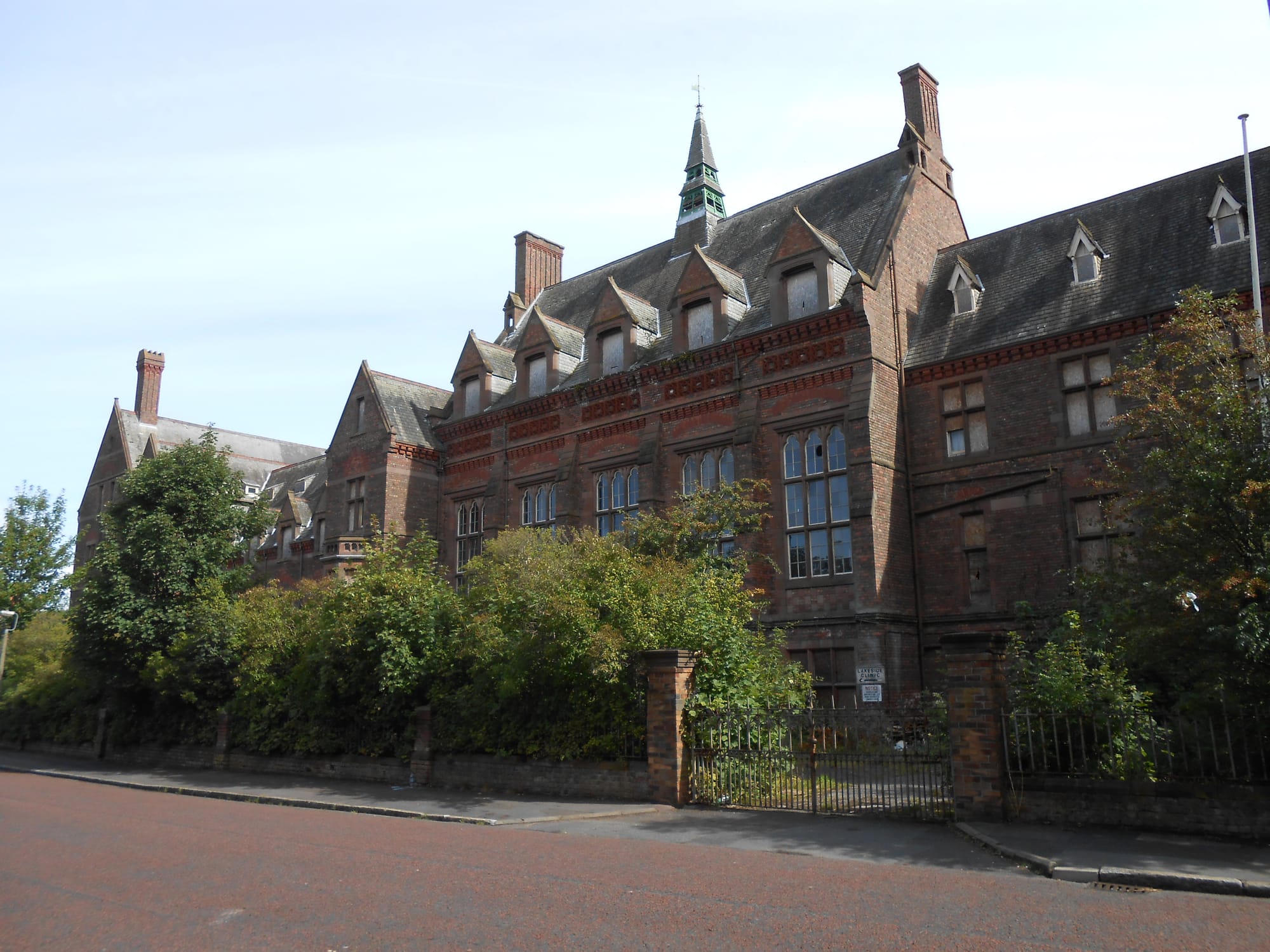
Newsham Park Hospital looks like it was built for ghost stories
Newsham Park Hospital is one of the easiest places in Liverpool to understand as a spooky legend.
The building is huge. It is derelict. And it carries several lives inside the same walls.
The Victorian Society notes that it began as the Royal Liverpool Seamen’s Orphanage, remained an orphanage until 1949, later became Newsham Park Hospital, and eventually fell into dereliction after closure. That long shift in use matters.
A building with that much scale and that many layers was always going to attract stories.
Part of the power here is visual. Long corridors. Boarded windows. Empty wards. A vast red-brick institutional building sitting beside the park like a place the city never quite finished explaining.
That is why Newsham Park turns up so often in Liverpool ghost lore.
It does not need much embellishment.
The real history is heavy enough. An orphanage. A hospital. Later decay. Years of people projecting fear, memory, and invented sightings into the same spaces.
Whether you treat it as haunted or just deeply atmospheric, it has become one of the city’s best-known modern spooky landmarks.
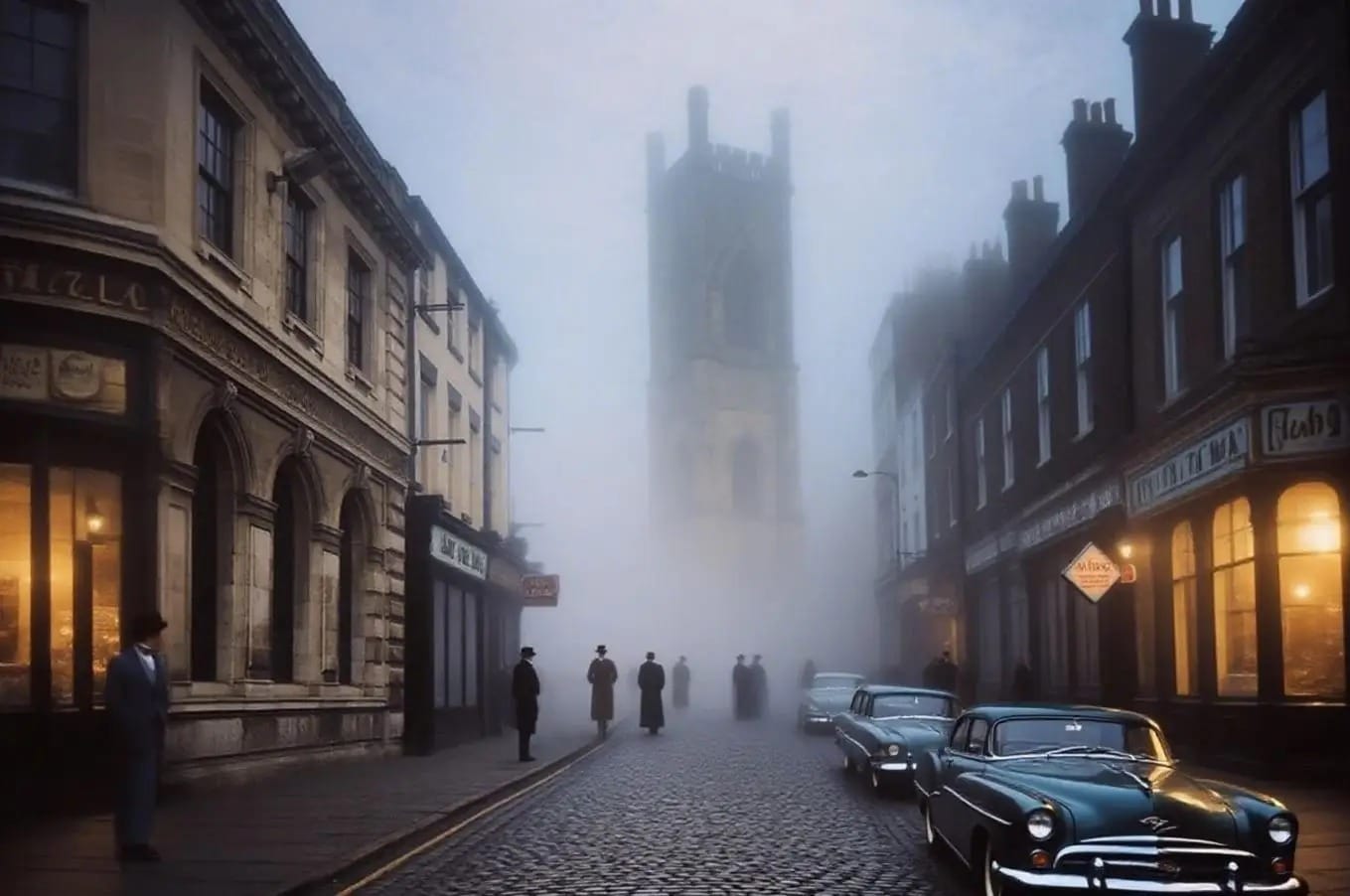
Bold Street still has Liverpool’s best modern legend
The Bold Street time-slip story refuses to die.
Someone walks along the street and suddenly seems to step into another decade. Shopfronts change. Vehicles change. People change.
The details vary depending on who tells it. That is part of why it works.
There is no strong primary source trail behind it, and the Discovery UK explainer makes that clear.
But Bold Street is the perfect place for a story like this. It has a strong identity, a long commercial history, and just enough visual layering to make the legend feel oddly possible for a second.
That is why people keep repeating it.

Cathedral rumours work because the setting is so strong
Liverpool’s big civic and religious buildings attract mystery for obvious reasons.
They are visible, important, and only partly accessible.
Crypts, sealed spaces, service passages, and wartime uses all help. So does the setting around the cathedral, where slopes, stone, and hidden corners do half the work.
Some of the wartime suspicion has a real basis. Liverpool was a strategic port and heavily bombed.
That does not make every rumour true.
But it does explain why the city keeps producing them.
What these stories reveal about Liverpool
Liverpool’s mysteries work because the city is still full of visible joints.
A tunnel system survives under ordinary streets with no settled explanation.
A cemetery sits in a quarry below the cathedral.
Older dock infrastructure lies below modern shopping ground.
Bold Street carries enough older identity that the time-slip story still lands.
That is why these stories still have life in them.
They mix real places, local folklore, and just enough uncertainty to keep people coming back.
And that is what makes Liverpool fun to write about here.
The city already has steep drops, buried layers, sealed spaces, river weather, civic grandeur, and the long aftereffects of trade and war.
Heard a Liverpool mystery we should know about?
Tell us your story.