You can make most everyday Liverpool journeys without a car, but the best option changes quickly once you leave the city centre. Walk for the central shopping, waterfront and university districts. Merseyrail is usually simplest for longer journeys along the coast, into South Liverpool or across the Mersey. Buses fill the gaps, particularly for Anfield, Woolton, the airport and neighbourhoods without a nearby station.
City centre: walk unless mobility, luggage or weather makes that impractical.
Merseyrail: useful for Southport, Waterloo, Crosby, South Liverpool stations, Ormskirk, Headbolt Lane and destinations across the Wirral.
Bus: usually better for Anfield, Woolton, many inner suburbs and Liverpool John Lennon Airport.
Train payment: tap in and out with the same bank card, phone or watch on Merseyrail.
Bus fare: an adult single currently costs £2 across Merseyside and Halton.
Several off-peak journeys: an all-areas Saveaway costs £6.80 and covers buses, trains and direct Mersey Ferry crossings.
Late journeys and event days: check the return trip before leaving. Matchdays and city-centre events can move bus stops and change journey times.
Walking works for most of central Liverpool
Lime Street, St George's Quarter, Bold Street, Ropewalks, Liverpool ONE and the waterfront sit within the same walkable central area. The Royal Albert Dock, Pier Head and Liverpool ONE are particularly easy to combine on foot.
The part that catches people out is the gradient. The waterfront is low and relatively level. Walking back towards Hope Street, the universities, Mount Pleasant or the cathedrals means climbing. Someone using a wheelchair, pushing a pram or carrying luggage may find a route that looks short on a map less straightforward on the ground.
Which Liverpool city-centre station should you choose?
Liverpool Central
Liverpool Central is the most flexible Merseyrail station for many city-centre journeys because both the Northern and Wirral lines stop there. It is close to Bold Street, Church Street, Ropewalks and the main shopping area. Merseyrail currently gives the station Step Free Access Rating A, with lifts to all platforms. Check the current Liverpool Central station facilities and accessibility information before travelling if step-free access matters to your journey.
Moorfields
Moorfields is useful for the commercial district around Dale Street, Old Hall Street and Tithebarn Street. There is one accessibility detail to remember: the main Moorfields entrance has lift access, but the Old Hall Street entrance does not have disabled access. That entrance also has more limited opening hours. Merseyrail publishes the current details on its Moorfields station page.
James Street
James Street is the useful Merseyrail stop for the Pier Head, Castle Street and the waterfront side of the centre. The station currently has Step Free Access Rating A. See the James Street station accessibility information for current lift and facility details.
Lime Street
Liverpool Lime Street is where most people arriving by long-distance rail enter the city. Its low-level Merseyrail station provides a local rail connection beneath the main station. If you need both Northern and Wirral line options, Liverpool Central is often the simpler interchange because both networks serve it directly.
Merseyrail is usually the simplest option for longer journeys
The Northern Line runs from the city towards Southport, Ormskirk and Headbolt Lane, and south through Brunswick, St Michaels, Aigburth, Cressington and Liverpool South Parkway to Hunts Cross. The Wirral Line connects central Liverpool with destinations including New Brighton, West Kirby, Ellesmere Port and Chester.
That makes rail particularly useful for Southport, Waterloo and Crosby, Aintree, Kirkdale and Sandhills, Lark Lane and Sefton Park via St Michaels, Aigburth, Liverpool South Parkway, New Brighton, West Kirby and Chester. The Merseyrail journey planner and network information is the useful place to check the exact route and live service position.
How Merseyrail Tap & Go works
Merseyrail passengers can tap in and out using a contactless bank card, smartphone, smartwatch or registered MetroCard. Use the same physical card or device at both ends of the journey.
A bank card and the same card stored in your phone may draw money from the same account, but the system treats them as different payment methods. Mixing them can leave an incomplete journey. Merseyrail's Tap & Go FAQs explain the payment rules and caps.
Tap & Go detail
Current figure
Single fares
From £2.60
Off-peak all-areas daily cap
£6.40
Morning peak
06:31 to 09:29 Monday to Friday
Maximum charge for an incomplete journey
£10.55
Outside the weekday morning peak, Tap & Go automatically applies the relevant daily cap when your journeys reach that level. The practical rule is simple: tap in and tap out every time.
When a Saveaway makes more sense
Merseyrail Tap & Go is for rail. If your day involves a mixture of bus, train and a direct ferry crossing, a Merseytravel Saveaway can make more sense.
Saveaway
Current price
Adult, one area
£5.10
Adult, all areas
£6.80
Young person, one area
£2.90
Young person, all areas
£3.40
Saveaways are off-peak tickets. On Monday to Friday they cannot be used for a journey starting between 6.31am and 9.29am. They can be used throughout the day at weekends and on Bank Holidays. They cover buses, trains and direct Mersey Ferry crossings within the areas purchased. The full River Explorer Cruise is separate and requires an additional payment.
Liverpool buses cover the places rail misses
Queen Square Bus Station handles many journeys heading north and east from the centre. Liverpool ONE Bus Station handles numerous services towards South Liverpool, the airport and other parts of the city region.
Liverpool ONE Bus Station, photographed in 2023. Photo: Chris Morgan, CC BY-SA 2.0, via Wikimedia Commons.
Routes and stopping points change, so check the current Liverpool bus timetables instead of relying on an old route number. The standard adult single fare is currently £2 across Merseyside and Halton.
The bus network starts changing in September 2026
Liverpool City Region is beginning the move to a franchised bus network. The first publicly controlled services start in St Helens on Sunday 6 September 2026. Routes 10 and 10A between Liverpool and St Helens are among the services affected, so passengers on that corridor should check the current Merseytravel bus service changes before travelling.
The wider rollout continues through the city region. L1Local's Liverpool bus changes for September 2026 explains the timetable and ticket changes in more detail.
Getting to Liverpool John Lennon Airport without a car
Liverpool John Lennon Airport does not have its own railway station. Direct buses run from Liverpool ONE Bus Station, while another useful option is rail to Liverpool South Parkway followed by a short airport bus connection.
Merseytravel currently lists the 82A and 500 from Liverpool ONE at about 40 minutes to the airport, with the 80A and 86A taking longer from the city centre. Check the current Liverpool John Lennon Airport bus connections before setting off because frequencies and journey times can change.
The bus interchange at Liverpool South Parkway. Photo: Chris Morgan, CC BY-SA 2.0, via Wikimedia Commons.
If you are already approaching Liverpool by train, changing at South Parkway can avoid travelling into the city centre and doubling back towards Speke. Accessibility equipment can occasionally be taken out of service, so check the station and airport connection on the day if step-free travel is essential.
The Mersey Ferry is transport, but check the timetable
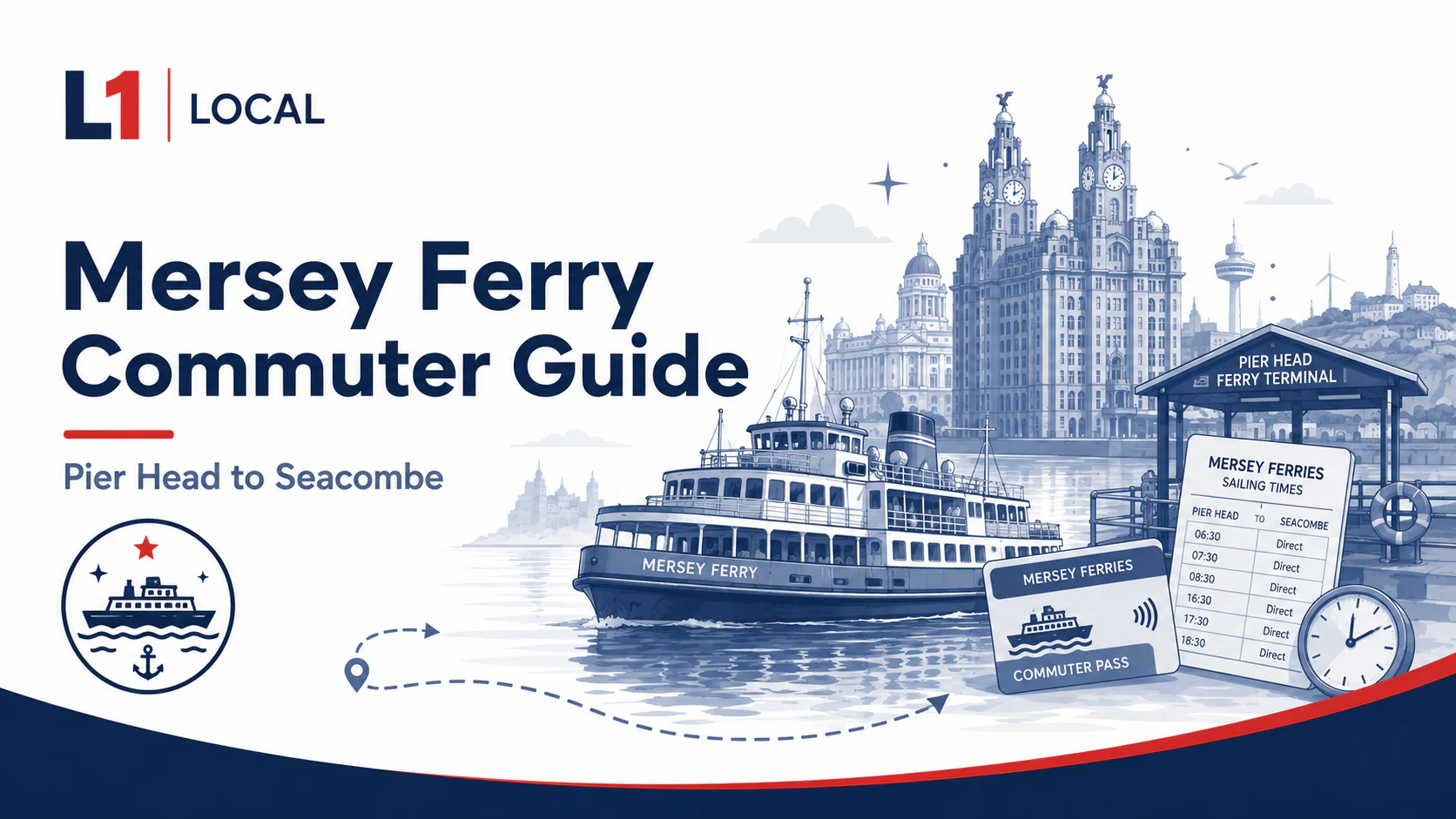
The ferry can form part of a car-free journey between Liverpool and Wirral, but the direct cross-river service is designed mainly around weekday commuting. It does not operate as an all-day replacement for Merseyrail.
Anfield does not have a railway station next to the stadium. Buses, matchday services, walking routes and rail-plus-bus combinations are therefore more useful than simply searching for the nearest station.
Football also changes the surrounding network. Road restrictions and passenger volumes can affect ordinary services around Anfield, Walton Breck Road and Sandhills. Everton home matches at Hill Dickinson Stadium similarly put pressure on Sandhills and routes towards the northern docks.
Several central Merseyrail stations have strong step-free provision, but entrances and facilities are not identical. Liverpool Central and James Street currently carry Step Free Access Rating A. Moorfields also has an A rating when approached through the Moorfields entrance, while the Old Hall Street entrance is not step-free.
Merseyrail publishes station-by-station information covering lifts, platform access, accessible toilets, wheelchair access, pram access, staff availability and Passenger Assist meeting points. Check the exact station before setting off rather than assuming two similar-looking routes will work the same way.
Merseyrail trains do not have toilets on board. Many stations do provide toilets, but opening arrangements vary.
Standard bicycles can currently be taken on Merseyrail trains without an additional charge, subject to available space. The Class 777 trains include dedicated bike areas. Check Merseyrail's current rules before travelling with an unusual or larger cycle.
Check the journey home before you leave
The easiest transport mistake is planning how to arrive and assuming the same options exist late at night. Check the return journey before leaving if you are going to a late event, travelling on Sunday, changing between train and bus, relying on the ferry, attending a football match or travelling during engineering works.
A route with several good options at 2pm may have one practical option at 11pm. The Merseytravel travel updates page is the final place to check bus, rail and ferry disruption before setting off.
Which option fits which journey?
Liverpool city centre: walk where practical.
Southport, Waterloo, Crosby, Aintree, South Liverpool stations or the Wirral: check Merseyrail first.
Anfield, Woolton and neighbourhoods away from rail: check the bus network.
Liverpool John Lennon Airport: compare a direct bus from Liverpool ONE with rail to Liverpool South Parkway plus an airport bus.
Several off-peak journeys using more than one type of public transport: compare the Saveaway price.
Rail-only travel: Tap & Go removes most of the need to choose a ticket in advance.
Wirral during commuter ferry hours: compare the ferry with Merseyrail before deciding.


Comments
Join the conversation with your L1Local Community account. Keep it civil and on topic.