Guide
WTF Does the Mayor of Liverpool Do?
A plain English guide to Liverpool's Lord Mayor, council leader and Metro Mayor, explaining who controls which services and where complaints should go.
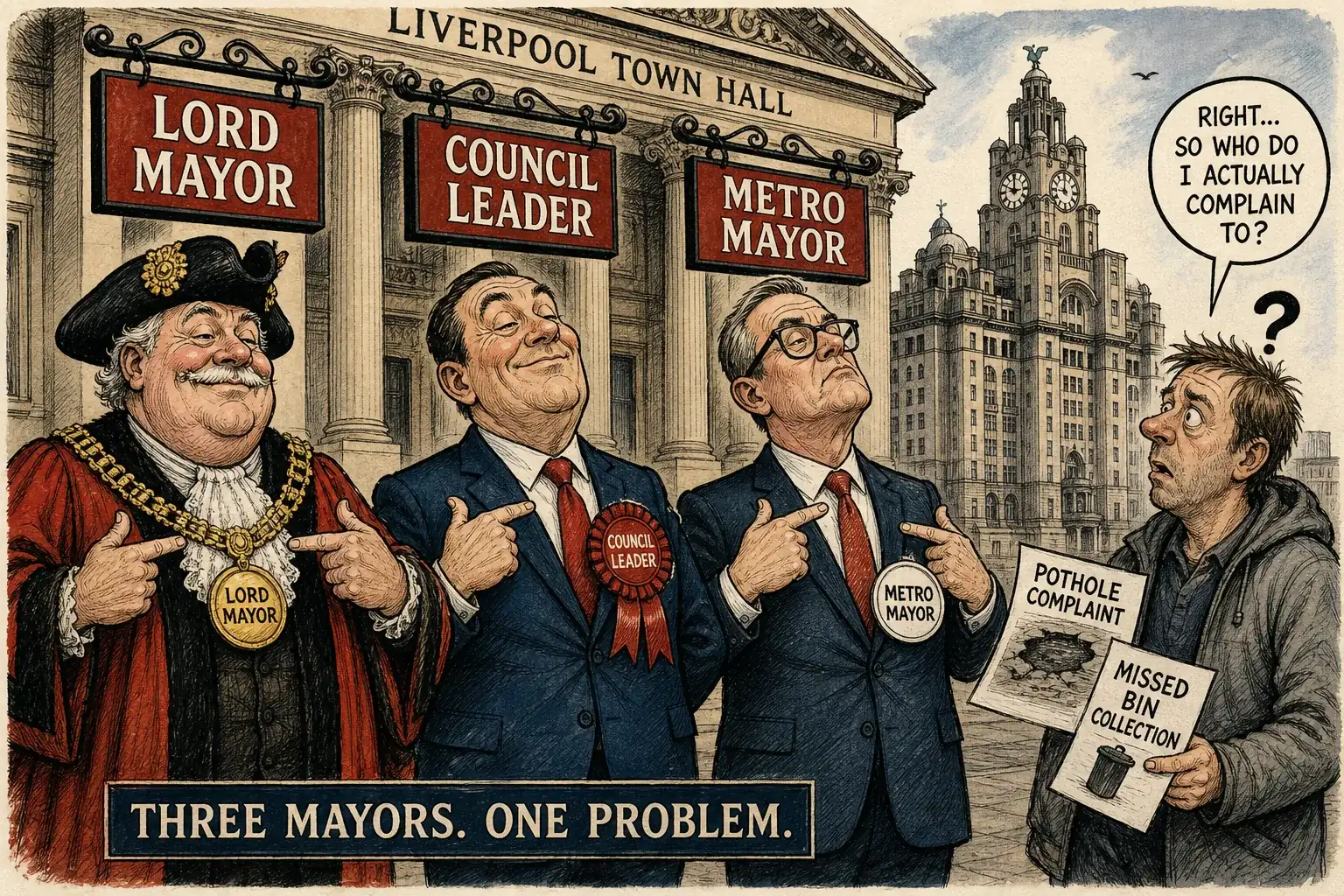
Liverpool has a Lord Mayor, a Metro Mayor and a council leader. The first wears the chain. The second runs a regional authority. The third leads Liverpool City Council.
That is why asking “what does the mayor do?” gets three answers before anyone has mentioned your bin.
Why people are confused
The titles sound similar, but the jobs cover different places and services. The Lord Mayor represents the city at civic events. The Metro Mayor covers six council areas across the Liverpool City Region. The leader heads Liverpool City Council's political cabinet.
Liverpool also had a directly elected city mayor from 2012 to 2023. That post has gone, but old articles, signs and memories have not all received the memo.
Short history
The Lord Mayor is the old civic role. Liverpool City Council chooses a serving councillor to hold it for one year. In 2026/27, the Lord Mayor is Councillor William Shortall.
Liverpool introduced a directly elected city mayor in 2012. Residents voted for one person to lead the council's executive. In 2023 the council moved to a leader and cabinet model.
The regional Metro Mayor arrived in 2017. Voters across Halton, Knowsley, Liverpool, Sefton, St Helens and Wirral elect that mayor. Steve Rotheram has held the post since it began.
What people think
- The Lord Mayor runs Liverpool City Council because the chain looks expensive.
- The Metro Mayor controls every service with “Liverpool” in the name.
- The old elected city mayor is still in office somewhere behind a locked Town Hall door.
- The council leader is a senior employee rather than a councillor chosen by other councillors.
All four ideas are wrong, though the job titles have done their best to encourage them.
What is true
The Lord Mayor represents the city
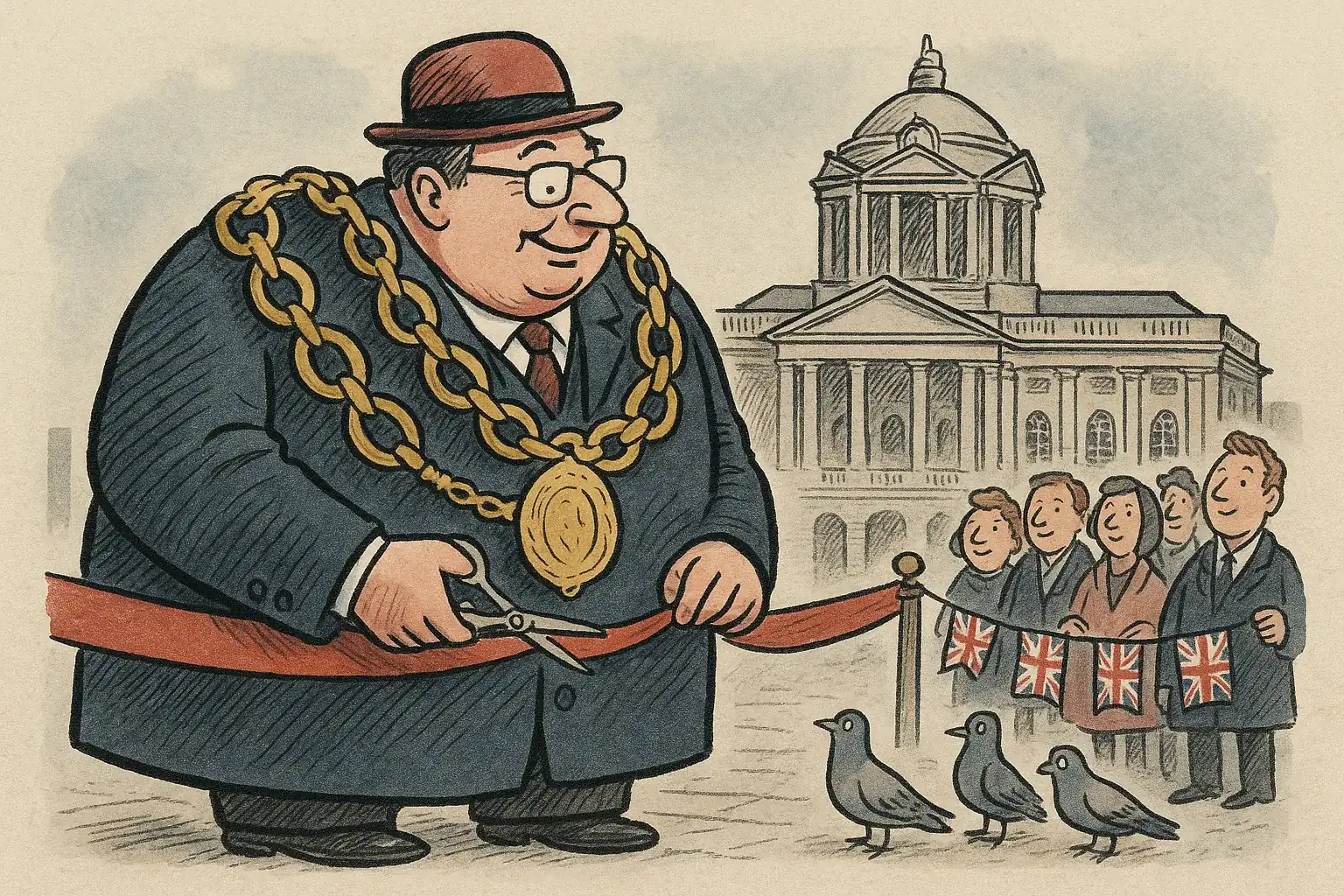
The Lord Mayor is Liverpool's first citizen. The role includes chairing full council meetings, attending civic and religious events, welcoming delegations and supporting charities.
The Lord Mayor does not set the budget, run council departments or decide planning applications. Send an invitation to a civic event. Send a missed-bin report somewhere else.
The Metro Mayor leads the city region
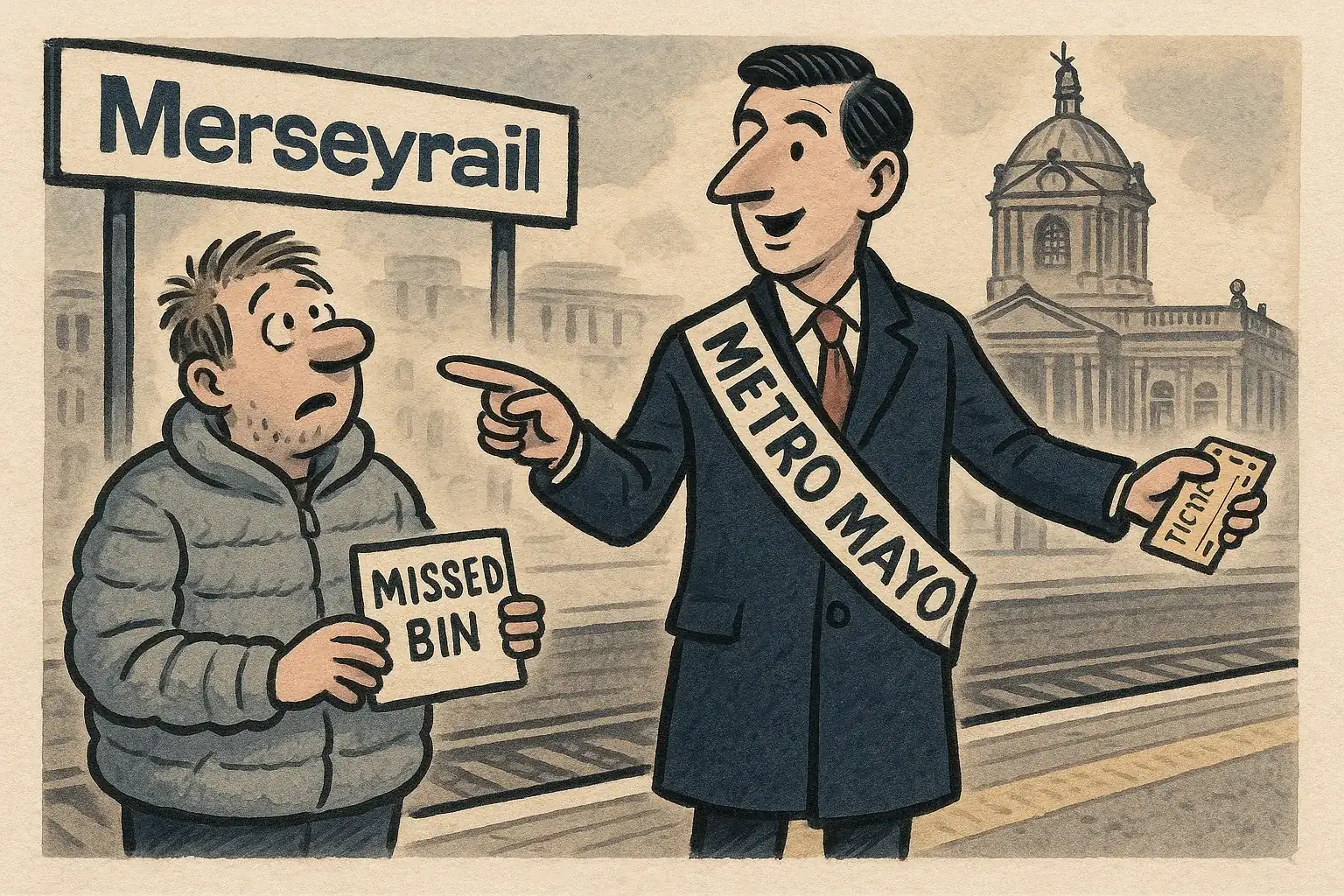
The Liverpool City Region Combined Authority brings together six local authorities and is led by Metro Mayor Steve Rotheram. Its work includes transport, skills, housing strategy, economic development, regeneration and other regional programmes.
The Metro Mayor does not run Liverpool City Council. The office does not collect household waste, decide ordinary Liverpool planning applications or manage your local library.
The council leader heads the political cabinet
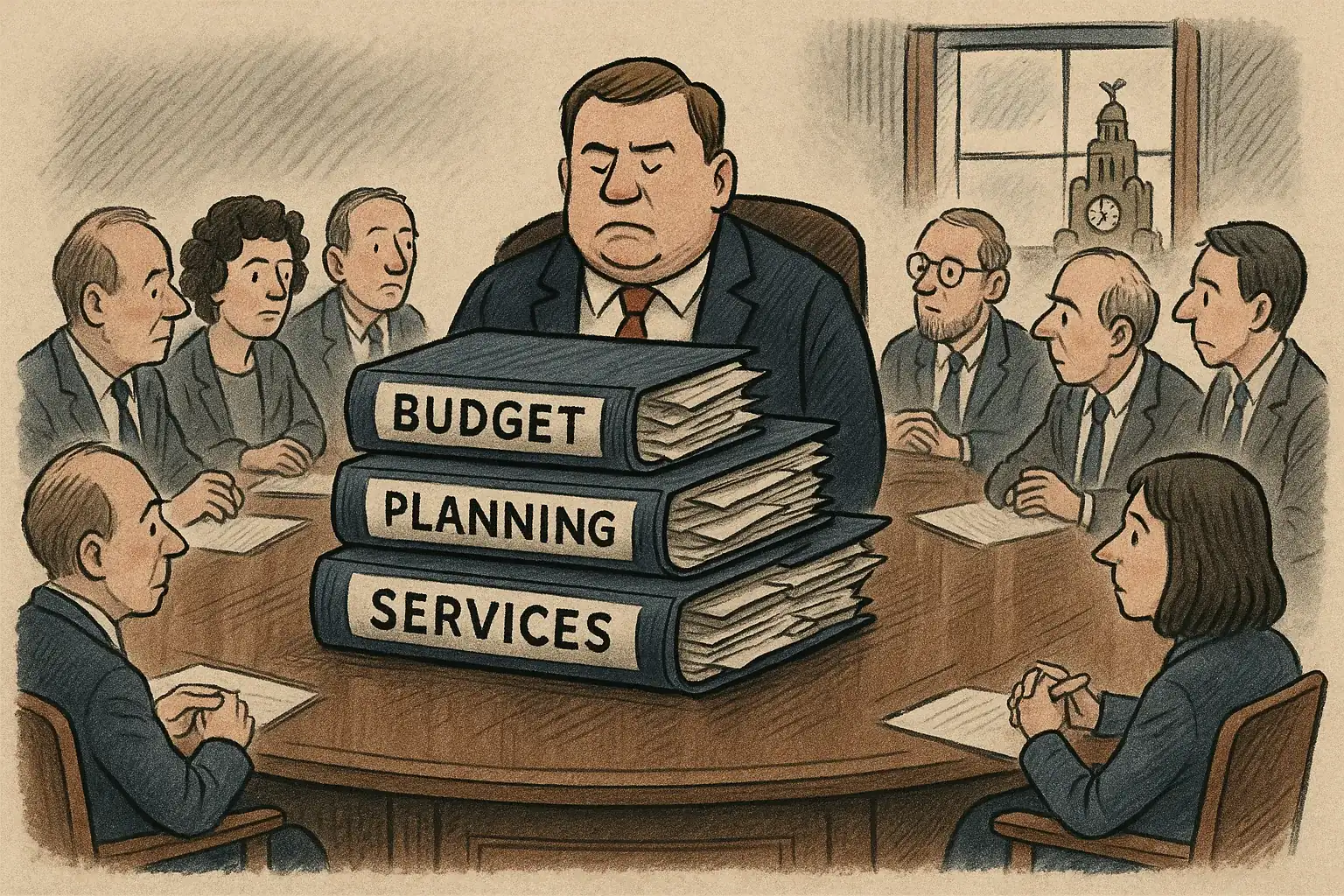
Liverpool's 85 councillors elect the leader. The leader appoints the cabinet, whose members hold portfolios such as finance, housing, adult social care and children's services. The council's current leader is Councillor Liam Robinson.
The cabinet is the main council decision-making body, but it does not act without limits. Full council agrees the budget and policy framework. Committees scrutinise decisions, regulatory committees handle work including planning and licensing, and officers make decisions delegated under the council constitution.
The elected city mayor no longer exists
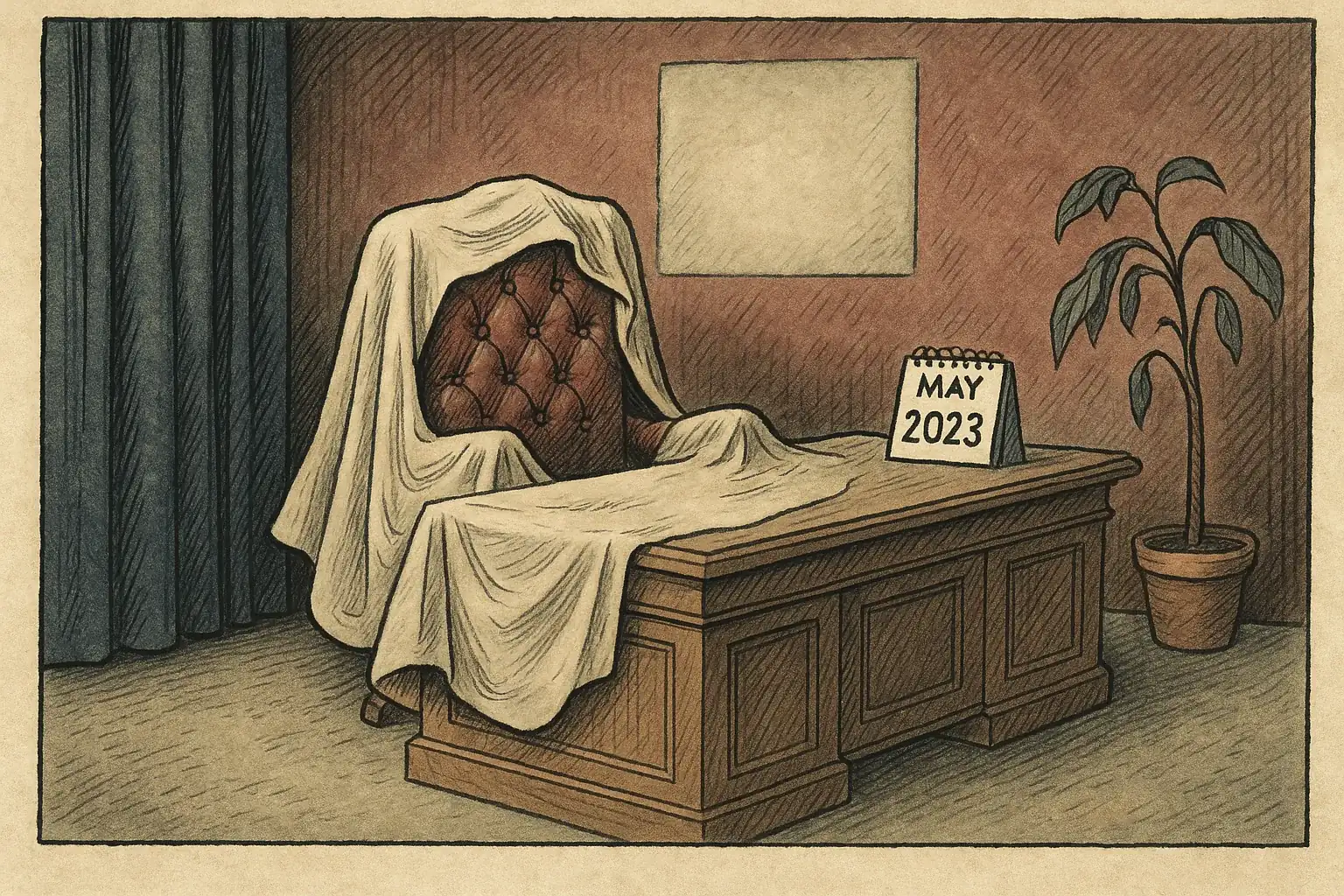
The directly elected Mayor of Liverpool led the city council's executive between 2012 and 2023. The council now uses the leader and cabinet model. The Local Government Association records the change in 2023.
High points
- A regional authority can plan transport and investment across council boundaries rather than stopping at Liverpool's edge.
- The Lord Mayor gives charities, civic events and full council meetings a named representative and chair.
- The leader and cabinet model publishes cabinet portfolios, so readers can see which councillor covers each service area.
Partner offer
I use YouFibre's full-fibre broadband myself and rate the speed. Order with my code WE5AZL and you can both get a reward, up to £100 depending on the package and current terms.
Low points
- “Mayor of Liverpool” and “Mayor of the Liverpool City Region” sound like the same job.
- Residents directly elect the Metro Mayor but do not directly elect the council leader.
- Transport, roads, planning and neighbourhood services sit across several bodies, which makes responsibility hard to follow.
- Old references to the elected city mayor still appear online.
Who has power now
- Liverpool City Council leader and cabinet: political direction and many decisions on city services, within the budget and constitution.
- Full council: the budget, policy framework and election of the leader.
- Council officers: day-to-day management and delegated decisions.
- Metro Mayor and Combined Authority: city-region transport, skills, strategic investment and devolved programmes.
- Ward councillors: local representation, casework and scrutiny.
What they cannot do
The Lord Mayor cannot order a department to fix a pothole. The Metro Mayor cannot approve your neighbour's extension. The council leader cannot ignore full council, the law or the council constitution. Your ward councillor can chase a case but cannot promise the decision you want.
Public office comes with power, but not a municipal magic wand. Liverpool would have put that on the crest by now.
Final verdict
The Metro Mayor leads the region. The council leader leads Liverpool City Council's cabinet. The Lord Mayor represents the city and chairs full council.
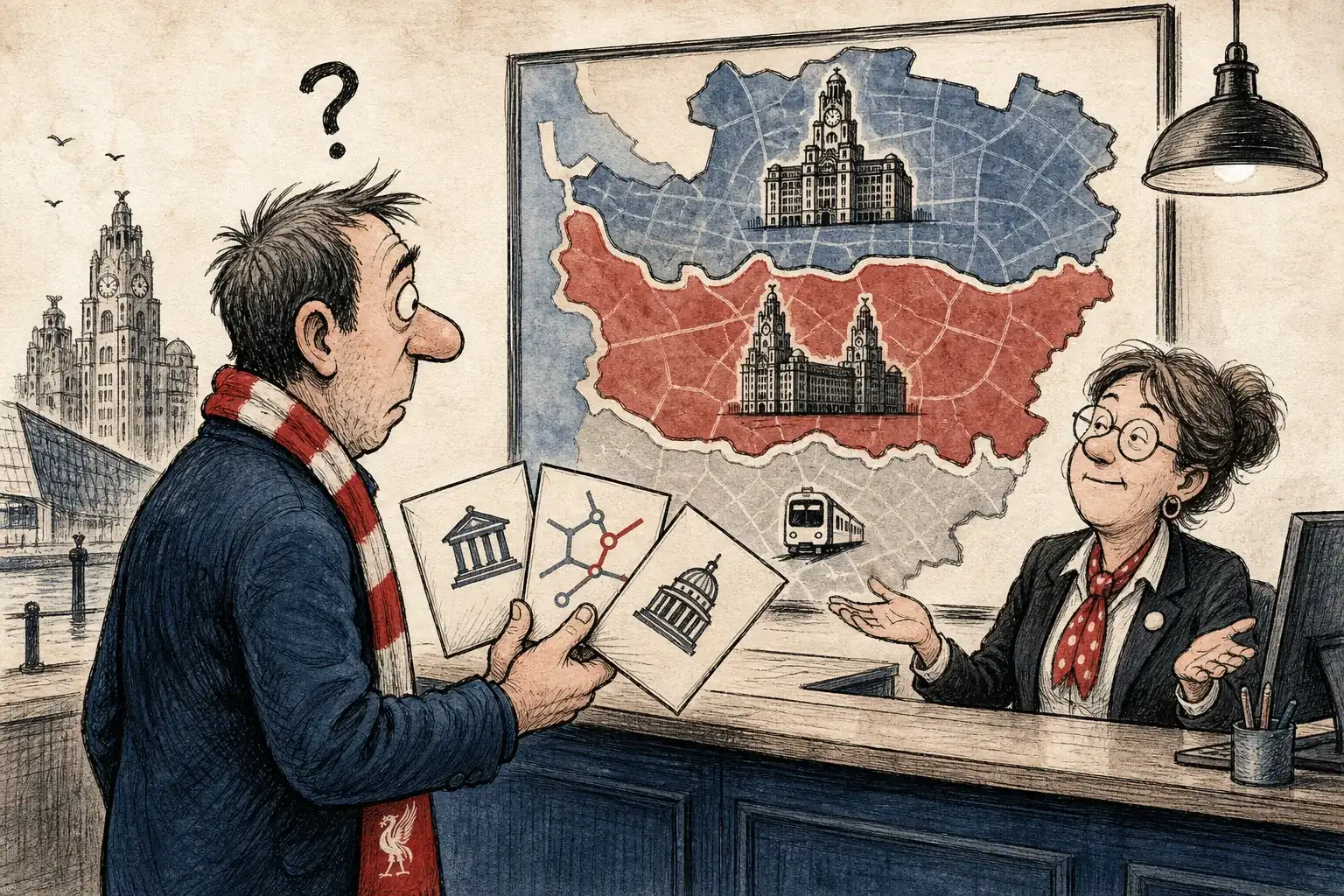
For bins, council tax, local planning and city services, start with Liverpool City Council or your ward councillor. For regional buses, trains, skills and combined-authority programmes, start with the Metro Mayor's authority.
Explainer box
- Lord Mayor for 2026/27: Councillor William Shortall.
- Leader of Liverpool City Council: Councillor Liam Robinson.
- Metro Mayor of Liverpool City Region: Steve Rotheram.
- Directly elected city mayor: role ended in 2023.
- Find your ward councillor: use the council's councillor search.
Related links
Useful links and sources
- How Liverpool Local Government Works
- What Liverpool Council Does With Your Council Tax
- Liverpool City Council: how the council works
- Liverpool City Council: Lord Mayor
- Liverpool City Region Combined Authority
- Liverpool City Region cabinet, June 2026
- Local Government Association: Liverpool peer challenge
Comments
Join the conversation with your L1Local Community account. Keep it civil and on topic.