
News
A Rainy Day in Liverpool That Doesn't Feel Like a Compromise
A realistic guide to navigating a wet afternoon in Liverpool by keeping your route tight and finding places where you can actually sit down.
There is a particular kind of Liverpool rain that makes a mockery of ambitious weekend itineraries. It rarely falls dramatically; instead, it hangs in the air, gets under your collar on Hanover Street, turns the waterfront stone a dark charcoal, and makes everyone in your group suddenly very interested in finding shelter.
The mistake most people make is trying to build a longer list of indoor activities to compensate. They schedule a museum, a gallery, a lunch spot, and a coffee run across different sides of the city centre. By mid-afternoon, nobody is enjoying the culture. They are just cold, tired, and negotiating deep puddles on Duke Street. A better approach is to keep your geographic footprint small and let one area carry the afternoon (see our guide to rainy day indoor ideas in Liverpool that still feel local).
Start Where the City Gives You Options
When the weather turns, base yourself around Bold Street, Castle Street, or the covered parts of Liverpool ONE. This boundary gives you enough dense choices that you can change plans without a twenty-minute walk in a downpour.
Bold Street is the easiest default if people are hungry or undecided. It lacks overhead cover, but the storefronts are packed tightly together. You can leave Bold Street Coffee and be inside Leaf or Maray within thirty seconds. If one place is full, the next option is right next door, avoiding the need for long, exposed walks through the Ropewalks.
Liverpool ONE is rarely the most romantic suggestion, but on a wet day, it functions exactly as it should. The partially covered walkways, accessible public toilets, and wide corridors let you pause and shelter without blocking the pavement. It is a highly practical base when the weather is at its worst.
Make the Waterfront a Bonus, Not a Punishment
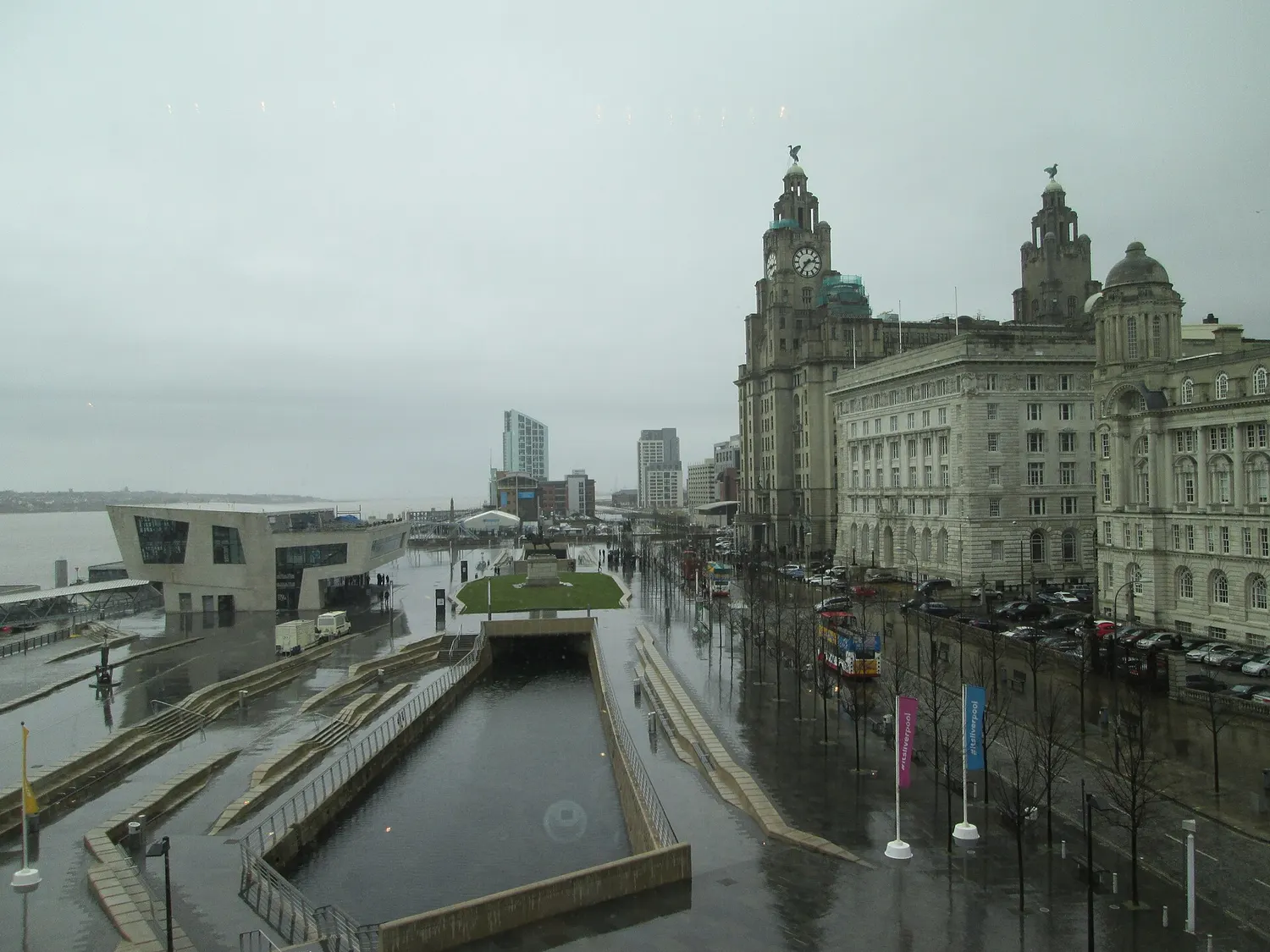
The Pier Head and waterfront are worth visiting in the rain for about ten minutes. The Mersey looks dark and the Liver Building looks imposing against grey skies. However, the wind off the estuary quickly changes the dynamic, turning a pleasant walk into a struggle against the elements.
Do not plan a long walk along the docks unless everyone is wearing waterproof gear. Walk down when the rain softens, take in the view of the Three Graces, and then head back inside. The Museum of Liverpool and the Royal Albert Dock warehouses offer immediate indoor shelter close to the water.

From the Albert Dock, you can easily walk back toward the shelter of the city centre. A short waterfront look is best followed by a hot drink in the basement of the Pen Factory on Hope Street or a sit-down meal on Castle Street.
Hope Street Is for Light Rain, Not Sideways Rain
Hope Street is excellent when the rain is light. You can walk between the two cathedrals, look at the Georgian townhouses, and stop at local cafes. It is a slower, quieter part of the city.
But during heavy rain, the wide road crossings and lack of awnings make it difficult to stay dry. Save Hope Street for days with light drizzle, a planned theatre show at the Everyman, or a lunch booking at The Quarter on Falkner Street. When the rain is heavy and coming in sideways, stick to the lower parts of the city centre.
If You Have Kids, Stop Adding Stops
Wet weather with children is about having quick exit routes. You need to know where the nearest toilet is and how quickly you can get back to a bus station or car park. Trying to drag children through three different cultural venues on a wet afternoon is a recipe for frustration.
Pick one main indoor activity, such as visiting the planetarium at the World Museum on William Brown Street, and pair it with a meal nearby. Do not add a second gallery visit just to fill the day. Nobody remembers the third rushed museum visit fondly; they just remember being wet and tired.
The Best Rainy-Day Plan Has Somewhere to Sit
The most effective rainy-day plan is to find a place where you are happy to sit for a few hours. This means finding a proper chair rather than a stool, and a venue where you do not feel rushed to vacate the table.
This could be a long lunch at Shiraz on Bold Street, a window seat in a quiet cafe, or a booth in a traditional pub like Ma Boyle's. A rainy day feels significantly better when you build a long pause into it, rather than constantly checking the weather forecast on your phone.
According to Met Office data, Liverpool receives an average of 836 millimeters of rainfall annually. Is it more productive to adjust your expectations to the local climate, or to keep trying to fight it?
Comments
Join the conversation with your L1Local Community account. Keep it civil and on topic.