Guide
Liverpool Council Tax 2026/27: Where the Money Goes
Liverpool council tax for 2026/27 explained: current bands, what the council funds, the extra charges on your bill and where to apply for support.
If your Liverpool council tax bill rose in April 2026, the first useful question is not whether the council spends it on bins. It is how much of the council budget comes from council tax in the first place.
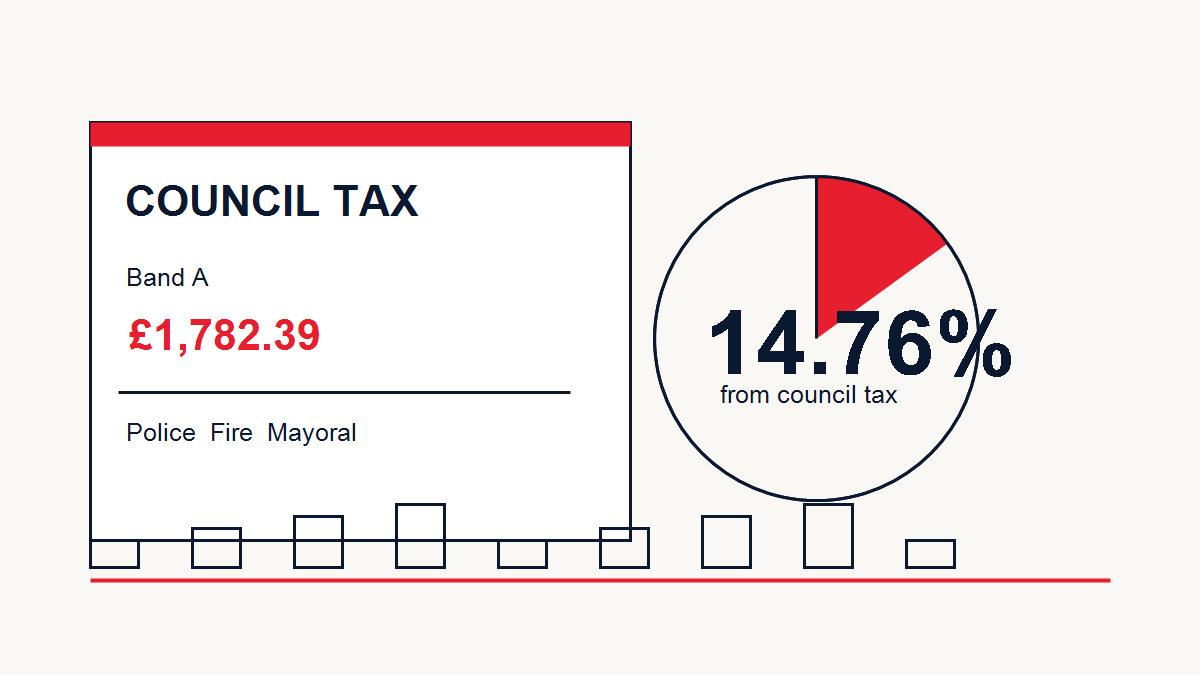
Liverpool City Council says council tax provides 14.76% of its funding in 2026/27. Government grants, business rates, fees and other income provide the rest.
What the 2026/27 bill costs and funds
- The 2026/27 charges took effect on 1 April 2026.
- A Band A home has a full annual bill of £1,782.39. Band D is £2,673.59.
- The bill helps fund council services including adult social care, children's services, homelessness support, waste collection, libraries, parks and roads.
- Part of the bill goes to police, fire and the Liverpool City Region rather than staying with Liverpool City Council.
- Discounts, exemptions and Council Tax Support can reduce what you owe.
Current Liverpool council tax bands
Your band is based on the property's value on 1 April 1991, not its value now. Liverpool City Council publishes the current charge for every band.
| Band | Full annual bill for 2026/27 |
|---|---|
| A | £1,782.39 |
| B | £2,079.46 |
| C | £2,376.52 |
| D | £2,673.59 |
| E | £3,267.72 |
| F | £3,861.85 |
| G | £4,455.98 |
| H | £5,347.18 |
These are full-year figures before any discount, exemption or Council Tax Support. Check the band and reductions shown on your own bill rather than using Band D as a guess.
What Liverpool City Council spends money on
The visible services include rubbish collection, street cleaning, parks, libraries and local roads. The largest pressures are less obvious. The council's 2026/27 budget puts around £90 million of extra funding into demand-led work including adult social care, children's services and homelessness support.
That is why a rising bill does not translate neatly into a freshly repaired pavement outside every home. Council tax goes into the wider council budget, alongside other income, and councillors agree how that budget is divided.
The extra charges on the bill
Liverpool City Council collects the whole payment, but the bill includes separate charges for Merseyside Police, Merseyside Fire and Rescue Authority and the Liverpool City Region mayoral authority. These are called precepts.
A precept is an amount another public body tells the council to collect on its behalf. Liverpool City Council does not decide how the police or fire service spends that share. The council's bill guide explains where to find the annual breakdown.
What council tax does not directly fund
- NHS services: hospitals, GPs and ambulances have separate funding.
- Motorways and major trunk roads: these are managed through national transport funding and National Highways.
- Most school running costs: schools receive major parts of their funding through government grants.
- Police spending decisions: the council collects the police precept but does not control the force budget.
Discounts and help with payment
If you are the only adult counted at your main home, the single person discount is 25%. Homes occupied only by qualifying full-time students may be exempt, subject to the council's student rules and application.
People on a low income may qualify for Council Tax Support. Apply promptly if you are struggling. Missing instalments can lead to recovery action, while an award or payment arrangement may reduce the immediate pressure.
Check your own bill
Confirm the property band, the period charged and every discount shown. If something is wrong, use your council tax account or contact the council with the reference number printed on the bill.
For the wider split between the city council and the city region, read our guide to how Liverpool local government works.

Related links and FAQs
Useful links and sources
Common questions
How much is Liverpool council tax in 2026/27?
The full annual bill is £1,782.39 for Band A, £2,079.46 for Band B, £2,376.52 for Band C, £2,673.59 for Band D, £3,267.72 for Band E, £3,861.85 for Band F, £4,455.98 for Band G and £5,347.18 for Band H. The charges took effect on 1 April 2026. These are full-year figures before any discount, exemption or Council Tax Support, so the monthly amount depends on how many instalments your bill is split across, which is shown on the bill itself.
How is my Liverpool council tax band decided?
Your band is based on the property's value on 1 April 1991, not what it is worth now. Check the band shown on your own bill rather than assuming Band D.
How much of Liverpool City Council's funding comes from council tax?
Liverpool City Council says council tax provides 14.76% of its funding in 2026/27. Government grants, business rates, fees and other income provide the rest.
What are the extra charges on a Liverpool council tax bill?
The bill includes separate charges, called precepts, for Merseyside Police, Merseyside Fire and Rescue Authority and the Liverpool City Region mayoral authority. Liverpool City Council collects the whole payment but does not decide how those bodies spend their share.
Can I get a discount on Liverpool council tax?
If you are the only adult counted at your main home, the single person discount is 25%. Homes occupied only by qualifying full-time students may be exempt, subject to the council's student rules and an application. People on a low income may qualify for Council Tax Support, and applying promptly matters because missing instalments can lead to recovery action.
Comments
Join the conversation with your L1Local Community account. Keep it civil and on topic.