Liverpool City Council says its parking fees have been brought into line with comparable UK cities. L1Local checked the hours as well as the prices. Liverpool's city-centre on-street parking remains chargeable until 11pm, later than the standard central charging periods in the other cities examined here. The extended hours have also generated an estimated £1.1 million in additional revenue, according to a Freedom of Information response reported by the Local Democracy Reporting Service.
At 10.30pm, a driver in a Liverpool city-centre on-street bay can still be paying the council to park.
In Manchester, normal council on-street charging has finished. The same is true in Birmingham, Sheffield, Cardiff, Edinburgh and Belfast. Bristol, Leeds and Nottingham run later, but their representative central charging periods end at 10pm.
Liverpool continues until 11pm.
The city's Controlled Parking Zone operates from 7am to 11pm every day. In the Inner Zone, an evening stay of up to five hours between 6pm and 11pm costs £10.60 under the council's current tariff. Liverpool City Council's live Inner Zone page confirms both the hours and prices.
The longer charging period is also bringing in money. A Freedom of Information response obtained by Liverpool Business Leaders found an estimated £1.1 million in additional revenue from parking transactions that fell wholly or partly within the new chargeable period, according to Local Democracy Reporting Service reporting published on 6 October 2026. The same report says more than 143,000 tickets were purchased between 1 July 2025 and 30 June 2026.
That is revenue, not profit.
And it is only one part of the scrutiny question.
Liverpool City Council has repeatedly defended its parking changes by comparing the city with other major UK cities. L1Local has therefore checked the council's comparison from the other direction: not just what the hourly tariffs are, but how long motorists are charged, what the extra hours raise, who absorbs the cost, and what evidence the council has published to show the policy is delivering what it promised.
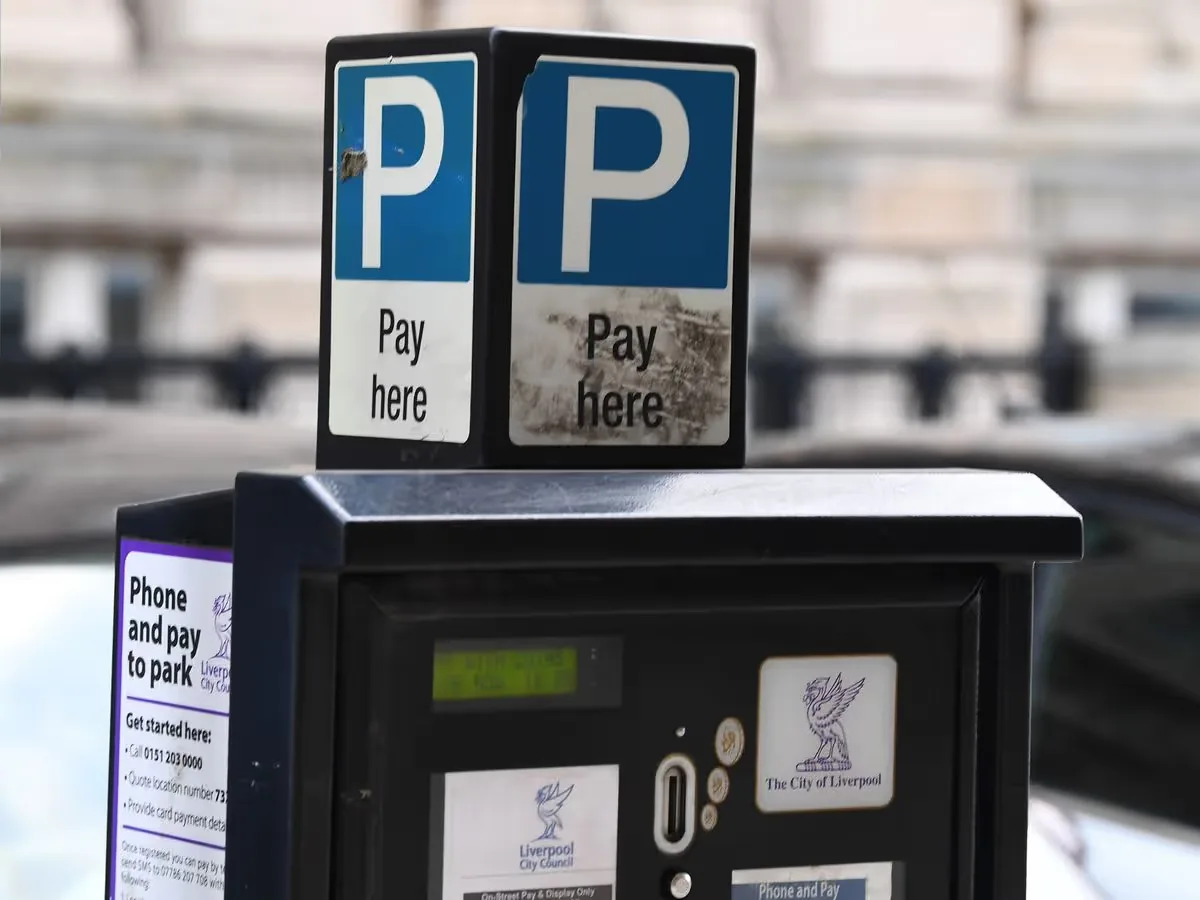
A Liverpool City Council pay-and-display machine. City-centre on-street charging now runs until 11pm.
Liverpool parking charges compared with other UK cities
There is no perfect national parking comparison.
Councils divide city centres into different zones. Maximum stays vary. Some switch to a cheaper evening tariff, while others continue hourly charging. Private car parks operate separately.
The table below compares representative council-controlled central on-street parking, using current official pages.
City
Representative central charging hours
Evening position
Official source
Liverpool
7am-11pm daily
Inner Zone: up to five hours from 6pm to 11pm costs £10.60
This comparison does not show Liverpool is the UK's most expensive city for parking.
Edinburgh's current council tariff reaches £9 an hour on streets including George Street and St Andrew Square. Birmingham's Inner Zone costs £14.50 for four daytime hours. Those figures are higher than Liverpool in those specific scenarios.
What stands out in this comparison is the clock.
Liverpool is the only city in this ten-city sample with representative central on-street charging continuing until 11pm.
That is the point the council's own "in line with other cities" argument does not answer.
The council's Outer Zone tariff is lower, with a maximum £8.50 charge for an evening stay of up to five hours in long-stay pay-and-display bays.
Blue Badge holders can park free in on-street pay-and-display bays, according to the council.
For motorists who used to rely on free on-street parking after 6pm, the change is direct. An evening visit or shift that previously fell outside the charging period can now carry a parking charge until 11pm.
For people who drive to several late shifts a week, that is a recurring employment cost rather than an occasional night-out expense.
The decision: what was approved and by whom
The current system was not introduced administratively without a political decision.
Liverpool City Council's official announcement on 1 May 2025 says the changes were approved by the council's Highways and Spaces Representation Committee. The decision extended the Controlled Parking Zone from 8am-6pm to 7am-11pm, Monday to Sunday.
The same council announcement says the changes would come into force by mid-July 2025 and that the committee approval included a review after 12 months. Read the council's approval announcement.
That review commitment is now important.
By October 2026, the 12-month point has passed whether measured from the May 2025 approval or the mid-July 2025 implementation timetable. L1Local has not located a published 12-month review in the council parking material checked for this article.
That does not prove no internal review exists. It does mean the published evidence currently available to residents does not answer the most obvious accountability question: what did the first year show?
The council says its fees were brought 'in line' with other cities
Liverpool City Council's current parking myth-buster says its on-street fees were increased to bring Liverpool "in line with similar sized cities in the UK".
The page says that before the changes Liverpool generated £3.839 million in net parking income in 2023/24, compared with an average of £10.603 million across a group comprising Belfast, Birmingham, Bristol, Cardiff, Edinburgh, Glasgow, Leeds, Liverpool, Manchester, Newcastle, Nottingham and Sheffield.
The council's May 2025 approval announcement also says it controlled 28% of parking across the city and had, until then, charged an average 47% less than private operators and other Core Cities for equivalent parking provision.
Those figures are useful evidence of the council's stated case.
They should not be presented as independently verified league-table figures.
The council pages do not publish the full city-by-city calculation behind the £10.603 million average or the detailed workings behind the 28% and 47% claims. L1Local therefore treats them as council figures, rather than independent findings.
There is also a wording inconsistency.
The May 2025 council announcement describes Liverpool as having the lowest net parking income among the Core Cities. The October 2026 myth-buster describes the same £3.839 million figure as the second-lowest among its named city group.
That may reflect a different comparison set, but the published pages do not explain the change.
The £3.839m comparison predates the 11pm policy
The council's £3.839 million figure is from 2023/24.
That matters because the 7am-11pm policy was approved in 2025.
The figure therefore describes Liverpool's parking finances before the extended evening hours started producing additional revenue.
It cannot show where Liverpool now sits against the comparison cities.
For a current comparison, the council would need to publish equivalent post-change figures using the same accounting definition for every city.
Follow the money: £1.1m is revenue, not profit
The latest FOI figure gives the debate a new financial anchor.
The Local Democracy Reporting Service reported that Liverpool Business Leaders received a council FOI response estimating £1.1 million in additional revenue from parking wholly or partly within the new chargeable period.
The report says:
more than 143,000 tickets were bought between 1 July 2025 and 30 June 2026
the £1.1 million estimate was calculated using the tariffs applying when each transaction was made
£801,000 was generated in the 6pm-7am period alone
The underlying FOI disclosure has not been located on Liverpool City Council's website by L1Local. Before publication, the strongest version of this article would obtain and link the original response from Liverpool Business Leaders or the council.
That matters because the headline £1.1 million figure does not tell readers:
how much extra enforcement cost
how much was spent changing signs, machines or systems
what proportion became a year-end parking surplus
exactly where any resulting surplus was spent
Until those numbers are set beside the £1.1 million, it should not be described as profit.
What the law means in plain English
Council parking money is not simply another unrestricted pot of cash.
In plain English, that means the council has to show what parking brought in, what the service cost, and what happened to any surplus. The law limits the purposes for which a surplus can be used.
The Department for Transport's statutory guidance on civil parking enforcement goes further on transparency. It says enforcement authorities should publish an annual report within six months of the end of the financial year, including a breakdown of parking income and expenditure and how any surplus was spent.
So the useful financial question is not:
"Did the council make £1.1m?"
It is:
"After the cost of running and enforcing the extended scheme, what was the surplus, and where did it go?"
Liverpool's current myth-buster says parking income is used to improve parking and highways. It also says the council has hired 37 new Civil Enforcement Officers, taking the total to 75, with plans to reach 100.
Those staffing numbers are verifiable as a council statement. The page does not attach a cost breakdown showing how much of the new revenue funds those posts.
Who pays, who could benefit, and who is accountable
The policy affects different groups in different ways.
Stakeholder
What the evidence shows
Accountability point
Motorists parking after 6pm
They face a direct charge in bays that were previously outside the evening charging period
Current tariffs and hours are set and published by Liverpool City Council
Late-shift workers who drive
Consultation respondents and hospitality workers have described the change as an added cost of getting to work
The scale of the impact has not been quantified citywide
Restaurants, pubs, theatres and other evening businesses
Businesses told the consultation they feared lost visits and higher staff costs
No published evidence yet isolates the policy's effect on evening turnover or footfall
Residents, pedestrians and disabled road users
The council says stronger evening enforcement should reduce obstructive and illegal parking and improve accessibility
The council needs before-and-after evidence to show whether those outcomes occurred
Blue Badge holders
On-street pay-and-display parking remains free for valid Blue Badge holders
They are not directly exposed to the pay-and-display tariff, though other restrictions still apply
Liverpool City Council Parking and Highways
Collects the revenue, operates enforcement and publishes the rules
Must account for parking income and expenditure and should publish performance reporting
Highways and Spaces Representation Committee
Approved the policy and a 12-month review
The promised review is the clearest political accountability checkpoint
The courts
A legal challenge remains unresolved in the latest published update located
The court, not campaigners or the council, will determine any legal findings
There is no single group that can yet be described as the proven "winner".
If the policy has increased space turnover, reduced illegal parking and improved access, residents, businesses and road users may have benefited.
If it has reduced evening visits or imposed significant costs on workers and customers, some city-centre businesses and staff may have lost out.
The missing piece is measurable before-and-after evidence.
89% of consultation respondents opposed the 11pm hours
Asked whether they agreed with changing the Controlled Parking Zone hours to 7am-11pm Monday to Sunday:
89% were against
8% were in favour
3% neither agreed nor disagreed
Among respondents categorised as residents, 72% opposed the proposal.
Among the 16 businesses that responded, 81% opposed it.
Seven of the nine responding strategic stakeholders were also against.
Those figures do not mean 89% of Liverpool residents opposed the scheme. It was a self-selecting consultation, not a representative poll.
But the result is still a material part of the decision record.
The same council consultation page records concerns that the charges could push some evening visitors elsewhere, increase costs for hospitality workers and create problems for people who could not rely on public transport at the end of a shift.
The council also recorded support for discouraging car use, improving enforcement and shifting more journeys towards public transport.
The consultation did change parts of the scheme
The council did not adopt every proposal unchanged.
Its consultation response says it:
dropped the proposed blanket two-hour maximum stay across the whole Controlled Parking Zone
dropped the proposed internal sub-zones
increased maximum stays around Hope Street
moved towards more shared-use bays after 6pm
committed to increased enforcement
proposed longer opening at Mount Pleasant car park
The 7am-11pm charging period remained.
This matters because the council's position is not that the consultation result was binding. Its current myth-buster explicitly says a consultation is not a referendum and is used to gather evidence for decision-making.
The scrutiny question is therefore not whether the council was legally required to follow the 89% result.
It is what evidence justified retaining the 11pm finish despite that level of opposition, and what the promised 12-month review found once the policy had operated in practice.
What the council says the longer hours are meant to achieve
The council's May 2025 approval announcement says the policy was intended to address:
congestion
illegal and inconsiderate parking
reduced access for residents and businesses
road safety
air quality
poor turnover of spaces
Its current parking pages say extended hours should stop spaces remaining occupied all night and allow officers to tackle illegal and inconsiderate parking later into the evening.
Those are policy objectives, not proven outcomes.
That wording matters.
The article should not say the policy "has improved road safety", "has reduced congestion" or "has improved air quality" unless the council publishes evidence demonstrating those changes.
The current public material establishes what the council intended to achieve.
It does not, by itself, establish that the outcomes occurred.
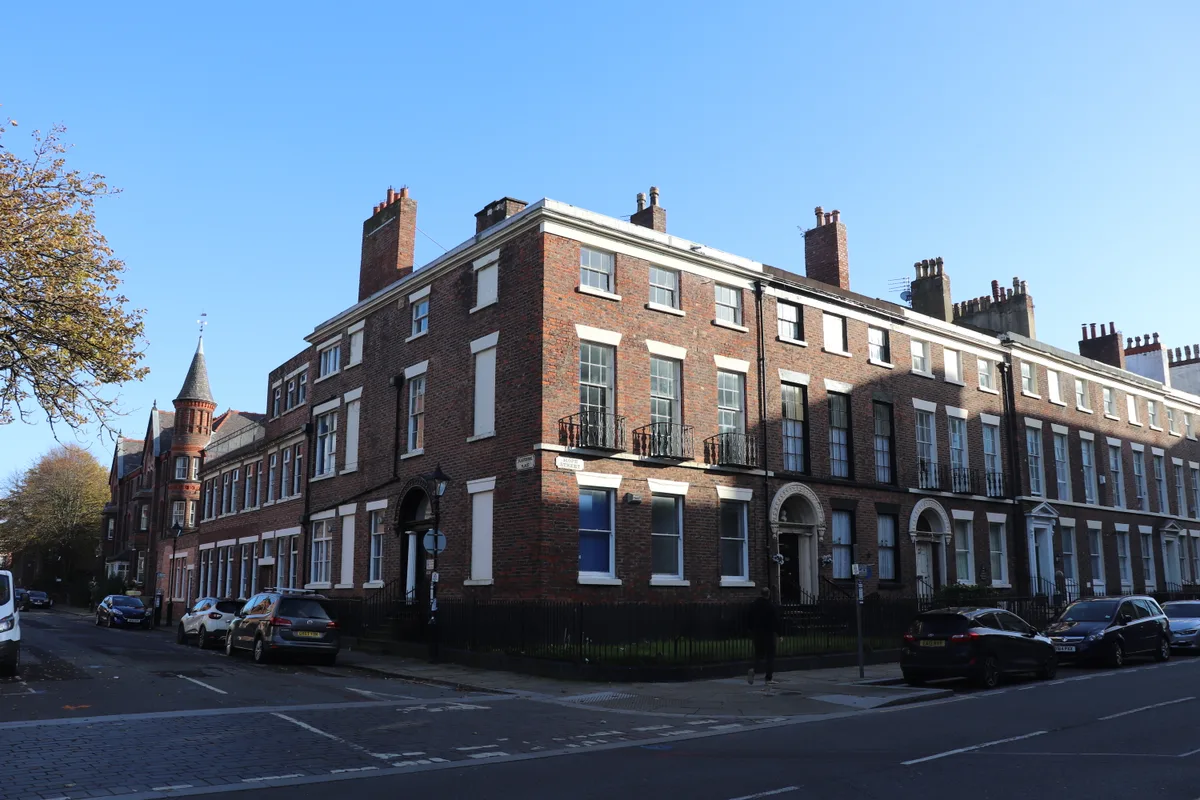
Hope Street at Blackburne Place. Hope Street recorded the most penalties in the figures ITV reported. Photo: Andrzej Otrębski, CC BY-SA 4.0, via Wikimedia Commons.
More than 7,000 penalties show enforcement increased, not that the problem was solved
Hope Street had the highest number in the figures reported by ITV, followed by locations including Duke Street and Old Hall Street.
That is evidence of increased enforcement activity.
It is not evidence that illegal parking, congestion or access problems fell overall.
The Department for Transport says the purpose of civil parking enforcement is compliance. A successful scheme should therefore be judged against parking behaviour and access, not simply how many penalties it issues.
The stronger test would compare:
parking occupancy before and after the change
average length of stay and space turnover
illegal and obstructive parking incidents
complaints and enforcement requests
PCNs over time, including whether they fall as compliance improves
Those figures have not been published together in the council material located for this article.
Has the policy damaged Liverpool's evening economy?
There is evidence of individual cost and concern.
The council consultation records objections from hospitality workers and businesses. ITV reported businesses around Hope Street saying the changes affected staff, customers and performers. MerseyNewsLive reported similar concerns in October 2026.
What is not established is the larger causal claim that the policy has damaged Liverpool's evening economy as a whole.
Liverpool BID Company's current Data Hub says city-centre spending in July 2026 was 1.2% below July 2025, and spending from January to July 2026 was 2.7% below the same period a year earlier.
Those figures cannot isolate parking.
Spending changes can be affected by household finances, inflation, weather, events, tourism, business openings and closures, public transport and many other factors.
A proper test of the parking policy would need evening-specific data for the areas and businesses most exposed to motorists between 6pm and 11pm.
Until that exists, two claims should be avoided:
that the parking policy has proved harmful to the entire evening economy
that city-centre footfall or spending data proves the policy has had no harmful effect
Neither conclusion is supported by the evidence currently published.
The legal challenge is unresolved
A group led by local businessman Alfie Hincks is pursuing a legal challenge to the parking changes.
The challengers allege potential breaches of the Road Traffic Regulation Act 1984 and the Equality Act 2010. They argue that revenue generation was given improper priority and that the policy did not adequately consider the effect on women working in the night-time economy.
Those are allegations by the challengers, not court findings.
The latest public update L1Local located is dated 10 August 2026. Local Government Lawyer reported that Liverpool City Council withdrew an application to have the case struck out after the claimant corrected procedural errors.
The council said it was confident it had complied with the relevant legal requirements and that it would be for the court to decide whether the claim should proceed.
No judgment located for this article establishes that the parking policy is unlawful.
The council's own pages currently show different prices
There is also a straightforward public-information problem.
Liverpool City Council's live Inner Zone parking page lists the current maximum tariff as £10.60.
The council's parking myth-buster, dated 3 October 2026, still states £10 as the four-hour maximum and says prices "may rise slightly in April".
Those council-owned pages do not agree.
L1Local has used the operational parking page because it is the live council page giving motorists current tariffs.
For a system backed by penalty notices, all council-facing guidance should show the same current prices.
What Liverpool's 11pm policy still needs to prove
The policy can now be assessed against its own stated objectives.
The council has enough data to answer a series of specific questions.
Has parking turnover improved?
The council said the extra hours would stop spaces being occupied all night and give more people a chance to park.
Publish occupancy, average stays and turnover before and after the change.
Has illegal and obstructive parking fallen?
The council cited unsafe pavement parking and inconsiderate parking.
Publish comparable incident, complaint and enforcement data for the periods before and after the extension.
What did the extra enforcement cost?
The FOI figure is gross additional revenue.
Publish the cost of extra staffing, administration, signs, machines, payment systems and other implementation costs attributable to the extension.
What surplus was left, and where did it go?
The parking account should show income, expenditure and any surplus.
Publish the figures in a way that lets residents follow the money from charge to expenditure.
What happened specifically between 6pm and 11pm?
Whole-day city-centre statistics cannot answer an evening-parking question.
Publish evening occupancy, footfall or other available measures broken down by relevant areas and times.
What exactly is the other-city benchmark?
Publish the city-by-city workings behind the £10.603 million average, 28% parking-control figure and 47% price comparison.
That would allow the council's claims to be tested rather than simply repeated.
What happens next
The promised 12-month review should now be public: Liverpool City Council's 1 May 2025 approval announcement says the committee required a review after 12 months. The policy was due to take effect by mid-July 2025. As of 7 October 2026, L1Local has not located a published review in the council material checked for this article. The immediate accountability question is when that review will be published and what data it contains.
The legal challenge is waiting on the court process: the latest public update located is 10 August 2026, when the council withdrew its strike-out application and said the court would decide whether the claim should proceed. The source does not give a next hearing date. Any court listing or judgment would materially change the legal section of this article.
The 2025/26 accounts face a 31 January 2027 audit deadline: Liverpool City Council has published unaudited 2025/26 accounts and says the statutory deadline for the final audited accounts is 31 January 2027. Separately, Department for Transport guidance says parking-enforcement authorities should produce an annual parking report within six months of the end of each financial year. L1Local should check both for a clearer breakdown of parking income, costs and surplus. Liverpool City Council statement of accounts.
No new public consultation deadline on the 7am-11pm city-centre policy has been located for this article.
Liverpool is not necessarily the most expensive. It does charge later
The evidence does not support the simple claim that Liverpool is Britain's most expensive city for on-street parking.
It supports something more precise.
Among the ten cities checked by L1Local using current official parking information, Liverpool has the latest representative central on-street charging finish at 11pm.
The council says its fees were brought into line with comparable cities. Its own published comparison focuses on prices and parking income.
The hours tell another part of the story.
The £1.1 million FOI estimate shows the extended period is financially material. The consultation shows the 11pm proposal faced heavy opposition among respondents. The committee approval shows a 12-month review was promised.
What the public record still does not show with the same clarity is whether the extra hours delivered the improvements used to justify them, what the full net financial return was after costs, and what measurable effect the policy had on evening workers and businesses.
Those are no longer hypothetical questions.
After more than a year of 11pm charging, they are the evidence the council should be able to publish.

Comments
Join the conversation with your L1Local Community account. Keep it civil and on topic.