Liverpool's weekly food waste collections are still being rolled out across the city. There is no published citywide street-by-street timetable showing when every household will receive the new grey food waste caddy.
Liverpool City Council says it will write to households around six weeks before collections start in their area. Homes joining the service receive a small kitchen caddy, a larger grey outdoor caddy and liners. Collections are free and take place every week.
When food waste collections start
When you get it: The council writes to households roughly six weeks before collections start in their area. There is no public street-by-street rollout calendar.
What you receive: A 5-litre indoor kitchen caddy, a 23-litre grey outdoor caddy and a starter roll of liners. Both are free.
Collection frequency: Collected weekly on your regular collection day.
What goes inside: All raw and cooked food waste, leftovers, bones, dairy, peelings, tea bags and pet food. No packaging or liquids.
If your area has not joined: Keep putting food waste into your purple household waste bin until your street joins the scheme.
When will your area get a grey food waste bin?
The practical answer is that you need to wait for a letter from Liverpool City Council.
The council's food waste collection service has reached many parts of Liverpool but continues to be introduced in phases. The council does not publish a complete list of streets or postcodes with future start dates.
The rollout process follows four steps:
The council sends a letter around six weeks before your area's collections begin.
You receive an information pack, indoor caddy, outdoor caddy and liners.
Once the service is active for your address, you can use the council's bin collection postcode checker to confirm your collection schedule.
Put the outdoor food waste caddy out on the collection day shown for your property.
If you have not received a letter or caddies, the absence of a public rollout date does not mean your street has been missed. The council is still introducing the service area by area.
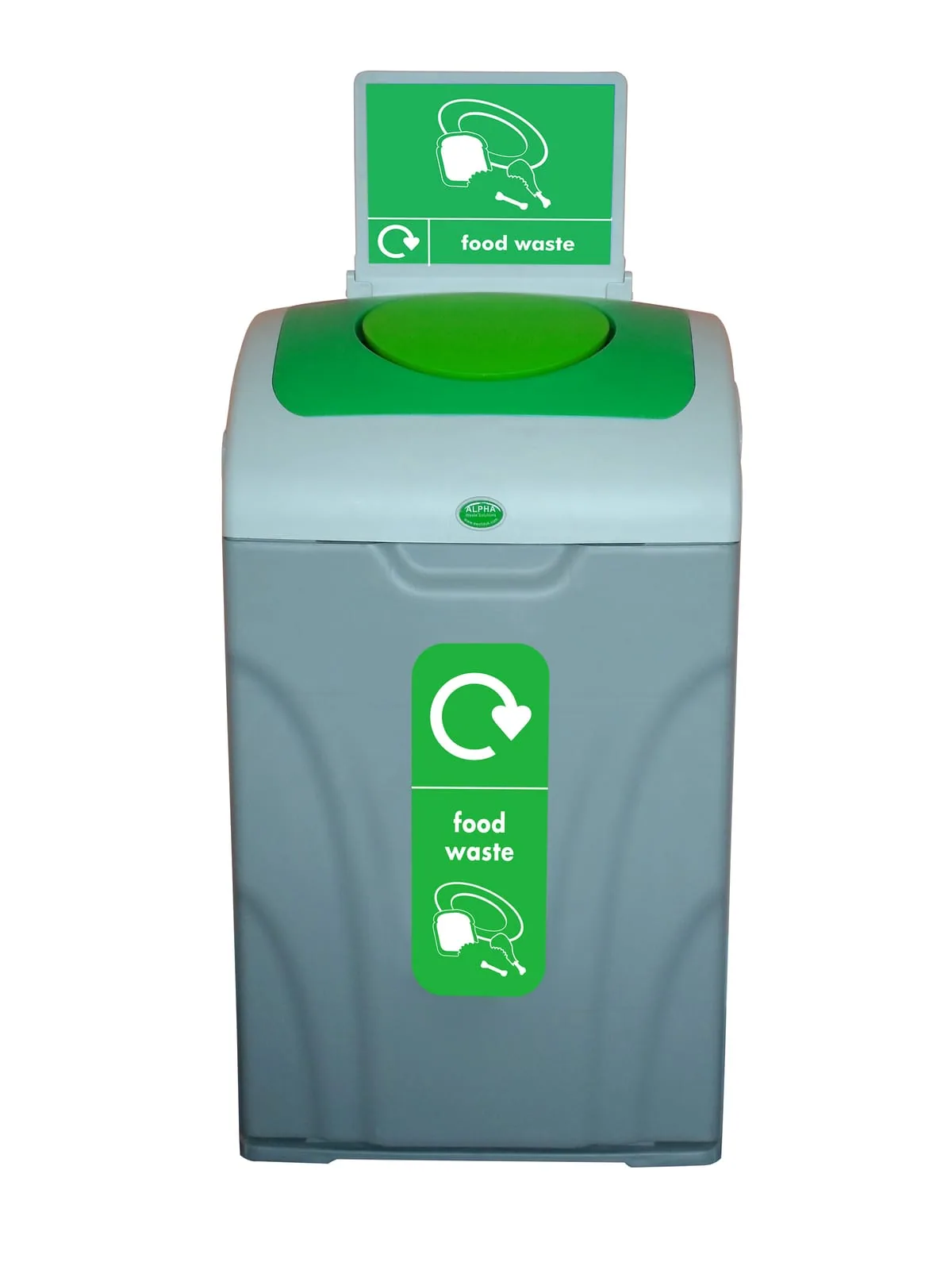
The grey bin is a 23-litre outdoor caddy
A domestic food waste collection container. Organic waste is collected weekly and sent for anaerobic digestion. Photo: Gardneraws (CC BY-SA 3.0).
Despite sometimes being described simply as a new grey bin, Liverpool households are not being given another full-size wheelie bin.
The council provides two containers:
5-litre indoor caddy: 200mm high, 195mm deep and 265mm wide.
23-litre outdoor caddy: 393mm high, 358mm deep and 325mm wide.
The smaller container sits on your kitchen worktop or under the sink. Filled liners are tied and transferred into the larger outdoor caddy, which is presented at the kerbside for collection.
That distinction matters if you have limited storage space. The outdoor container is considerably smaller than Liverpool's standard purple, blue or green wheeled bins.
What can go in Liverpool's grey food waste caddy?
The separate collection takes most ordinary household food waste, including:
Leftovers and plate scrapings
Raw and cooked meat, including bones
Raw and cooked fish, including bones
Cheese and other dairy products
Eggs and eggshells
Tea bags and coffee grounds
Rice, pasta and beans
Bread, cakes and pastries
Fruit and vegetables
Vegetable and fruit peelings
Out-of-date or mouldy food
Pet food
Do not put food packaging into the caddy. The council also excludes liquids such as milk, cooking oil, melted fat, general household rubbish and anything that is not food waste. Packaging must be separated from food before disposal.
What should you do if the grey caddy has not reached your street?
If your address has not yet joined the separate food waste collection, follow Liverpool City Council's instructions for your existing bins.
The council's guide to what goes in each Liverpool bin lists food waste, including pet food, as accepted in the purple household waste bin until your area joins the food collection scheme.
Once the separate food waste collection begins at your property, the new caddy becomes the container provided specifically for this material. Our companion guide on Liverpool bin collections covers the wider purple, blue and green bin system, collection times, missed bins and garden waste charges.
What if your area has started collections but your caddy is missing?
There is a specific process for households that are in an active rollout area but have not received their containers.
Liverpool City Council advises residents that they will be told when to expect delivery of the indoor and outdoor caddies. If they have not arrived within three days of the expected delivery date, residents can submit a food waste caddy request form.
The form allows you to request either an external or internal food caddy. It is designed for replacement or missed deliveries in active zones, rather than bringing forward the rollout to an area that has not yet joined.
Weekly collections and replacement liners
The food waste service is free. Collections take place weekly on the days associated with your normal blue and purple bin collections. Once your food caddy is delivered, use the online postcode checker to confirm your exact day.
Liverpool supplies compostable liners for the kitchen caddy. When your roll is nearly empty, tie an empty liner to the handle of your outdoor caddy on collection day. Collection crews will leave a fresh roll. You can also submit an online caddy liner request form if you need extra liners.
What happens if you use communal bins?
Arrangements differ for households using Liverpool's communal bin stations rather than individual wheeled bins.
Liverpool had around 850 communal bin collection stations when the council published an update in July 2026. Those stations provide dry recycling and household waste facilities, and the council confirmed they are scheduled to receive separate food waste facilities as part of future upgrades.
Residents who use communal bins will be contacted directly with instructions before food waste facilities are installed in their area. Living in a terraced street served by communal hubs means you will use the communal food waste station rather than an individual 23-litre outdoor kerbside caddy.
How Liverpool's rollout started
Liverpool began the first phase of separate weekly food waste collections on 22 September 2025 across around 15,000 properties in 15 wards, including Childwall, Garston, Fazakerley West and West Derby.
A second group of approximately 15,000 properties joined in November 2025, bringing the total to 29,306 properties across 25 electoral wards by early 2026. A third phase adding another 15,000 properties began in February 2026.
Those earlier phases do not provide a fixed timetable for remaining streets. Liverpool City Council continues to roll out the service in stages, contacting households around six weeks before their street goes live.
Why Liverpool introduced separate food waste collections
Liverpool began its rollout ahead of national Simpler Recycling rules. Under GOV.UK Simpler Recycling guidance, English councils are required to provide weekly food waste collections to households, subject to transitional arrangements.
When the first phase was announced, council research found that roughly a third of the material placed into Liverpool's purple bins was food waste. Separating food waste diverts tonnes of organic material from disposal.
What happens to the food after collection?
Liverpool's separately collected food waste is sent for anaerobic digestion. In this process, microorganisms break down organic matter in sealed, oxygen-free tanks.
The process generates biogas (used as renewable energy) and digestate, a nutrient-rich biofertiliser used on agricultural land. This keeps organic waste out of the residual purple-bin waste stream and cuts landfill emissions.
When will my area get a grey food waste bin in Liverpool?
Liverpool City Council writes to households roughly six weeks before collections start in their area. There is no published street-by-street rollout calendar, so wait for the letter.
Is Liverpool's food waste collection free?
Yes. The containers and the weekly collection are free. Homes joining the service get a 5-litre indoor kitchen caddy, a 23-litre grey outdoor caddy and a starter roll of liners.
What can go in Liverpool's grey food waste caddy?
Raw and cooked food waste: leftovers, meat and fish including bones, dairy, eggs and eggshells, tea bags and coffee grounds, rice, pasta, bread, fruit and vegetable peelings, out-of-date food and pet food. Do not put in packaging or liquids such as milk, cooking oil or melted fat.
What do I do with food waste until my street joins the scheme?
Keep putting it in your purple household waste bin until your street joins.
What if my food waste caddy has not arrived?
If your area has started collections and the caddies have not arrived within three days of the expected delivery date, submit the council's food waste caddy request form for an indoor or outdoor caddy.
How do I get more food waste liners in Liverpool?
When your roll is nearly empty, tie an empty liner to the handle of your outdoor caddy on collection day and the crew will leave a fresh roll. You can also submit the council's online caddy liner request form.
Comments
Join the conversation with your L1Local Community account. Keep it civil and on topic.
Liverpool this week
New places, local news, things to do and our latest guides. Weekly.
Comments
Join the conversation with your L1Local Community account. Keep it civil and on topic.