Check your next purple, blue, green or food-waste collection with Liverpool City Council's official address checker. This guide covers collection rules for Liverpool City Council residents, how to report missed bins, green-bin subscription costs and accepted items.
Liverpool bins: check your collection day
Because bin collection days are set address by address, there is no single citywide calendar for Liverpool. Check your schedule directly using the official council tool:
Note on borough jurisdiction: These rules apply strictly to addresses within Liverpool City Council. If you live in Sefton, Wirral, Knowsley, St Helens or Halton, check with your respective local council as collection systems and bin colours differ.
Quick answers for Liverpool bin collections
Need to know
Liverpool rule
Check my bin day
Enter your postcode in the official council checker and select your address.
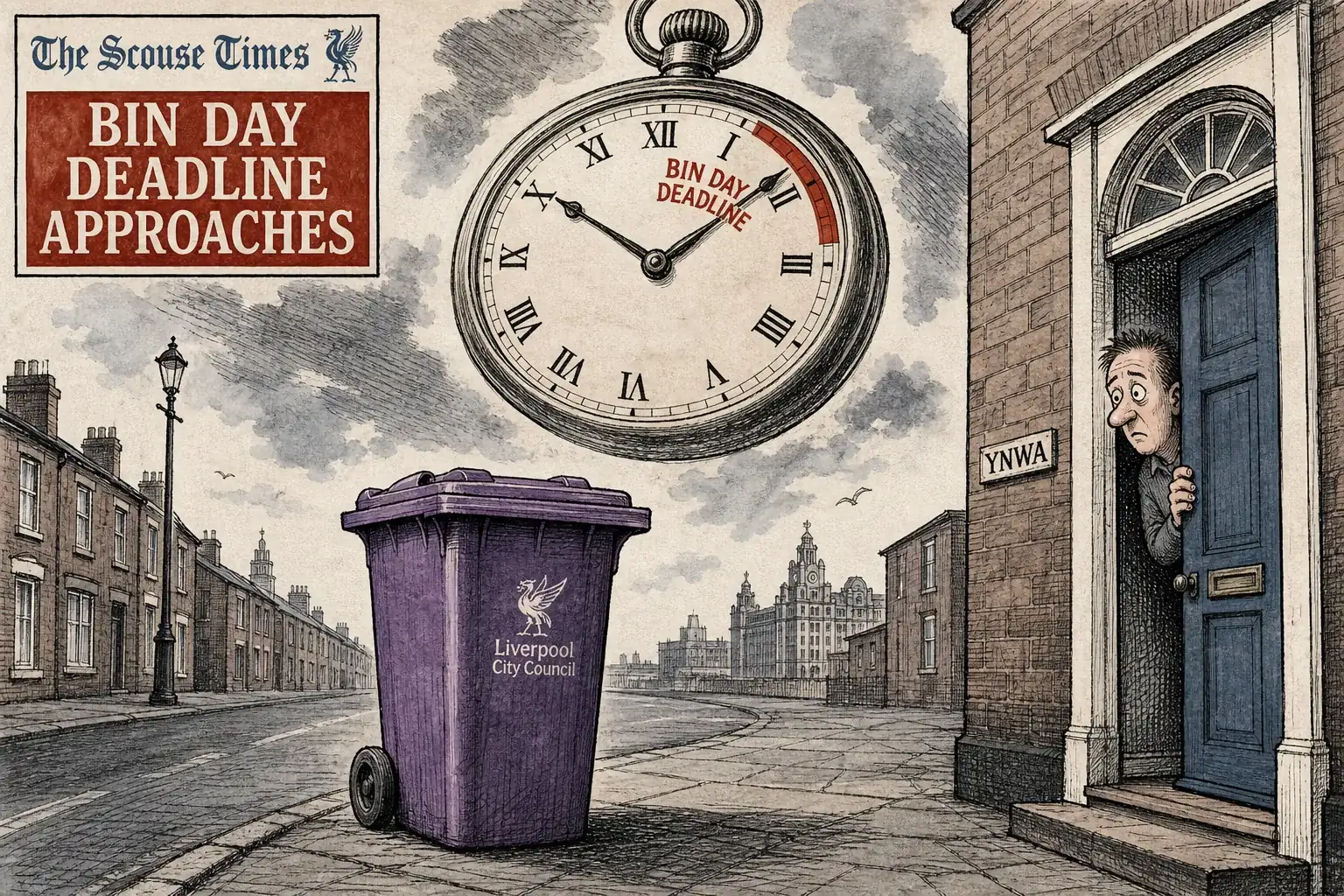
Put bins out by
6.30am on collection day, lid closed.
Missed purple, blue or food bin
Report from 2pm on collection day, and by 2pm on the next working day.
Bank holidays
Normally collected on your usual day.
Purple bin
Household waste that cannot be recycled.
Blue bin or bag
Loose recycling. No plastic bags.
Green bin
Optional paid garden-waste service.
Grey food-waste caddy
Free weekly collection where the rollout has reached your address.
Last checked: 5 October 2026. Missed-bin deadlines, green-bin rules and recycling-centre hours checked against Liverpool City Council guidance.
If your bin should have been emptied today, go straight to report a missed bin. Purple, blue and food-waste bins can be reported after 2pm on the scheduled day and by 2pm on the next working day.
Liverpool's bins and what each one is for
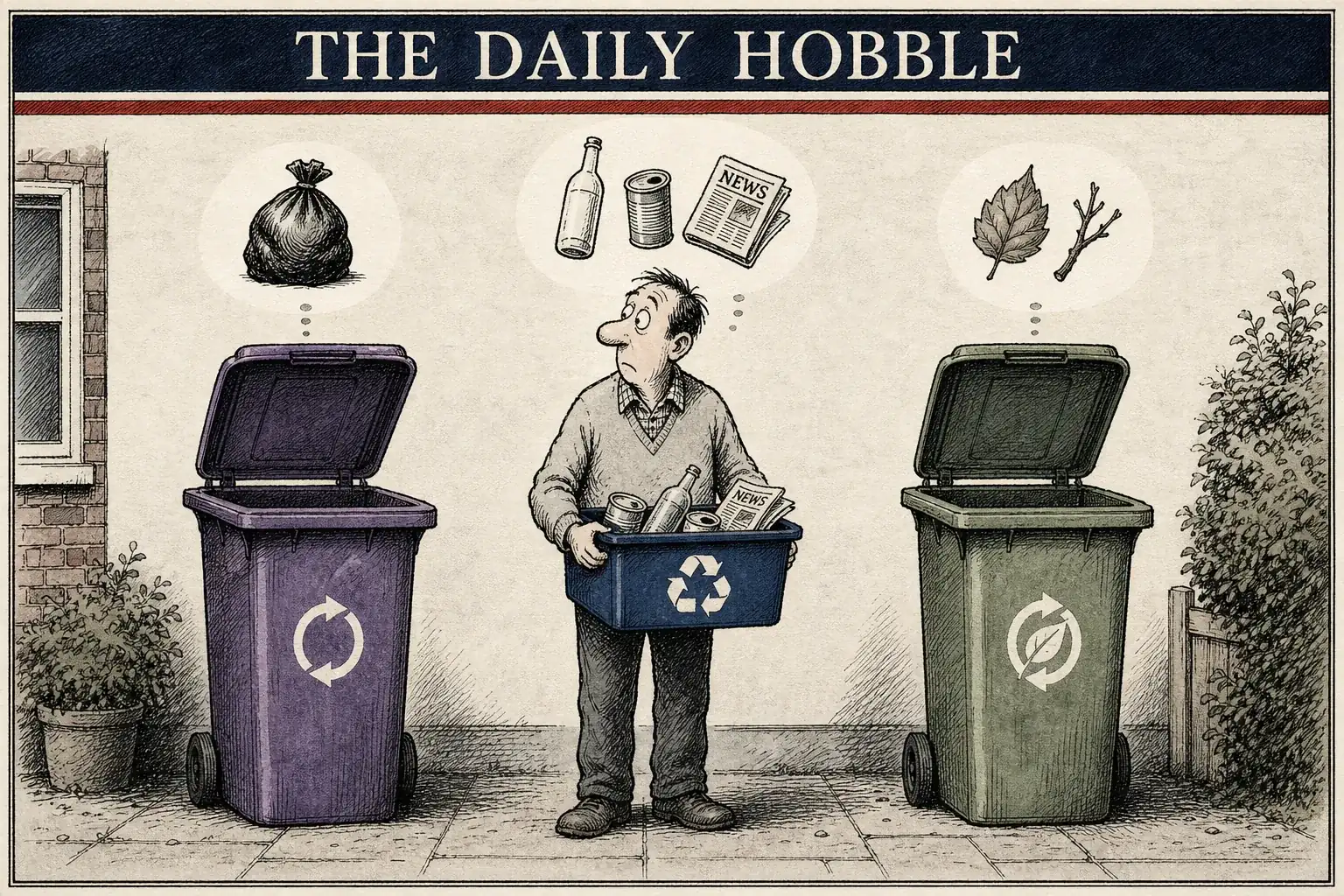
Liverpool's four household bins, what they are for and the key rule for each
Bin
Used for
Key rule
Purple
General household waste
Food waste also goes here until the separate service reaches your address.
Blue bin or bag
Household recycling
Put items in loose. No plastic bags.
Green
Garden waste
Paid service. Fortnightly from late February to late November.
Grey food-waste caddy
Food scraps and leftovers
Free and weekly where the rollout has reached your address.
Put bins out before 6.30am on collection day with the lid closed. Details on each bin are further down.
Is there a Liverpool bin collection calendar for 2026?
No. There is no single Liverpool-wide calendar that shows which bin goes out on which day for every household. Collection days are set by address, so two nearby streets can have different schedules.
Use the council's postcode checker to see the dates attached to your property. Do not rely on a fixed city timetable published elsewhere.
Read the next listed collection dates for each bin.
Bins and bags must be out before 6.30am. Wheeled bins should be placed at the kerbside with the handles facing the road. If you live in a terraced house, the council says bins should be placed at the nearest end of the passage or alley.
Recycling bags should be left on the pavement by the front door.
Liverpool bin collections on bank holidays
Normally, no. Liverpool City Council says waste and recycling are collected as normal on bank holidays, so use your regular collection day.
For Christmas and New Year, check the collection page again before putting bins out because separate festive arrangements can be published.
Check that the bin was out before 6.30am and on the correct day.
Report it by 2pm on the next working day.
The council says this reporting window allows a crew to return and empty the bin. If you miss the deadline, you may need to wait for the next scheduled collection.
A subscribed green garden-waste bin can be reported as soon as it is missed on the scheduled day. Check that the subscription is still active first.
Why Liverpool Council may not empty your bin
The council may leave a bin if:
it was put out too late
it was too heavy
it contained the wrong material
rubbish or recycling was left beside it as side waste
the lid could not be closed
a green-bin subscription had expired
A yellow sticker can also indicate that incorrect items were found. Remove them and present the bin again on the next scheduled date.
The reporting window closes at 2pm on the next working day.
What goes in Liverpool's purple, blue, green and food-waste bins?
What goes in Liverpool's purple, blue, green and food-waste bins
Bin
Put in
Keep out
Purple
Household waste that cannot be recycled. Food waste where the separate food-waste service has not yet started for your address.
Electrical items, garden waste and building waste.
Blue bin or bag
Plastic bottles, tubs and trays, glass bottles and jars, cans, empty aerosols, paper, cardboard, cartons and other accepted recycling. Put items in loose, not inside plastic bags.
Black-bag waste, plastic bags and film, food, liquids, textiles, electrical items, wood, polystyrene and syringes.
Green
Grass cuttings, hedge clippings, dead plants, weeds, bark, leaves, small twigs and branches up to 7.5cm or 3 inches thick.
Soil, turf, household rubbish, food waste, plant pots, glass, plastic, metal, paper, cardboard and building waste.
Grey food-waste caddy
Leftovers, plate scrapings, meat, fish, bones, dairy, eggshells, tea bags, coffee grounds, rice, pasta, bread, fruit and vegetables.
Packaging, liquids, cooking oil or fat, and non-food household waste.
If you are unsure about an item, use Liverpool City Council's full bin-sorting guide. Incorrect material can result in a bin being left.
Weekly food-waste collections
Liverpool's separate food-waste service is being rolled out across the city in phases.
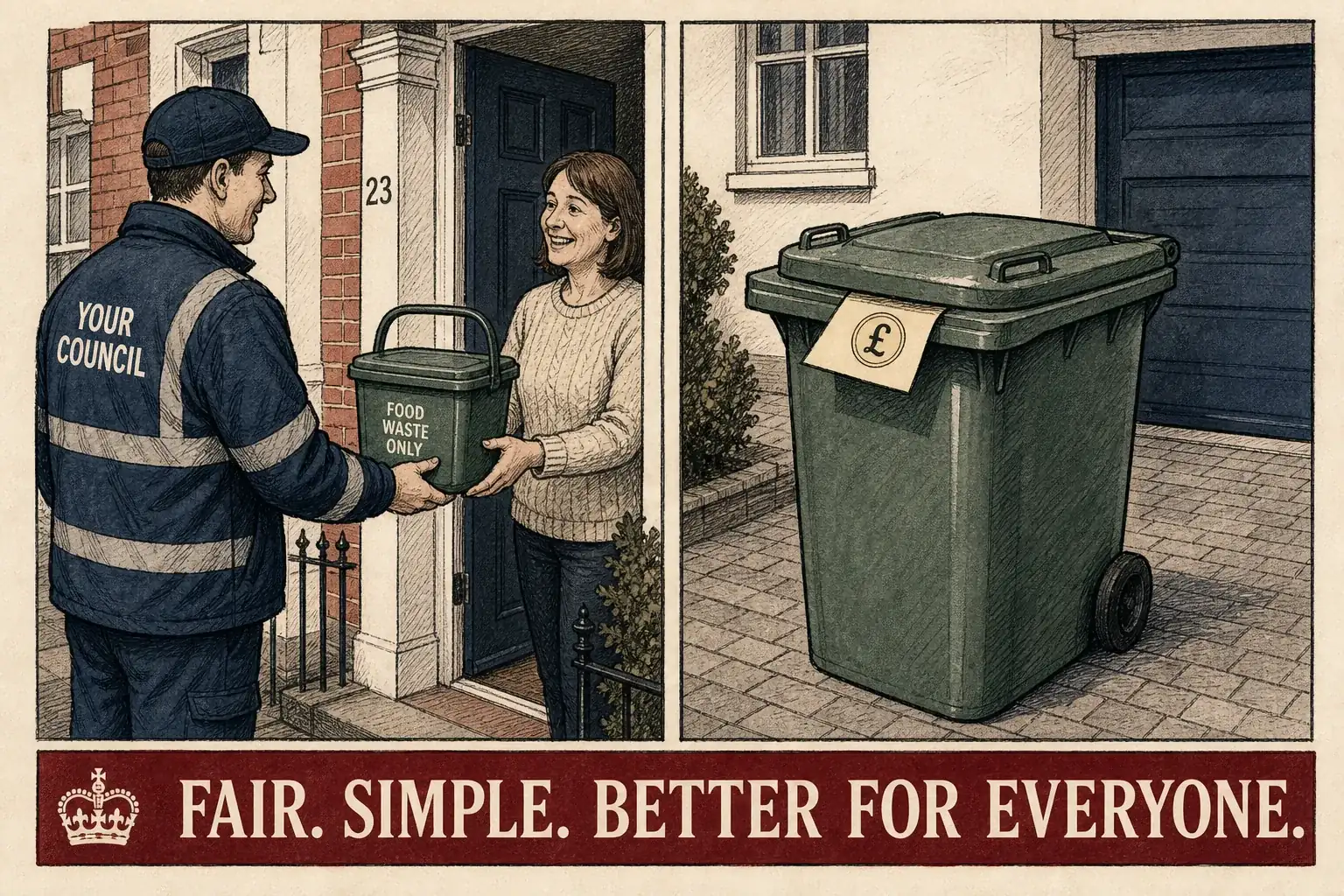
Where it is active, food waste is collected weekly. The council provides an indoor caddy, a larger outdoor caddy and liners before the service starts.
The council says it writes to households around six weeks before collections begin in their area. If you have received your caddies, use the normal collection-date checker for your schedule.
Food-waste collection is free where available; green garden-waste collection is paid.
Liverpool green-bin cost, renewal and sticker rules
Green garden-waste collection is an optional paid service. Collections run once a fortnight. The 2026 paid service started in the week beginning 23 February 2026 and runs until the last week of November.
Liverpool green-bin annual collection fees in 2026
Number of green bins
Annual collection fee
1
£50
2
£93.75
3
£125
4
£156.25
5
£187.50
The fee covers collections, not the bin itself. A green bin costs £25.
A household starting the service with one new green bin would therefore pay £75 initially: £50 for the annual collection and £25 for the bin.
Renewals and stickers
The annual fee runs from the date you sign up, not from January. Existing subscribers who renew should have their chipped sticker reactivated within 5 working days of payment. New subscribers should be sent a green-bin sticker within 15 working days.
Refunds, part-year sign-ups and fee waivers
There is a 14-day cooling-off period. After that, the fee is non-refundable.
There is no part-year discount. A household that signs up part-way through the year pays the annual fee from the date it signs up.
If you are struggling financially and in urgent need, the council may be able to waive the fee if you meet its full eligibility criteria. You will need your National Insurance number and may need to provide income documents. Apply through the council's refunds and help with the collection fee page.
Check vehicle and pedestrian access before setting off.
Lost, stolen or damaged bins
Use the council's request a bin page if a bin has been lost, stolen or damaged. Delivery of an approved request takes up to 15 working days. Contact the council if it has not arrived by then.
Purple bin: call 0151 233 3001. There is a £25 administration and delivery fee, payable by debit or credit card over the phone.
Green bin: you must already have paid for the green-bin collection service. Request it online and choose "buy a new bin". The fee is £25.
Blue bin: request it online. The council says it may charge for a new blue bin in some circumstances, and it may check the details given in your request.
Communal bins
Some flats and terraced streets use communal bins instead of individual wheelie bins.
Liverpool's communal blue bins are for loose recycling and purple bins are for bagged non-recyclable waste.
The council says communal bins are emptied every two days. If one is full or overflowing, use the communal-bin reporting service.
Do not leave waste beside communal bins. The council treats rubbish left around them as fly-tipping.
Assisted bin collections
If illness or disability prevents you from putting your bins out, you live alone and nobody can help, you can apply for an assisted bin collection.
Liverpool City Council aims to review requests within seven working days. If approved, collection staff take the bin out and return it after emptying.
An approved assisted collection lasts for two years. If you still need help after that, you must reapply.
Moving house or leaving a bin behind
Do not take your bins with you. The council says bins should be left at the property for the next occupant.
Unwanted or abandoned bins can be reported to the council. It aims to collect them within 15 working days. Leave the bin out where it can be seen until it is collected.
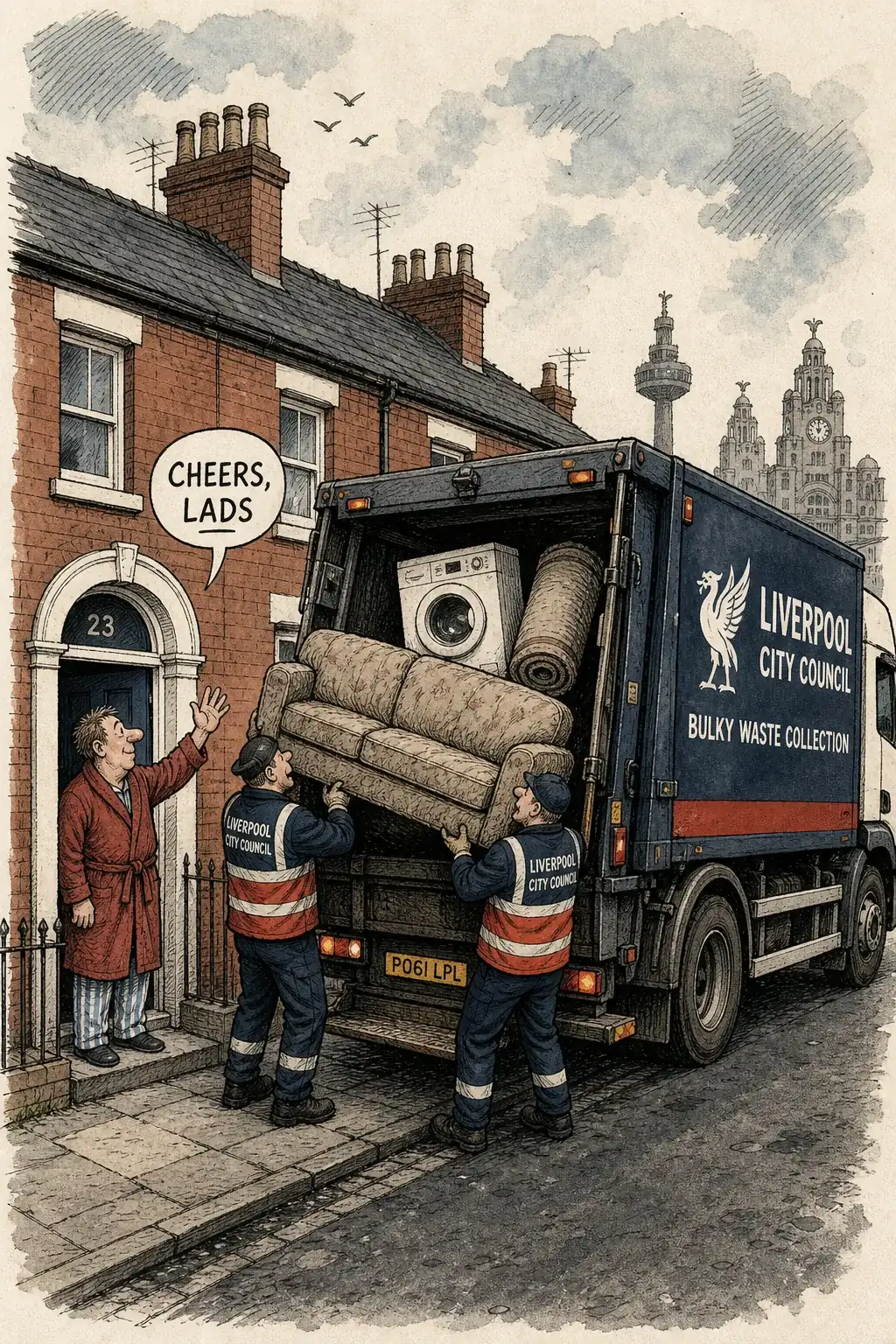
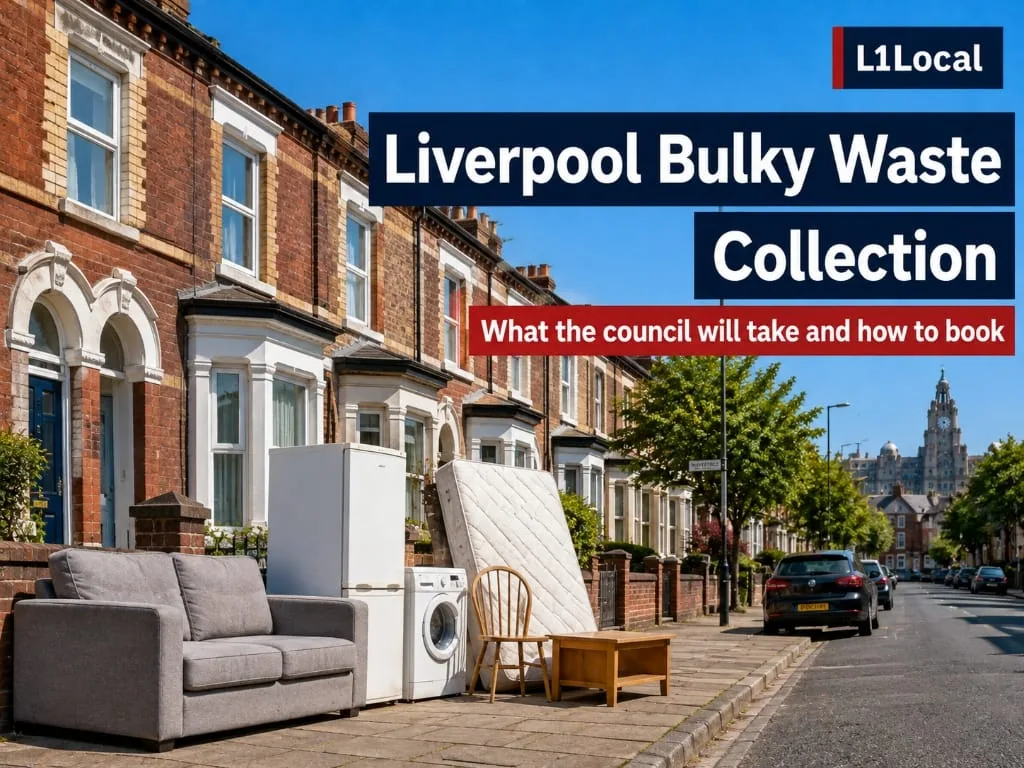
Liverpool's bulky item collection is free, up to five items per booking. See what is accepted, how to book, where to leave items and the alleygate rules.
Use the Liverpool City Council postcode checker. Collection dates can vary between nearby streets.
Is there a single Liverpool bin collection calendar for 2026?
No. Collection days are set by address, so two nearby streets can have different schedules. Use the council's postcode checker to see the dates for your property.
What time do bins need to be out in Liverpool?
Before 6.30am on the scheduled collection day.
How do I report a missed Liverpool bin?
For purple, blue and food-waste collections, wait until 2pm on the scheduled day, then use the missed-bin form. Report it by 2pm on the next working day. A subscribed green bin can be reported on the scheduled collection day without waiting until 2pm.
Which Liverpool bin is for recycling?
The blue bin or blue recycling bag. Accepted recycling should normally go in loose rather than inside a plastic bag.
Which Liverpool bin is for general waste?
The purple bin is for household waste that cannot be recycled. Where Liverpool's separate food-waste service has not reached an address, food waste also goes in the purple bin.
Is Liverpool's food-waste collection free?
Yes. Separate food-waste collections are being rolled out across Liverpool in phases and are collected weekly where active.
How much is a green bin in Liverpool?
The 2026 annual collection fee is £50 for one green bin, charged from the date you sign up. A new green bin costs £25 on top of the collection charge.
Are Liverpool bins collected on bank holidays?
Normally, yes. Liverpool City Council says waste and recycling are collected on the regular day on bank holidays. Check separately around Christmas and New Year in case festive arrangements are published.
Do I take my bins with me when I move house?
No. Leave them at the property for the next occupant. Unwanted or abandoned bins can be reported to the council, which aims to collect them within 15 working days.
Comments
Join the conversation with your L1Local Community account. Keep it civil and on topic.
Liverpool this week
New places, local news, things to do and our latest guides. Weekly.
Comments
Join the conversation with your L1Local Community account. Keep it civil and on topic.