The idea is refreshingly simple. Find somewhere in or around Liverpool. Turn up. Look at it. Paint it.
Their subjects include the sort of places that make up everyday Liverpool: pubs, terraces, old buildings, streets and neighbourhoods.
Rather than everybody producing an identical interpretation, each artist brings their own eye and experience to the scene.
The collective does not appear to publish a definitive current membership list, so it would be wrong to present three or four names as everybody involved. However, artists publicly associated with the group include Gary North, Alexis Butterfield and Tammy Walters, each approaching painting from a very different direction. Two more, painting under the names Northern Resident Artist and Hanno, paint alongside them too. That variety is part of what makes the idea work.
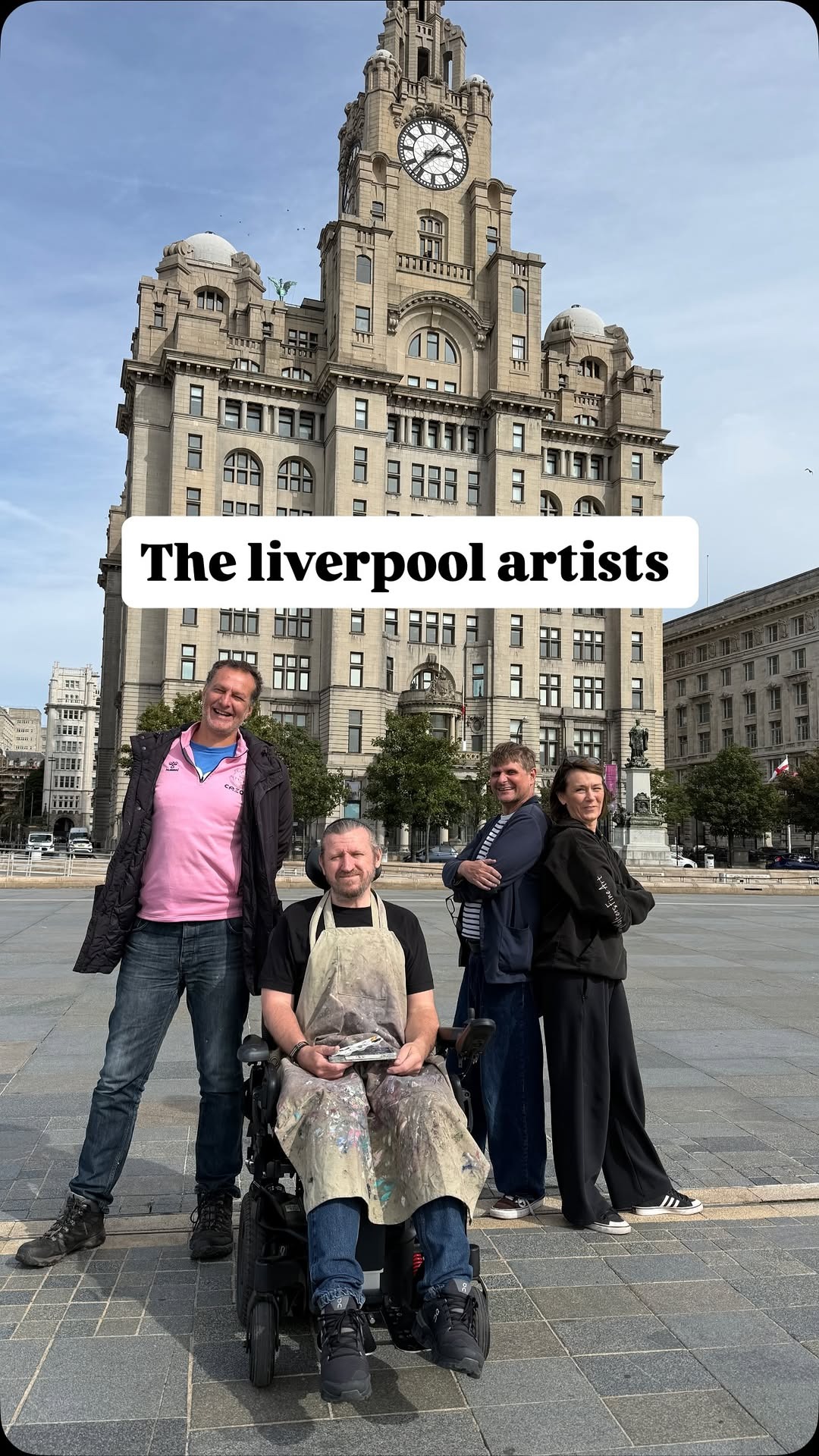
Members of The Liverpool Artists painting outdoors in Liverpool. The collective describes what it does as “painting in the wild”. Photo: The Liverpool Artists, used with permission.
I could never draw.
Give me a pencil and a blank sheet of paper and I would struggle.
Computers changed that for me.
When I discovered digital graphics, particularly Macromedia Fireworks, I finally found a way of being visually creative. I could work with photographs, text, shapes and layers. I could move things around until they looked right.
And I moved them around a lot.
Sometimes I would shift a piece of text or one layer of a graphic hundreds of times. There were graphics where it probably felt closer to a thousand tiny adjustments before I was happy with them.
Somebody might eventually look at that finished image for three seconds.
It could have taken me hours.
After more than 20 years of learning, experimenting, getting things wrong and trying again, I like to think I became capable of creating online graphics to a high level.
In a strange way, I miss some of that now.
AI has changed the speed of digital creativity almost beyond recognition. An image that once required hours of Photoshop, Fireworks, photography or illustration can sometimes be produced in seconds.
At L1Local, we use AI.
We are not going to pretend otherwise.
For a small independent Liverpool publication trying to keep pace with much larger publishers, social platforms and an internet where everything moves increasingly quickly, AI has become part of the equation.
We use it as a tool, including when creating visual material.
We also try to create images that have some identity rather than simply producing the same polished AI graphics appearing across thousands of websites and social accounts.
Sometimes I think we succeed.
Sometimes we don't.
But using AI has made me appreciate something else more, not less. People like The Liverpool Artists.
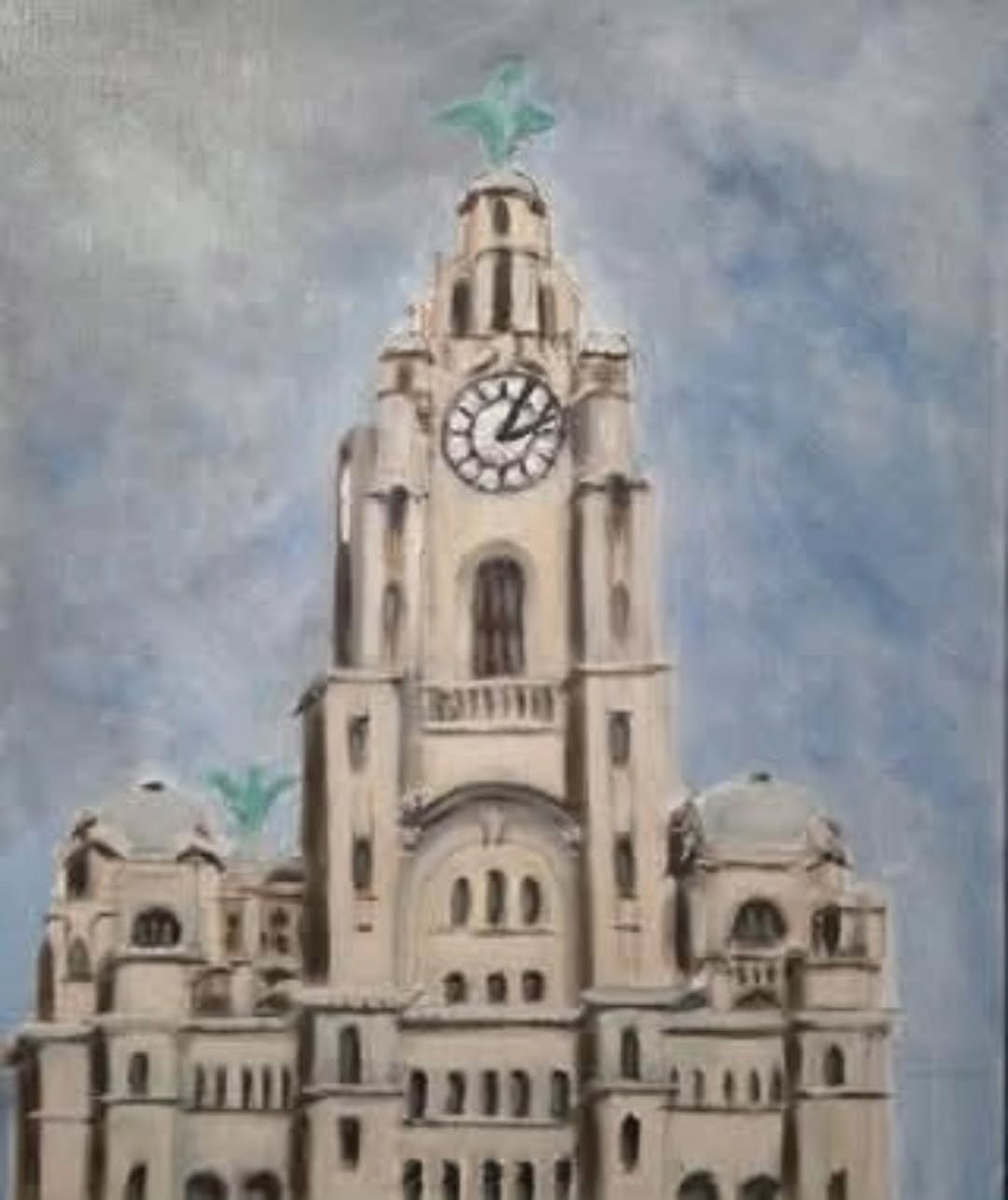
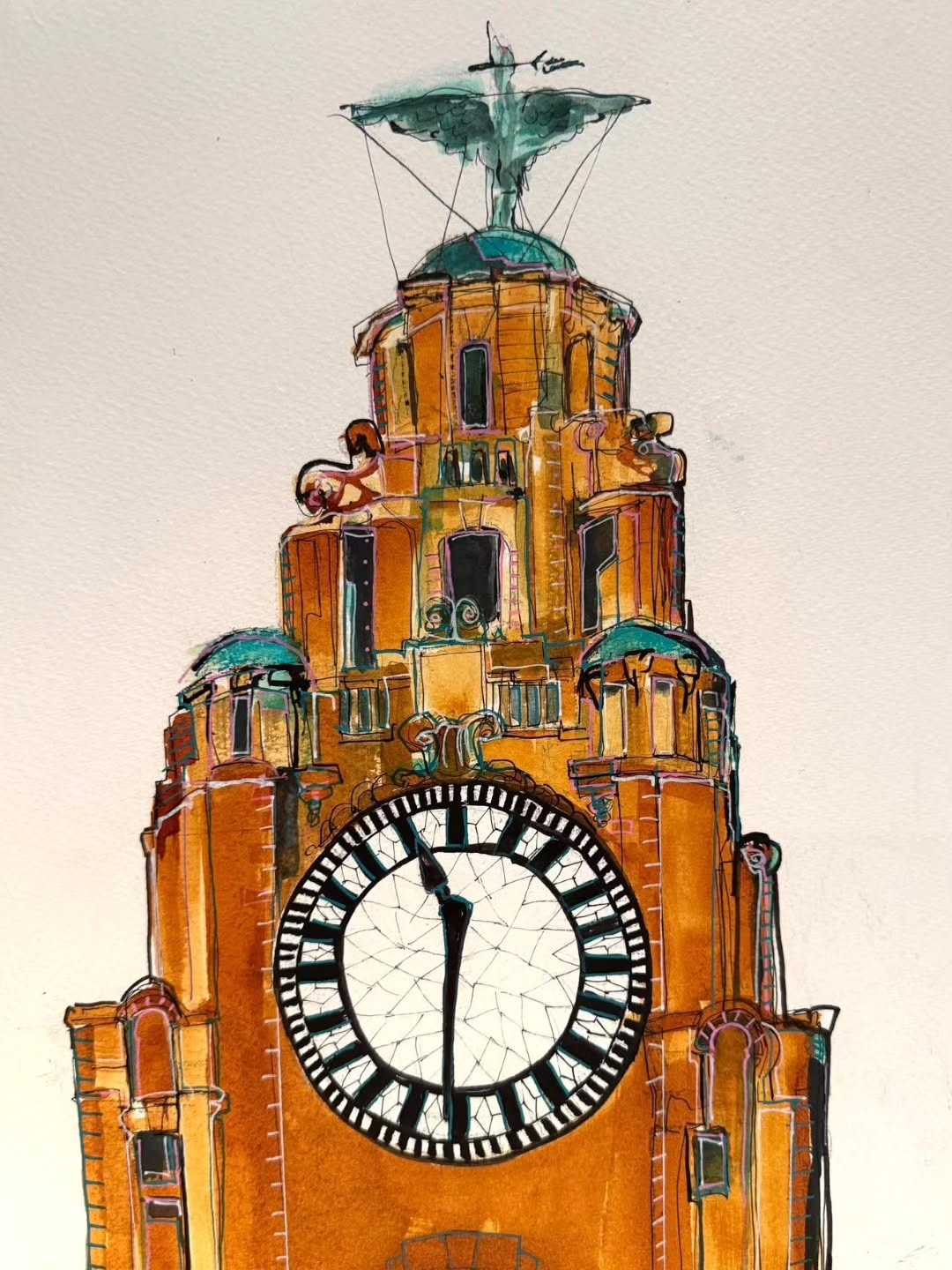
The Royal Liver Building, painted by one of The Liverpool Artists. Photo: The Liverpool Artists, used with permission.
Painting in the wild
There is a traditional term for painting outdoors from the scene in front of you: plein-air painting.
I prefer The Liverpool Artists' description: painting in the wild.
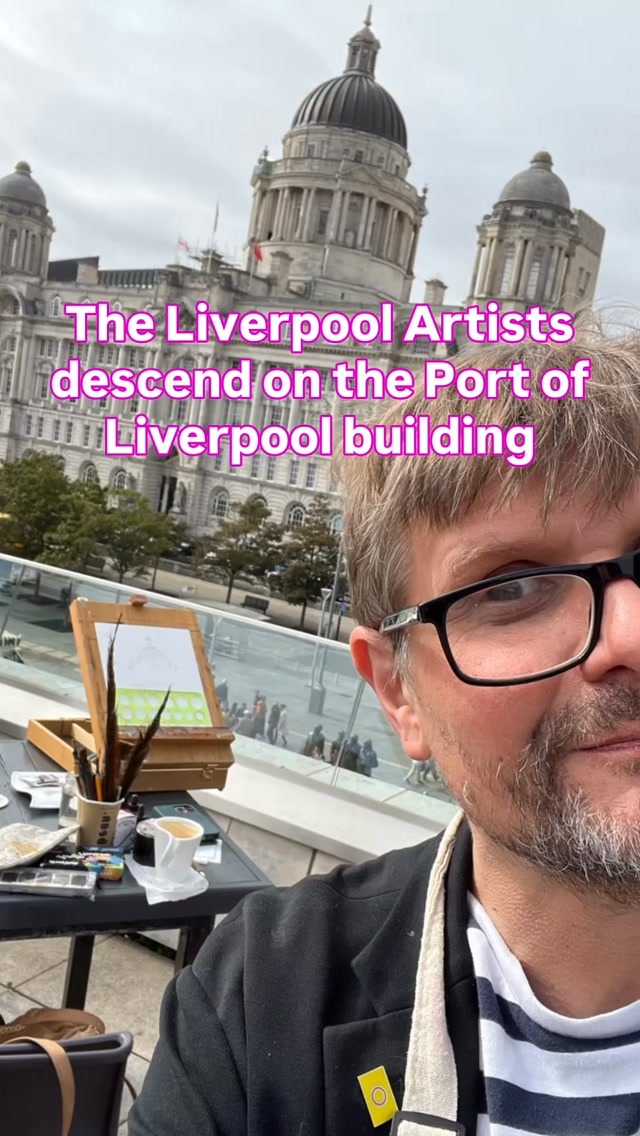
One of The Liverpool Artists at the easel, painting the Port of Liverpool Building on location. Photo: The Liverpool Artists, used with permission.
It sounds slightly chaotic because it probably is. A studio gives an artist some control. Liverpool does not.
Cars stop in front of what you are painting. People walk past. Deliveries arrive. Light changes. Somebody starts talking to you. The wind picks up. It rains.
The building itself might look completely different at four in the afternoon from how it looked when you started at midday. The artist has to deal with all of it.
There is also something very direct about having artists working in public. You do not have to enter a gallery or already know something about art. You might simply be walking down a Liverpool street and encounter somebody painting a building you have walked past hundreds of times.
Suddenly you look at it as well.
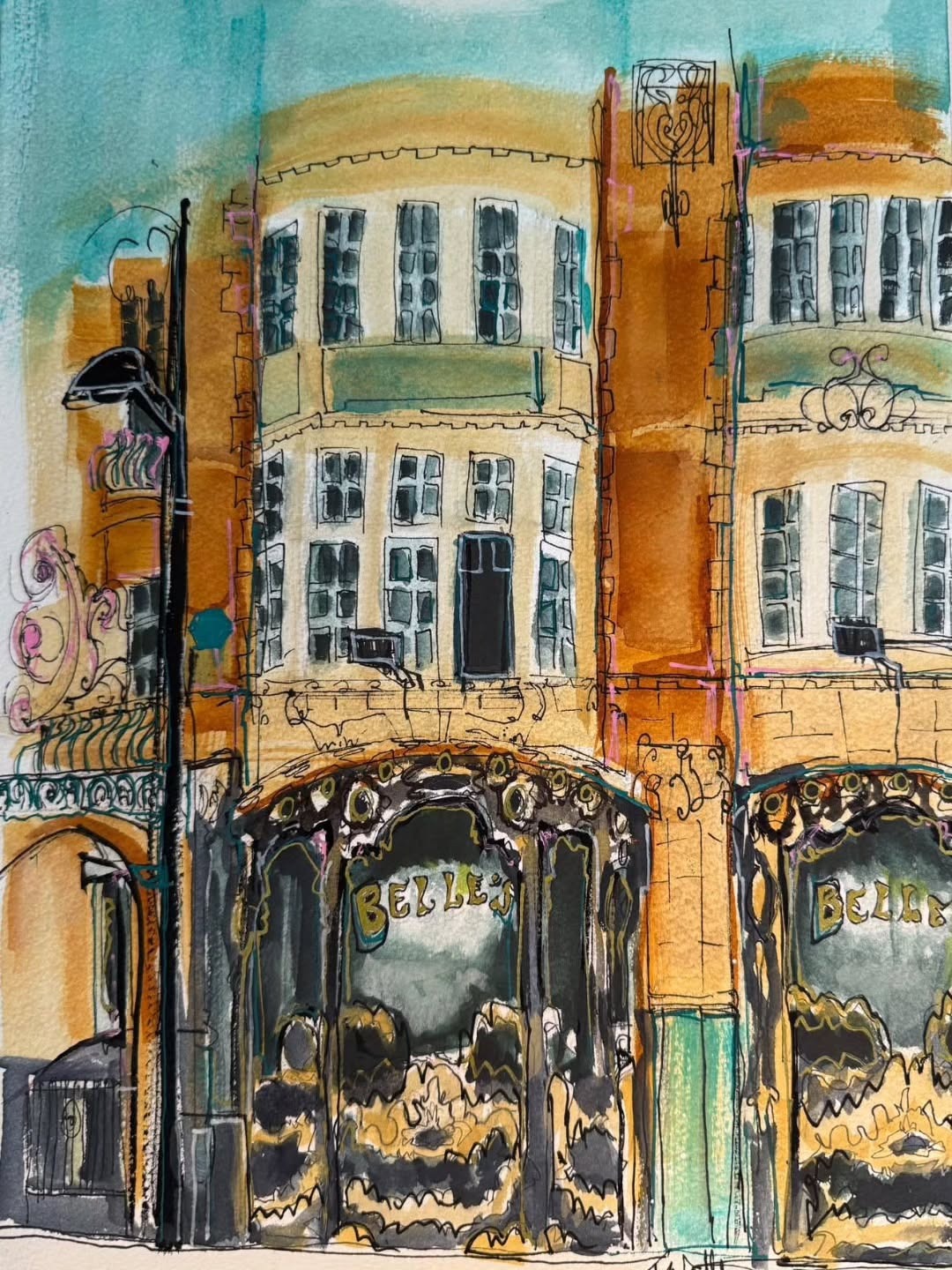
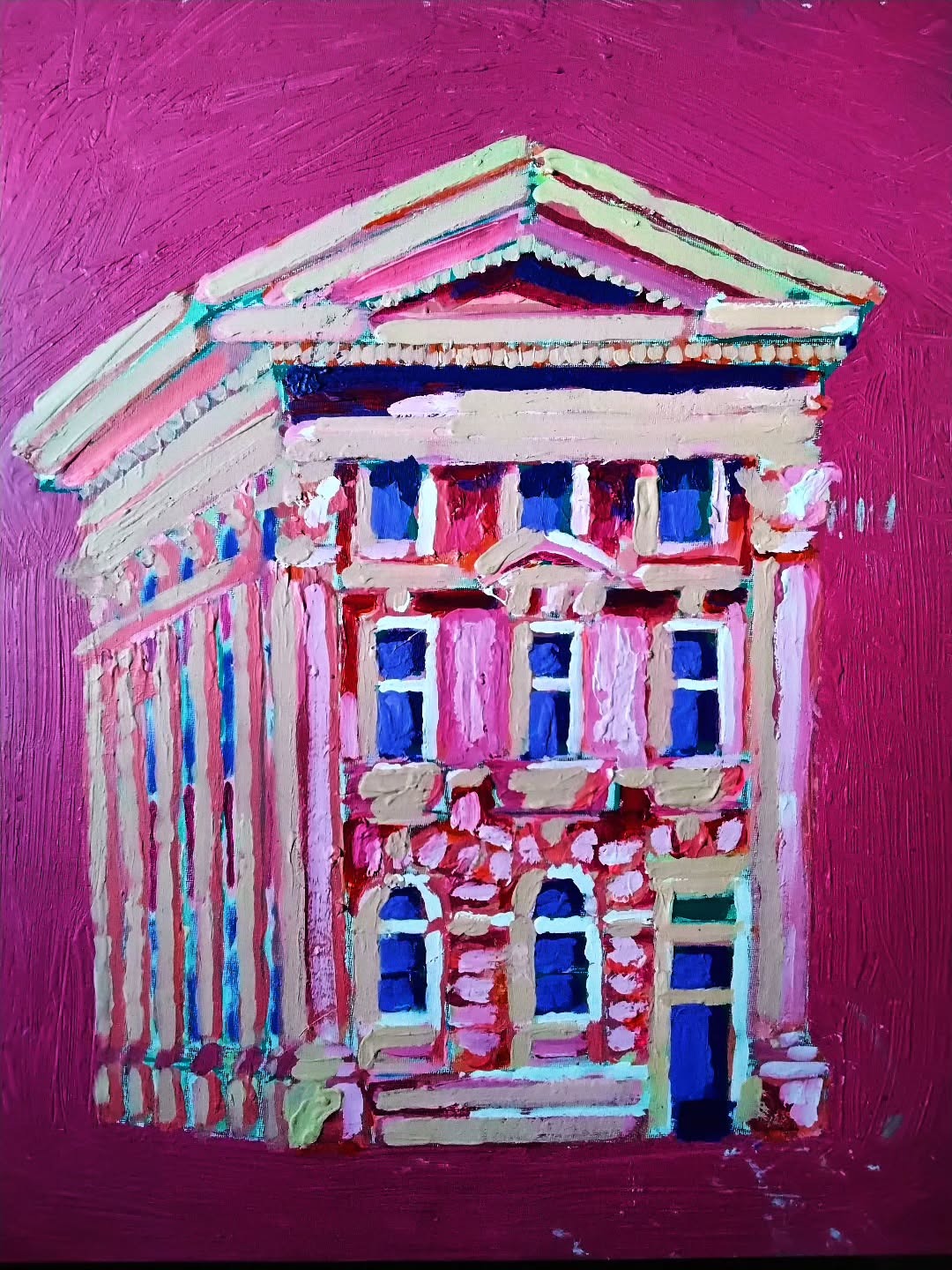
One of the Liverpool street buildings painted “in the wild” by the collective. Photo: The Liverpool Artists, used with permission.
Gary North is trying to paint Liverpool's pubs
One of the artists associated with the group is Gary North, a self-taught painter who has embarked on a much bigger Liverpool project. He is attempting to paint the city's pubs.
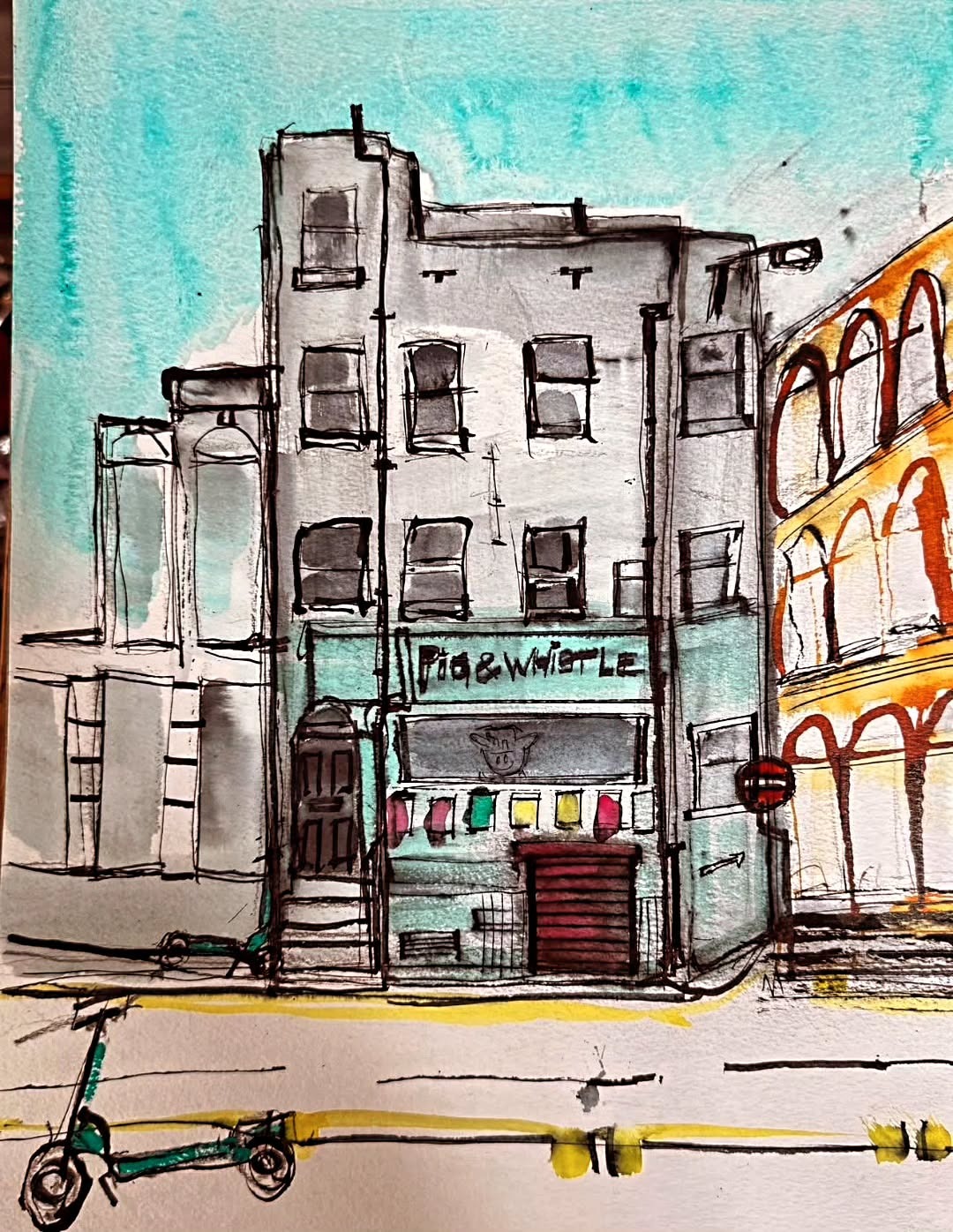
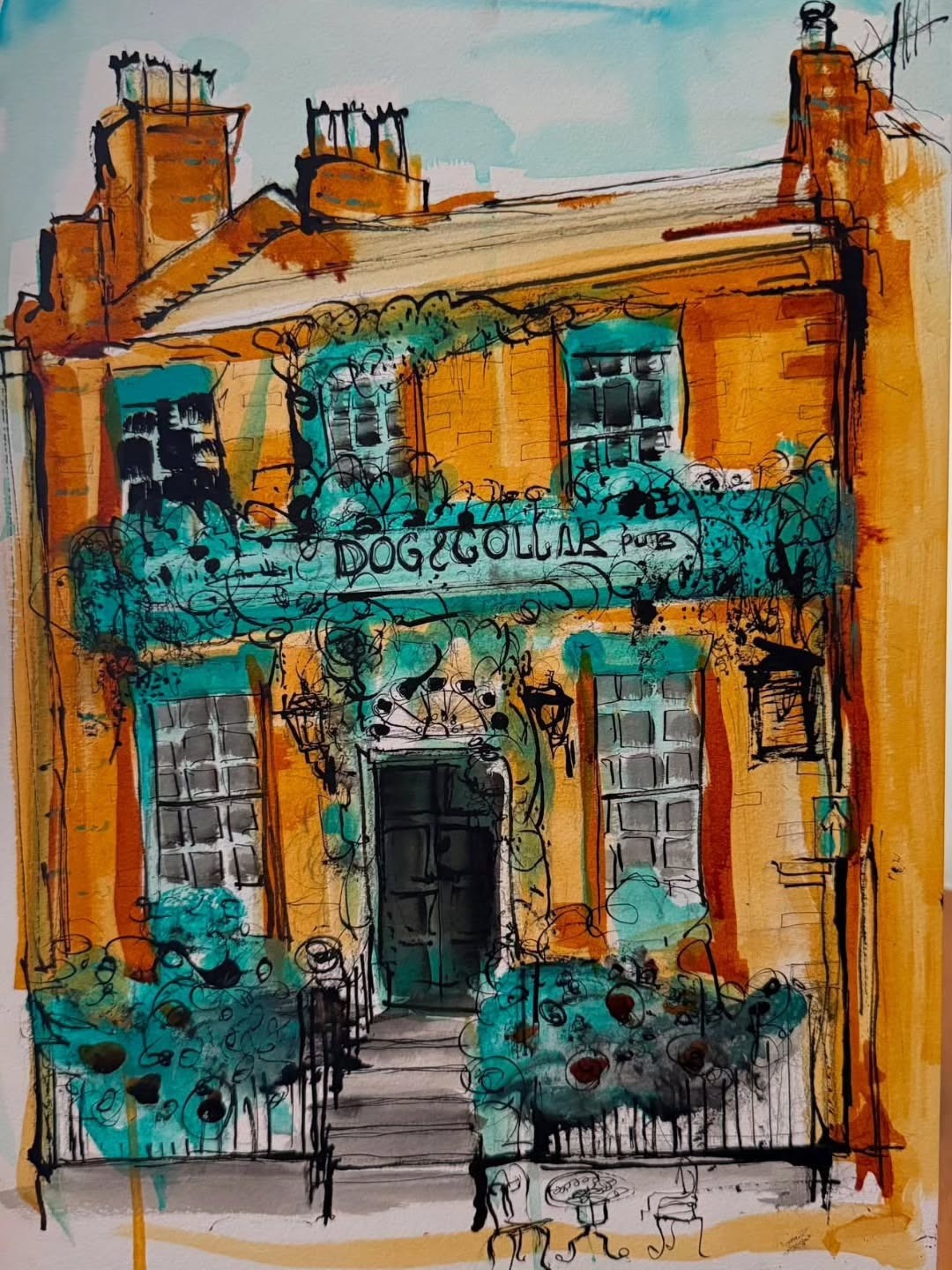
By August 2026, North had painted approximately 150 of an estimated 285 Liverpool pubs, according to BBC reporting on the project. His subjects have included the Pig and Whistle, Baltic Fleet, The Vines, Ship and Mitre, The Grapes, Peter Kavanagh's, Lion Tavern and The Bridewell.
North had already received wider recognition before beginning the project. Lancashire County Council named him Lancashire Artist of the Year 2025 for Spring at Bridge 39 (Leeds/Liverpool canal), which received the highest number of votes in the competition's public vote. The council describes him as a self-taught painter.
The Pig and Whistle, one of the Liverpool pubs painted as part of the collective's ongoing pub project. Photo: The Liverpool Artists, used with permission.The Dog and Collar, another Liverpool pub painted as part of the same project. Photo: The Liverpool Artists, used with permission.
His pub paintings are particularly interesting because they can become records as well as artworks.
Liverpool changes. Signs disappear. Buildings are altered. Businesses change hands. Pubs close and occasionally reopen under different names.
Paint a pub today and, intentionally or otherwise, you have recorded a particular moment in that building's life.
An AI system could generate an imaginary Liverpool pub in seconds. North standing outside an actual pub and deciding how that building, on that day, should appear on canvas is something else. If you fancy visiting a few of the pubs he has captured, our guide to Liverpool pubs worth a Monday or Tuesday night out is a good place to start.
Alexis Butterfield sees Liverpool partly through an architect's eyes
Alexis Butterfield brings another perspective.
Butterfield is a Liverpool-based landscape artist who spent roughly 25 years concentrating on architectural practice before returning heavily to fine art.
His work frequently concentrates on architecture, streets and places carrying visible traces of their past. His own site divides his work across Liverpool city centre, North Liverpool, South Liverpool, Wirral and Chester.
His professional background also includes regeneration and architecture. In a 2026 interview with NewStart, Butterfield discussed almost three decades working around regeneration, housing and the built environment alongside his painting.
That must affect the way you look at a street. Most of us can walk past the same building every day without really studying it. An architect may see proportions, alterations, materials and the relationship between one building and the next. An artist sees another layer again. Our own guide to reading Liverpool through its buildings covers some of the same ground from a resident's rather than a painter's eye.
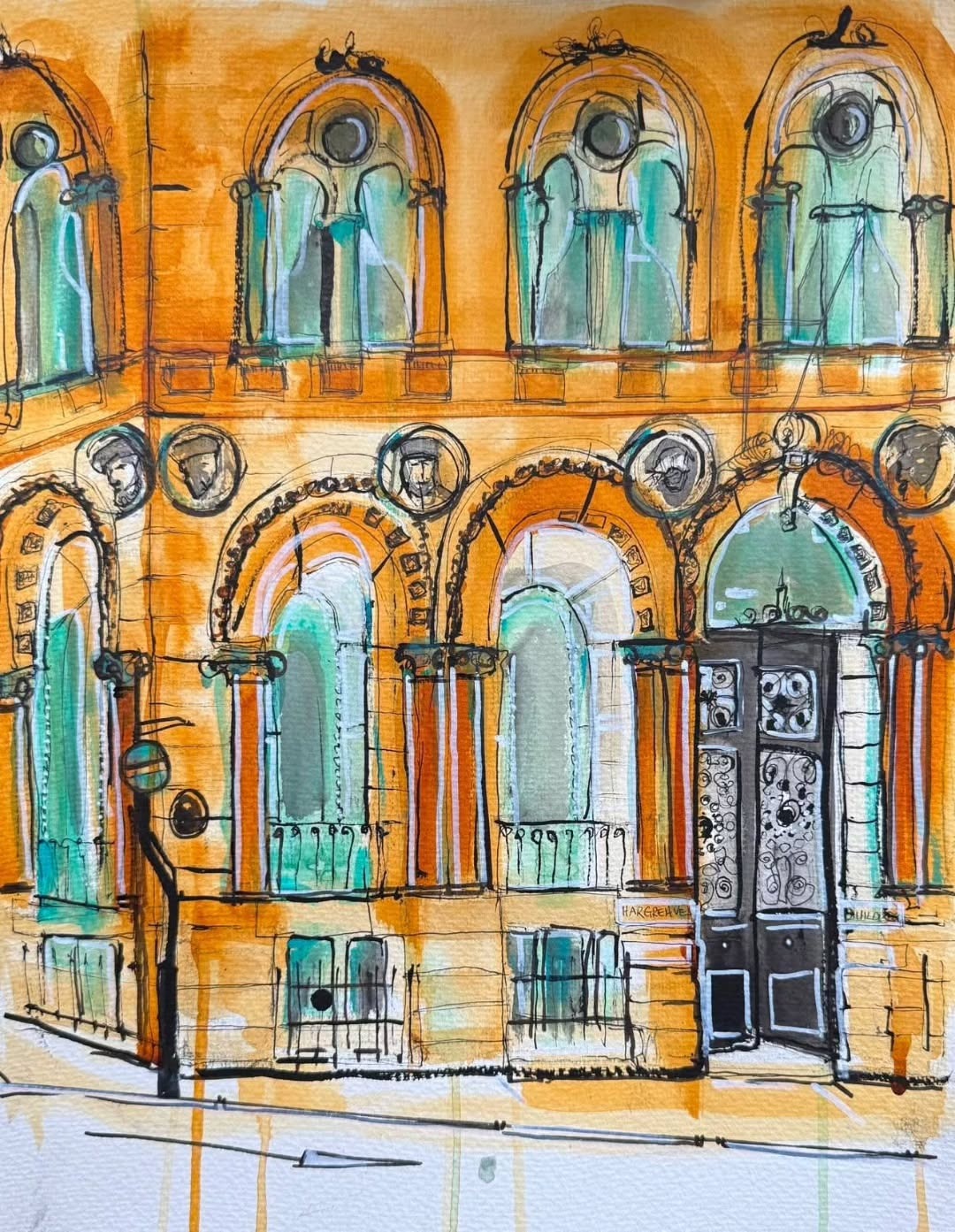
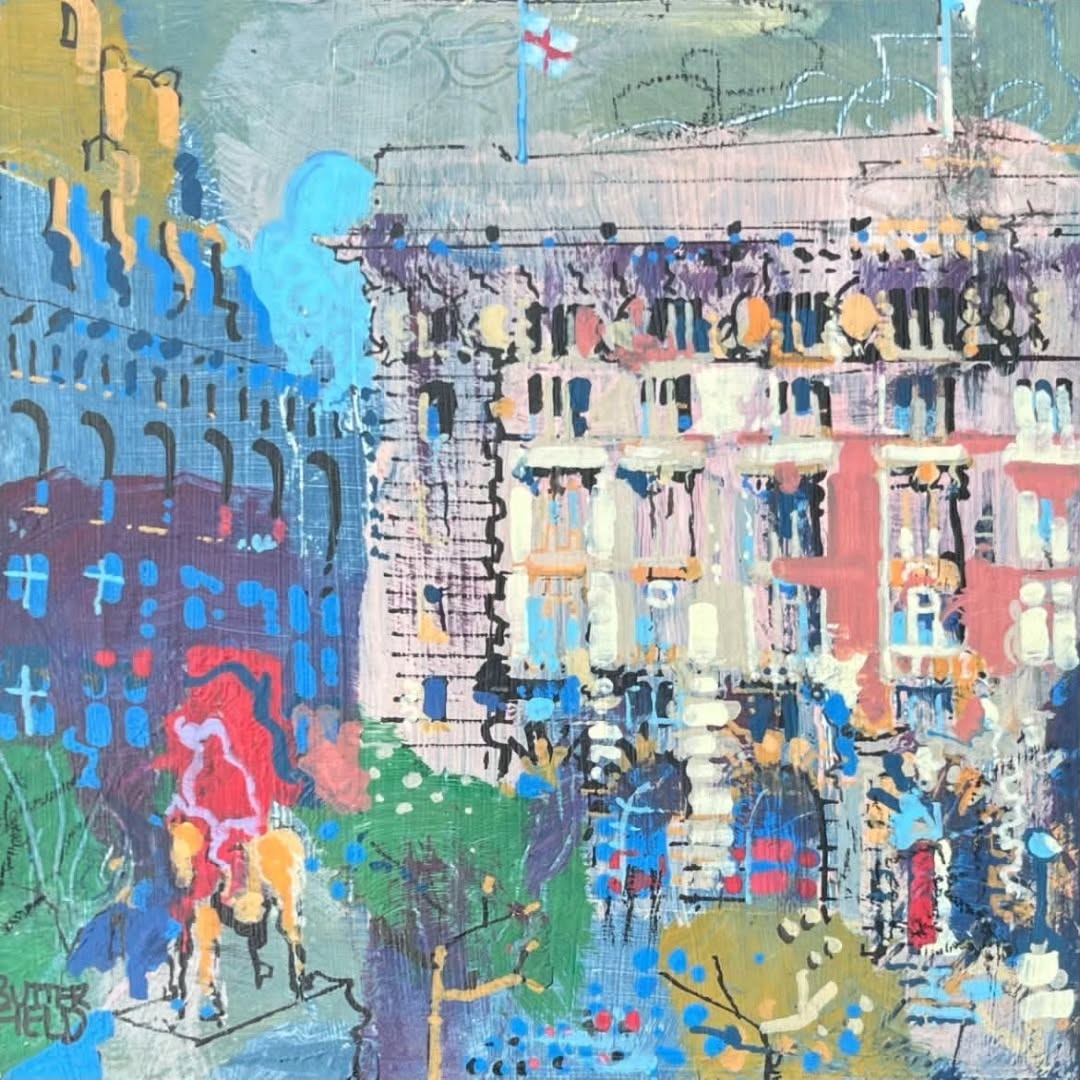
One of Alexis Butterfield's Liverpool building studies, mixing drawing with other media rather than aiming for a photographic copy. Photo: The Liverpool Artists, used with permission.The Throstle's Nest, painted by Alexis Butterfield. Photo: The Liverpool Artists, used with permission.Another Alexis Butterfield street study, further from a literal likeness than his building studies above. Photo: The Liverpool Artists, used with permission.
Butterfield's work mixes drawing and other media rather than trying simply to create photographic copies of buildings. That is another reason putting several artists in front of the same Liverpool street does not result in several versions of the same picture.
They are not only painting what is there. They are painting what they notice is there. Some of the buildings he studies sit close to our history of the Royal Liver Building and the Three Graces, if you want the fuller story behind the waterfront skyline.
The Royal Liver Building's clock tower, one of the waterfront landmarks the collective keeps returning to. Photo: The Liverpool Artists, used with permission.
Tammy Walters took a completely different route into painting
Tammy Walters followed another path.
Walters was born in 1968 in Kirkby and initially worked outside the arts, including in accounts and corporate HR.
After periods living and working abroad, she returned to the UK in 2016 and pursued painting full-time. Her career has included two years as resident artist at Aintree International Equestrian Centre, and much of her established work has concentrated on horses and other animals, work that has seen her named a finalist for Wildlife Artist of the Year.
Her story says something useful about artists more generally. There is rarely a single route.
Someone can study art formally. Someone else can be self-taught. Another person might spend decades in a completely different career before returning to something they wanted to do when they were younger.
Those experiences follow them into the work.
A painting can take three hours and 30 years
If you see somebody painting a Liverpool pub for three hours, it is easy to say: that painting took three hours.
But did it?
Perhaps the physical act took three hours. Getting to the point where the artist knew what to do during those three hours may have taken 30 years.
The painting contains every bad picture they made. Every technique they experimented with and abandoned. Every time they got the colour wrong. Every time they tried again. Every previous picture that quietly taught them something about making the next one.
What looked easy at the end was only easy because of everything that came before it. The final image might take an afternoon. The ability to create it can take a lifetime.
The value in somebody's painting is not that it was produced quickly. It is that they produced it. One person looked at a Liverpool street and made a set of decisions nobody else would have made in exactly the same way. There is paint beneath other paint. Lines are changed. A brush does something the artist did not quite intend.
The Liverpool Artists are also recording Liverpool
There is another reason to pay attention to what groups like this are doing. Collectively, they are building an informal visual record of Liverpool.
Not necessarily the version of Liverpool selected for postcards. Not always the waterfront. Not only the Royal Liver Building.
A pub. A terrace. A doorway. A row of shops. A street corner. Places people actually use.
Look at enough paintings made over enough years and you begin to see buildings before signs changed, businesses before they disappeared and neighbourhoods before they were redeveloped.
Liverpool artists have been doing this for generations. Today the paintings are artwork. In decades to come, some may also become historical documents, in the same spirit as our Liverpool heritage trail.
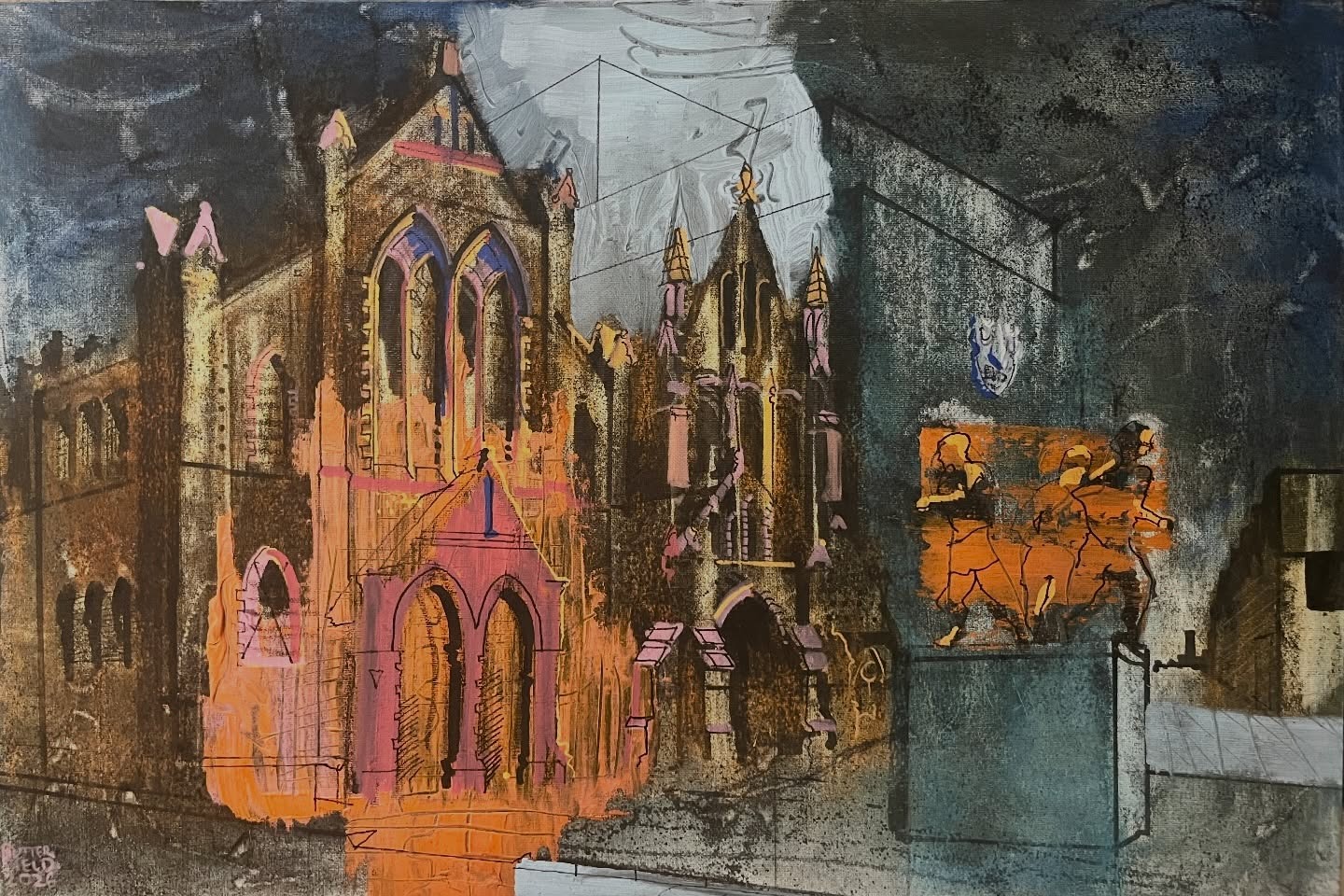
The same idea of everyday Liverpool, painted in a completely different palette. Photo: The Liverpool Artists, used with permission.
Supporting artists means keeping the artist attached to the art
Social media has made it easier than ever to see art. It has also made it incredibly easy to separate an image from the person who made it.
Screenshot. Repost. Share. Within days an image can travel across the internet with no artist's name attached.
Supporting human artists therefore requires more than clicking a heart.
If you like a painting, find out who painted it. If you share it, credit them. If you can afford an original, buy one. If you cannot, many working artists offer prints and smaller pieces. Go to exhibitions. Commission people. Our guide to Bold Street's independent shops is a decent starting point if you want to put money behind local makers more generally.
If you run a Liverpool pub, restaurant, office or hotel, consider putting locally created work on your walls.
And publishers like L1Local have responsibilities too. Something appearing on Instagram does not automatically give us permission to take it and publish it. The creator should remain part of the story.
Something happened on the day that painting was made
A generated image does not remember making itself. A person does.
Ask an artist about a particular painting and there may be a whole story behind it.
It rained. Somebody stopped and talked for half an hour. A dog knocked something over. The artist nearly abandoned it. The pub landlord brought out a cup of tea. The light suddenly changed. They hated it when they finished it and liked it six months later.
That lived experience becomes attached to the physical object. The painting represents a place, but it also represents a few hours in one person's life. That afternoon will never happen in exactly the same way again.
Maybe the lunatics are the sane ones
The Liverpool Artists describe themselves as a “collective lunacy.”
Maybe they are.
They stand outside with paints, brushes and easels while the rest of us increasingly stare into screens. They spend hours studying buildings most people walk past without properly seeing. They deliberately make something slowly in a world increasingly obsessed with making everything faster.
There is no prompt to rewrite, no regenerate button. Just an artist, a place, a particular moment and everything that person has learned during the years that brought them there.
The Liverpool Artists call it collective lunacy. Standing on a Liverpool pavement long enough to paint what is actually there is not quite as mad as it sounds.
Maybe they are the sane ones. Gary North, for one, has another 135 pubs left to go.
Follow The Liverpool Artists
The artists named in this piece, and two more members the collective pointed us to, can be found and supported directly online.
The Liverpool Artists' public profile describes a collective based in and around Liverpool, and this is not necessarily every current member. The five named here were confirmed directly by the collective.
Liverpool this week
New places, local news, things to do and our latest guides. Weekly.