Both exhibitions are at FACT Liverpool on Wood Street until Sunday 16 August 2026. The galleries are free and you do not need to book for a normal visit.
The short version
What: two free exhibitions about AI, identity and imagined futures
Where: FACT, 88 Wood Street, Liverpool, L1 4DQ
When: Wednesday to Sunday, 11am to 6pm
Last day: Sunday 16 August 2026
Booking: not required for the exhibitions
Nearest station: Liverpool Central
Parking: FACT has no car park
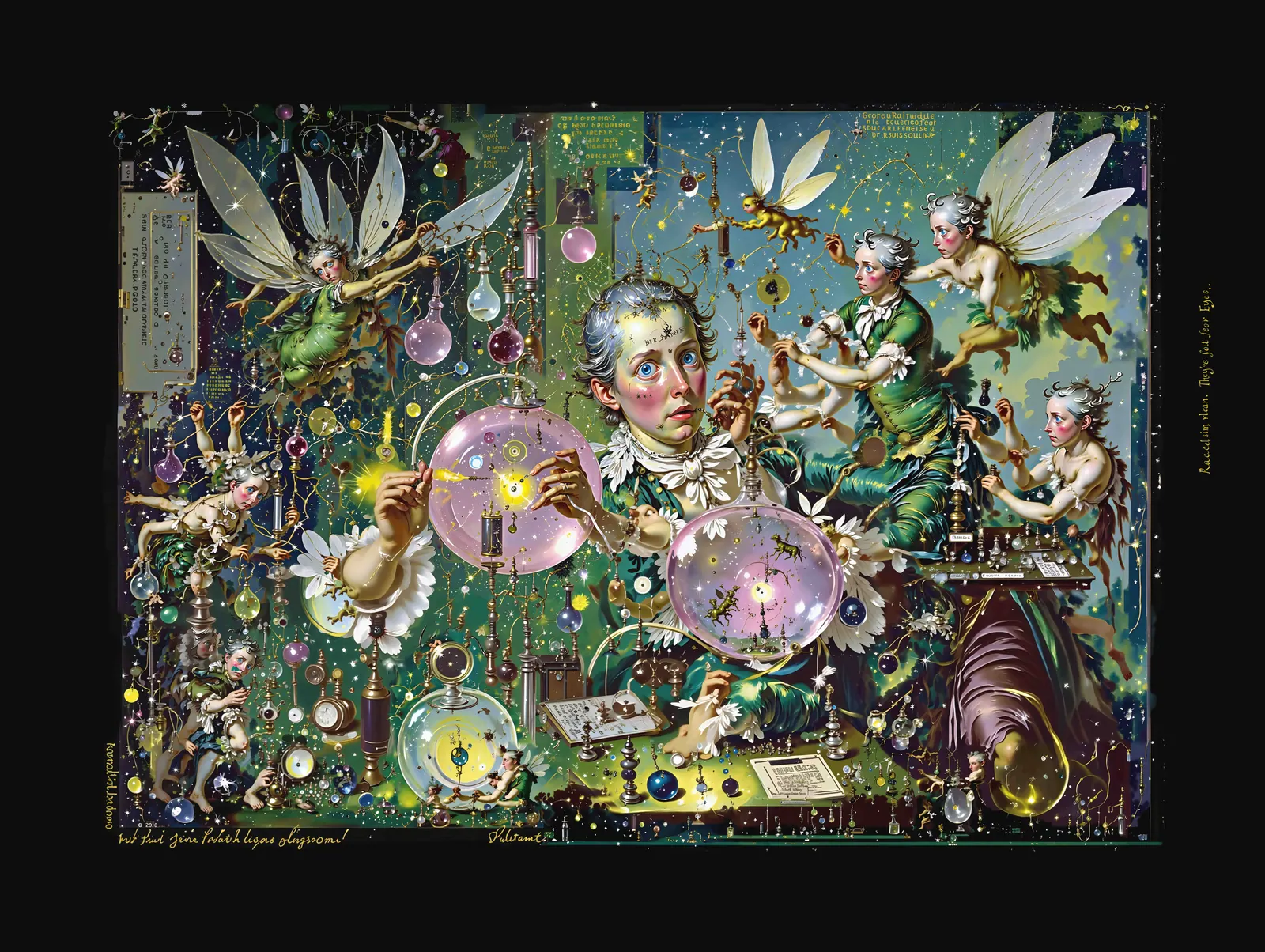
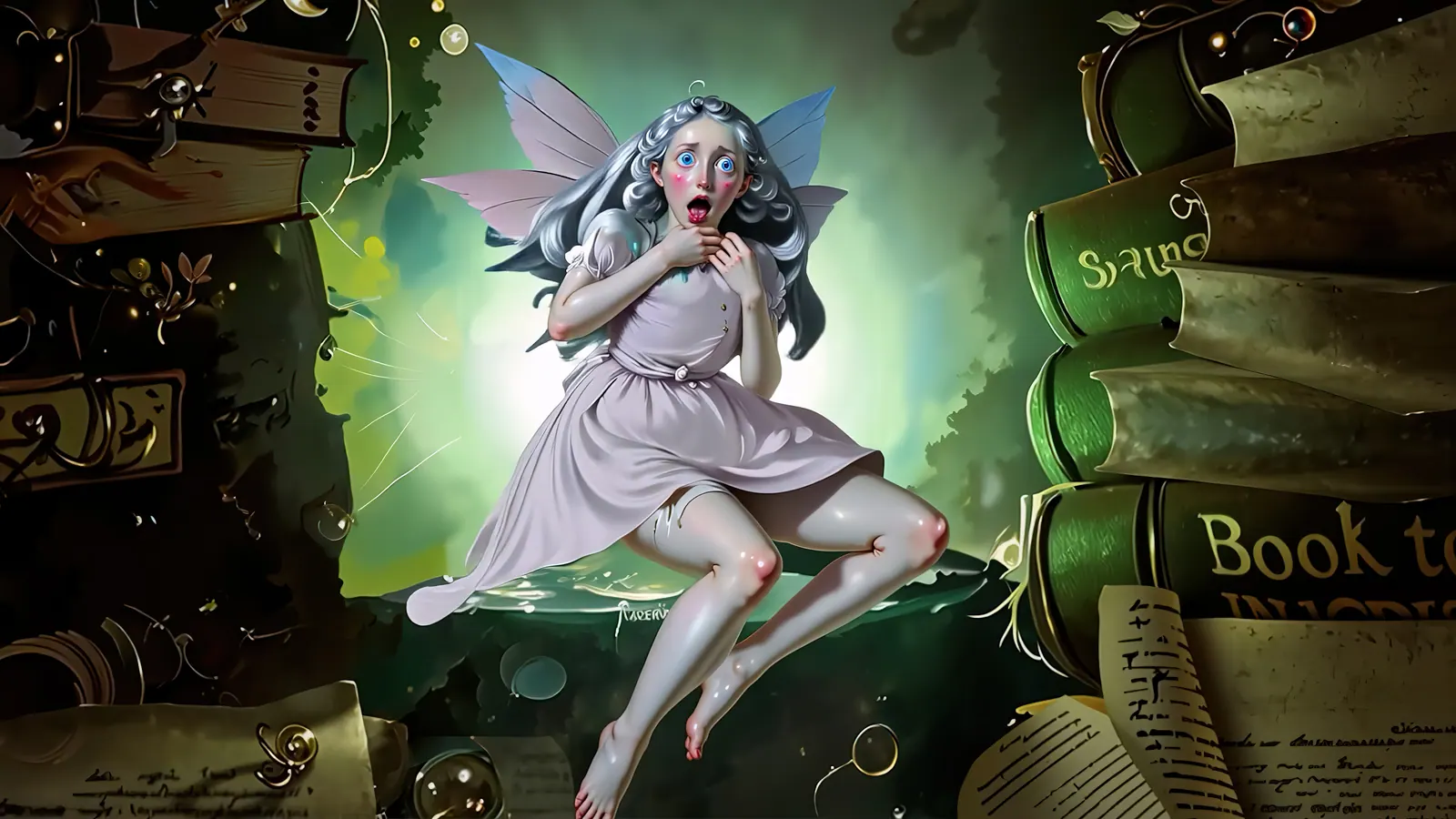
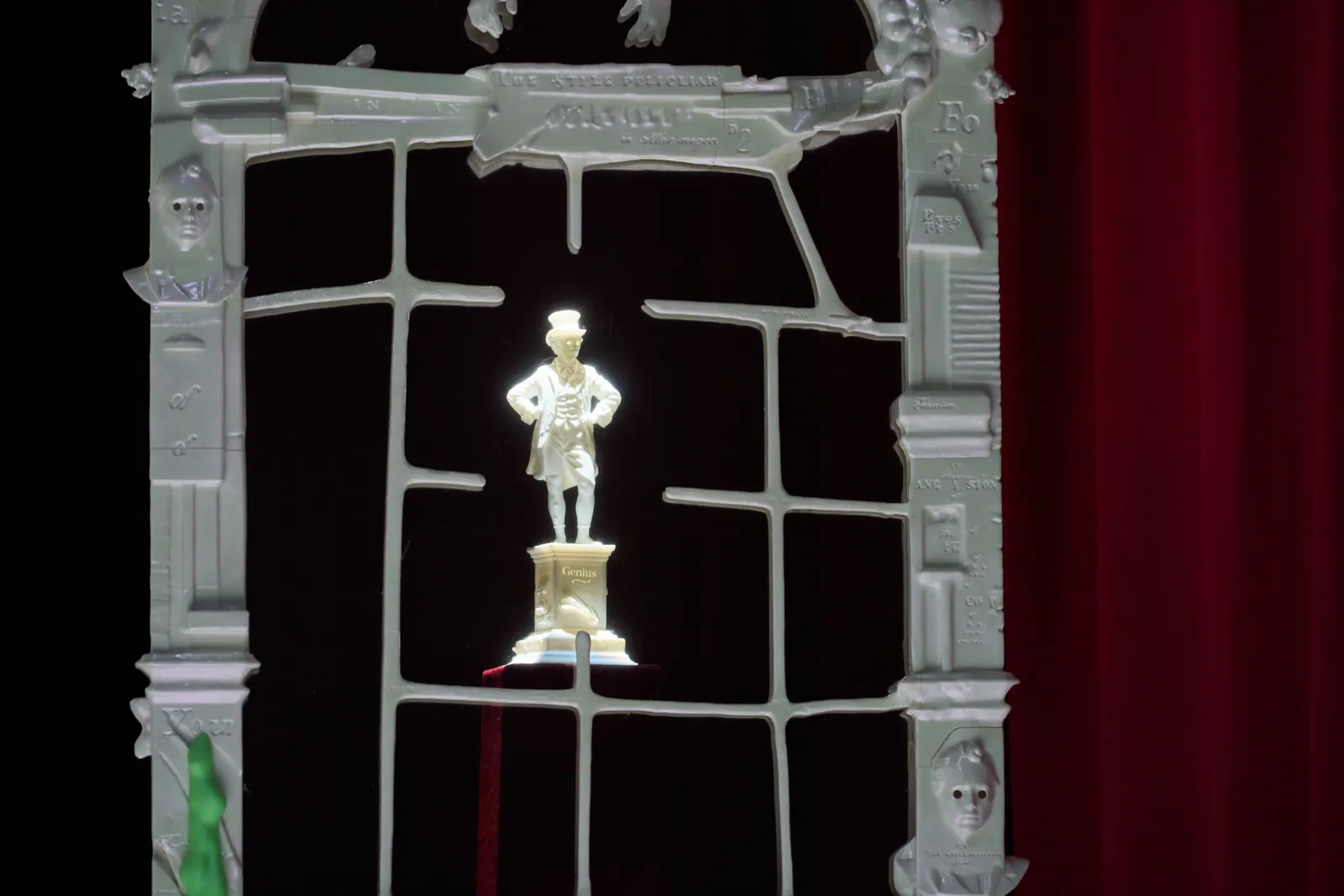
Rachel Maclean, O, they serve you get (2026). Digital image courtesy of the artist. FACT press image.
FACT summer exhibitions at a glance
FACT summer exhibitions, galleries, dates, times and entry prices
Exhibition
Gallery
Dates
Opening times
Entry
Rachel Maclean: They've Got Your Eyes
Gallery 1
Until 16 August 2026
Wednesday to Sunday, 11am to 6pm
Free
Sahjan Kooner: (darkforest) The Zone of Ghosts
Gallery 2
Until 16 August 2026
Wednesday to Sunday, 11am to 6pm
Free
Rachel Maclean: They've Got Your Eyes
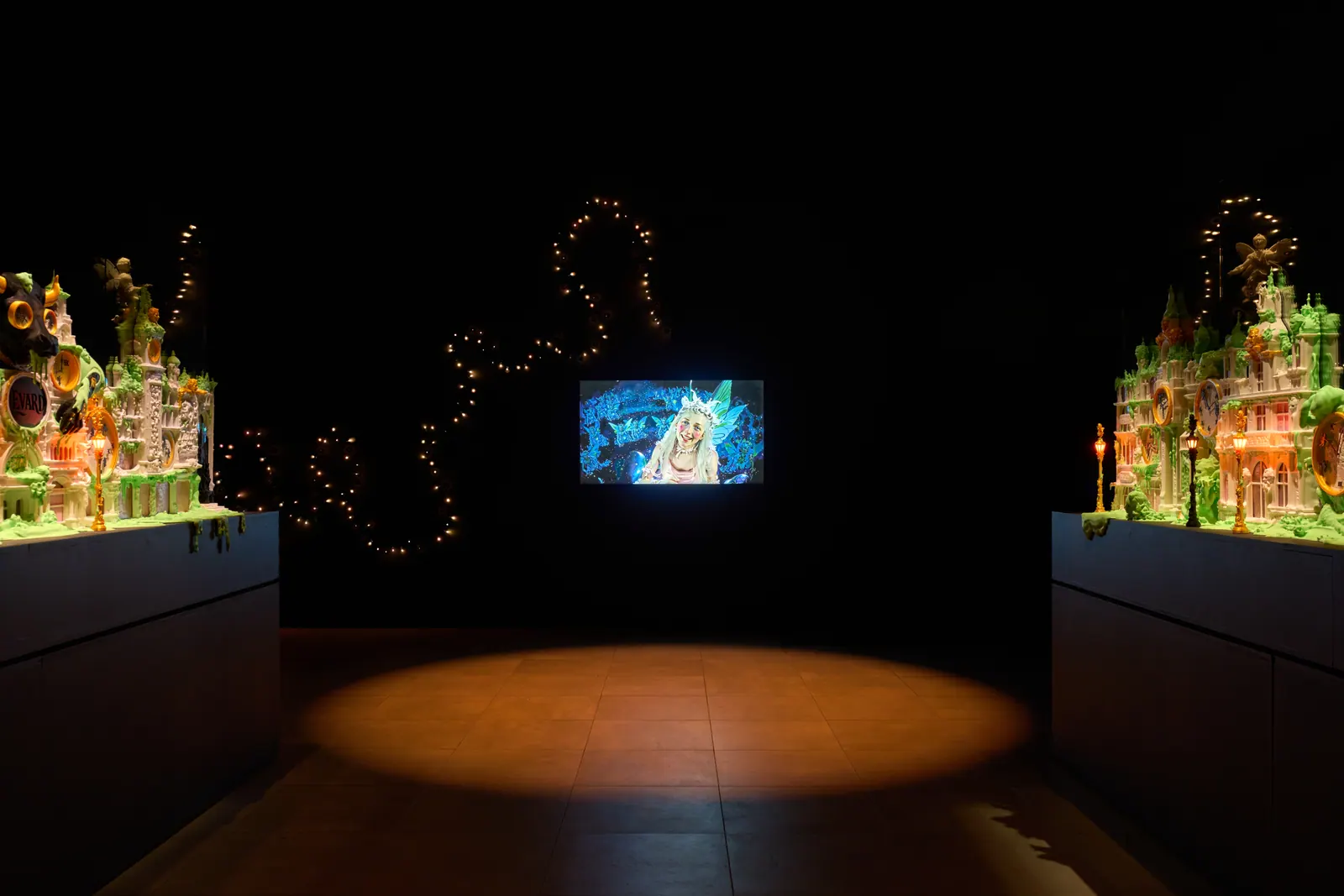
They've Got Your Eyes fills Gallery 1 with a 20-minute film shown across several screens. Sculptures and objects bring parts of its strange visual world into the room.
You can enter the gallery at any point. A clock outside shows when the film will begin again, although FACT recommends joining at the start to see the full sequence.
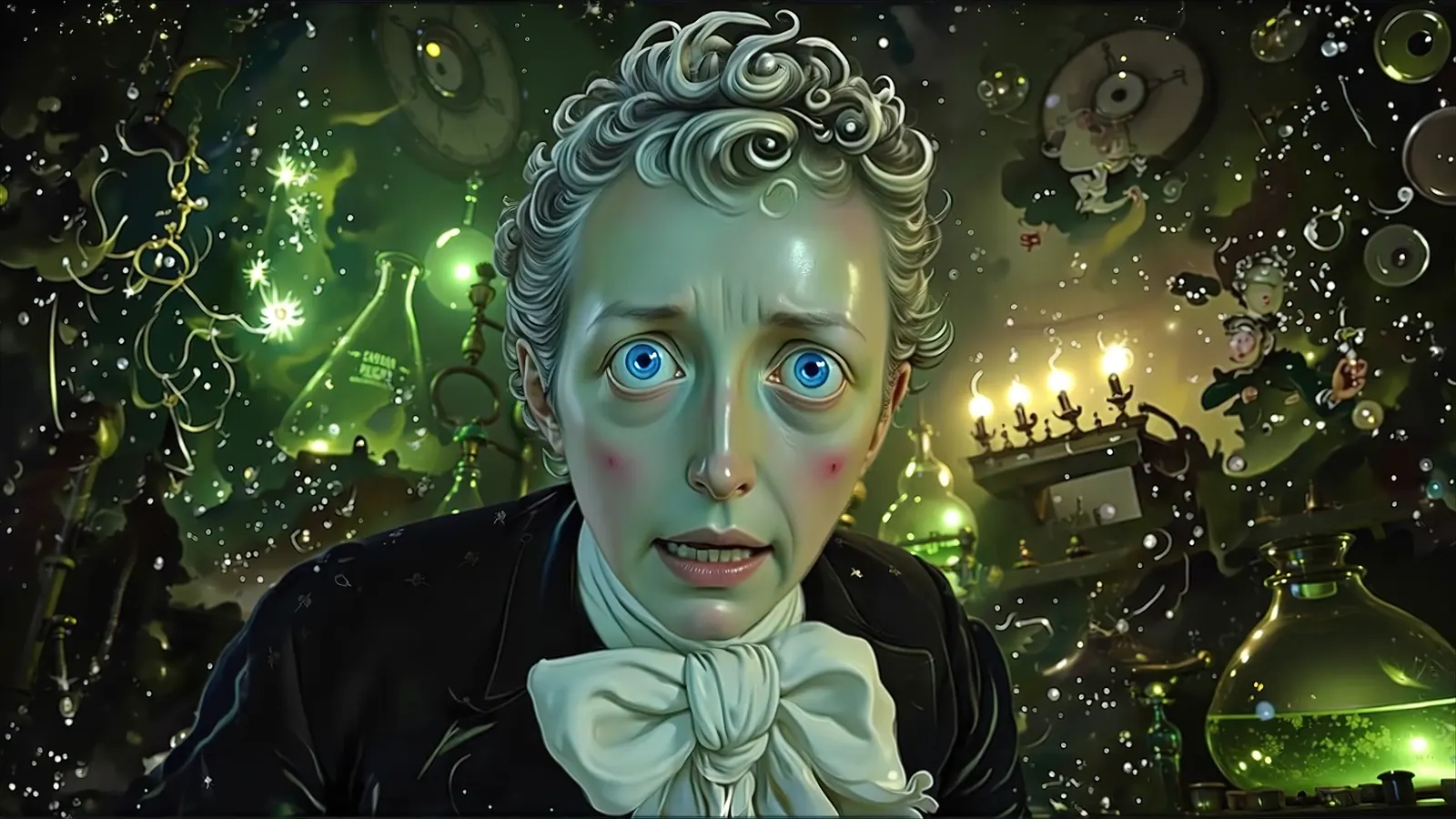
Rachel Maclean, They've Got Your Eyes (2026), film still. Courtesy of the artist. FACT press image.
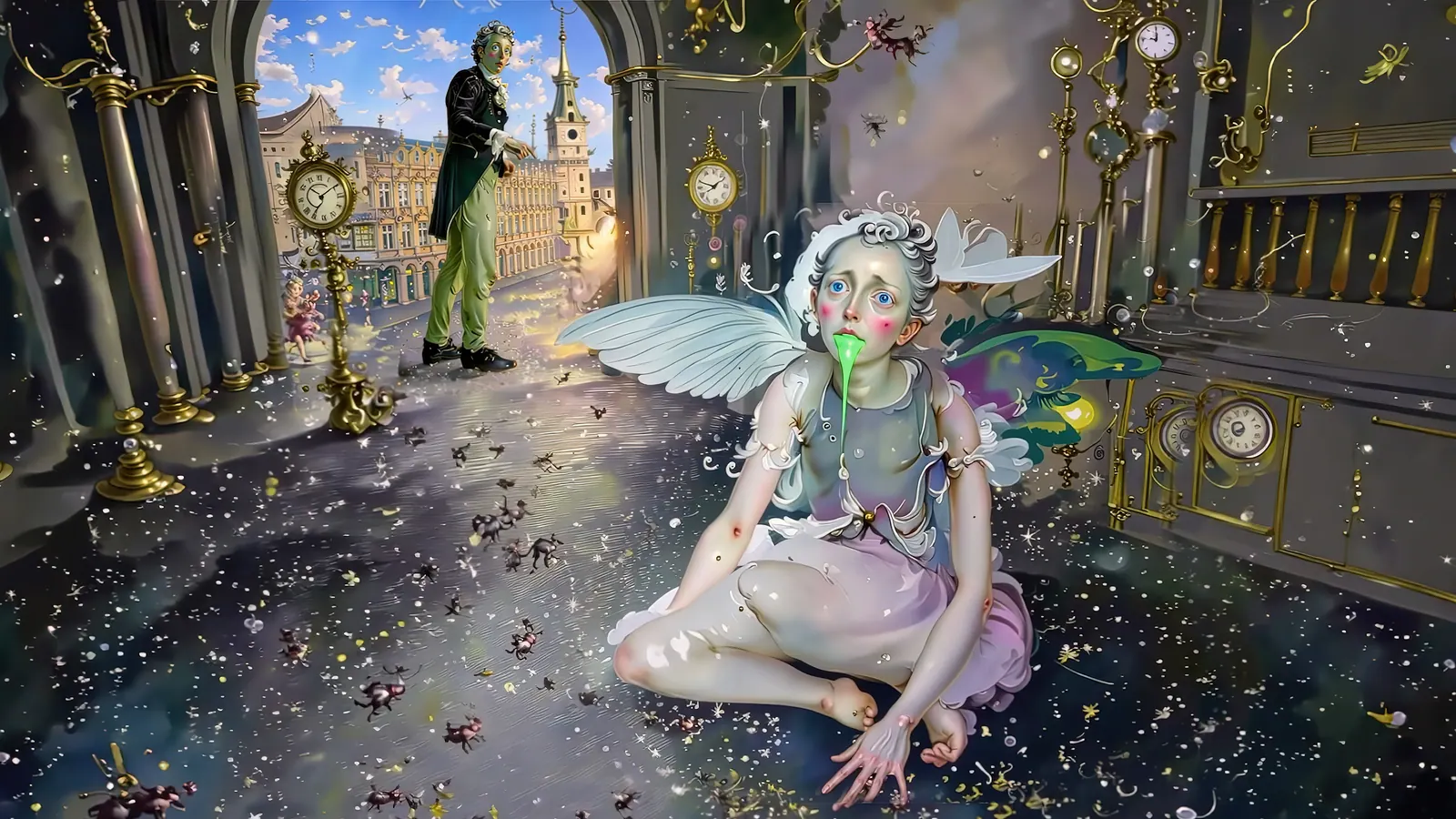
The film follows The Gentleman, a character combining a modern technology founder with a Victorian engineer. He has created a process for generating fairies, but his confidence starts to collapse when another inventor appears to be better at it.
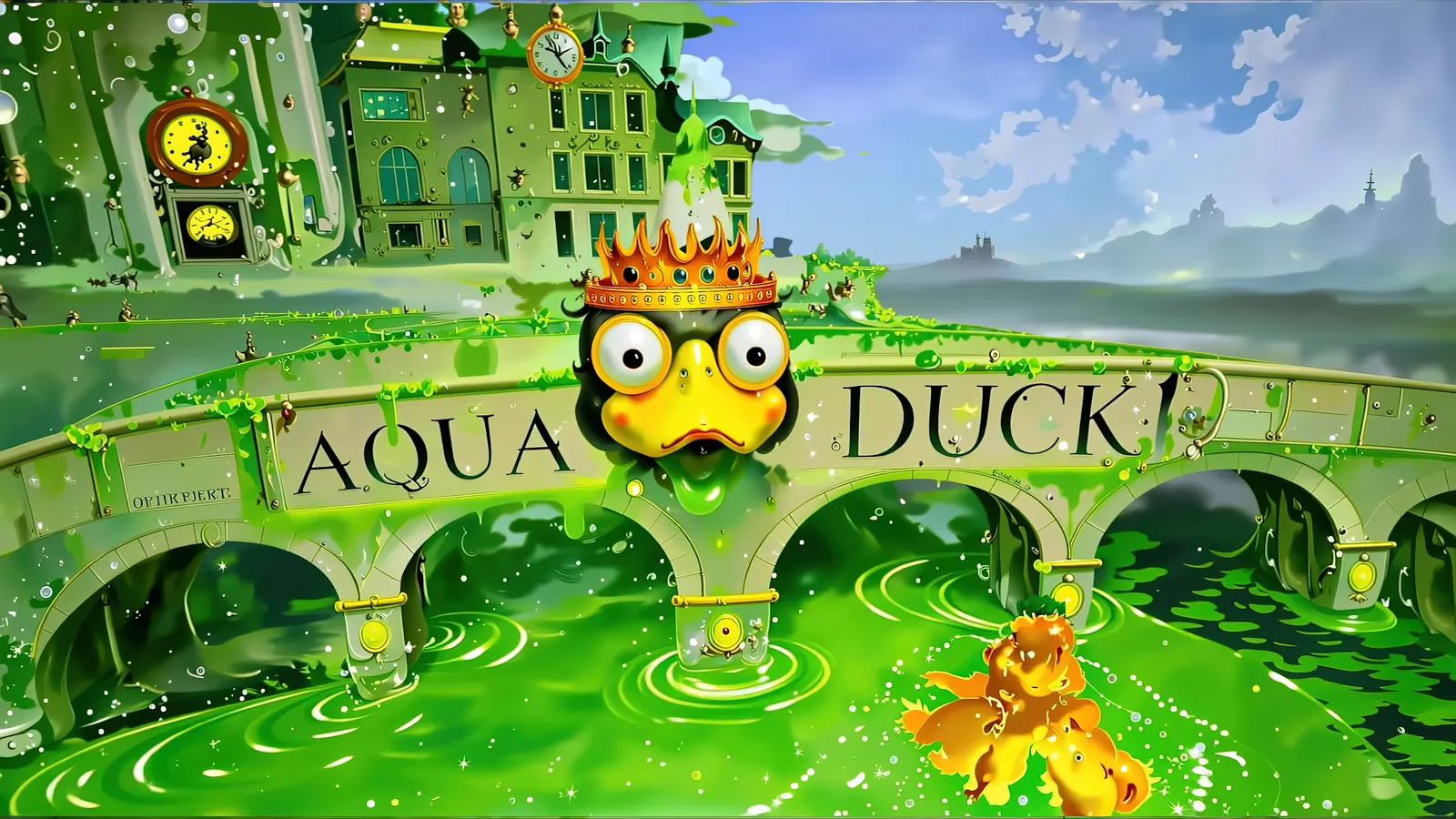
Commands given to the generated characters produce distorted results. An instruction to build an aqueduct creates an "Aqua Duck", while a request for a parliament produces an ice-cream parlour called "ParlourMint". Sculptures based on generated objects sit around the gallery.
The film turns an instruction to build an aqueduct into an "Aqua Duck". Rachel Maclean, They've Got Your Eyes (2026), film still. Courtesy of the artist. FACT press image.
The jokes are silly on purpose, but they sit inside a serious argument about competition, ownership and the pressure to develop AI systems quickly.
One of the generated fairy characters in They've Got Your Eyes (2026). Film still courtesy of the artist. FACT press image.
How Rachel Maclean used AI
The exhibition does not present a film produced from a short text instruction.
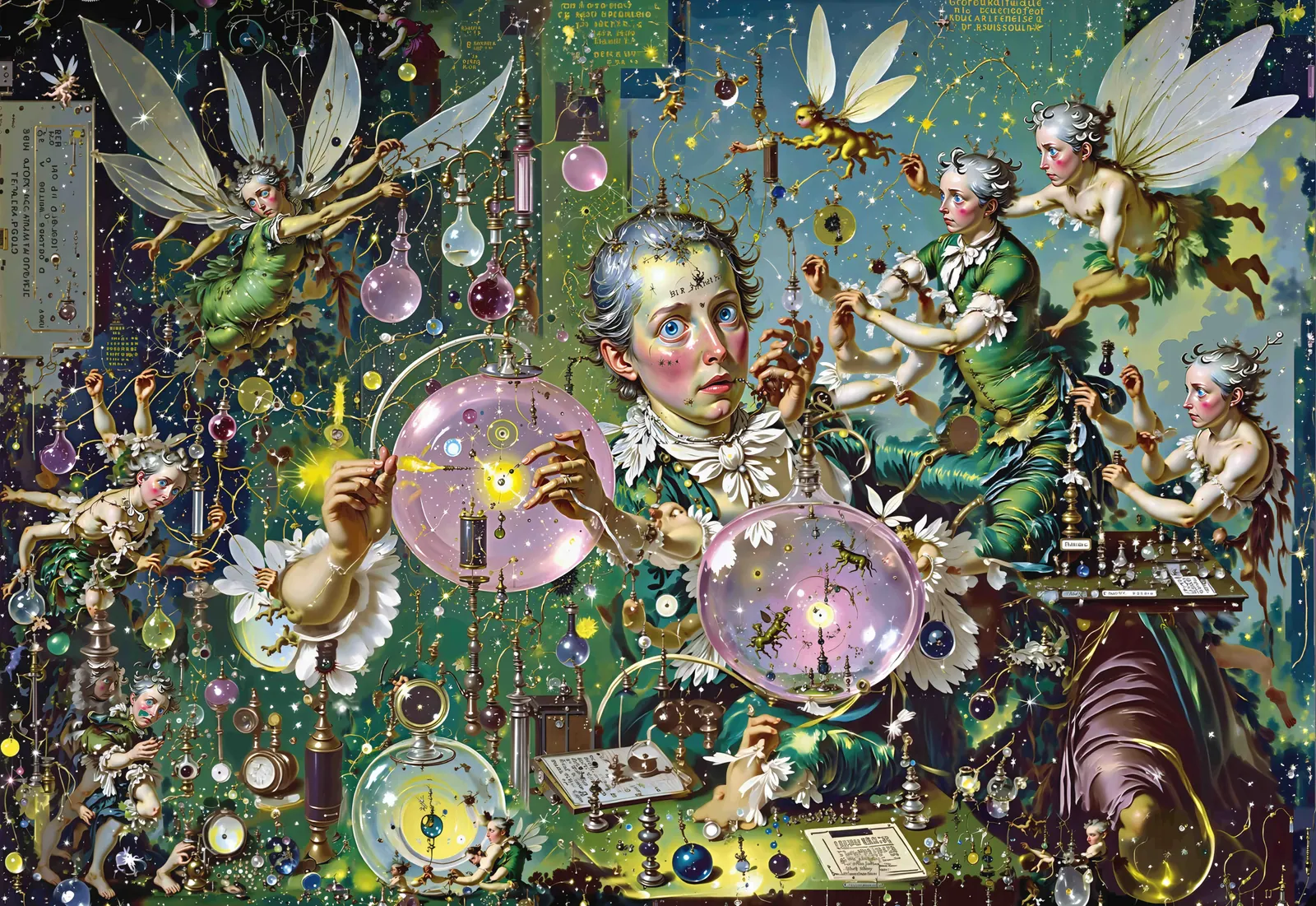
Maclean wrote the script, planned the storyboard, performed the characters and filmed the live-action material in her Glasgow studio. Green-screen footage was then combined with backgrounds created using FLUX and Wan 2.2 through ComfyUI, a visual system used to build generative-image workflows. FACT explains the process in its article on how They've Got Your Eyes was made.
Rachel Maclean, O, they serve you get (2026). Digital image courtesy of the artist. FACT press image.
According to FACT, the models were trained only on Maclean's likeness and previous work, with support from the Bridging Responsible AI Divides programme at Edinburgh College of Art. The decision is central to the exhibition because it asks whether artists can use generative AI while keeping control over the images, performances and source material being used.
Maclean compares parts of the process to rotoscoping, an animation technique in which artists work over filmed frames. Camera movement, performance, framing and lighting remained under her control while the models altered the visual surface.
Maclean performed the characters before generative models changed the visual surface of the footage. They've Got Your Eyes (2026), film still courtesy of the artist. FACT press image.
This does not settle the wider arguments about AI training, copyright or creative labour. It does make the production process part of the exhibition instead of hiding it behind a claim that a machine simply created the work.
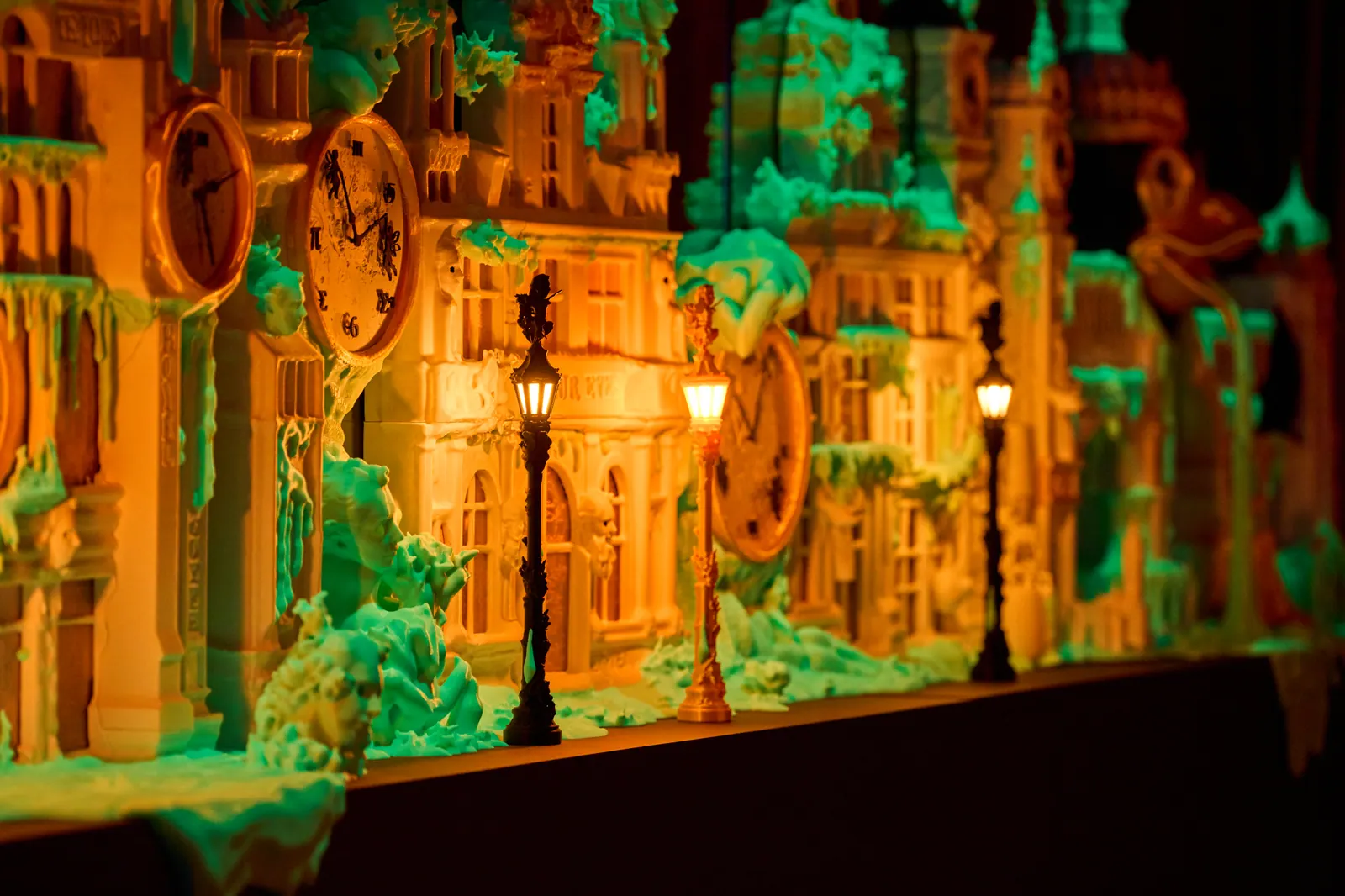
Rachel Maclean, They've Got Your Eyes (2026), installation view at FACT Liverpool. Photography by Rob Battersby. FACT press image.Sculptural objects extend the film into Gallery 1. Rachel Maclean, They've Got Your Eyes (2026), installation view at FACT Liverpool. Photography by Rob Battersby. FACT press image.
Access information for They've Got Your Eyes
The film includes flashing lights and images, occasional strong language and several screens working at the same time.
Closed captions appear on every screen. You can ask FACT staff for a printed transcript. Parents and carers may want to consider the flashing imagery and language before taking younger children into Gallery 1.
Sahjan Kooner: The Zone of Ghosts
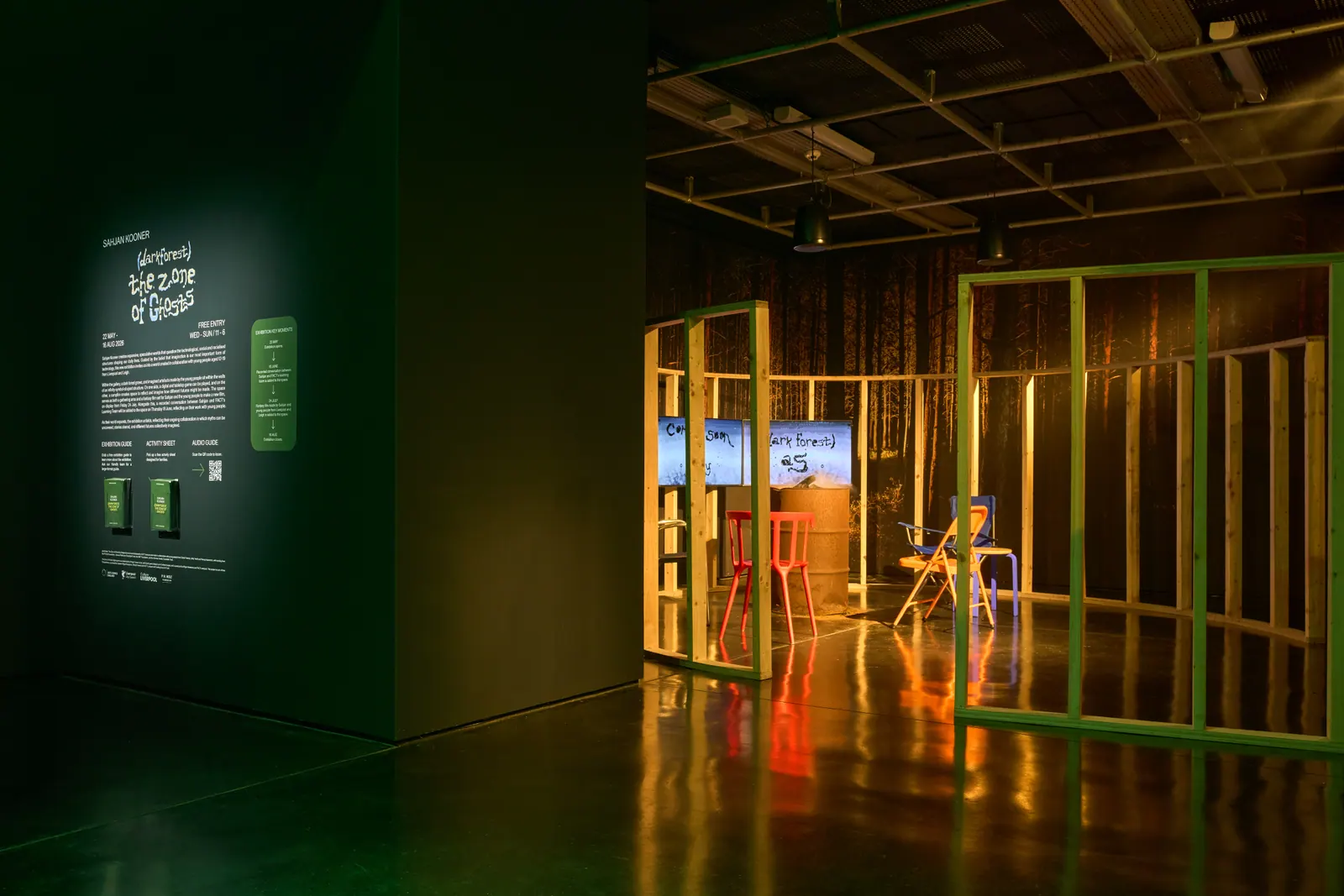
(darkforest) The Zone of Ghosts turns Gallery 2 into a fictional forest built around an infinity-shaped structure.
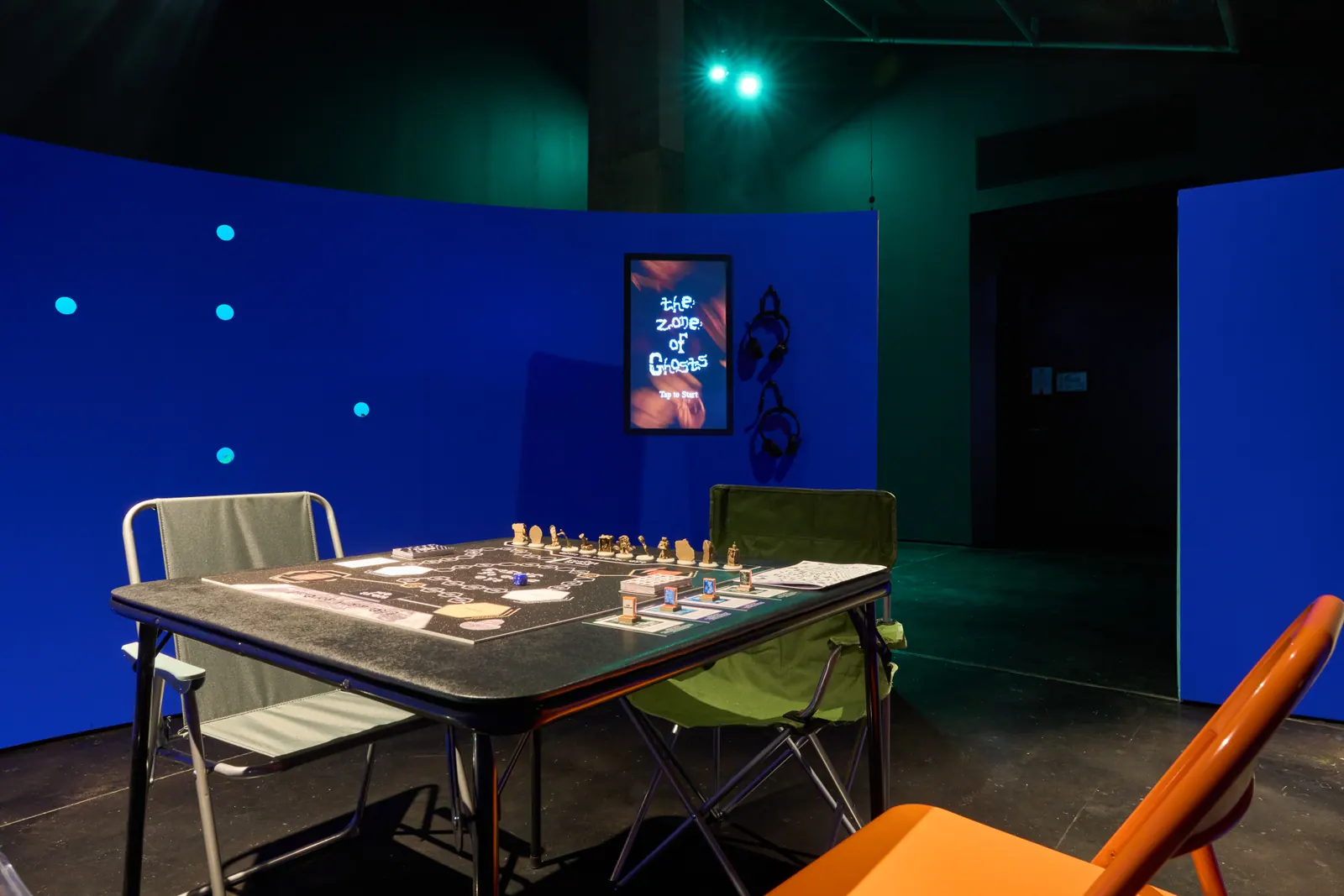
Objects imagined by young participants have been placed inside its walls. You can play a tabletop game, try a digital version and spend time around a campfire-style gathering area used for conversation and storytelling.
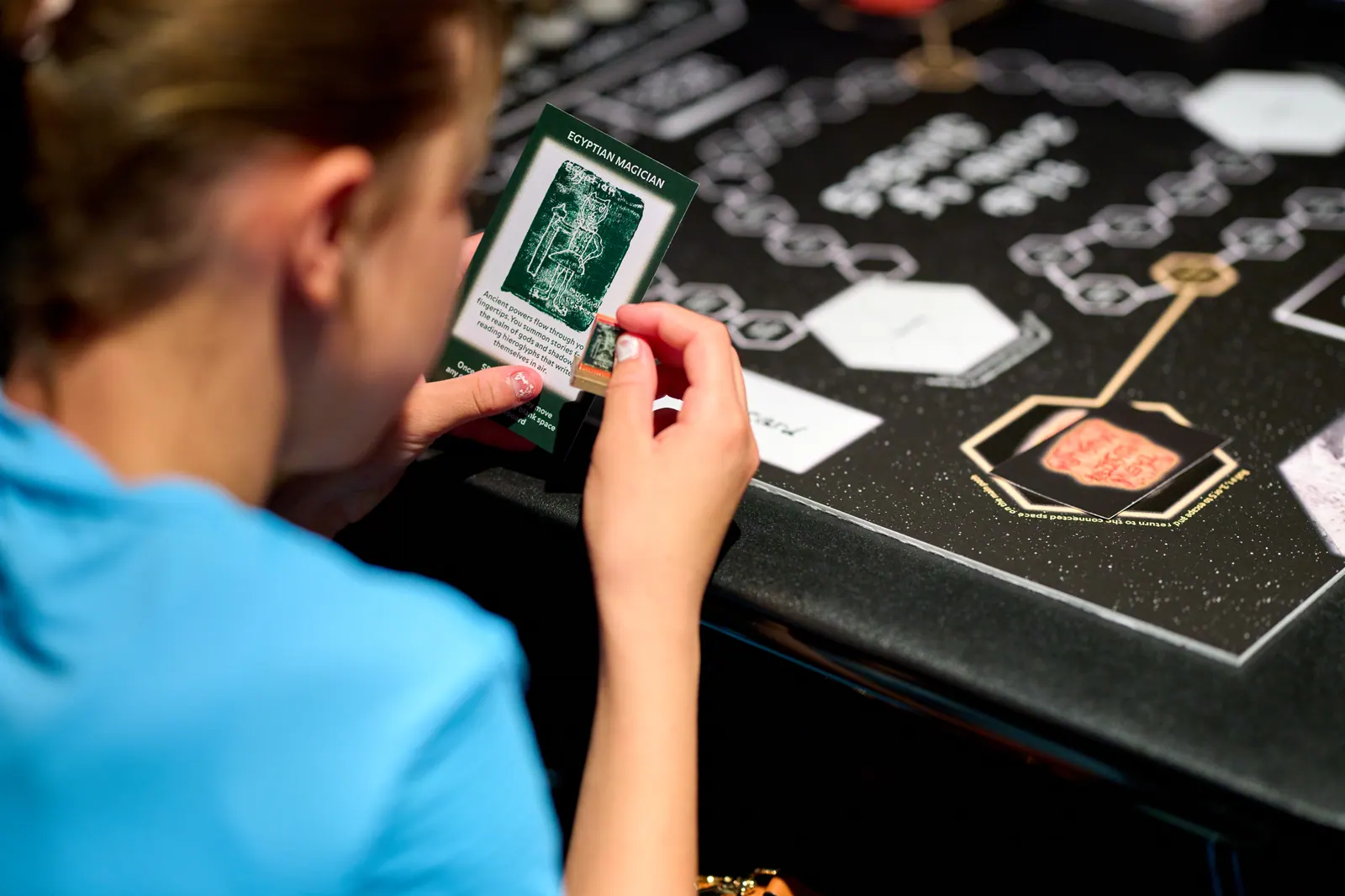
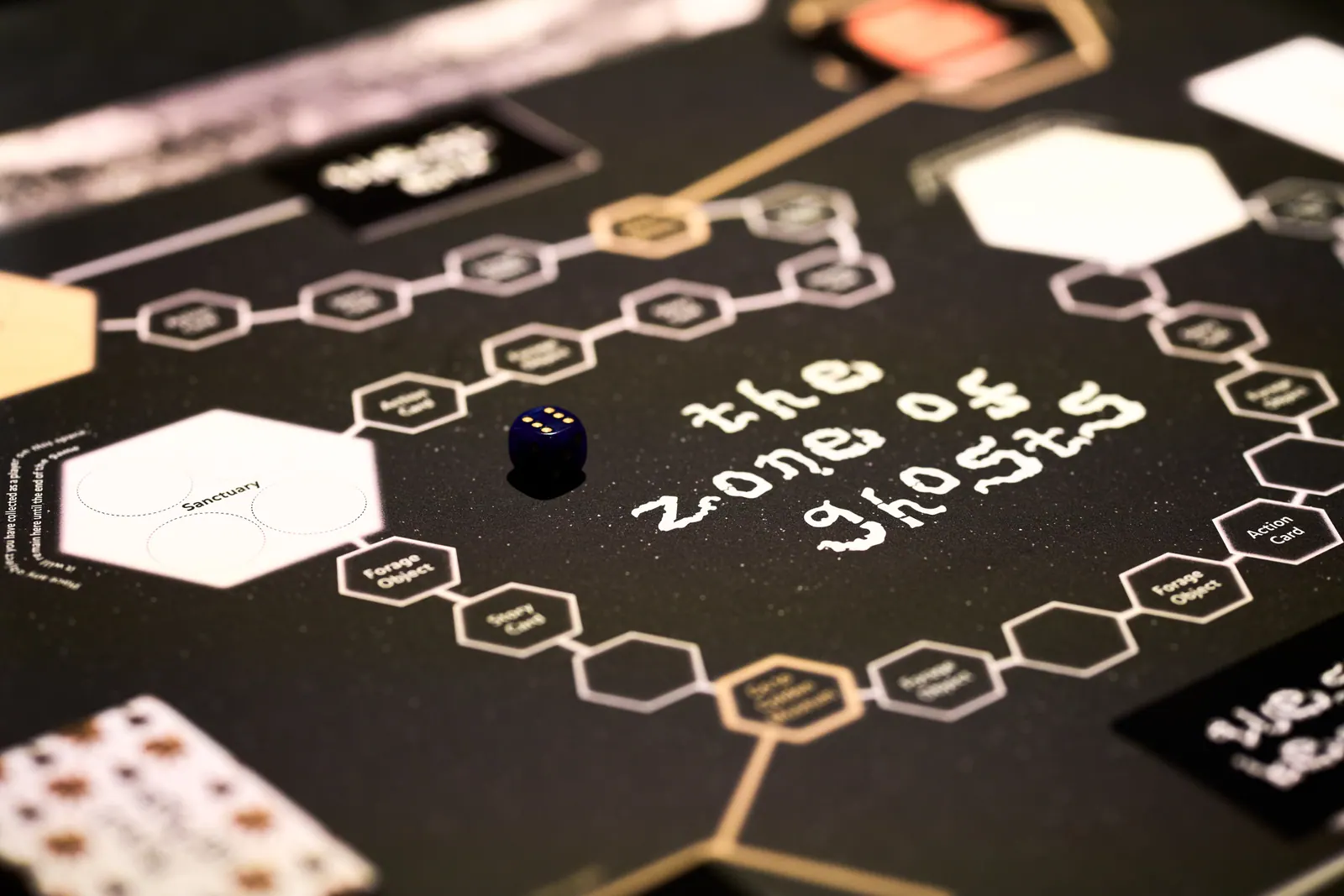
The exhibition includes a tabletop game made as part of the shared fictional world. Sahjan Kooner, (darkforest) The Zone of Ghosts (2026), installation view at FACT Liverpool. Photography by Rob Battersby. FACT press image.
The exhibition was created with young people aged 12 to 19 from Liverpool and Leigh. Participating organisations include Global Friends, Unity Youth and Young Inspectors.
Rather than asking young people to respond to a finished artwork, the project involved them in building its stories, artefacts and rules. The gallery also worked as a film set during the project.
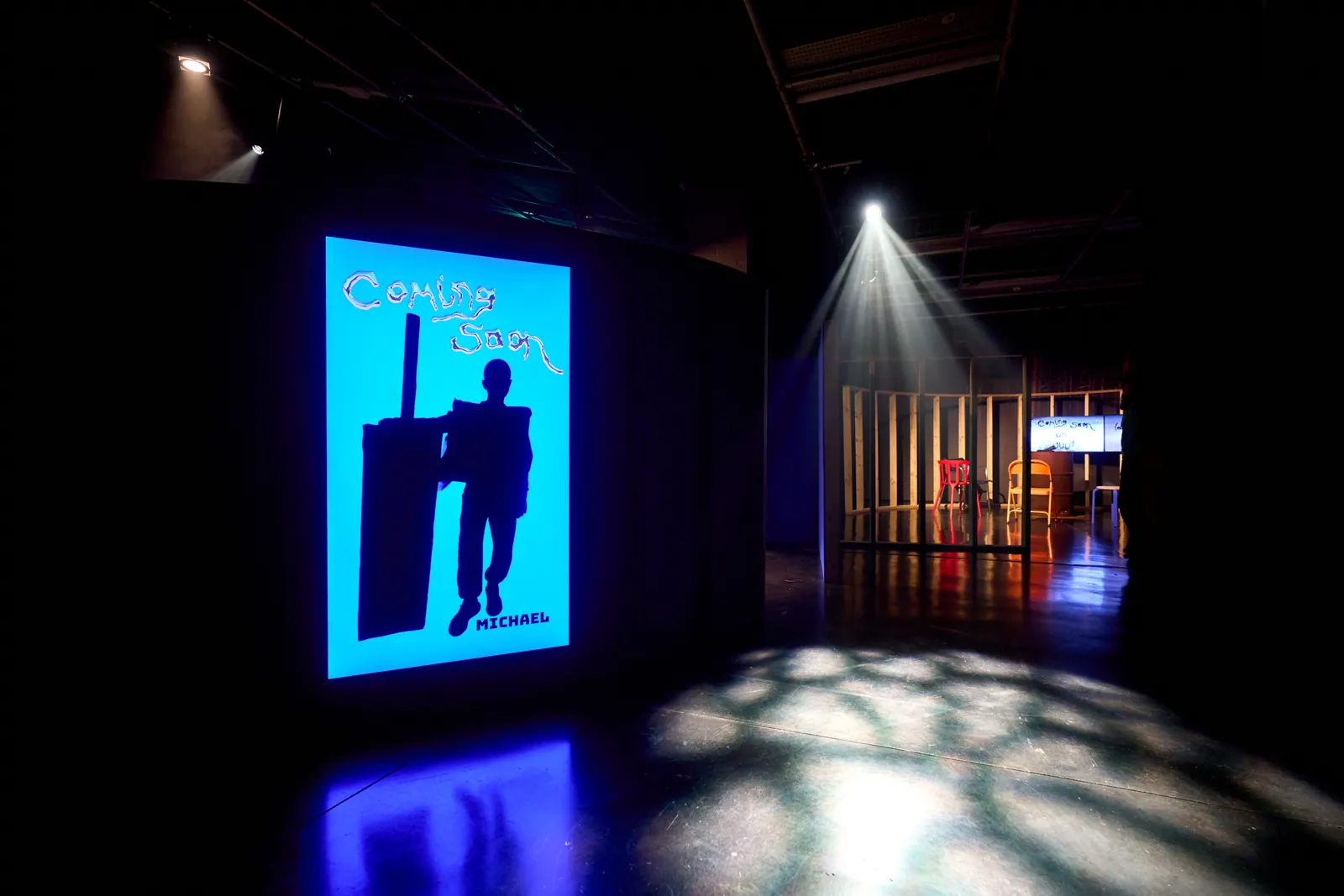
The gallery is built around an infinity-shaped structure. Sahjan Kooner, (darkforest) The Zone of Ghosts (2026), installation view at FACT Liverpool. Photography by Rob Battersby. FACT press image.
A new collaborative fantasy film, The Darkforest As, went on display on 24 July. It was written and performed with project participants and can now be watched inside Gallery 2.
The board game table inside Gallery 2. Sahjan Kooner, (darkforest) The Zone of Ghosts (2026), installation view at FACT Liverpool. Photography by Rob Battersby. FACT press image.
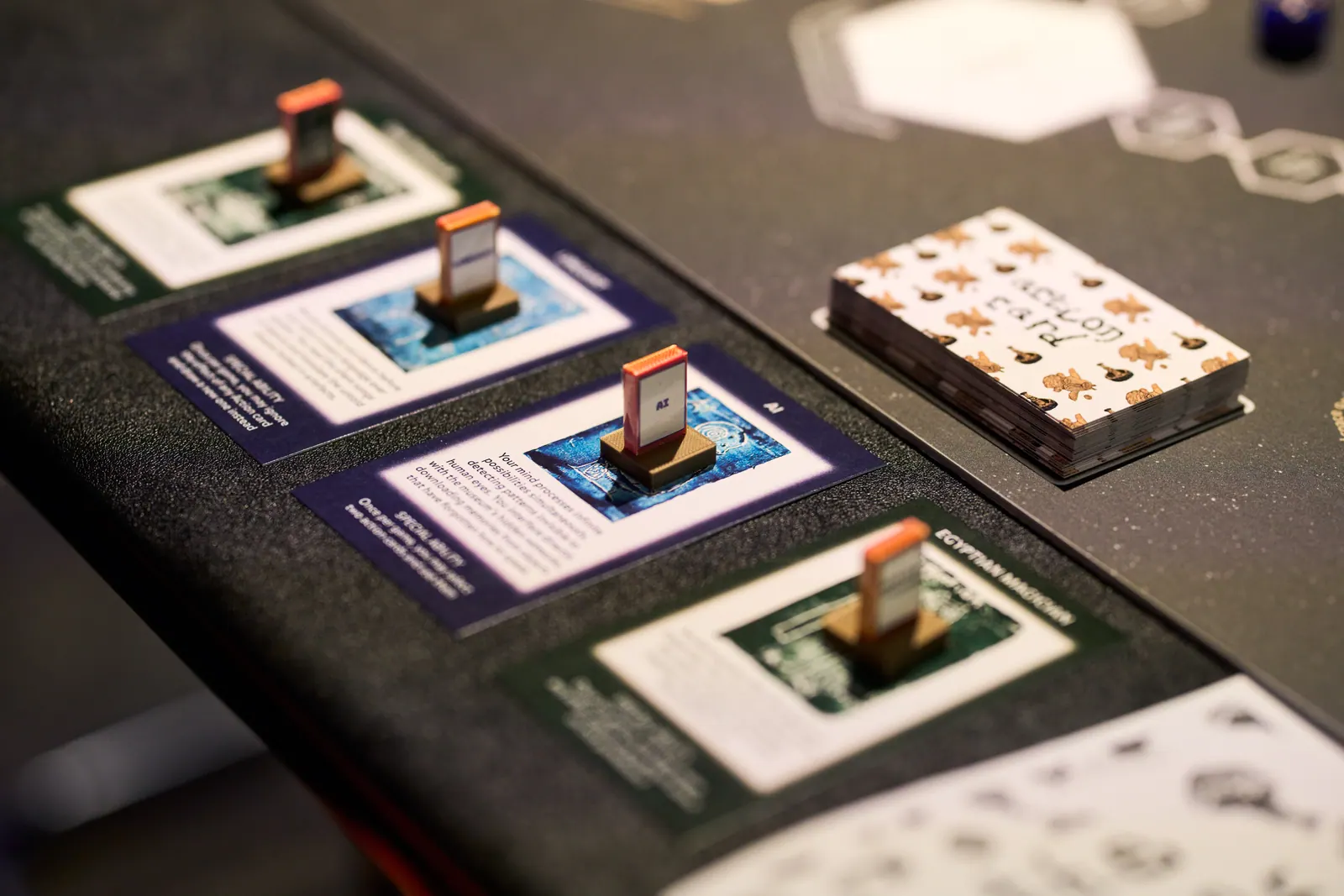
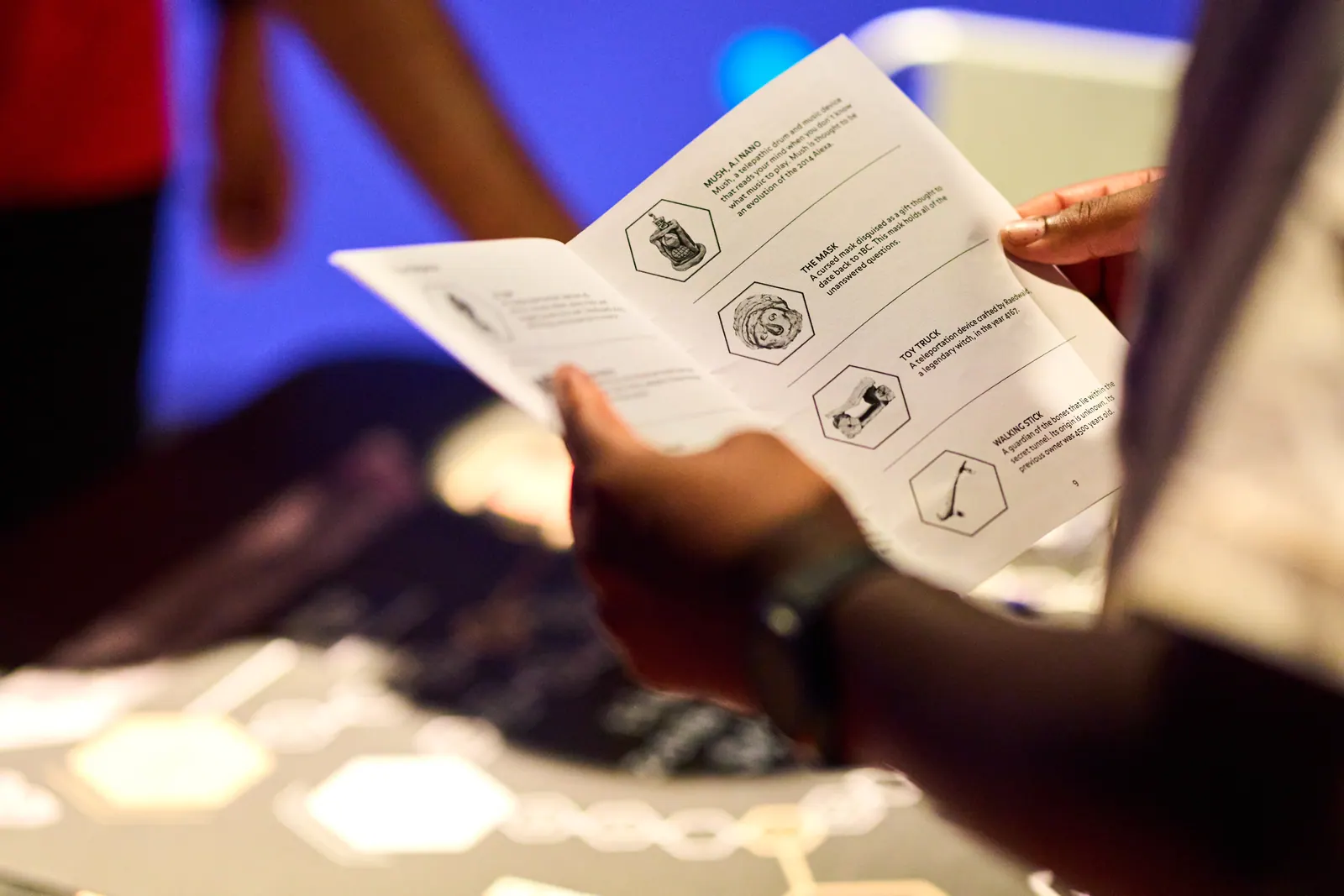
The Zone of Ghosts game board. Sahjan Kooner, (darkforest) The Zone of Ghosts (2026), installation view at FACT Liverpool. Photography by Rob Battersby. FACT press image.Cards and pieces used to build stories during the game. Sahjan Kooner, (darkforest) The Zone of Ghosts (2026), installation view at FACT Liverpool. Photography by Rob Battersby. FACT press image.A visitor reads the game instructions in Gallery 2. Sahjan Kooner, (darkforest) The Zone of Ghosts (2026), installation view at FACT Liverpool. Photography by Rob Battersby. FACT press image.Film and sculpture share the dark Gallery 2 space. Sahjan Kooner, (darkforest) The Zone of Ghosts (2026), installation view at FACT Liverpool. Photography by Rob Battersby. FACT press image.
How the exhibitions work together
The two exhibitions approach technology from different directions.
They've Got Your Eyes looks at the relationship between an individual artist and systems capable of copying, altering or reproducing elements of their work. Its central questions concern control, ego, ownership and the speed of technological development.
The Zone of Ghosts concentrates on shared imagination. Young people take the role of storytellers and world-builders rather than an audience being shown somebody else's idea of the future.
Seen together, the exhibitions create a useful contrast. One asks what can happen when technology absorbs an artist's identity. The other asks who is usually excluded from designing technological and social futures. This is our interpretation of the programme, based on the themes and working methods FACT describes.
Free AI and filmmaking talk on 5 August
FACT is holding a related event on Wednesday 5 August at 6.15pm.
Grierson is a professor working across creative computing, artificial intelligence and the creative industries. Sykes is a creative technologist and one of Maclean's collaborators.
The talk takes place in The Box at FACT. Entry is free, but advance booking is required.
Partner offer
I use YouFibre's full-fibre broadband myself and rate the speed. Order with my code WE5AZL and you can both get a reward, up to £100 depending on the package and current terms.
Free family workshop on 8 August
FACT's next Do Something Saturdays workshop takes place on Saturday 8 August from midday to 3pm.
The session is based on Kooner's exhibition. You can create an offering for the fictional forest, write a short film idea and play The Zone of Ghosts board game inside the installation's infinity-shaped structure.
The workshop is free, suitable for all ages and does not require advance booking. Families can arrive at any point between midday and 3pm.
Free introductory tours
FACT advertises free introductory tours at 1pm, lasting about 20 minutes. You do not need to book.
The tour listing currently says tours run from Tuesday to Sunday, while the main visitor information says the galleries are closed on Mondays and Tuesdays. If you plan to attend specifically for a Tuesday tour, check the current FACT programme or contact the venue before travelling.
How long to allow
Allow about one hour for both exhibitions. This is our estimate, not an official visit time.
Maclean's film runs for 20 minutes. Starting near the beginning, looking at the sculptures and then spending time with Kooner's film and games could easily take longer than an hour.
Give yourself more time if you are attending the 5 August talk or 8 August family workshop.
Getting to FACT
FACT is at 88 Wood Street, close to Bold Street, Ropewalks Square and Slater Street. Our Ropewalks guide explains how Wood Street connects with the rest of the area.
By train
Liverpool Central is the nearest railway station. FACT's official pages give slightly different walking estimates, ranging from three to five minutes. Liverpool Lime Street is about a 12-minute walk away.
By bus
FACT lists Berry Street, Paradise Street and Hardman Street as the nearest bus stops. Services and city-centre stopping arrangements can change, so use the Merseytravel journey planner before travelling.
By bicycle
Cycle parking is available on Ropewalks Square, around five metres from FACT's entrance.
Parking
FACT does not operate a car park. Commercial car parks are available around the Ropewalks and city centre, but prices and opening hours vary.
Disabled parking bays are available nearby on Wood Street and Bold Street. Check signs and restrictions before leaving your car.
Accessibility
FACT has level pavement access from Wood Street and ramp access from Fleet Street at the rear.
The galleries, cinema screens and public areas are accessible to wheelchair users and people with limited mobility. A lift beside the box office serves every floor.
Accessible toilets are available on the ground, first and second floors. Guide dogs and fully trained support dogs are welcome. FACT also provides a visual guide to the building to help you prepare for a visit.
For specific access questions, call FACT on 0151 707 4444 or email info@fact.co.uk.
What to check before travelling
The exhibitions are scheduled to close on Sunday 16 August 2026.
Normal gallery entry is free and does not require booking, but talks, workshops and special events can have separate arrangements. Opening times can also change when an installation is being updated or an evening event is taking place.