History
Tinker, Tailor, Scouser, Spy
Four women tied to Liverpool's Second World War secrets, from the Western Approaches bunker to SOE in India and an opera singer spying in Berlin.
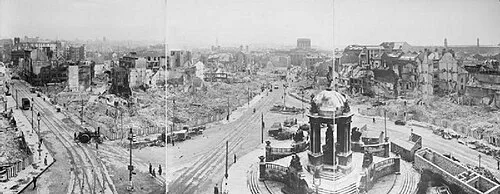
It was a clear night on the 28th August 1940, but the people of Liverpool were unaware of the devastation that lay ahead. As the German Luftwaffe bombers attacked the city at night, Liverpool’s landscape and the lives of its people began to change forever. This marked a terrifying period of air raids which soon became known as the Liverpool Blitz, lasting from August 1940 to January 1942. Yet, behind the destruction and uncertainty, ordinary people played extraordinary roles in keeping the city and the Allied war effort going.
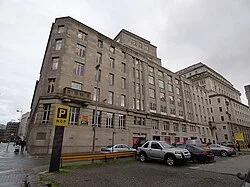
Just a 15-minute walk away from the Albert Dock is the Western Approaches Museum, located on 1-3 Rumford Street. Hidden beneath the city streets, this museum offers a glimpse into wartime Liverpool, allowing its visitors to step into the shoes of the original wartime staff. On arrival, guests are presented with a wartime replica identity card, inviting them to follow in the footsteps of more than 1,000 staff members who worked there during the Second World War. But did you know that 80% of the staff members were women? Today we will uncover the stories of four remarkable women who helped shape the outcome of the war in favour of the Allied forces: the daring operative Margery Booth, the dedicated decoder Elizabeth Copley, secret agent Edith Louise Lloyd and the strategic mastermind Jean Laidlaw.
Margery Booth, the daring operative
Over 600 miles away from her family home in Southport, Margery Booth, a famous British opera singer, performed Richard Wagner’s Parsifal at the Bayreuth Festival in Bavaria. It was here she caught the attention of German Chancellor Adolf Hitler. He was so impressed by her performance that he sent a bouquet of crimson roses wrapped in a swastika-emblazoned sash to her dressing room. This encounter marked the beginning of Booth’s association with some of the most powerful figures in Nazi Germany, transforming her into a celebrated performer within Germany’s cultural establishment.
From this point onwards, Booth’s relationship with Hitler and his inner circle appeared to have been shaped by her artistic reputation and appreciation for the arts. Her talent earned her admiration among the Nazi elite, therefore placing her in a protective bubble where she could move through high Nazi society without scrutiny.
When the Second World War broke out in September 1939, Booth and her husband, Dr Egon Strohm, chose to stay in Berlin so she could continue her career as a principal mezzo-soprano at the Berlin State Opera. Her decision to stay in Germany would later provide her with the perfect cover story for her next venture as a member of British intelligence for MI6 and MI9. Although the precise circumstances of her recruitment remain classified, Margery was denounced by the British press as a traitor and suspected collaborator. Whilst such accusations damaged her reputation in Britain, they gave British intelligence a perfect cover to use to its advantage.
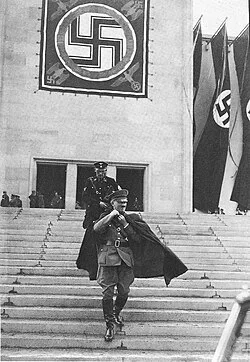
In addition to Booth’s own connections in the cultural establishment, her husband’s work as a translator and radio propagandist for the Reichsrundfunk, the German State Radio broadcasting service, helped her connect to a network of British expatriates and fascist sympathisers. Among these were individuals involved in producing English-language propaganda for Nazi Germany. Their social connections provided Booth with countless opportunities to observe and gather information.
One of the most infamous figures associated with Nazi propaganda was William Joyce, better known to British audiences as Lord Haw-Haw. Before becoming a broadcaster for Germany, Joyce had been involved with Oswald Mosley’s British Union of Fascists (BUF), where he served as the Director of Propaganda. The BUF became notorious for its antisemitic rallies and violent street fights. This became a growing concern for British intelligence because of the party’s ties to foreign dictators such as Benito Mussolini.
In 1937, Joyce broke away from Mosley to form the National Socialist League, which explicitly worshipped Adolf Hitler. His increased support for Nazism brought him to the attention of MI5. As the political situation in Europe deteriorated in the summer of 1939, MI5 attempted to arrest Joyce, but he escaped to Germany several days earlier, placing himself beyond their reach.
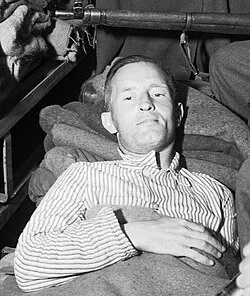
Once in Germany, Joyce became the primary voice of Nazi propaganda for British audiences. His broadcasts combined German psychological messaging with personal attacks on British leaders, mocking the war effort and offering chillingly accurate descriptions of British air-raid targets. At the peak of his popularity, his station reportedly attracted between 6 million and 18 million occasional listeners from the UK. This terrified British intelligence, who believed Joyce’s mocking would eventually erode public morale.
His activities extended beyond radio broadcasting. He also visited prisoner-of-war camps in an attempt to recruit British prisoners into the Britisches Freikorps, or British Free Corps, a small Waffen SS group created to attract British and Commonwealth volunteers to the German side. For British intelligence, understanding Joyce’s activities, his connections and the networks surrounding him would therefore be of considerable interest.
This pressing need for intelligence brought together an unlikely pair of British agents operating right under the noses of the Nazis: John Brown, a British prisoner of war and Margery Booth, a Wigan-born opera singer. Together, they established a dangerous espionage pipeline that sealed Joyce’s fate. John Brown gathered information by successfully convincing the Germans that he was a Nazi sympathiser. Having gained their trust, he was given unprecedented freedom inside the prisoner camp system, allowing him to observe the surrounding area and secretly map out nearby airfields and anti-aircraft defences. His position also gave him access to the administration at Stalag III-D, a specialised camp where British prisoners were targeted for recruitment in serving the Germans. Through this role, he came into contact with collaborators such as William Joyce, who frequently visited camps to encourage British prisoners to join the Nazi cause. These encounters gave Brown direct access to valuable information such as names, schedules, propaganda scripts and recruitment logs.
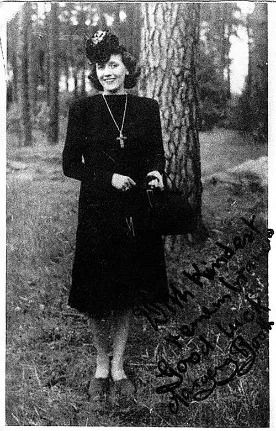
Booth’s role in the operation relied on a different kind of access. German authorities invited prominent performers to prisoner-of-war camps, hoping to entertain the inmates, improve morale and ultimately coerce them to join the German cause. It was reported that during one of these performances she met Brown. Recognising a fellow British patriot, they struck a dangerous alliance. This involved Brown compiling incriminating documents and maps detailing German military installations and recruitment activities, which he would then carry to Booth at her performances or through secret meetings in Berlin. On one occasion shortly before she performed for Hitler, Brown hastily shoved a batch of papers down her dress to be smuggled out. This daring method of concealment would later become associated with Booth’s nickname, the ‘Knicker Spy.’
This high-stakes game of concealment eventually reached a fracturing point in 1944. Following the failed 20th July plot to assassinate Hitler, the Gestapo launched a paranoid crackdown on anyone suspected of treason, and Booth fell under deep suspicion. She was arrested and subjected to brutal torture. Yet, even under extreme duress, her operatic composure held and she refused to break. Lacking concrete evidence, the Gestapo reluctantly released her. In the chaotic final months of the war, as Berlin crumbled under Allied bombs, Booth made a daring escape from the city and eventually reached American lines, narrowly evading a firing squad.
Her return to Britain, however, brought no hero’s welcome. Because she had operated within the highest echelons of Nazi society, the British public and its music industry unfairly classified her as a Nazi collaborator. Unable to publicly share her classified wartime efforts, she was ultimately silenced and forced to move to New York to escape the hostility. Tragically, her story ended far too soon; battling cancer, she passed away into obscurity in 1952 at the age of 47. For decades, the ‘Knicker Spy’ remained a forgotten ghost of the war effort; a patriot who sacrificed her health and her career to defeat the regime that applauded her from the front row.
Elizabeth Copley, the dedicated decoder
Elizabeth Copley was born in Pemberton, Wigan, around 20 miles away from the Western Approaches command centre, during a period of economic hardship. Her upbringing was marked by tragedy when her mother died from lung disease inherited from working in a cotton mill. Concerned for her daughter’s future, her mother wanted to ensure Elizabeth would be provided for, and at just 18, Elizabeth married Henry Copley. Together they moved to Liverpool in search of a fresh start and greater financial stability. Before the outbreak of war, Elizabeth successfully established herself as a civilian accountant, developing the numerical precision and mathematical skills that would later prove invaluable to British wartime intelligence.
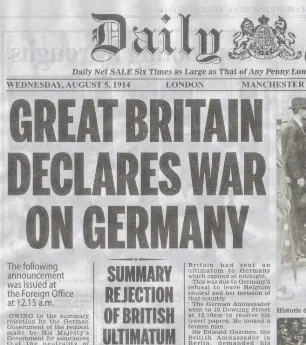
When Britain declared war on Germany on the 3rd September 1939, Elizabeth’s life changed once again. With her husband entering military service and sent overseas, she faced an uncertain future while caring for her newborn child. Rather than remain in civilian life, she seized an opportunity to contribute to the war effort after spotting a recruitment poster for the Women’s Royal Naval Service, known as the Wrens, at Clitheroe railway station. Her decision marked a turning point, taking her from the familiar world of accountancy into the increasingly complex demands of naval warfare.
Elizabeth’s mathematical ability and expertise with figures initially made her a suitable candidate for map plotting, and she began a two-week period of basic training at the Blundellsands training depot, north of Liverpool. However, her path took an unexpected turn when she was selected for a six-week intensive decoder course in Warrington. There she learnt the fundamentals of cryptology, teleprinter operations, and the precise formatting of encrypted naval coordinates, developing the skills needed to handle sensitive information in a service where accuracy and discretion were paramount.
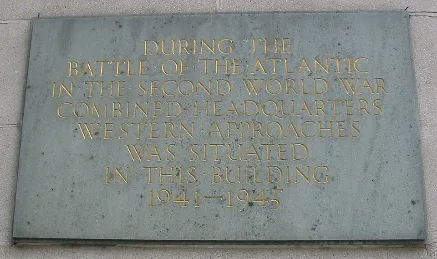
In February 1941, Elizabeth arrived at the Western Approaches, the newly established Liverpool headquarters directing the Allied campaign in the Atlantic. Here, the movement of convoys, aircraft and enemy submarines was tracked across the operations room, as naval personnel worked to protect the lifeline connecting Britain to the supplies it desperately needed. For Elizabeth, the journey from civilian accountant to wartime decoder brought her into the heart of a battle where information could mean the difference between a convoy reaching safety and ships disappearing beneath the waves.
During her four years at Western Approaches, Elizabeth worked long shifts known as watches. She helped maintain the continuous flow of information on which the Battle of the Atlantic depended. She could spend around ten hours a day inside the windowless bunker, beneath a seven-foot bombproof concrete roof, surrounded by cigarette smoke, industrial fumes from ventilation machinery and damp concrete. Deprived of natural sunlight for extended periods of time, staff faced the physical strain of underground service, with ultra-violet sessions being mandatory to ward off vitamin D deficiencies and anaemia. For Elizabeth, the demands of work extended well beyond mastering codes and coordinates; maintaining concentration and accuracy through exhausting shifts was essential in an environment where the battle continued around the clock.
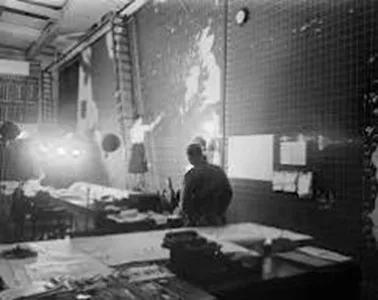
At her desk, with her headphones on and coded messages before her, she worked within the intelligence chain that helped Britain track the deadly struggle across the Atlantic. Radio traffic from the ships and naval units carried vital information about convoy movements, enemy sightings and the threat from German U-boats hunting in coordinated groups known as wolf packs. Much of this information arrived in coded or abbreviated form, demanding careful interpretation and unwavering attention to detail. Drawing on the numerical precision she had developed as an accountant, Elizabeth worked to process the information accurately, knowing that even a small error in a ship’s identity or reported position could mislead those responsible for assessing the threat.
Once the information had been decoded and verified, it could be passed to the person responsible for maintaining the operational picture in the main plotting room, where reports from across the Atlantic were brought together to help comrades follow the changing situation at sea. Each message added another piece to a vast and constantly shifting picture of the battle, helping those directing Allied operations assess the threats and coordinate their response. For Elizabeth, decoding was far more than a technical exercise; it was a vital link between the fragments of information arriving from the ocean and the decisions that could determine whether ships and their crews reached safety.
The intelligence gathered at Western Approaches did more than track the movements of ships and enemy submarines; it also helped shape the tactics used to fight them. At the Western Approaches Tactical Unit (WATU), led by Captain Gilbert Roberts and staffed largely by Wrens, naval officers studied the behaviours of German U-boats through carefully designed wargames. The information processed by personnel across the command centre contributed to a clearer understanding of enemy movements, helping the unit recreate the dangers faced by Allied convoys and explore new ways to counter the submarine threat.
Through these wargames, WATU developed innovative anti-submarine tactics, including the manoeuvres known as the Raspberry and Beta Search, which helped Allied escorts respond more effectively to U-boat attacks. The unit’s method was subsequently taught to thousands of Allied naval officers, extending the influence of its work far beyond Liverpool. Elizabeth’s role as a decoder placed her within this wider intelligence system that helped commanders turn information into action.
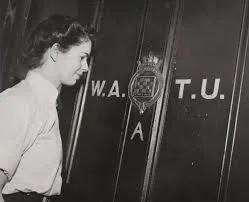
By the end of the war in Europe and Japan in 1945, the urgency that had sustained the Western Approaches command centre for years began to recede. The work of tracking the enemy submarines and protecting Allied convoys gave way to the task of closing down the wartime operation, and the bunker’s once relentless activity gradually came to an end. For Elizabeth, years of watches, coded messages and life beneath Liverpool’s streets were drawing to a close, bringing an end to a chapter of service that had taken her far beyond her former career as a civilian accountant.
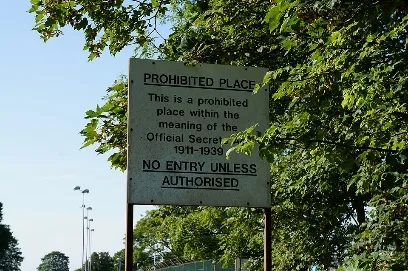
Returning to normal life as a young mother, Elizabeth was bound by the Official Secrets Act, restricting what she could reveal about the sensitive work she had undertaken. The codes she had handled, the information she had processed and the operations she had helped support could not simply become stories to share at home. Instead, she returned to the quieter routines of family life, carrying the memory of her wartime service largely in silence. Beneath the streets of Liverpool, the command centre had played its part in the Battle of the Atlantic; above ground, Elizabeth’s story reflects the experience of many wartime personnel whose contributions were essential to the war effort, yet whose service remained largely invisible long after the fighting ended.
Free weekend guide every Thursday
Edith Louise Lloyd, the secret agent
Just 5.5 miles away from the Western Approaches command centre, Edith Stanley was born in West Derby, Liverpool on the 8th June 1903, into a middle-class family. Raised in an environment shaped by the Church and community life, she developed the organisational skills, meticulous attention to detail and quiet discretion that would later prove invaluable to British wartime intelligence.
For the first three decades of her life, there was little to suggest that Edith would become involved in the secret machinery of war. In 1934, she married Cyril Mosley Lloyd, an ordained minister in the Church of England, and assumed the responsibilities of a vicar’s wife. Her daily life revolved around parish work, community organising, social events and assisting her husband’s administration, developing skills in confidential correspondence, record keeping and discretion that would later serve her in a very different world.
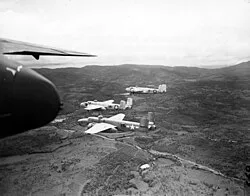
When war erupted across Europe in September 1939, Cyril volunteered for military service and was commissioned as a British Army chaplain, eventually being posted to British India. Rather than remain in Liverpool as the threat of German air raids grew, Edith followed him more than 4,000 miles to Poona, a decision that took her far from home and placed her within reach of the expanding Allied war effort in the Far East.
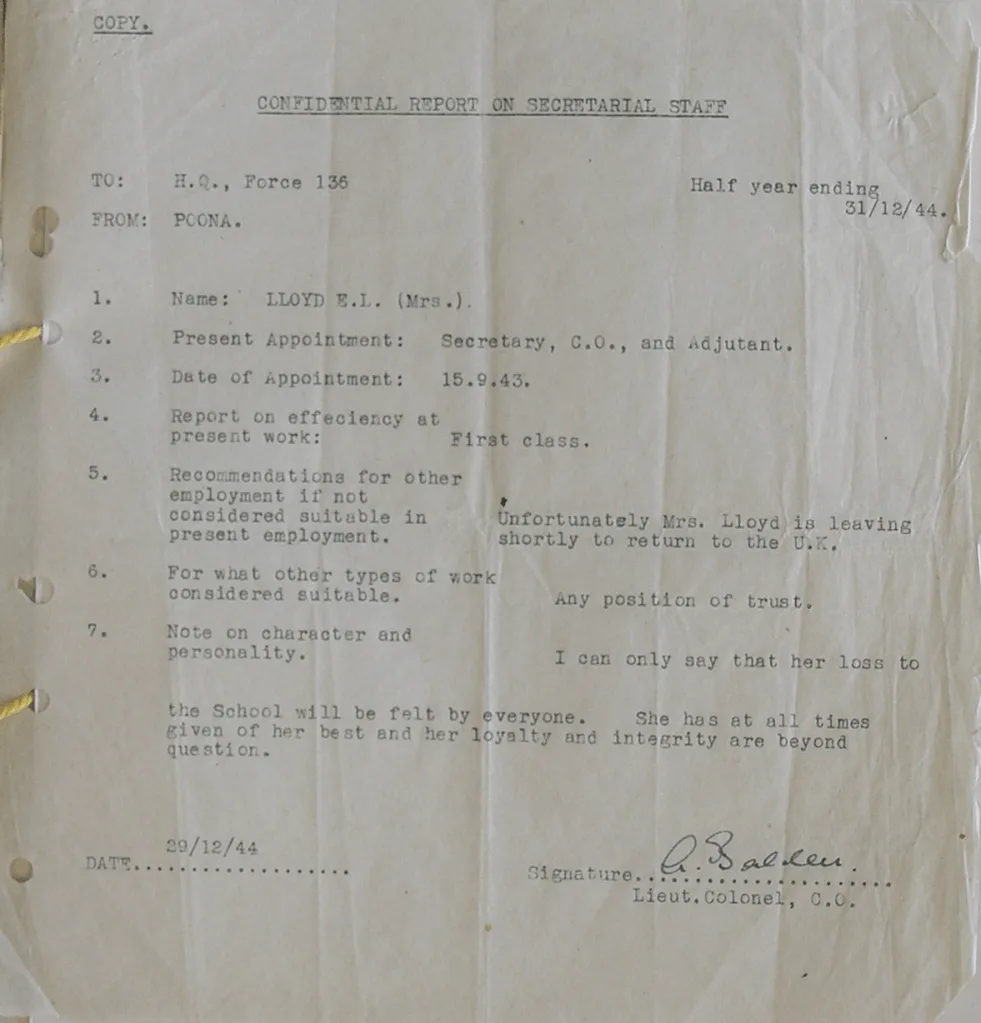
For several years, Edith’s life continued under the familiar identity of an army chaplain’s wife, until September 1943, when she was recruited to work at the highly secretive School of Eastern Warfare in Poona, commanded by Lieutenant Colonel Anthony Balden. Her new responsibilities were a world away from the parish administration: handling classified ciphers, organising sensitive records and cataloguing files on guerrilla trainees preparing for covert deployment behind enemy lines. The information passing through her hands concerned men whose missions depended on secrecy, where a compromised document could endanger lives and jeopardise Allied operations.
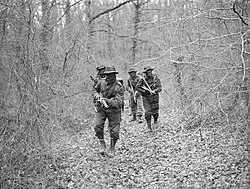
Recognising her administrative precision and discretion, Balden selected Edith to serve as his gatekeeper, a position she held from September 1943 until January 1945. She controlled access to the commanding officer, managed confidential information and helped safeguard the records supporting clandestine missions. Serving with the First Aid Nursing Yeomanry (FANY), she became part of the hidden machinery sustaining Britain’s secret war in the Far East, where the success of operations depended as much on secure administration and careful planning as on the courage of those sent into the field.
Edith’s contribution may not have involved parachuting behind enemy lines or leading guerrilla fighters into battle, but her work helped protect the people and information on which such missions relied. In a theatre of war where secrecy could mean the difference between survival and capture, her quiet vigilance formed another line of defence, supporting the network preparing personnel for dangerous operations across Japanese-occupied territories.
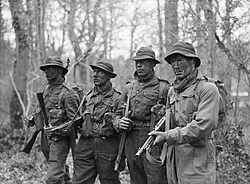
In January 1945, Edith returned to the United Kingdom alongside her husband, seemingly bringing her first period of wartime service in India to a close. Yet Balden was reportedly reluctant to lose an experienced and trusted member of his staff, and his personal request for her return brought her back into service on 2 May 1945. Travelling once more to India, she joined Force 136 in Calcutta, where her assignment to Q-operations shifted her responsibilities from safeguarding sensitive information to supporting the logistical systems sustaining clandestine resistance activities.
The demands of service were increasingly personal. In July 1945 she was struck down by severe amoebic dysentery, a serious illness that threatened to interrupt her work just as the war in Asia approached its conclusion. That autumn, she was granted six days’ leave to reunite with family members repatriated from internment camps in Singapore, survivors of the brutal Japanese occupation. Amid the exhaustion and uncertainty of the final months of war, the reunion offered a rare opportunity to reconnect with family after years spent serving thousands of miles from home.
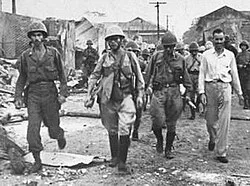
Despite the toll on her health, Edith remained involved in the work of winding down the organisation before resigning from the SOE in January 1946. She returned to Britain and the quieter rhythms of life as a vicar’s wife, carrying experiences she could not readily share. Like many FANY members and administrative personnel, she put away her uniform and faded from public view, her contributions overshadowed by the more visible exploits of frontline combatants.
Yet Edith’s story forms part of a much larger history of women’s wartime service. Just miles from her childhood home, deep beneath the Liverpool streets, the Western Approaches command centre had served as a nerve centre of the Battle of the Atlantic, where a predominantly female workforce of plotters, clerks and other specialists helped turn scattered reports into the intelligence needed to protect Allied shipping. Edith’s own work took place thousands of miles away, amid the secret campaigns of the Far East, but the principles were the same: precision, discretion and the determination to keep vital operations moving under extraordinary pressure.
From the banks of the Mersey to the clandestine headquarters of India, women helped sustain a global war through work that rarely attracted public recognition. Edith’s story reveals the invisible thread connecting Liverpool’s wartime command centres with the distant networks of Allied intelligence, reminding us that behind the dramatic exploits of agents and resistance fighters stood those whose painstaking work helped keep the machinery of war turning.
Jean Laidlaw, the strategic mastermind
Born and raised in Glasgow, Scotland, Jean Laidlaw initially moved south to London as a young woman to pursue a career in finance. By the outbreak of the Second World War, she was living in the capital, working as a civilian insurance clerk while studying accountancy. Her professional training had given her a sharp eye for figures, a methodical approach to complex information and the ability to recognise patterns in the numbers in front of her, skills that would soon take her far beyond the world of office ledgers and financial records.
As the war intensified, the Royal Navy faced an urgent need for personnel to serve at sea, prompting renewed recruitment into the Women’s Royal Naval Service (WRNS), widely known as Wrens. Under the principle of ‘free a man for the fleet’, women were recruited to take on increasingly specialised roles ashore, allowing more men to be deployed to operational duties. Jean answered the call in London, joining a service that was beginning to recognise the value of women with strong mathematical and analytical abilities. Under the leadership of WRNS director Vera Laughton Mathews, women with the right skills were given opportunities to undertake responsibilities that had once been considered the preserve of men. Jean quickly distinguished herself, rising to the rank of Chief Petty Officer before being selected for officer training at the Royal Naval College in Greenwich. There, she completed the training required to become a Third Officer, marking a significant step in her naval career. Her progression reflected not only her ability with figures but also the confidence placed in her judgement and leadership, qualities that would soon be tested in one of the Navy’s most unusual wartime units.
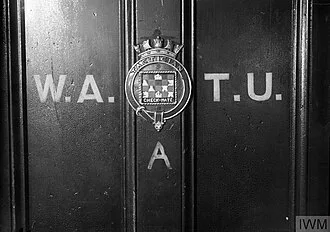
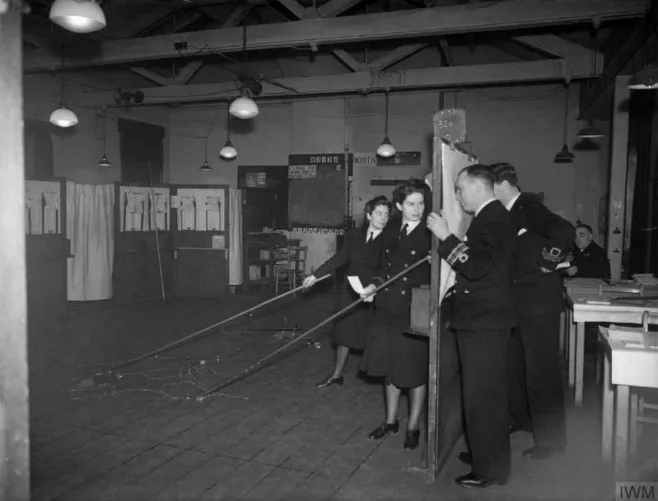
In February 1942, aged just 21, Jean was selected by Captain Gilbert Roberts to become the first Wren recruit to join the newly established Western Approaches Tactical Unit (WATU) in Liverpool. Located on the top floor of the Western Approaches headquarters at Derby House, WATU had been created to investigate German U-boat tactics and develop new ways for allied escorts to protect the convoys crossing the Atlantic. Jean’s arrival marked the beginning of a new chapter in her service, taking her from the familiar calculations of accountancy into the demanding world of naval strategy and wargaming.
Unlike the Wrens working in the bunkers decoding and plotting rooms, Jean’s work centred on a large tactical grid where naval battles were recreated using chalk markings, strings and wooden ship models. Under Roberts’s direction, she and other members of WATU examined reports from real convoy attacks, then recreated the encounters to understand how German submarines approached their targets and escaped detection. The work demanded sustained concentration, an ability to interpret complicated information and the patience to test a theory repeatedly before trusting its conclusions. Jean’s mathematical training proved valuable in this environment, where a small detail in a report could reveal a weakness in the enemy’s tactics and offer a chance to save lives at sea.
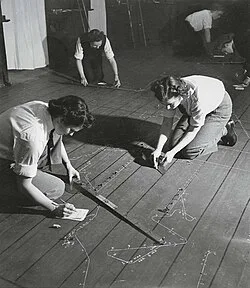
By 1942, German U-boats were inflicting devastating losses on Allied merchant ships, threatening the flow of food, fuel and essential supplies on which Britain depended. Reports from the Atlantic presented a troubling puzzle; some merchant ships were struck from within convoy formations, suggesting that the submarines were finding ways to approach their targets that traditional defensive tactics did not fully explain. At WATU, Jean worked alongside Roberts and their wider team to examine these reports, using the evidence from real attacks to test how U-boats might be getting close to the ships they were hunting.
Through repeated wargames, the team explored the possibility that submarines were approaching convoys from astern, using speed on the surface to enter the formation at night before attacking at close range. After firing, a submarine could submerge and allow the convoy to pass overhead before attempting to escape behind it. The theory offered a new way to understand the pattern of attacks, and crucially suggested that Allied escorts needed to look beyond the convoy’s outer perimeter. Rather than rely on assumptions about where an enemy submarine would be, the team could use simulated battles to test how escorts might respond to different movements and threats.
The value of this work became increasingly clear during the hard-fought convoy battles of 1943, including the Battle of Convoy ONS 5 in May, when Allied escorts inflicted heavy losses on German submarines. This battle is regarded as an important turning point in the wider struggle for control of the Atlantic, although its outcome depended on many factors, including escort tactics, intelligence, air support and the determination of those serving at sea. Jean did not work alone in developing the methods used by the Navy, but her role in WATU placed her among the women whose analytical skills helped transform reports of enemy attacks into practical lessons for Allied commanders. In a war where a single misjudgement could cost the lives of hundreds of sailors, the ability to recognise a pattern and test a solution had become a vital part of the fight.
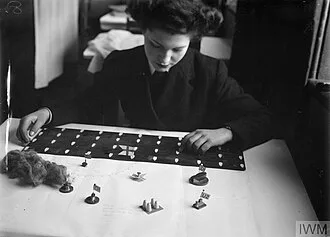
Jean remained at WATU as the unit continued to study German submarine tactics and train Allied naval officers in the use of its methods. Alongside Raspberry, the team developed other manoeuvres, including Pineapple, Strawberry and the Beta Search, while its wargaming courses carried lessons learned in Liverpool to officers preparing to face U-boat threats at sea. By recreating the pressure and uncertainty of convoy attacks before officers encountered them in battle, WATU helped turn the tactical theory into practical experience. Its work continued until the unit closed in July 1945, as the war drew to an end and the need for specialised training was dismantled.
For Jean, the end of the war meant leaving behind the naval role that had taken her from civilian accountancy into the heart of anti-submarine warfare. Like other service personnel who had worked with sensitive military information, she was subject to restrictions under the Official Secrets Act, limiting what she could disclose about aspects of her war work. She returned to civilian life and her career in accountancy, living privately in London until her death in 2008. For years, the significance of her contribution to WATU remained largely outside public view, reflecting the experience of many women whose intelligence, judgement and persistence had helped shape Britain’s wartime response. Her story reveals how skills developed in ordinary civilian life could become extraordinary assets in a conflict where the right insight, tested at the right moment, could help protect the lifeline connecting Britain to the world.
The secrets of Western Approaches
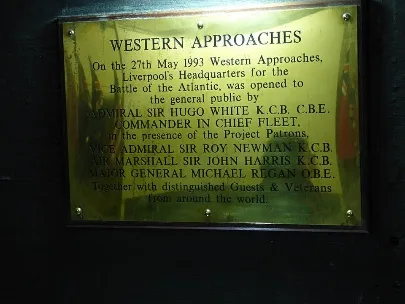
When the Western Approaches Command Centre closed its doors in 1945, it left behind a legacy of wartime secrets that would remain buried for nearly half a century. Behind those sealed doors lay not only the story of the Battle of the Atlantic, but also the contributions of the women whose work had helped secure victory, yet whose sacrifices remained largely unrecognised. It was not until 1993, when the bunker reopened as a museum to commemorate the battle and also to preserve the historic bunker from redevelopment, that these forgotten stories began to emerge from the shadows. For many of these women, however, recognition came decades too late. Their experiences leave us with a haunting question: how many other stories of courage, sacrifice and service remain hidden, lost to the silence of war and the secrets history has yet to reveal?
Follow L1 Local
Liverpool news, guides and what's on, in your feed.