History of Liverpool: From 1207 to the Modern City
Liverpool from its 1207 charter through the docks, the slave trade, Irish migration, the Blitz, decline and regeneration, and how each period shaped the city.
Liverpool did not start as a great port. In 1207 it was a small settlement on the Mersey surrounded by farmland, and it stayed small for around five hundred years.
What changed it was a hole in the ground dug in 1715, and what followed from that hole built the docks, the wealth, the slave trade, the migration and eventually the decline that produced the city standing here now.
This is that story in order, with dates and places you can go and stand in. Everything below was checked against Liverpool City Council, National Museums Liverpool, Historic England and UNESCO on 26 August 2026.
Key dates in Liverpool's history
28 August 1207: King John makes Liverpool a free borough. It will not be a city for another 673 years.
31 August 1715: the Old Dock opens, the world's first commercial enclosed wet dock. It is under Liverpool ONE now.
1700 to 1807: Liverpool ships carry an estimated 1.5 million enslaved Africans, roughly half the British trade.
1830: the Liverpool and Manchester Railway opens.
1840s: the Great Famine brings huge Irish migration.
1880: Liverpool becomes a city.
1 to 7 May 1941: the May Blitz kills around 1,700 people in a week.
1972: Albert Dock closes. Restoration starts in 1982.
2004: UNESCO World Heritage status. 2021: UNESCO takes it away.
1207: a borough, not a city
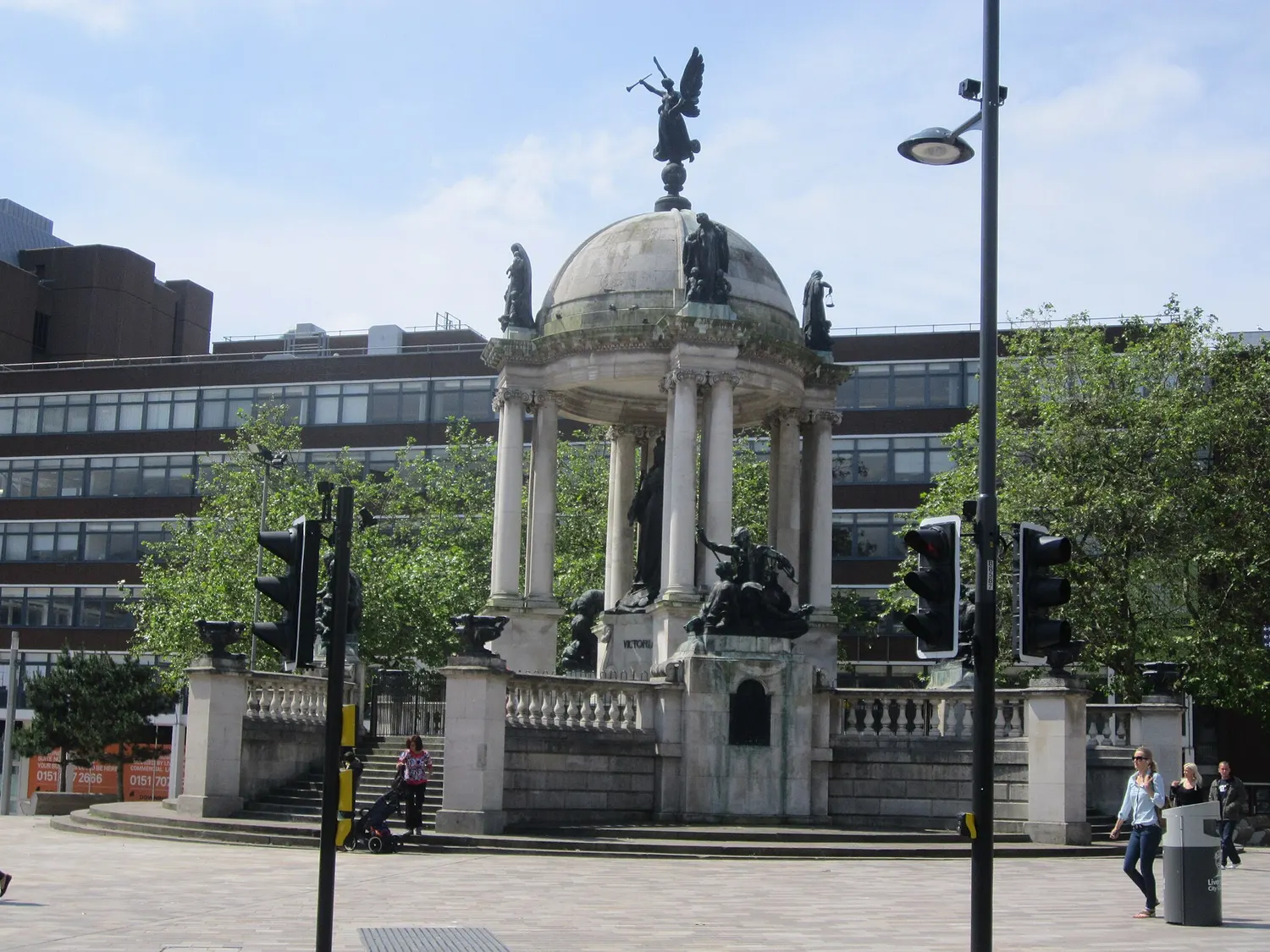
Derby Square, where Liverpool Castle stood. Photo: Rept0n1x (CC BY-SA 3.0) via Wikimedia Commons.
King John's Letters Patent were issued on 28 August 1207, and the document is still held by Liverpool Record Office. It made Liverpool a free borough and a privileged port, which was essentially an advert: come and settle here, and trading will be easier than elsewhere.
It worked slowly. For roughly five centuries Liverpool stayed a modest place. The Mersey gave it access to Ireland and the Irish Sea, but the river was the problem as much as the opportunity. Its tidal range is enormous, and ships could only be worked safely for part of the day.
One point people get wrong: Liverpool was a borough in 1207 and did not become a city until 1880. Six hundred and seventy-three years separate the two.
1715: the dock that made everything else possible
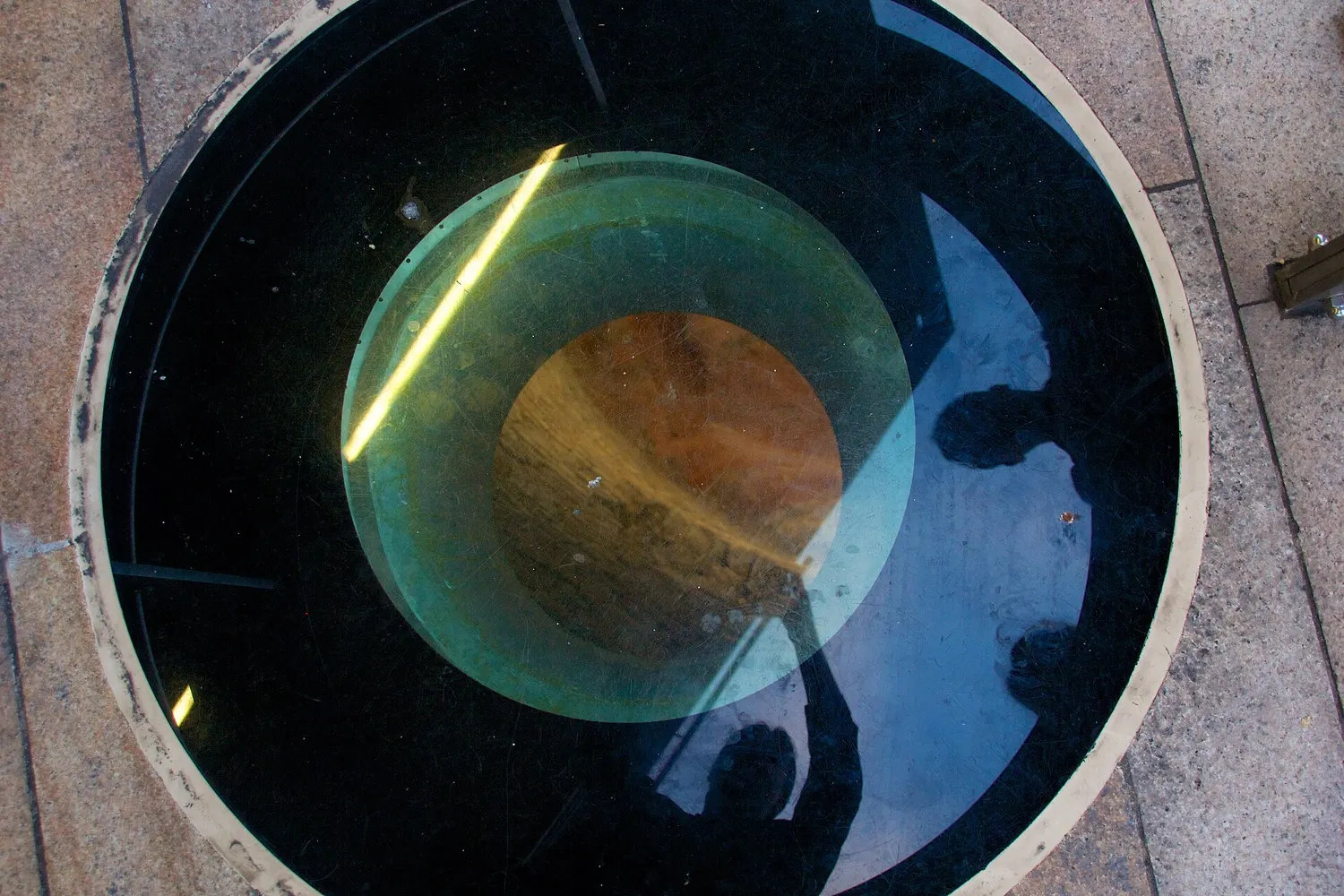
The Old Dock wall, preserved under Liverpool ONE. Photo: Mike Peel (CC BY-SA 4.0) via Wikimedia Commons.
The fix was to stop fighting the tide. The Old Dock opened on 31 August 1715, designed by engineer Thomas Steers, and it was the world's first commercial enclosed wet dock.
Gates held water in the basin so ships floated at a constant level whatever the river was doing outside. It was about 660 feet by 330, some three and a half acres, and could hold around a hundred ships. It cost roughly £12,000 and took five years, and it would have bankrupted the corporation had it failed.
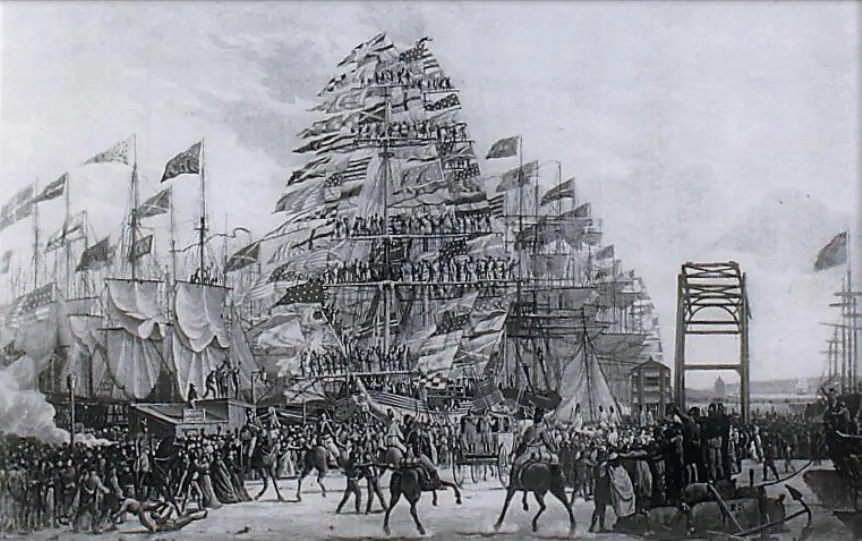
It did not fail. Five more enclosed docks followed by the end of the century, and through the nineteenth the system spread north towards Stanley Dock and Bootle and south through Wapping, Queen's and Brunswick towards Garston.
The opening of Princes Dock, 1821. Print: public domain, via Wikimedia Commons.
You can still visit the Old Dock. It sits beneath Liverpool ONE, and National Museums Liverpool runs tours down to the brickwork.
The slave trade
The Freedom sculpture at the International Slavery Museum, Royal Albert Dock. Photo: Rept0n1x (CC BY-SA 3.0) via Wikimedia Commons.
A great deal of the money that built those docks came from slavery, and Liverpool's part in it was not incidental. It was dominant.
The first known Liverpool slave ship, the Liverpool Merchant, sailed in 1700. By the 1750s the port had passed Bristol and London to lead the British trade.
The scale is worth stating plainly. Between 1700 and 1807 Liverpool ships were responsible for around half of the entire British slave trade, carrying an estimated 1.5 million enslaved African people across the Atlantic. In the trade's final decade Liverpool accounted for roughly 80 per cent of all British slaving voyages and about 40 per cent of all European ones. Estimates vary between sources, but the order of magnitude does not.
National Museums Liverpool puts it directly: Liverpool's ships and merchants dominated the trade in the second half of the eighteenth century, and the city and its inhabitants "derived great civic and personal wealth from the trade which laid the foundations for the port's future growth".
Britain abolished the slave trade in 1807, and that is where the story usually stops being told. It should not. Liverpool's economy went on profiting from goods produced by enslaved labour elsewhere for decades afterwards, cotton above all, which is what fed the Lancashire mills the railways were built to serve.
The International Slavery Museum at the Royal Albert Dock is the place to take this properly, and it is free.
The nineteenth century: 77,000 to 550,000
The population was around 77,000 in 1801. By 1881 it was over 550,000. Nothing about the city could stay the same at that rate.
Warehouses, banks, insurance offices and shipping companies filled the centre. Historic England describes Liverpool's surviving warehouses as the physical evidence of a trading network linking northern and Midlands manufacturing to markets worldwide.
The other half of that story is what the growth did to people. Dock labourers and their families lived in dense courts and cellars near the water, and overcrowding, bad sanitation and epidemic disease came with it. The wealthy commercial city and the overcrowded working city occupied the same square mile.
1830: Liverpool starts the railway age
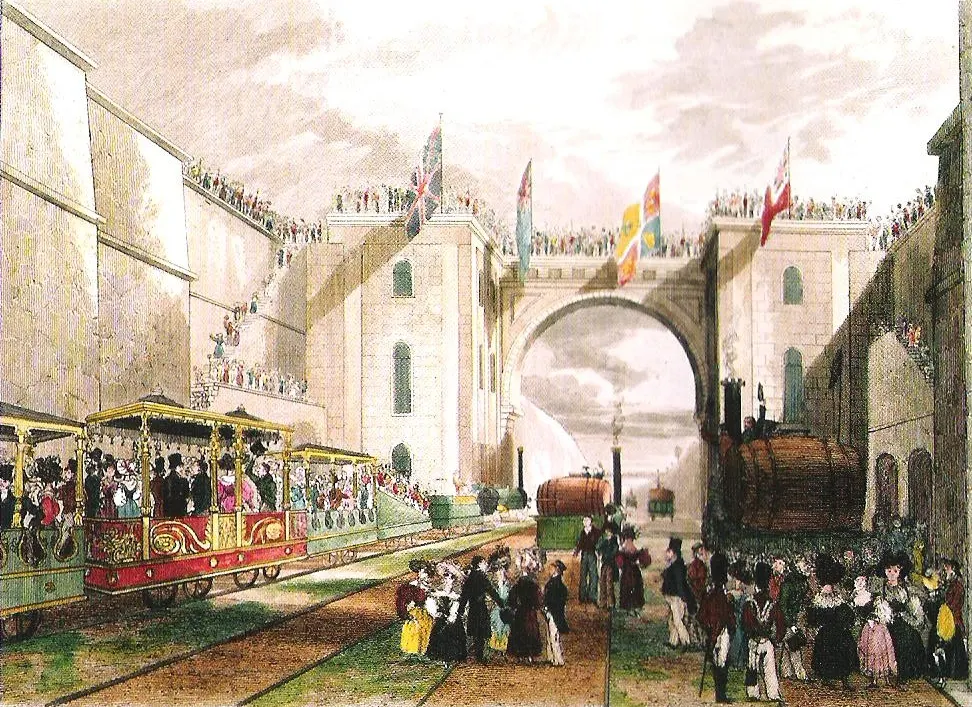
The opening of the Liverpool and Manchester Railway, 1830. Print by I. Shaw Junior, public domain, via Wikimedia Commons.
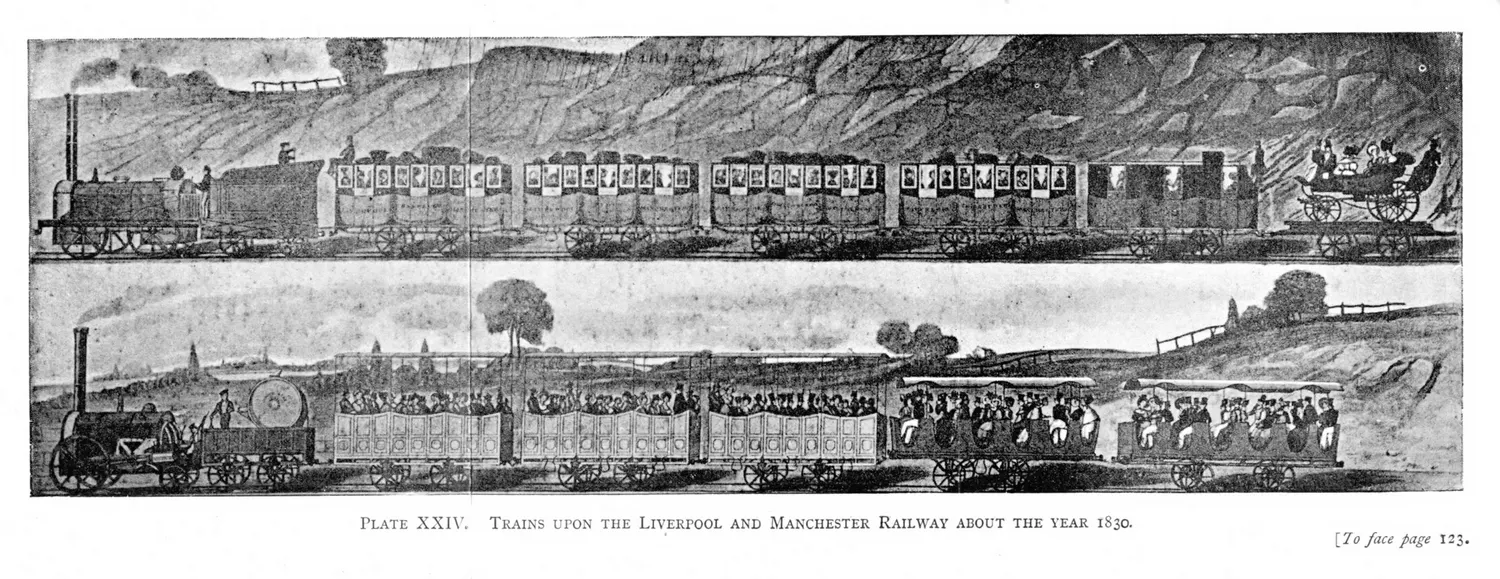
Goods arriving by sea still had to get inland, and that pressure produced the Liverpool and Manchester Railway, opened in 1830. It is generally treated as the start of the main-line railway story in Britain.
Trains on the line around 1830. Engraving: public domain, via Wikimedia Commons.
The pattern that made Liverpool rich now had all its parts: ships in, railways inland to the mills, manufactured goods back to the docks, out again by sea.
Jesse Hartley builds the waterfront you recognise
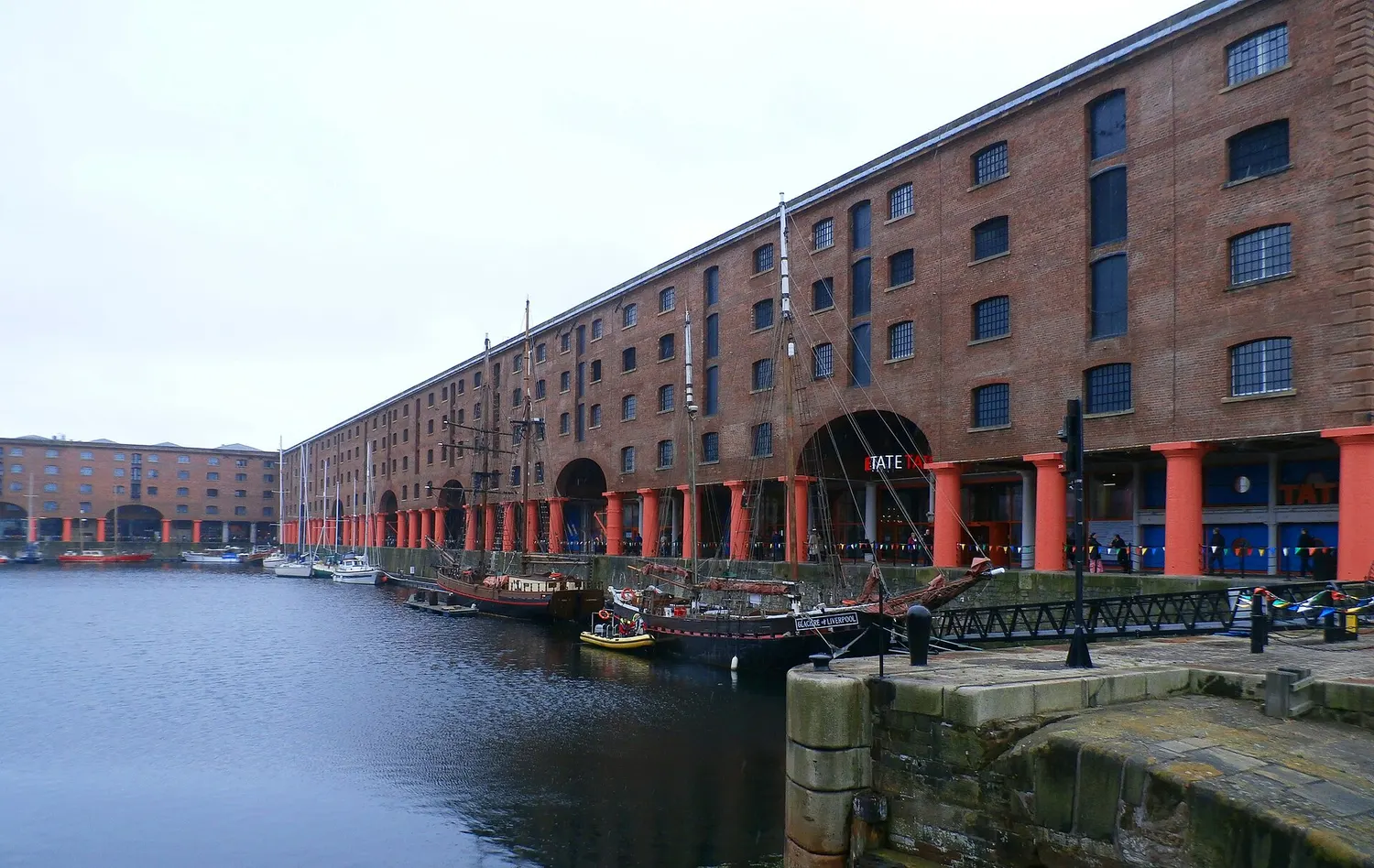
Albert Dock, opened 1846. Photo: Anthony Parkes (CC BY-SA 2.0) via Wikimedia Commons.
Jesse Hartley became Surveyor to the Liverpool Dock Trustees in 1824 and spent decades rebuilding the river's edge. Albert Dock, opened to shipping in 1846, is the best-known survivor: brick, stone and iron instead of timber, because warehouses full of cargo burn.
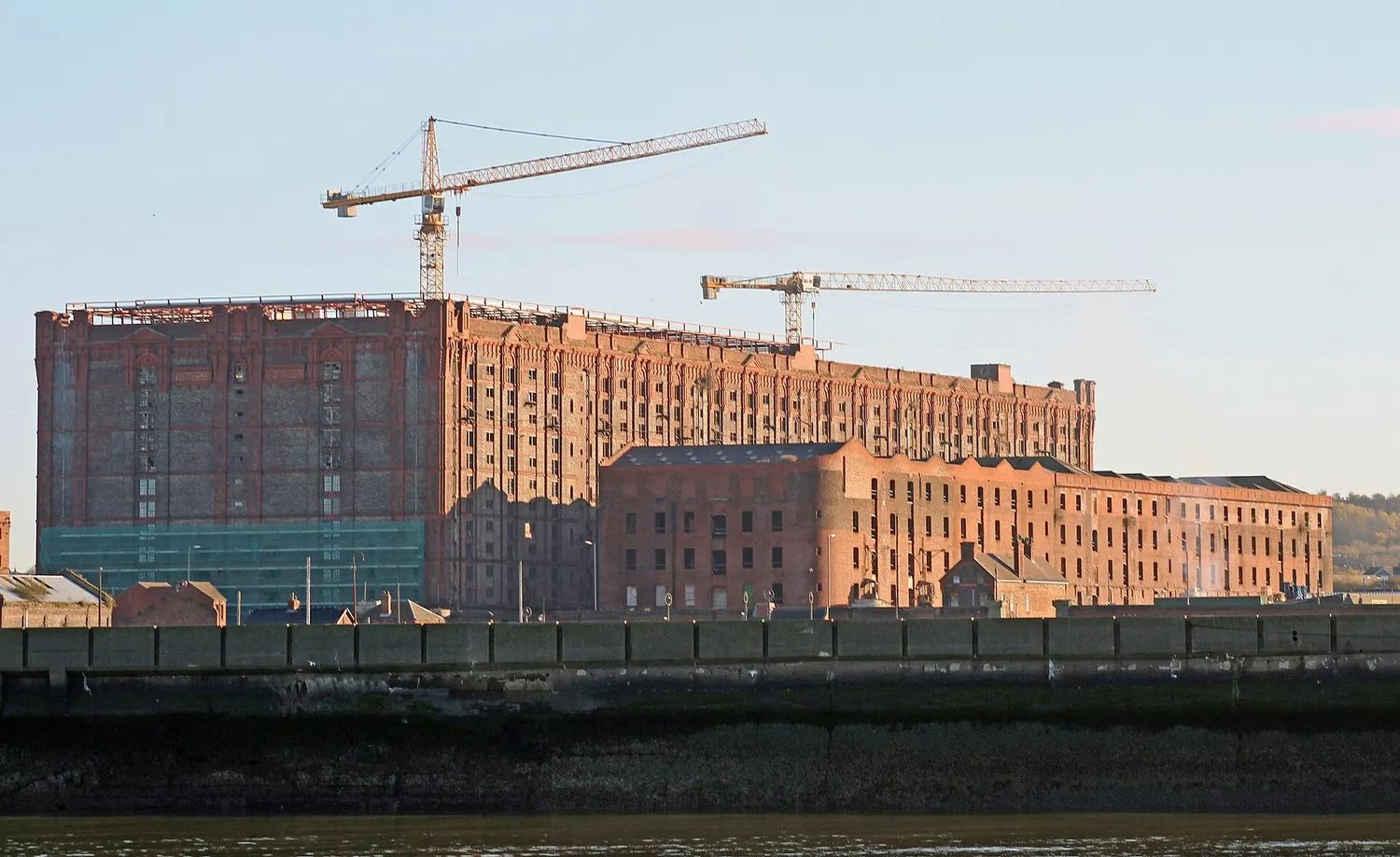
Stanley Dock, opened 1848. Its Tobacco Warehouse followed in 1901. Photo: Rodhullandemu (CC BY-SA 4.0) via Wikimedia Commons.
Stanley Dock followed in 1848, and its enormous Tobacco Warehouse in 1901. Almost everything now labelled Liverpool heritage started life as working industrial plant. We have more on this in our piece on Hartley and the Albert Dock.
The Famine, and a city remade by migration
Liverpool and Ireland were already tied together, but the Great Famine of the 1840s changed the city permanently. Enormous numbers crossed the Irish Sea looking for food, work, or a ship onward to North America. Many went on. Many stayed, and Irish labour became central to the docks.
That is why Liverpool's churches, politics, music, family names and neighbourhood loyalties look the way they do. It stopped being a Lancashire port and became a city made by movement.
Black and Chinese Liverpool
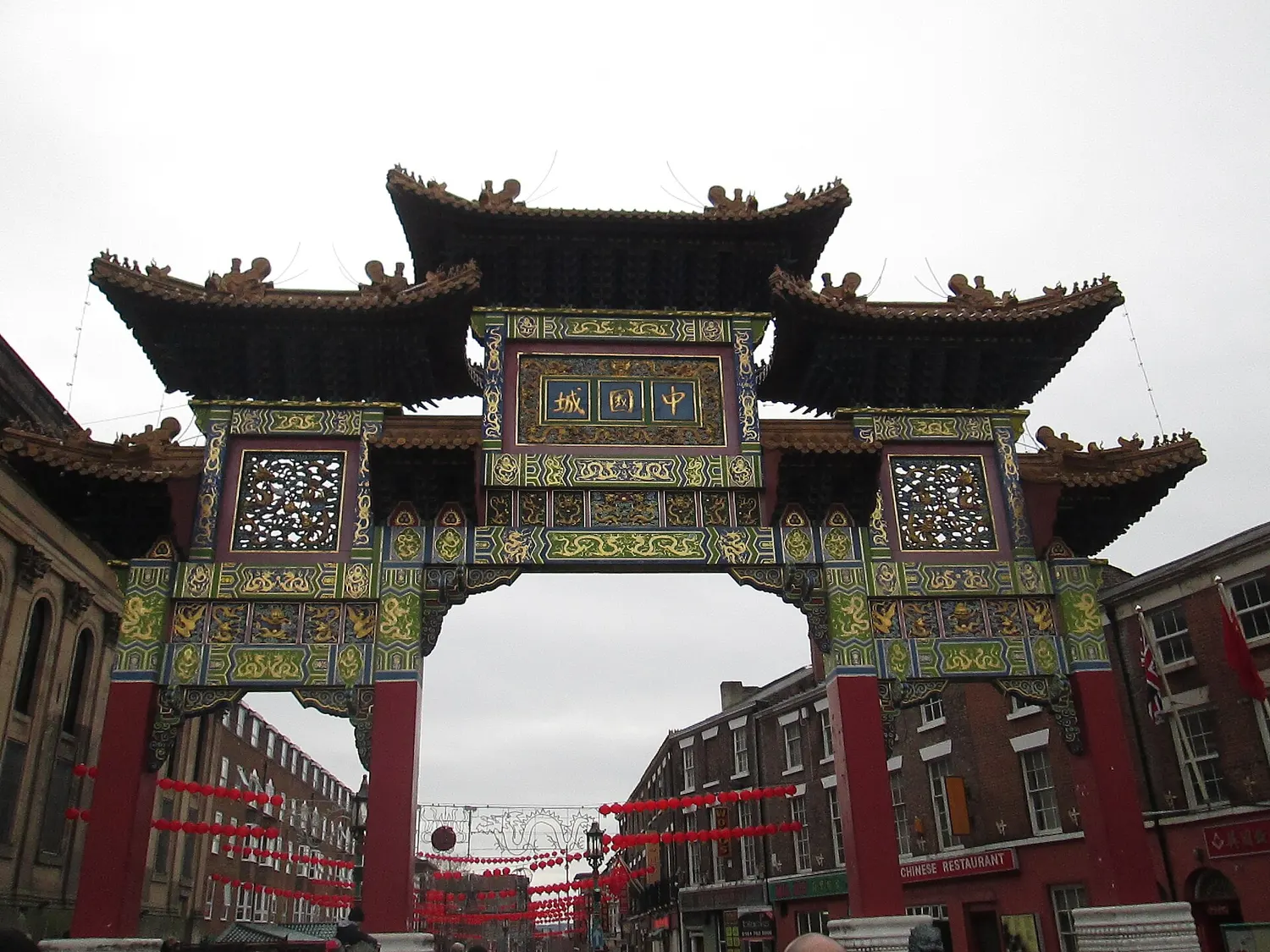
The Imperial Arch on Nelson Street. Photo: Martin Dawes (CC BY-SA 2.0) via Wikimedia Commons.
Ships brought people as well as cargo. Black sailors, merchants and settlers are recorded in Liverpool from at least the eighteenth century, and National Museums Liverpool describes the city's Black community as the oldest in Europe, later added to by West African seafarers on lines including Elder Dempster.
Chinese seafarers arrived through the same trade routes as shipping links with ports including Shanghai developed, settling around the south docks and the streets near Nelson Street, Duke Street and Great George Street. Liverpool's is generally recognised as Europe's oldest Chinese community.
Neither is a footnote to the port's history. Both are a direct product of it.
1880, and the city assembles itself
Liverpool was granted city status in 1880, by which point its population had passed 600,000 and the Anglican Diocese of Liverpool was created the same year.
The map filled in afterwards. Wavertree, Walton and more of Toxteth and West Derby came inside the boundary in 1895, and later expansion brought in Allerton, Childwall, Woolton and Speke. Places that had been villages became districts, which is why Woolton and West Derby still feel like separate places with their own centres.
The Pier Head, and peak Liverpool
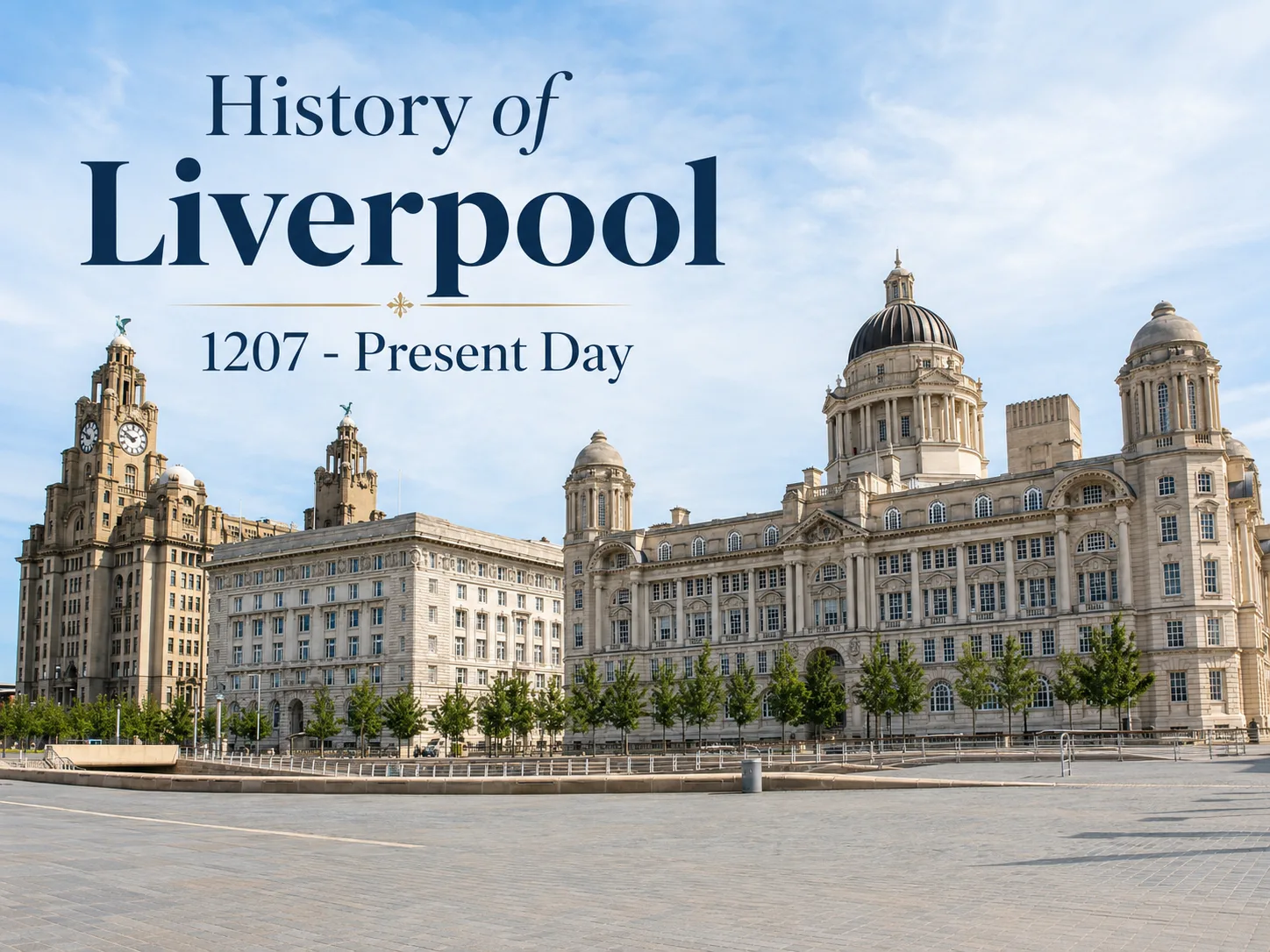
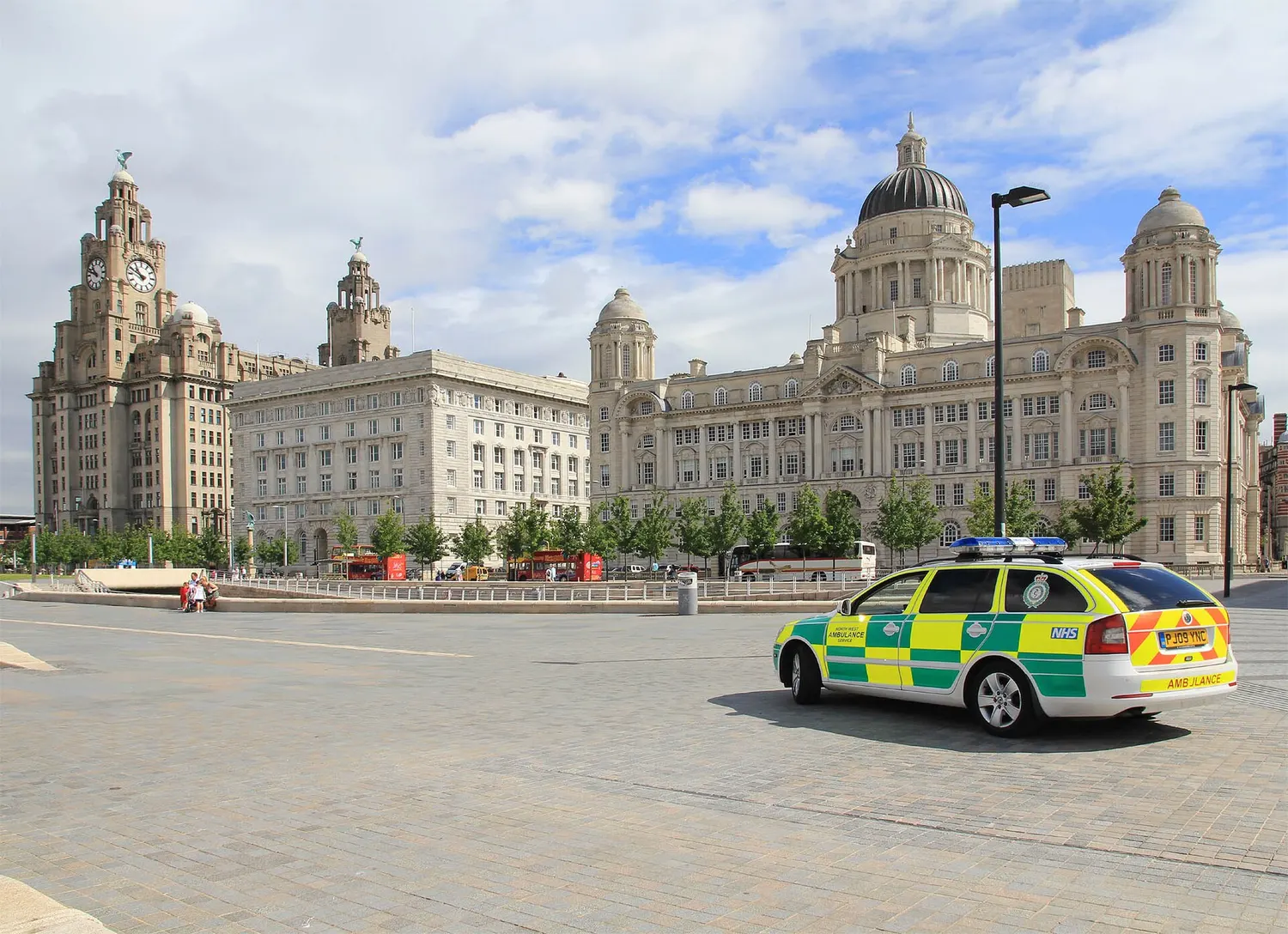
The Three Graces from the river. Photo: David P Howard (CC BY-SA 2.0) via Wikimedia Commons.
The waterfront everyone photographs is early twentieth century. The Port of Liverpool Building was finished in 1907, the Royal Liver Building in 1911, and the Cunard Building shortly after. Together they became the Three Graces.
They were not built to be admired. They were offices for the businesses that ran, insured and financed miles of working dock. The Royal Liver Building's reinforced concrete frame was unusually ambitious for its date. Our Pier Head guide covers what to look at.
The war
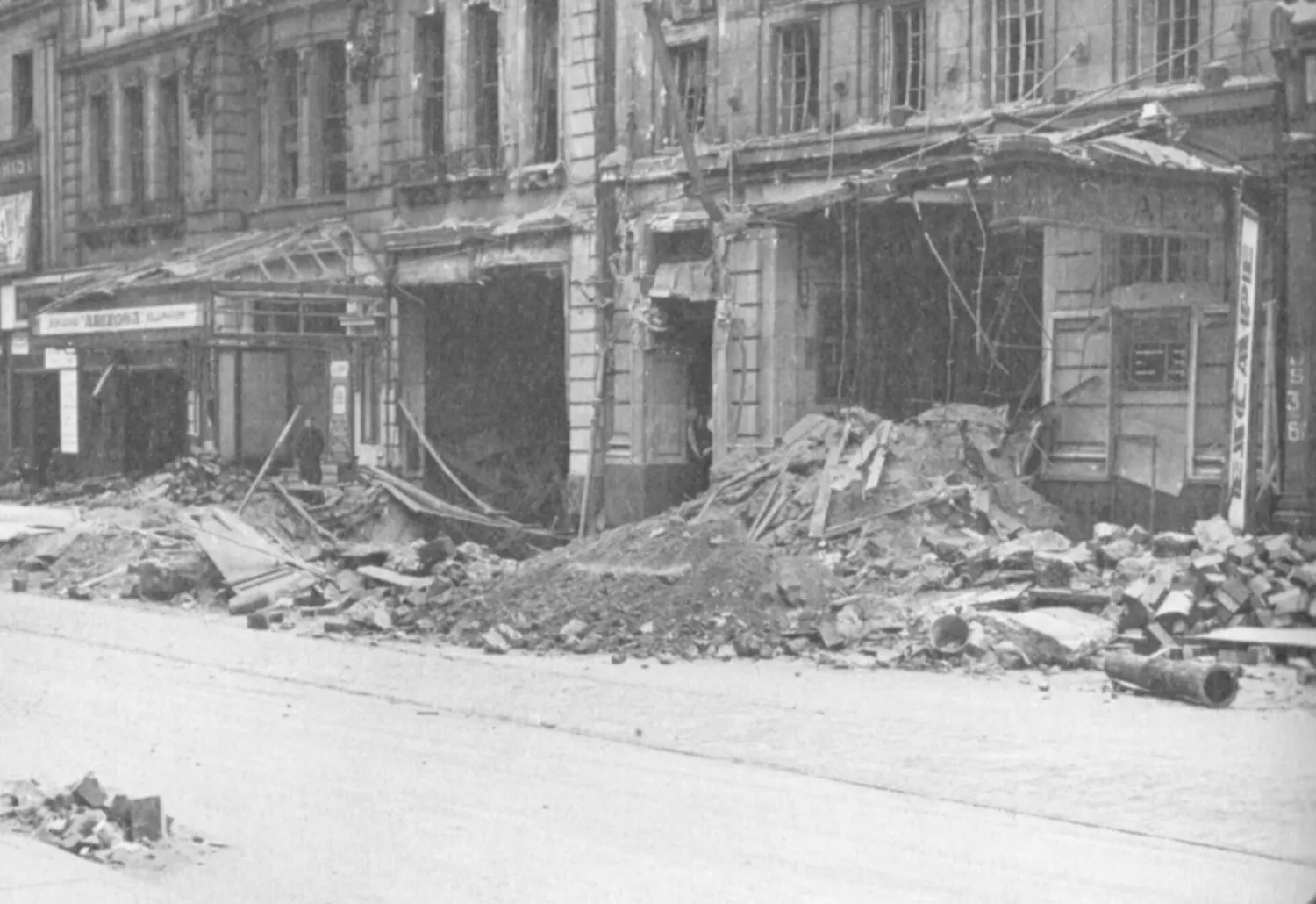
Bomb damage to the Futurist and Scala cinemas on Lime Street. Photo: public domain, via Wikimedia Commons.
By 1939 Liverpool had close to 900,000 people and around a third of Britain's imports were coming through its docks. That made it essential, and it made it a target.
The worst of it was the May Blitz, 1 to 7 May 1941: seven consecutive nights, hundreds of bombers, and around 1,700 people killed in that week alone. Across Merseyside more than 4,000 civilians died in air raids, and over 6,500 Liverpool homes were completely destroyed with many times that number damaged.
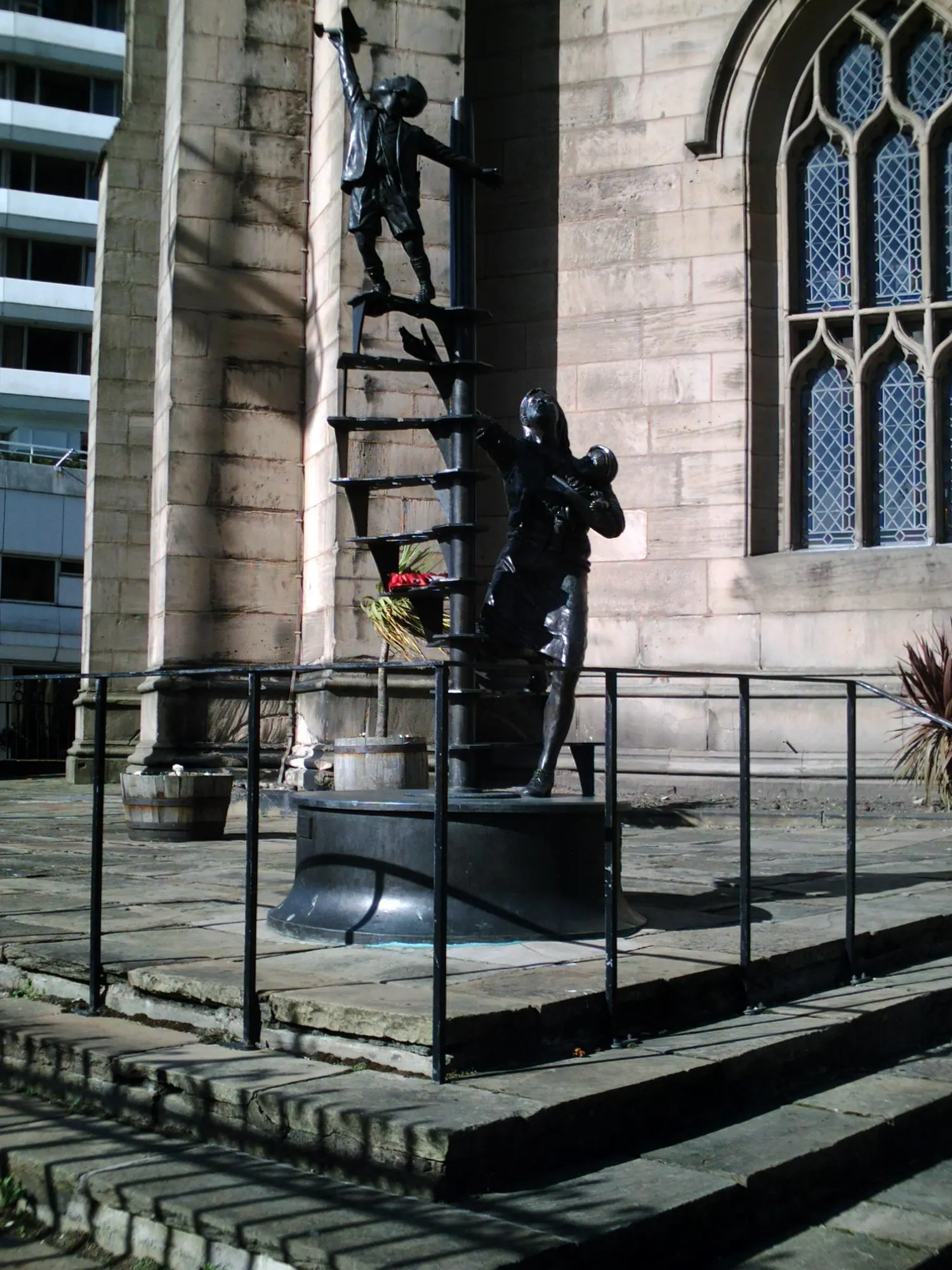
The Spirit of the Blitz memorial. Photo: Rodhullandemu (CC BY-SA 3.0) via Wikimedia Commons.
The Custom House, one of the great buildings of the dock estate, was hit and later demolished rather than repaired. Liverpool kept its port. What it lost was harder to rebuild.
Why the port economy collapsed
There is no single cause, which is why the decline was so hard to arrest.
Manufacturing shrank. More decisively, containerisation in the 1960s changed what a port needed to be. Containers meant far fewer men, far faster turnaround, and deep-water berths with cranes and space, none of which the old central docks had. Activity did not leave the Mersey so much as move north to modern facilities.
For communities built entirely around dock work, that was the end of the arrangement. National Museums Liverpool records around 12,000 people a year leaving Liverpool at the worst of it. A population approaching 900,000 fell to roughly half.
And then the neighbourhoods went
Slum clearance moved families out of inner-city courts into new estates at Kirkby, Cantril Farm, Huyton, Speke and Netherley. Some of that housing genuinely needed replacing. But clearance and new roads also broke up street patterns and the communities inside them, and parts of Everton, Scotland Road, Vauxhall and Toxteth became unrecognisable.
Liverpool's decline was not only about work. It was about where people were allowed to live.
The 1960s: the city gets famous for something else
While the port economy weakened, Liverpool acquired an entirely different international reputation. Hundreds of local groups were playing clubs and halls across Merseyside, and while The Beatles are the ones everyone names, the wider Merseybeat scene also produced Gerry and the Pacemakers, Cilla Black and The Searchers.
For centuries the world had known Liverpool because of ships. Now people a long way from the Mersey knew it for music, and later for football.
1981
By the early 1980s the city had severe unemployment, falling population and widespread dereliction. In July 1981 several nights of rioting took place in Liverpool 8, following long-running grievances over unemployment, racial discrimination and policing. National Museums Liverpool's Black Community Trail sets out that context: Black residents facing racism, difficulty finding work, and police harassment.
It became the defining image of Liverpool's crisis. At almost exactly the same moment, something else was starting a mile away.
Albert Dock, and the turn
Albert Dock closed in 1972. By 1981 the South Docks were derelict, buildings empty and the dock itself silting up.
Restoration began in 1982 through the Merseyside Development Corporation, and the first restored phase opened in 1984. The decision that mattered was not demolishing Hartley's warehouses but reusing them: museums, shops, offices, restaurants. The Merseyside Maritime Museum followed, and Tate Liverpool opened in 1988.
It did not fix the economy. It did change what the city thought its old dock buildings were for.
2008, and then 2021
Liverpool was European Capital of Culture in 2008, which brought a year of programming and a great deal of international attention. Liverpool ONE opened the same year, stitching the retail centre back towards the water. The economy that emerged was not the old one: services, culture, education, tourism, health and logistics rather than dock labour.
Recognition had come in 2004, when UNESCO added Liverpool Maritime Mercantile City to the World Heritage List across six areas of the historic docks and commercial centre.
It did not last. After years on the In Danger list and mounting argument over development around the northern docks and Liverpool Waters, UNESCO removed Liverpool from the World Heritage List in 2021, concluding that development had caused serious deterioration and irreversible loss to the qualities that made the site significant.
That decision is still worth arguing about, because it is the city's oldest question in modern form: how much of a working industrial past should a place preserve, and how much should it be allowed to build over?
You can walk most of this
Liverpool is unusual in how tightly packed its history is.
Derby Square: the Victoria Monument stands on the site of Liverpool Castle, which was there from the 1230s until 1726.
Liverpool ONE: the Old Dock is underneath it.
Castle Street and Exchange Flags: the commercial wealth, and where it came from.
Pier Head: the Three Graces.
Royal Albert Dock: Hartley's warehouses, the Maritime Museum and the International Slavery Museum.
Stanley Dock: the next stage of expansion north.
Nelson Street: the Chinese arch and Europe's oldest Chinese community.
Toxteth and Granby: Black Liverpool, migration and 1981.
Everything in it is movement. Cargo through docks. Cotton and sugar and tobacco through warehouses. Enslaved Africans carried across the Atlantic by Liverpool ships. Irish families crossing during the Famine. Black and Chinese seafarers settling by the water. Millions of emigrants passing through on the way to somewhere else. Goods inland by rail. Then, later, jobs and people leaving.
That is why no single landmark explains the place. The Liver Building, the Albert Dock, the Chinese arch, the Georgian terraces, the empty dock walls and the outer estates are all the same story at different points.
Liverpool was a borough in 1207 and a city in 1880. What made it happened in between, when the Mersey connected a small settlement to most of the world.
King John granted Liverpool the status of a free borough by Letters Patent on 28 August 1207. The document is held by Liverpool Record Office. Liverpool did not become a city until 1880, 673 years later.
Why did Liverpool become such an important port?
The Old Dock, opened on 31 August 1715 and designed by Thomas Steers, was the world's first commercial enclosed wet dock. It let ships load and unload whatever the tide was doing, which the Mersey's huge tidal range had previously made impossible for much of the day.
What was Liverpool's role in the slave trade?
Liverpool became Britain's leading slaving port. Between 1700 and 1807 its ships were responsible for roughly half the British trade, carrying an estimated 1.5 million enslaved Africans across the Atlantic. In the trade's final decade the port accounted for around 80 per cent of all British slaving voyages.
Why did Liverpool lose its World Heritage status?
UNESCO removed Liverpool Maritime Mercantile City from the World Heritage List in 2021, having added it in 2004. The committee found that development around the northern docks and Liverpool Waters had caused serious deterioration and irreversible loss to the qualities that made the site significant.
How badly was Liverpool bombed in the war?
Severely. The worst was the May Blitz of 1 to 7 May 1941, seven consecutive nights in which around 1,700 people were killed. Across Merseyside more than 4,000 civilians died in air raids, and over 6,500 Liverpool homes were completely destroyed.
Comments
Join the conversation with your L1Local Community account. Keep it civil and on topic.
Liverpool this week
New places, local news, things to do and our latest guides. Weekly.

Comments
Join the conversation with your L1Local Community account. Keep it civil and on topic.