Titanic was built in Belfast. She sailed from Southampton. She was heading for New York.
So why did she have LIVERPOOL written across her stern?
The answer begins in a red-brick building on James Street, where the White Star Line ran its shipping empire.
Liverpool was Titanic's official port of registry, despite the liner never visiting the city. But the connection went much deeper than a name painted on the hull.
When Titanic sank in April 1912, families on Merseyside were among those waiting for news. The company's Liverpool headquarters became a focus of that uncertainty.
More than a century later, the buildings, records and memorials are still here.
This is the Liverpool story behind the world's most famous ship.
Watch: Why Liverpool's name was on Titanic
Our one-minute Liverpool Stories film explains the connection. The full story, with historical sources and places to visit, continues below.
Titanic belonged to the Oceanic Steam Navigation Company, better known as the White Star Line. She was built by Harland and Wolff in Belfast and sailed from Southampton, but her registered home port was Liverpool.
A port of registry was an administrative designation, not necessarily a ship's departure point or destination. Titanic's British official number was 131428. Her registration connected her to the White Star Line's Liverpool headquarters at 30 James Street.
That is why LIVERPOOL appeared beneath TITANIC on her stern. It did not mean she had visited the city.
Titanic at Southampton, April 1912. Unknown photographer, public domain, via Wikimedia Commons.
Why did Titanic sail from Southampton instead?
Liverpool had been central to White Star's Atlantic services for decades. But in 1907 the company transferred its principal New York passenger service to Southampton, which offered convenient connections for travellers from London and continental Europe.
Titanic departed Southampton on 10 April 1912, called at Cherbourg in France and Queenstown (now Cobh) in Ireland, and headed for New York. She never completed the crossing.
Walk along James Street towards the waterfront and you can still see Albion House, 30 James Street, the former headquarters of the White Star Line.
Completed in 1898, the striking red-brick and pale-stone building was at the centre of the company's operations. White Star's chairman and managing director, J. Bruce Ismay, sailed aboard Titanic and survived the sinking.
Albion House, Liverpool. Photograph: Man vyi, public domain, via Wikimedia Commons.
When news of the sinking reached Liverpool
Late on 14 April 1912, Titanic struck an iceberg in the North Atlantic. She sank in the early hours of 15 April, with the loss of more than 1,500 lives.
Early reports were confused. Families and members of the public sought news from the White Star Line's offices on James Street. The company's Liverpool base became one of the places where the scale of the tragedy was painfully understood.
For people with relatives at sea, this was not just an international headline. It was the question of whether someone they loved would come home.
Liverpool's people aboard Titanic
The connection went beyond the company's address. Liverpool and the surrounding area had long supplied seafarers to the Atlantic shipping industry, and people with Merseyside connections served aboard Titanic.
Their stories are part of the collections and research of National Museums Liverpool. Those individual lives deserve more attention than the familiar lists of wealthy passengers and grand first-class rooms.
Even the ship's working spaces reflected dockside culture. A long crew passageway on E Deck was known as Scotland Road, a name associated with Liverpool's dockland communities.
The Pier Head memorial connected to Titanic
At the Pier Head stands the Memorial to Heroes of the Marine Engine Room. It was conceived following Titanic's loss and came to commemorate marine engineers more broadly.
The memorial recognises workers whose skill and courage kept great liners operating, often far from the public attention given to captains and passengers.
No. Titanic was registered in Liverpool, but never sailed into the port. She travelled from Belfast to Southampton before beginning her only transatlantic voyage.
The name on her stern represented her official registered home port, not a stop on her itinerary.
More than a century later, Liverpool's connection survives in shipping records, the James Street headquarters, waterfront memorials and the stories of the people aboard.
Titanic never sailed into Liverpool. But Liverpool sailed with Titanic.
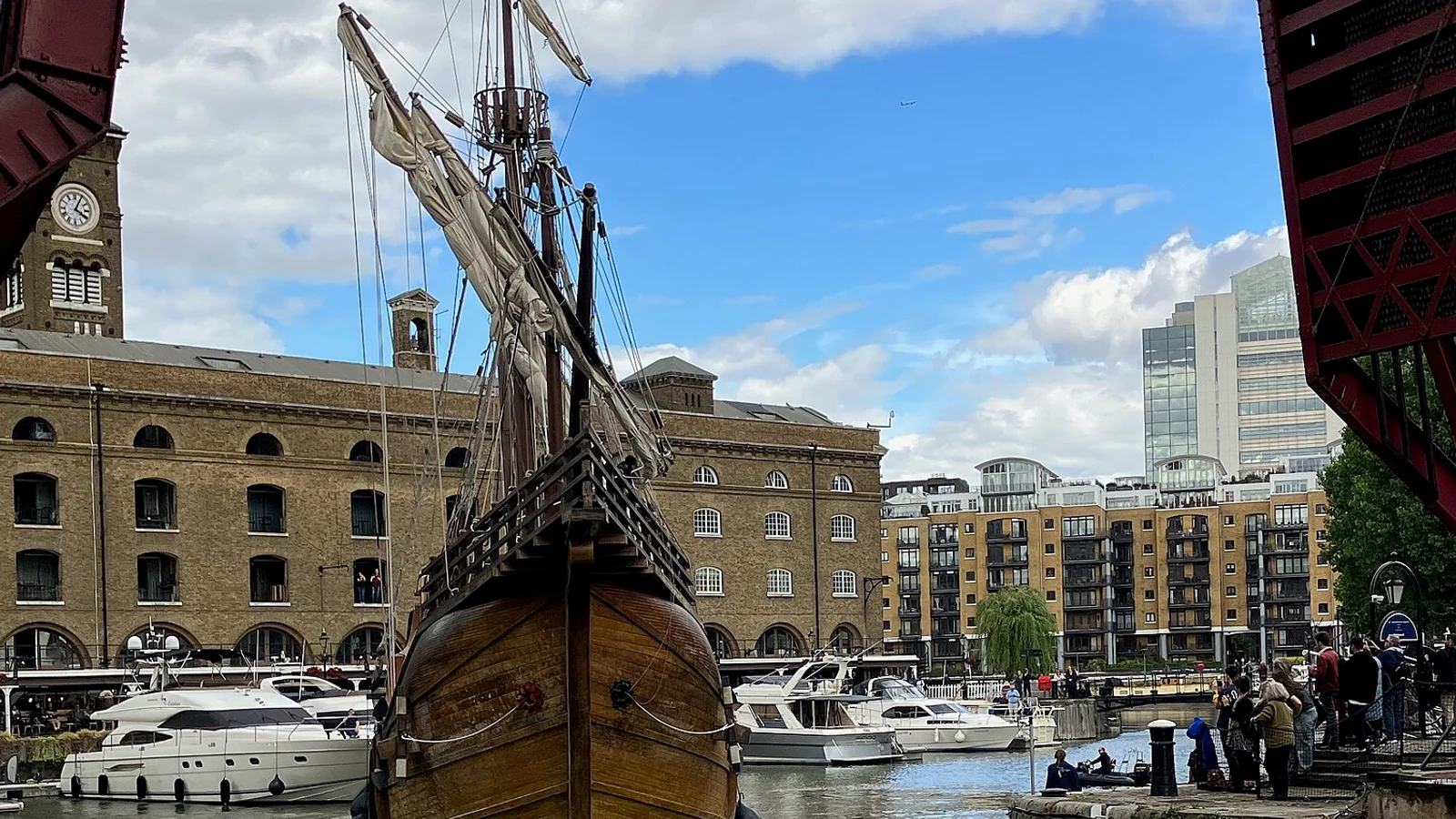
A full-scale replica of the Santa María docks at Royal Albert Dock, 12-25 August 2026. Tickets, opening hours and the history the tour material leaves out.


Comments
Join the conversation with your L1Local Community account. Keep it civil and on topic.