The Murder Merseyside Thought It Had Solved: 40 Years Later, Who Killed Diane Sindall?
Forty years after Diane Sindall was murdered in Birkenhead, DNA cleared Peter Sullivan. Police are still trying to identify the man behind the profile.
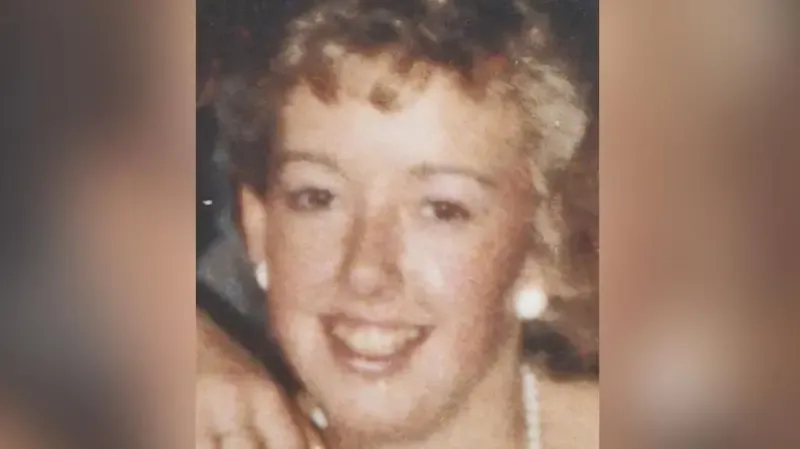
For almost four decades, the murder of 21-year-old Diane Sindall appeared to have an answer. Then modern DNA testing showed that the man convicted of killing her was not the source of the male profile recovered from her body. His conviction was quashed. The murder investigation reopened. Forty years after Diane's death, police are still trying to identify the man behind that DNA.
Content warning: This article contains references to sexual violence and serious physical injury.
For almost four decades, the murder of Diane Sindall appeared to have an answer.
A man had been convicted. Peter Sullivan was found guilty at Liverpool Crown Court in November 1987 and sentenced to life imprisonment.
He remained in prison for 38 years.
Then the scientific evidence changed the case.
On 13 May 2025, the Court of Appeal quashed Sullivan's conviction after modern testing established that semen recovered from Diane's body contained DNA from an unknown man. It was not Sullivan. It was not Diane's fiancé.
The prosecution did not seek a retrial.
The Court of Appeal concluded that the conviction could no longer be regarded as safe. The judgment recorded that, had the DNA evidence been available in 1986, the prosecution accepted the evidence as a whole would have been insufficient even to charge Sullivan.
Merseyside Police had already reopened Diane's murder investigation in 2023 after being told about the DNA development.
There is still no publicly announced match for the profile on the national DNA database.
For the 40th anniversary of Diane's murder in 2026, police said 575 people had been eliminated through DNA enquiries, with another 32 under review. Detectives were continuing to work with the National Crime Agency, re-interview witnesses, revisit the original investigation and examine information submitted by the public.
A Crimestoppers reward of up to £20,000 also remains available for qualifying information supplied exclusively to the charity which leads to the arrest and conviction of the person responsible.
The case now contains two separate searches for answers.
One concerns how Peter Sullivan came to spend almost four decades imprisoned for a murder that the Court of Appeal concluded the modern evidence could not safely attribute to him.
The other is the question that has returned to the centre of the investigation: Who killed Diane Sindall?
Diane Sindall left work at about 11.45pm on 1 August 1986
Birkenhead seen across the River Mersey. Diane Sindall's van ran out of petrol on Borough Road after leaving work in Bebington. Photo: Alex Liivet (CC0 1.0) via Wikimedia Commons.
Diane Sindall was 21.
She worked as a florist and also had a second job behind the bar at the Wellington pub in Bebington. Merseyside Police says she and her fiancé were saving to get married.
On Friday 1 August 1986, Diane finished her shift at the Wellington and left at about 11.45pm in her blue Fiat van.
She did not get home.
The van ran out of petrol on Borough Road in Birkenhead. Diane left it and continued on foot.
Several witnesses saw her walking along Borough Road between midnight and approximately 12.20am on Saturday 2 August.
The later Court of Appeal judgment records that her car keys were found on the pavement at about 2.30am, close to an alleyway.
Several hours later, Diane's body was discovered by a member of the public in an alleyway off Borough Road.
She had been sexually assaulted and suffered extensive injuries.
Investigators established that she had been dragged along the alleyway. Her cause of death was a cerebral haemorrhage resulting from multiple blows to the head.
The killing triggered an intensive investigation across Merseyside.
But evidence recovered from Diane's body could not be fully exploited by the forensic science available in 1986.
Investigators had recovered traces of semen.
According to the later Court of Appeal judgment, rain had diluted the sample and the techniques then available were not capable of identifying the man who had deposited it.
Almost four decades later, that preserved evidence would overturn the conviction.
Diane's belongings were found on Bidston Hill
Bidston Hill, where property belonging to Diane Sindall was recovered during the 1986 investigation. Photo: Roger W Haworth (CC BY 2.5) via Wikimedia Commons.
The investigation did not remain confined to Borough Road.
Smoke was reported from a fire on Bidston Hill on 2 August.
People walking on the hill on either 2 or 3 August came across the remains of a fire together with a handbag, part of a pair of jeans and a bank paying-in slip bearing Diane Sindall's name.
Police later recovered property belonging to Diane.
The prosecution case would argue that her killer had attempted to burn her clothing on the hill and later returned to the area.
There was also a potential witness.
A man who knew Peter Sullivan told police that on the afternoon of 3 August he had seen Sullivan emerging from bushes on Bidston Hill and running.
However, the Court of Appeal record says neither that witness nor his girlfriend subsequently selected Sullivan during an identification procedure.
Bidston Hill remains part of the renewed appeal.
Merseyside Police has continued to ask for information about the man reportedly seen running from the area and about anyone who was on Borough Road around the time Diane disappeared.
How Peter Sullivan became a suspect
Sullivan was not immediately arrested.
On 18 August 1986, police encountered him carrying a suitcase. He told officers he was travelling to London to look for work and provided a statement about his movements around the time of Diane's murder.
Further information emerged the following month and officers returned to him.
A search of his home recovered fibres which could be compared with fibres found on Diane's body and clothing. The forensic evidence at the time said only limited significance could be attached to the comparison.
Police also recovered a crowbar.
Sullivan acknowledged that it had been in his possession around the time Diane was killed. The pathologist considered that Diane's injuries could have been inflicted with it.
Sullivan then gave police an account of his movements which differed substantially from his earlier statement.
He initially denied ever going to Bidston Hill and said he had been at home with his partner when Diane was attacked.
After police obtained statements contradicting parts of his account, his explanation changed.
When officers read part of the statement from the witness who claimed to have seen him on Bidston Hill, Sullivan identified the witness and accepted that he had been there, saying he had entered the bushes to urinate.
The Court of Appeal judgment records that Sullivan was then cautioned, became distressed, denied killing Diane and was arrested.
He asked for a solicitor.
Access to legal advice was refused for a period.
Sullivan confessed, withdrew the confession and changed his account repeatedly
What happened during the interviews became one of the most disputed parts of the case.
Sullivan gave a series of inconsistent accounts.
At different stages he made admissions which included striking Diane, hiding or burning her clothing and disposing of trousers.
At other stages, he withdrew those admissions.
After he was eventually allowed legal representation, interviews continued with his solicitor present. The Court of Appeal records that he again made admissions and then withdrew them.
At his trial, Sullivan said some confessions which had not been tape-recorded had been made after he was assaulted and abused by police officers.
Those were his allegations and were contested as part of the case. The trial judge rejected defence applications to exclude the admissions.
Years later, psychologists examining Sullivan described characteristics including low intelligence, high suggestibility and high compliance.
The Criminal Cases Review Commission also identified evidence suggesting possible breaches of the Police and Criminal Evidence Act 1984 relating to legal representation and the absence of an appropriate adult.
Those concerns became part of later attempts to overturn the conviction.
They were not, however, the ground on which the Court of Appeal ultimately cleared him in 2025.
The conviction was quashed because of the new DNA evidence.
Bite-mark evidence became another major part of the prosecution case
Police had also taken impressions of Sullivan's teeth.
At the time, he was missing ten teeth.
An oral pathologist initially concluded that injuries to one side of Diane's body did not appear to be bite marks and that another injury, although consistent with biting, was unlikely to have been caused by Sullivan.
A second specialist, a forensic odontologist, reached a different conclusion.
He considered that the injuries were human bite marks made by Sullivan. After reading that opinion, the first expert changed his position and agreed.
At the 1987 trial both experts gave evidence for the prosecution.
Decades later, Professor Iain Pretty reviewed the material for Sullivan's appeals.
He argued there was no reliable scientific basis for positively identifying an individual from bite marks on human skin.
By the 2025 appeal, his evidence also noted that professional forensic odontology organisations in Britain and the United States no longer endorsed positive identification of suspects through bite-mark comparison.
The Court of Appeal did not overturn Sullivan's conviction on that ground alone.
The judges said the bite-mark evidence had been challenged at the original trial and had previously been considered by the Court of Appeal. They declined to receive the latest evidence as a separate basis for allowing the appeal.
But the DNA evidence changed the context in which all of the older evidence had to be viewed.
The prosecution case was circumstantial
Peter Sullivan went on trial at Liverpool Crown Court in 1987.
The prosecution assembled several strands of evidence.
He had been drinking in a pub about ten minutes' walk from where Diane was killed and had left at around 11.30pm.
He had borrowed a crowbar which could have caused her injuries.
Fibres from his home were said to be consistent with fibres found on Diane, although the scientific evidence attached only limited significance to them.
His accounts of his whereabouts had changed repeatedly.
He had eventually admitted being on Bidston Hill.
He had travelled to London after publicity about Diane's belongings being found there.
Dental specialists said he was responsible for bite injuries.
And he had made admissions in police interviews which prosecutors argued included details known to the killer.
Sullivan denied murder.
He gave evidence at trial, produced an alibi and challenged both the police interviews and other parts of the prosecution case.
The jury convicted him on 4 November 1987.
He received a life sentence.
Another man made an extraordinary claim before the trial ended
One of the most striking facts recorded in the 2025 Court of Appeal judgment emerged very late in the original trial.
An unnamed man had told police that he had found Diane's body at about 6am on 2 August, taken her clothing and belongings, and carried them to Bidston Hill where he burned them.
He later retracted that account.
Police eliminated him from the murder investigation on the basis of the bite-mark evidence.
When the information was disclosed during Sullivan's trial, proceedings were adjourned while lawyers considered it. The issue was eventually put before the jury through an agreed statement of facts.
Nothing in the 2025 judgment establishes that this unnamed man murdered Diane, and it would be wrong to imply otherwise.
The episode matters for a different reason.
It shows how much weight the original investigation placed on the dental evidence when deciding who could and could not be responsible.
Sullivan's first CCRC application failed in 2008
Sullivan did not appeal immediately after his conviction.
His trial barrister advised that there were no arguable grounds.
More than two decades later, in 2008, he applied to the Criminal Cases Review Commission.
The CCRC sought expert forensic advice about whether the surviving material could produce useful DNA evidence.
The advice was pessimistic.
Scientists from the Forensic Science Service concluded that further testing was very unlikely to produce a profile.
The case was not referred back to the Court of Appeal.
The 2025 judges later addressed that decision. Given the technology and expert advice available in 2008, they said the CCRC's decision at the time had been justified.
Earlier testing might also have consumed material which later techniques were able to analyse successfully.
The CCRC has nevertheless said that it regrets not identifying Sullivan's conviction as a potential miscarriage of justice during that first review.
In 2019 he sought permission to appeal his conviction directly, more than three decades after the trial.
His lawyers relied partly on new evidence challenging the reliability of bite-mark comparisons and the reliability of his police admissions.
Professor Pretty questioned the dental evidence.
Forensic psychologist Dr Harry Wood assessed Sullivan as having low intelligence and being highly suggestible and compliant.
The application was refused.
The Court of Appeal considered the long delay and also examined the substance of the arguments. It concluded at the time that the new bite-mark evidence and concerns about the interviews did not make the conviction unsafe.
Sullivan then returned to the CCRC.
This time, science had moved on.
Modern DNA testing finally produced a profile
Sullivan made his second CCRC application in March 2021.
The commission revisited the possibility of testing material retained from 1986.
New techniques were now capable of extracting information which scientists had been unable to obtain previously.
The result transformed the case.
Experts established that the semen recovered from Diane's body contained DNA belonging to an unknown man.
It was not Peter Sullivan.
It was not Diane's fiancé.
The Crown instructed another forensic scientist to review the findings. He agreed with the CCRC's experts.
The CCRC referred Sullivan's conviction to the Court of Appeal. Its referral was publicly announced in November 2024.
After being informed of the DNA result, the force reopened the Diane Sindall murder investigation in 2023 rather than waiting for Sullivan's appeal process to finish.
The case which police had treated as solved since the 1980s was a live murder inquiry again.
The Court of Appeal quashed the conviction on 13 May 2025
The appeal was heard by Lord Justice Holroyde, Mr Justice Goss and Mr Justice Bryan.
The decisive question was the new forensic evidence.
There had clearly been a sexual element to Diane's attack.
The DNA profile came from semen recovered from her body.
There was no evidence that two attackers had been involved and no evidence providing an innocent explanation for the semen.
The new scientific evidence therefore pointed to an unknown man as Diane's attacker rather than Sullivan.
The prosecution did not oppose the appeal on the DNA ground.
The Court of Appeal recorded the Crown's acceptance that if the DNA evidence had existed in 1986, the evidence as a whole would have been insufficient even to charge Sullivan.
The judges allowed the appeal.
The court concluded it was now "impossible to regard the appellant's conviction as safe."
The prosecution did not seek another trial.
Sullivan was released.
The conviction which had stood for almost 38 years was gone. Overturned convictions of this vintage remain exceptional in Merseyside legal history, echoing older cases such as the 1931 appeal in the Julia Wallace murder case where the appellate courts also determined that purely circumstantial chains could not sustain a murder conviction.
The Court of Appeal did not decide every disputed issue in Sullivan's favour
There is an important legal distinction in the judgment.
The court did not rule that every strand of the original case had independently been disproved.
It declined to allow the appeal separately on the new bite-mark evidence or on the psychological evidence concerning Sullivan's confessions.
Instead, the DNA evidence was decisive by itself.
At the same time, the judges recognised that the DNA finding altered how the old circumstantial evidence had to be understood.
Evidence which might have appeared incriminating in 1987 now had to be viewed alongside reliable modern forensic evidence pointing towards another man.
The judgment said that the DNA evidence inevitably weakened the other strands of the prosecution case, regardless of how persuasive they had appeared at the time.
That is different from rewriting the history and saying every piece of the original investigation was worthless.
The problem is that the conviction produced by those pieces of evidence could no longer survive the scientific evidence.
Forty years later, detectives are still trying to identify the DNA profile
Merseyside Police reopened the investigation into Diane Sindall's murder in 2023, eliminating 575 people through DNA enquiries to date. Image: Merseyside Police.
For Merseyside Police, the investigation is no longer simply a review of what happened in 1986.
It is an active murder inquiry centred on one crucial piece of evidence: the DNA profile of an unidentified man.
The investigation was reopened in 2023 after advances in forensic science established that DNA recovered from Diane did not match Peter Sullivan.
Detectives are now working with the National Crime Agency as they try to establish who left that DNA.
The scale of that work has continued to grow.
By the force's 40th-anniversary appeal in 2026, police said 575 people had been eliminated through DNA enquiries, with another 32 under review.
The investigation team has also returned to the original case files, re-interviewed witnesses and followed up new information received from the public.
Detective Superintendent Rachel Wilson said police remained determined to find the person responsible.
"We believe the DNA profile will be key to finding the killer and to date have eliminated 575 people with 32 currently under review."
She also appealed directly to anyone who may still be withholding information.
"Forty years is a long time but it is never too late for someone to do the right thing and come forward with any information they have which may help to assist our enquiries."
Police believe somebody may know, or suspect, who was responsible but have never told investigators.
Wilson said fear or what she described as a "misplaced sense of loyalty" could have prevented someone coming forward.
Her message was simple:
"Please have the courage to tell us what you know."
Why the DNA evidence has become central to the investigation
DNA profiling was still in its infancy when Diane was murdered.
The detectives investigating her death in 1986 therefore did not have access to the forensic techniques now available to investigators.
Evidence recovered from Diane was preserved, however, and advances in DNA analysis eventually allowed scientists to extract a profile from semen recovered from her body.
That profile was not Peter Sullivan's.
It was not Diane's fiancé's.
Police have also said it does not belong to members of Diane's family.
There is currently no publicly announced match on the national DNA database.
That leaves investigators in an unusual position.
They possess biological evidence potentially capable of identifying the person responsible, but they do not yet have a name to attach to it.
This is why elimination testing has become such a substantial part of the renewed investigation.
Police can compare samples from people connected with the original inquiry, potential witnesses and others identified through new lines of enquiry against the unknown profile.
The National Crime Agency is assisting Merseyside Police in the effort to identify the unknown man.
Borough Road and Bidston Hill remain central to the appeal
Two places repeatedly appear in both the original investigation and the renewed police appeals.
The first is Borough Road in Birkenhead.
Diane's van ran out of petrol there.
Witnesses saw her walking along the road between midnight and approximately 12.20am.
Her body was discovered several hours later in an alleyway off Borough Road.
Police remain interested in anyone who was in or around Borough Road during those early hours and who may remember seeing Diane, another person, a vehicle or anything unusual.
The second location is Bidston Hill.
Property belonging to Diane was found there following attempts to burn it.
The original investigation also received evidence concerning a man reportedly seen running from the area during the weekend of the murder.
Forty years later, police continue to ask people to reconsider what they remember.
A detail which appeared insignificant in 1986 could potentially take on a different meaning when compared with evidence now available to detectives.
A £20,000 Crimestoppers reward remains available
A Crimestoppers reward of up to £20,000 remains available for information supplied exclusively to the charity which leads to the arrest and conviction of the person responsible for Diane's murder.
Crimestoppers allows information to be supplied anonymously.
The renewed investigation has therefore reached a position that would have been impossible in 1986.
Police have a male DNA profile which they believe could be central to identifying Diane's killer.
They have eliminated hundreds of people.
They are using forensic techniques unavailable to the original detectives.
But they still need the name that connects the scientific evidence to a person.
A separate investigation is examining Sullivan's treatment
Solving Diane's murder is not the only investigation still open.
In March 2026, the Independent Office for Police Conduct announced an independent investigation into complaints connected with the original Merseyside Police investigation of Sullivan.
The IOPC said Sullivan's complaint followed concerns he raised publicly about how the 1986 investigation had been handled.
It is examining surviving records and speaking to agencies involved in the case.
The watchdog stressed that its inquiry is separate from Merseyside Police's renewed criminal investigation into Diane's murder and said it would take steps to avoid interfering with that work.
The IOPC also noted the difficulty created by the passage of almost 40 years.
Diane's murder helped lead to the creation of RASA Merseyside
The consequences of Diane's death extend beyond the murder investigation and Sullivan's conviction.
Her killing became a catalyst for the organisation now known as RASA Merseyside, which provides specialist support to people affected by rape and sexual abuse across Liverpool, Sefton and Wirral.
RASA's own history says a group of local women came together after Diane's murder and established the Wirral Rape Crisis Counselling Service.
The charity formally launched on 28 September 1987.
RASA says people had previously claimed police had the wrong man
The collapse of Sullivan's conviction also brought renewed attention to information which, according to RASA Merseyside, had circulated within parts of Birkenhead for years.
According to Wood, those people did not provide evidence, identify the person they suspected or agree to approach detectives.
That distinction is essential. The accounts described to the BBC do not establish that a particular person was responsible for Diane's murder. They show that people had privately expressed doubts about Sullivan's conviction but were unwilling to provide information which investigators could act upon.
Wood linked that reluctance to the nature of some close-knit communities in Birkenhead at the time, where people could have feared repercussions for identifying someone.
Her account now has renewed relevance because it closely resembles one of the lines in Merseyside Police's current appeal.
Police have said it is possible that somebody holds information about Diane's killer but has stayed silent through fear or what Detective Superintendent Rachel Wilson described as a "misplaced sense of loyalty".
After Sullivan's conviction was overturned, senior investigators also urged people to reconsider suspicions they may have had about individuals in 1986, including people who have since died.
The BBC reported that police wanted even apparently minor information passed to investigators so detectives could assess it against the evidence now available.
The renewed DNA investigation gives those old suspicions a potential forensic test that did not exist in 1986.
A name, association, unexplained behaviour or recollection does not prove guilt. But if new information identifies someone relevant to the inquiry, detectives may be able to compare that lead with the unknown DNA profile or use it to develop further enquiries.
This is one reason the public appeal remains central to the investigation despite the existence of DNA evidence.
Diane's family had to confront the case again
For Diane's relatives, the quashing of Sullivan's conviction did not bring an ending.
It removed one.
In March 2026, Diane's family issued their first public statement since the conviction was overturned.
They remembered her love, humour and plans for marriage and a family, and appealed for anyone holding information to contact investigators.
They also described having to relive the events surrounding her death as the investigation began again.
That point can become obscured in coverage of the miscarriage of justice.
Peter Sullivan lost 38 years of his freedom to a conviction the Court of Appeal eventually quashed.
Diane Sindall was killed at 21, and forty years later her family still does not have the name of the person responsible.
What is known 40 years later
Some of the most important facts can now be stated with far greater certainty than they could in 1987.
Diane left the Wellington pub shortly before midnight on 1 August 1986.
Her van ran out of petrol on Borough Road.
Witnesses saw her walking between midnight and approximately 12.20am.
She was sexually assaulted and killed.
Her property was later found burned or partly burned on Bidston Hill.
Semen recovered from her body survived.
Modern testing established an unknown male DNA profile.
That profile does not belong to Peter Sullivan.
It does not belong to Diane's fiancé.
Police have said it does not belong to members of Diane's family.
There is currently no publicly announced match on the national DNA database.
Merseyside Police reopened the murder investigation in 2023.
Sullivan's conviction was quashed in May 2025.
By the 40th-anniversary appeal in 2026, 575 people had been eliminated through DNA enquiries and another 32 were under review.
Police and the National Crime Agency were still trying to identify the person behind the DNA.
What remains unanswered
Forty years of investigation have established considerably more about the murder of Diane Sindall than detectives knew in August 1986.
They know that Peter Sullivan's conviction could not safely stand.
They have an unidentified male DNA profile recovered from evidence connected with Diane's sexual assault.
They have eliminated hundreds of people.
They have reopened witness enquiries, returned to the original investigation and brought in the National Crime Agency.
What they still do not have is the identity of the man behind that DNA.
Someone may also possess information which has never been given to police.
That is why the 40th-anniversary appeal is not simply an anniversary of an unsolved murder. It is part of an active attempt to use evidence unavailable to the detectives of 1986 to answer the question the justice system once believed had already been settled.
Who killed Diane Sindall?
Merseyside Police says its investigation remains open.
A Crimestoppers reward of up to £20,000 remains available for qualifying information supplied exclusively to the charity which leads to the arrest and conviction of the person responsible.
Diane Sindall was murdered in the early hours of Saturday 2 August 1986 in an alleyway off Borough Road in Birkenhead, after her van ran out of petrol following a shift at a pub in Bebington.
Why was Peter Sullivan's murder conviction quashed?
The Court of Appeal quashed Sullivan's conviction on 13 May 2025 after modern DNA testing established that semen recovered from Diane's body did not match him, Diane's fiancé or her family, pointing to an unknown male attacker.
What is the current status of the Diane Sindall investigation?
Merseyside Police reopened the murder investigation in 2023. By the 40th anniversary in 2026, detectives working with the National Crime Agency had eliminated 575 people through DNA enquiries with 32 more under review.
Is there a reward for information in the Diane Sindall murder?
Yes. Crimestoppers offers a reward of up to £20,000 for qualifying information supplied anonymously to the charity that leads to the arrest and conviction of Diane's killer.
Comments
Join the conversation with your L1Local Community account. Keep it civil and on topic.
Liverpool this week
New places, local news, things to do and our latest guides. Weekly.



Comments
Join the conversation with your L1Local Community account. Keep it civil and on topic.