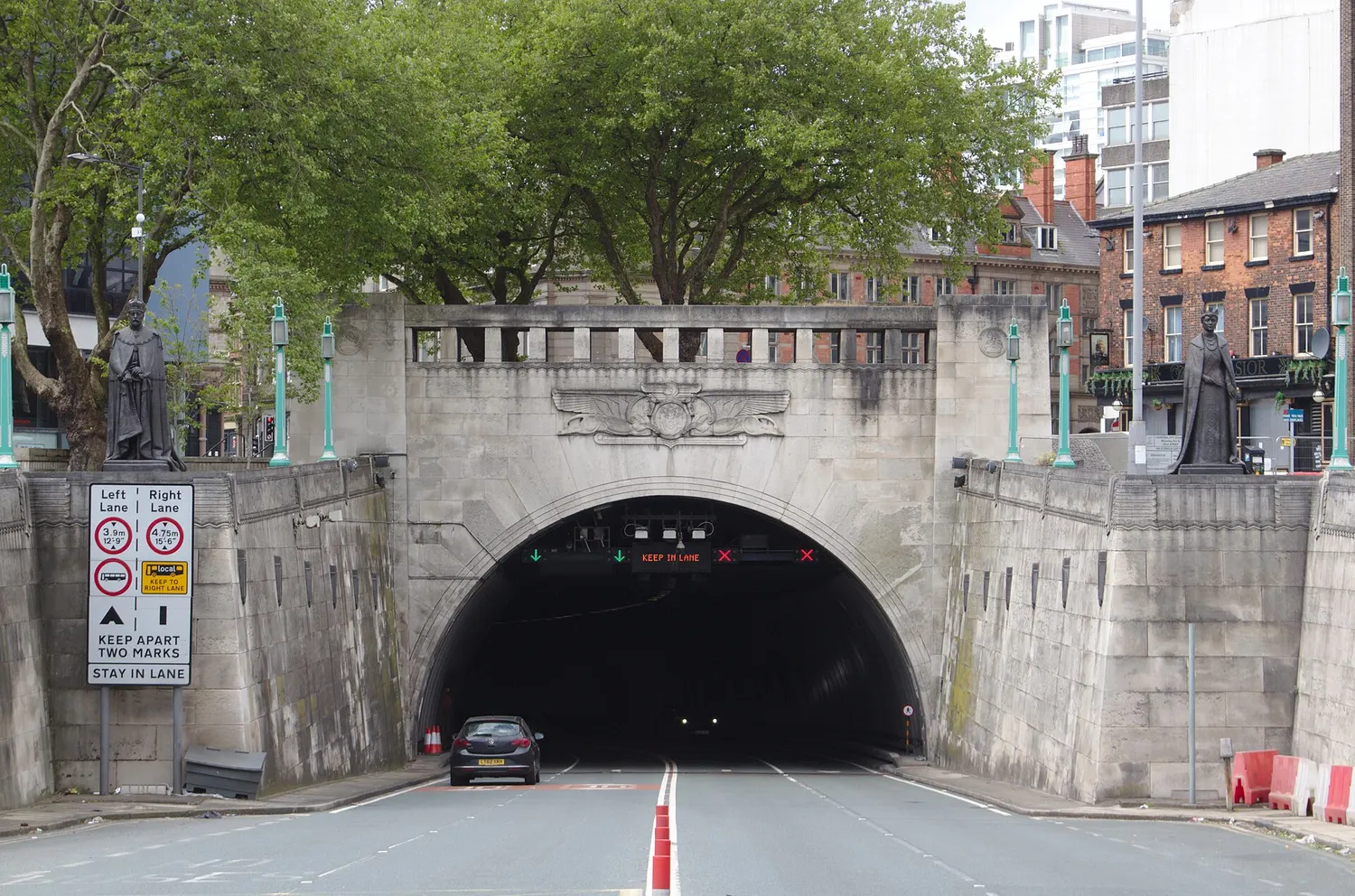
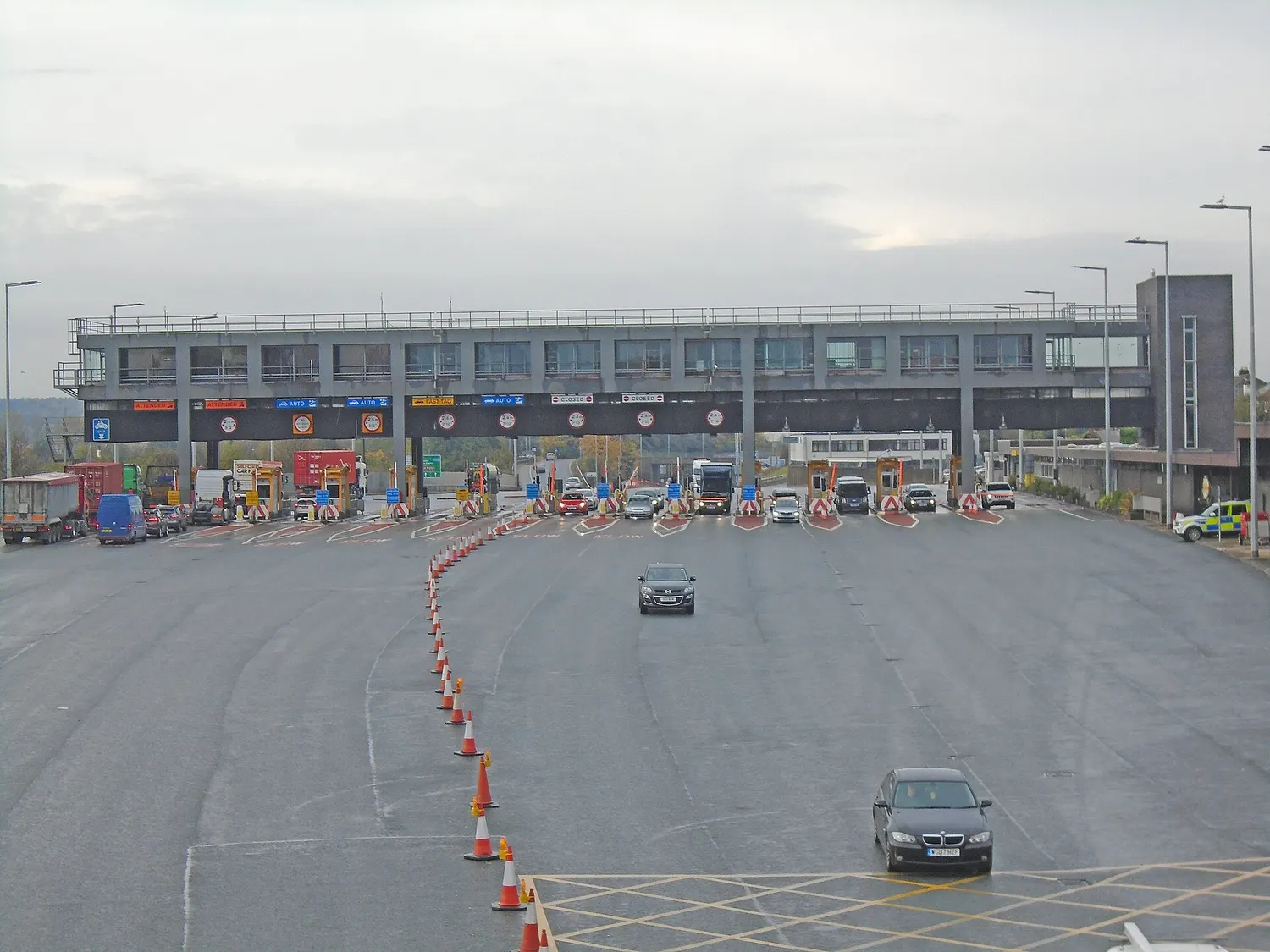
Photo: Rodhullandemu (CC BY-SA 4.0) via Wikimedia Commons
Guide
History of the Mersey Tunnels: Queensway to Kingsway
How Liverpool and Wirral were joined under the river: the 1886 railway tunnel, Queensway in 1934 and Kingsway in 1971, and what it took to build each one.
Liverpool and Wirral have been connected under the River Mersey for 140 years, and the first crossing was not built for cars at all.
There are three tunnels, not two. A Victorian railway tunnel from 1886, the Queensway road tunnel of 1934, and Kingsway, which opened in 1971 and was not finished until 1974. This is how each one was built, what it cost in lives, and what is still there to see above ground.
Facts and current prices below were checked against the Institution of Civil Engineers, Merseytravel and the Liverpool City Region Combined Authority on 26 August 2026.
Key dates for the Mersey tunnels
1886: the Mersey Railway tunnel opens between Liverpool and Birkenhead. It still carries trains.
1934: Queensway opens after nine years' digging. Just over 2 miles, and the longest road tunnel in the world at the time.
1,700 people worked on Queensway. Seventeen died. They are named on Workers Memorial Day each year.
When the two pilot tunnels met under the river in 1928 they were less than an inch out of line.
1971: the Queen opens the first Kingsway tube to Wallasey. The second follows in 1974. Eight workers died building it.
The spoil from Queensway became Otterspool Promenade.
Tolls run until at least 2048, because the borrowing is not repaid.
The first tunnel was a railway, not a road
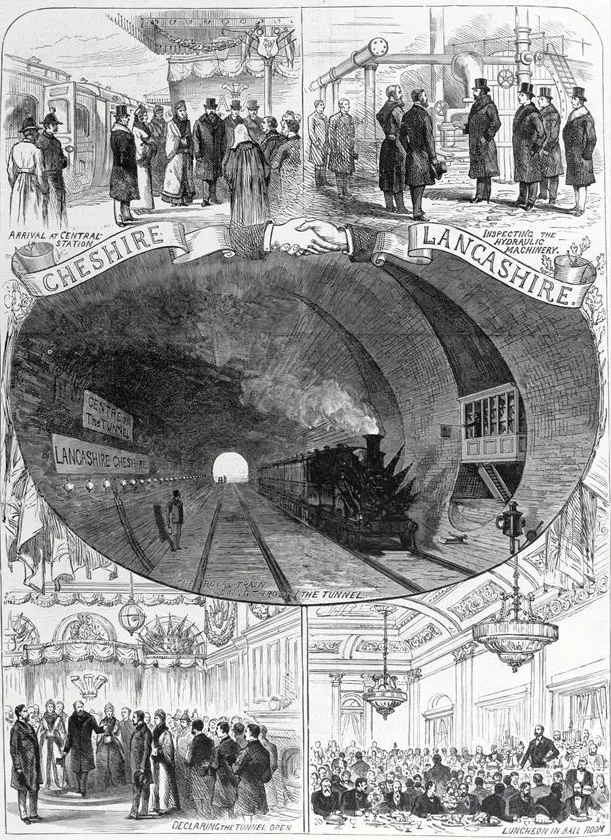
The opening of the Mersey Railway, 1886. Illustration: The Illustrated London News, public domain, via Wikimedia Commons.
Most people assume Queensway came first. It did not. Half a century earlier, the Mersey Railway had already gone under the river.
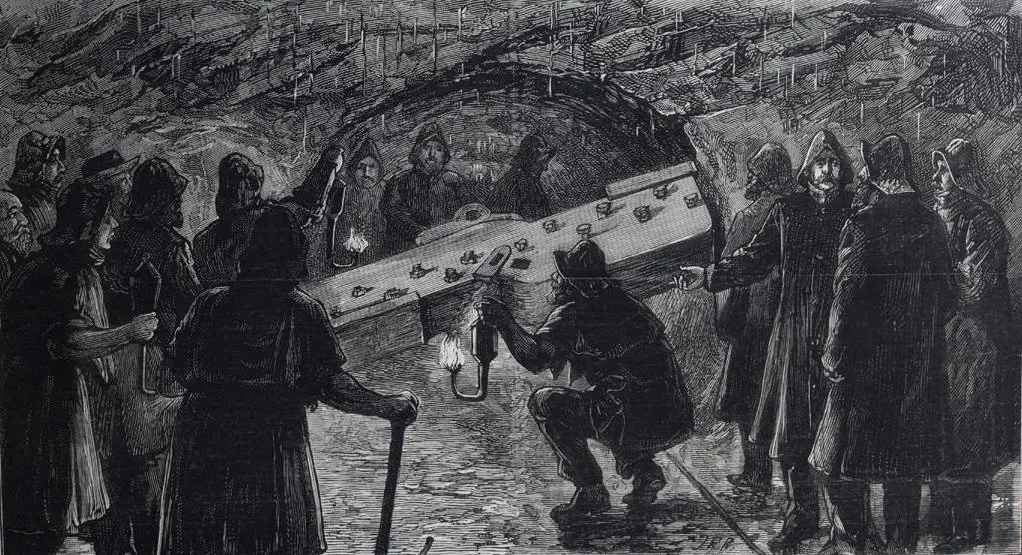
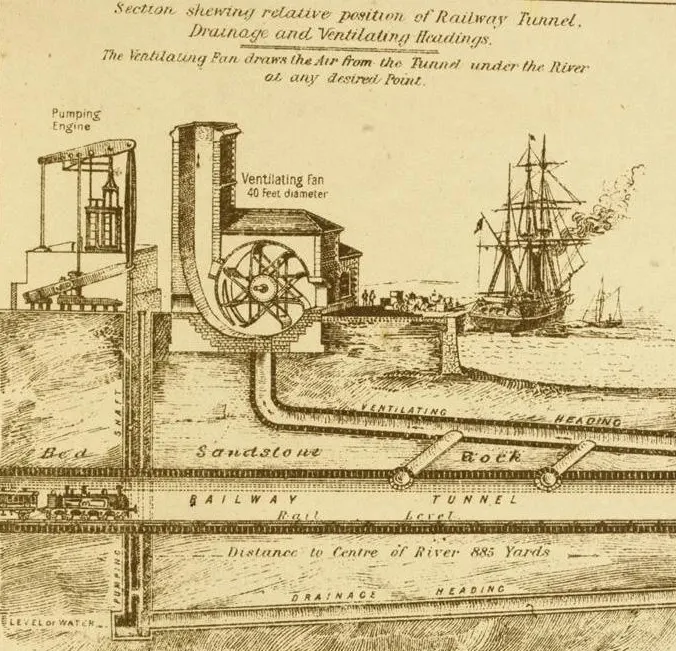
Before it, crossing between Liverpool and Birkenhead meant a boat or a long way round. Building underneath meant cutting through porous red sandstone while holding back the water that came with it, which is why a separate drainage tunnel was dug below the railway itself and pumping machinery ran continuously.
The breakthrough under the river. Illustration: J. R. Brown, public domain, via Wikimedia Commons.
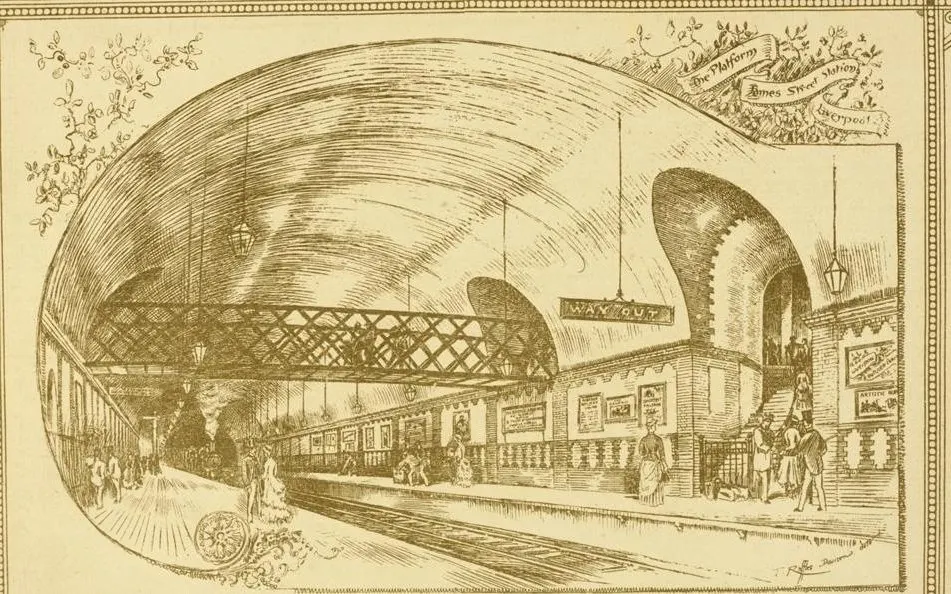
The railway was formally opened by the Prince of Wales, later Edward VII, on 20 January 1886, with public services starting on 1 February. The first trains ran from James Street in Liverpool to Green Lane in Birkenhead, calling at Hamilton Square and Birkenhead Central.
James Street station, with the tower housing the hydraulic passenger lifts. Illustration: Thomas Raffles Davison, public domain, via Wikimedia Commons.
If you take the Wirral Line from James Street today, you are using that 1886 crossing. It is the oldest of the three, and the one most people use without ever thinking of it as a tunnel.
Steam underground was a bad idea
The line opened with steam locomotives, which in a deep underground railway meant smoke with nowhere to go. Stations and tunnels filled with it, and passengers went back to the ferries.
The pumping and ventilating machinery. Illustration: Mersey Railway Company, public domain, via Wikimedia Commons.
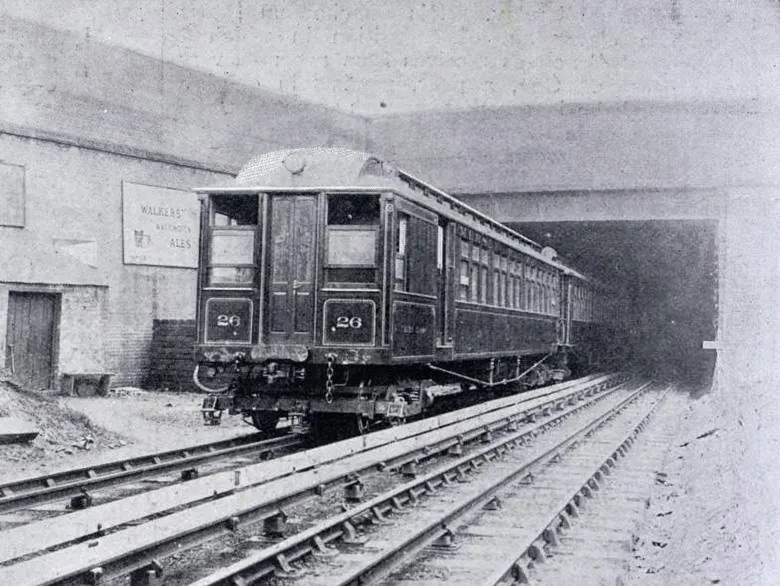
The answer was electrification in 1903, which turned an impressive piece of Victorian engineering into something people would commute on.
An electric train emerging after the 1903 conversion. Illustration: The Illustrated London News, public domain, via Wikimedia Commons.
Queensway: nine years, 66 tonnes of gelignite
By the 1920s the problem had changed. Cars, buses and lorries were piling up at the ferry terminals, and a railway tunnel was no use to any of them.
Digging started on 16 December 1925. Shafts went down on both sides, then pilot tunnels were driven towards each other under the river.
They met on 3 April 1928, less than an inch out of line. No satellites, no computers, no laser guidance. Just surveying.
274,300 tonnes of concrete and 83,300 tonnes of cast iron
939km of electrical cable
1.2 million tonnes of rock and gravel dug out
That spoil had to go somewhere. Much of it became Otterspool Promenade, so the riverside walk in south Liverpool is largely the inside of the tunnel, turned out.
Seventeen men did not come home
The workforce was 1,700. Seventeen were killed during construction, and Merseytravel says they are still honoured each year on Workers Memorial Day.
It is worth pausing on that before the engineering statistics take over. This was hand-dug work under a tidal river, in compressed air, with explosives.
The opening, and the human bouquet
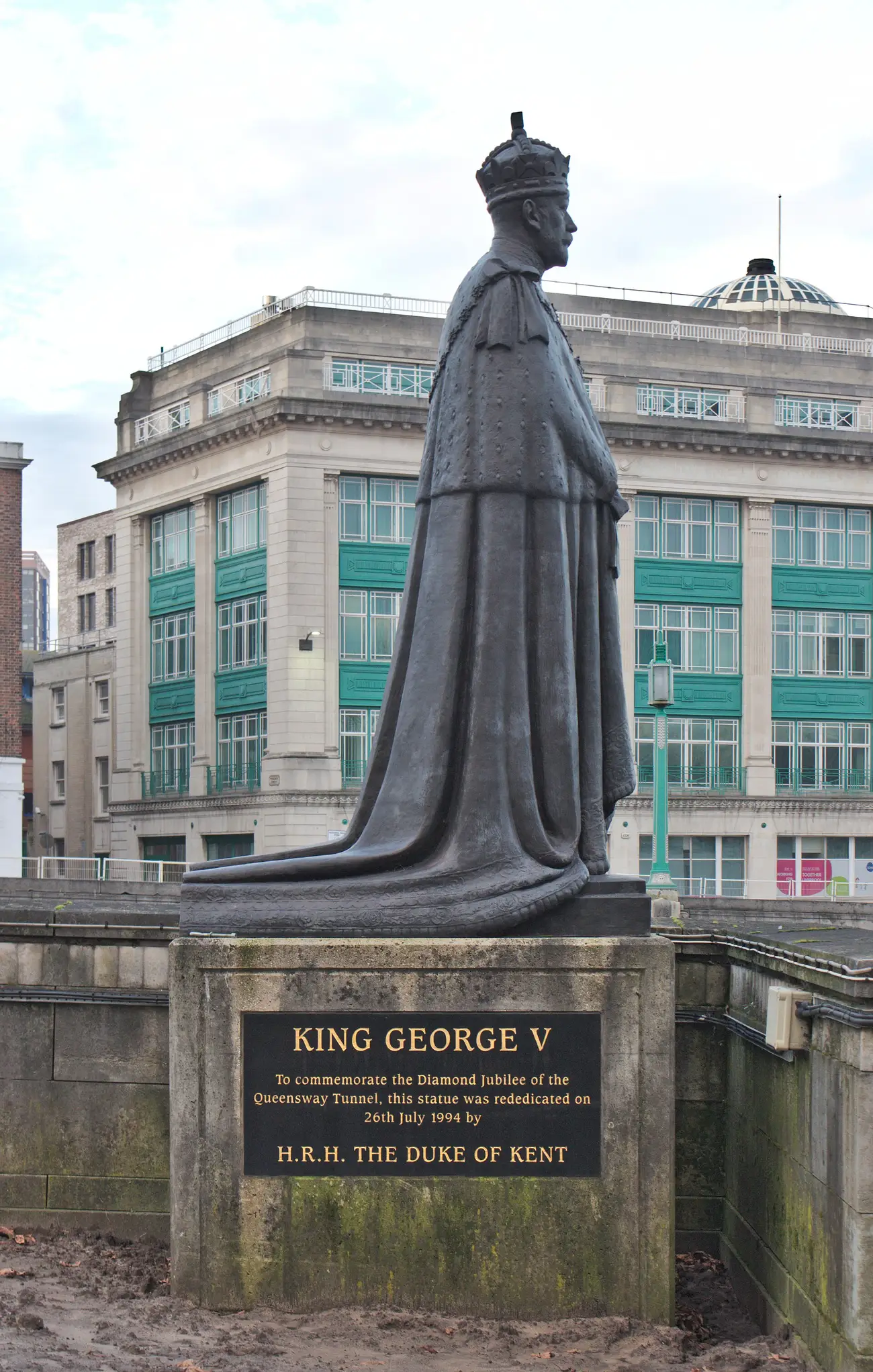
The Queensway monument at Old Haymarket, reinstated in 2026. Photo: Rodhullandemu (CC BY-SA 4.0) via Wikimedia Commons.
King George V opened Queensway on 18 July 1934. Merseytravel's account of the day is worth quoting for scale: a million people came into the city centre, and 1,000 school children lined the streets dressed as flowers to form a human bouquet.
At just over 2 miles, or 3.24km, it was the longest road tunnel in the world. A crossing that had meant a ferry queue now took minutes.
Around 35,000 vehicles still use it every day.
The buildings above it are part of the design
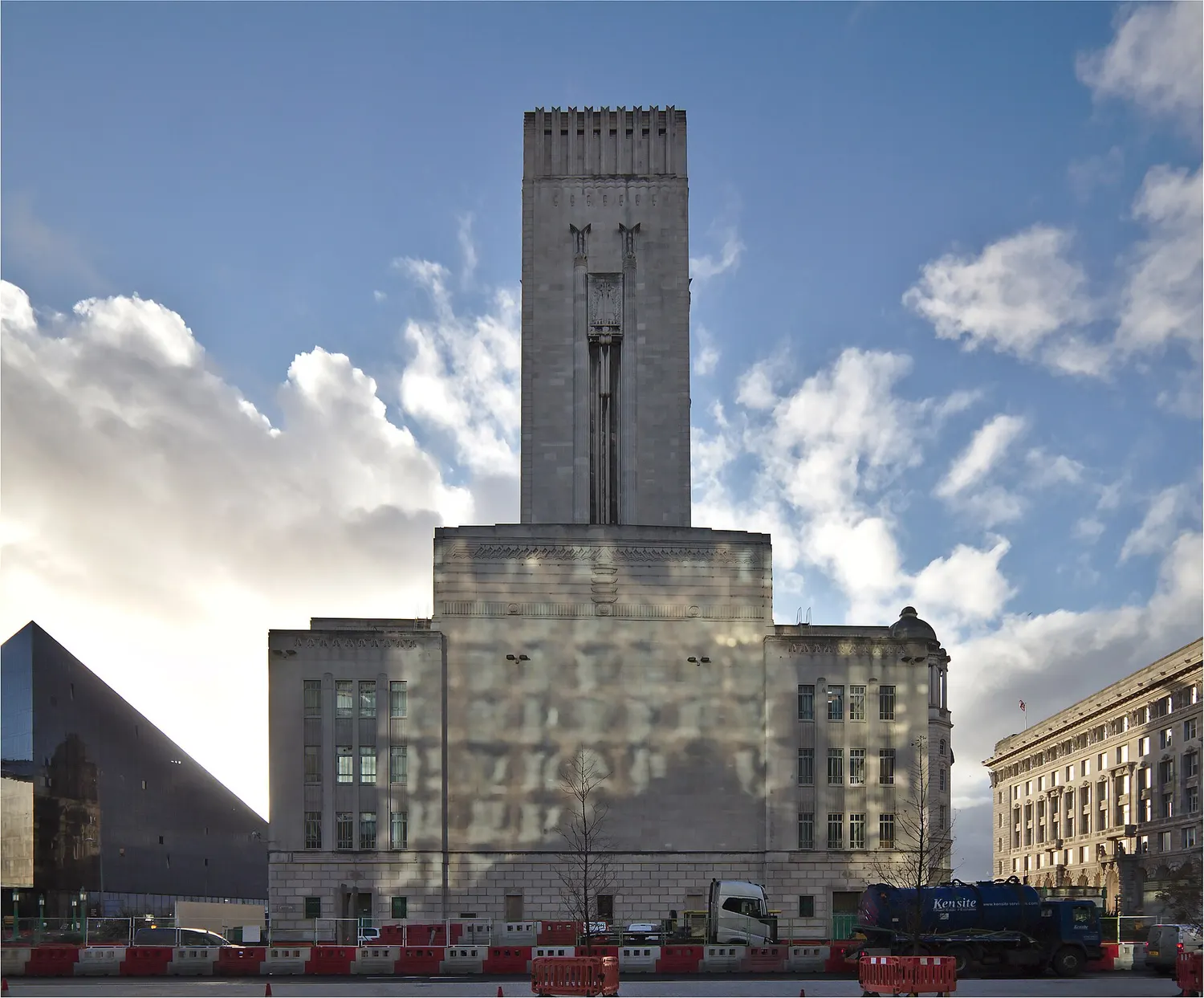
George's Dock Building: an Art Deco landmark that is really a ventilation station. Photo: Rodhullandemu (CC BY-SA 4.0) via Wikimedia Commons.
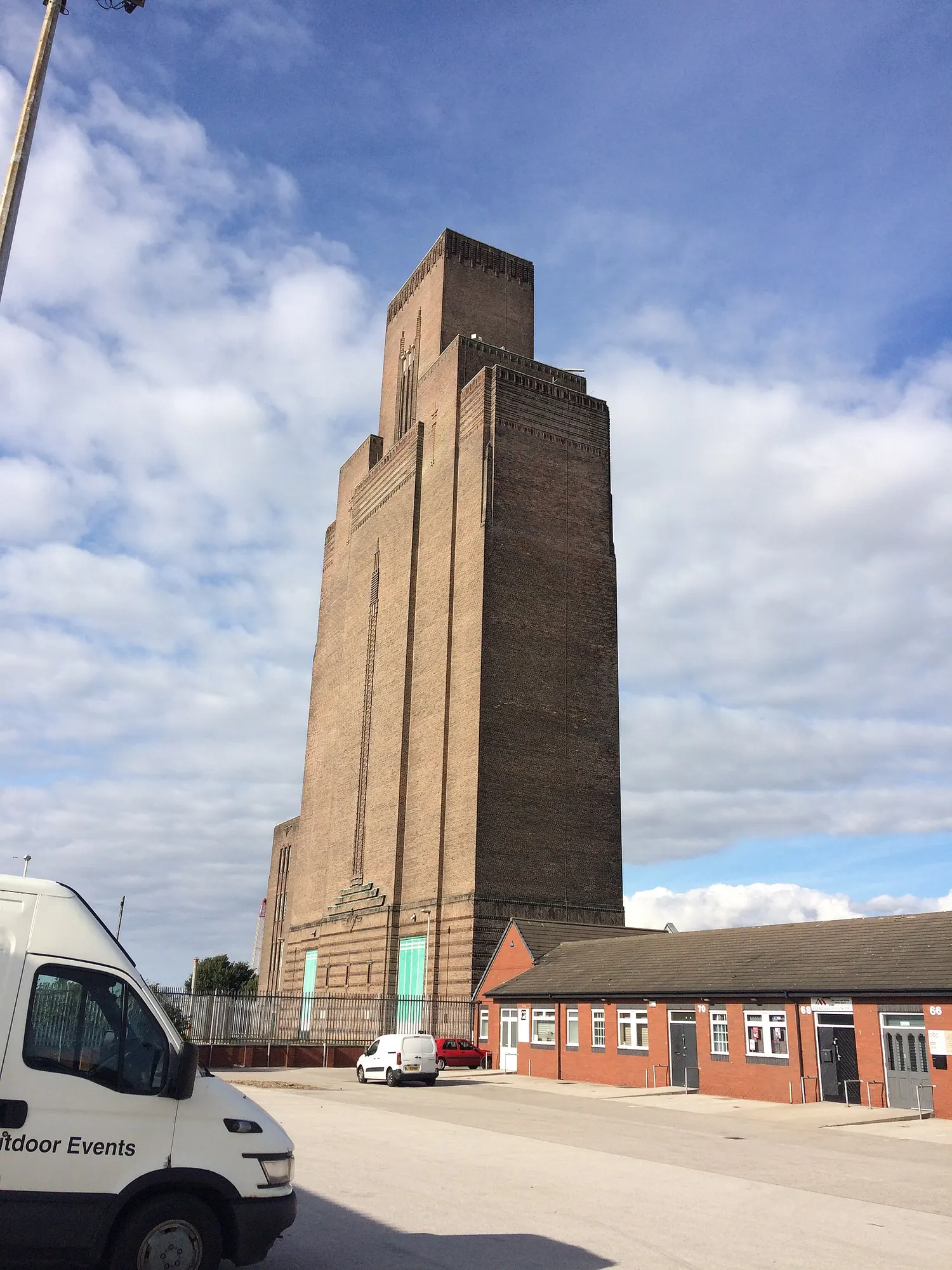
A road tunnel full of petrol engines needs enormous quantities of air moved in and bad air moved out. Six ventilation shafts were built across both sides of the river, and rather than hide them, the architect Herbert James Rowse turned them into civic buildings.
Rowse also designed India Buildings and the Philharmonic Hall, and his tunnel work is covered in our guide to Liverpool architecture.
The George's Dock Building beside the Pier Head is the obvious one. People walk past assuming it is offices. It is a ventilation station with machinery inside, and it is where the tunnel tours start.
One of the Birkenhead ventilation towers. Photo: Paro7181 (CC BY-SA 4.0) via Wikimedia Commons.
An abandoned stretch under the city
Not all of it went to plan. Workers on the Liverpool side hit a fault in the rock, and rather than fight it the engineers moved the alignment and dug elsewhere.
The abandoned section is still down there, tool marks and shot holes and all. It is a reminder that the clean curve you drive through was argued out underground, a few yards at a time.
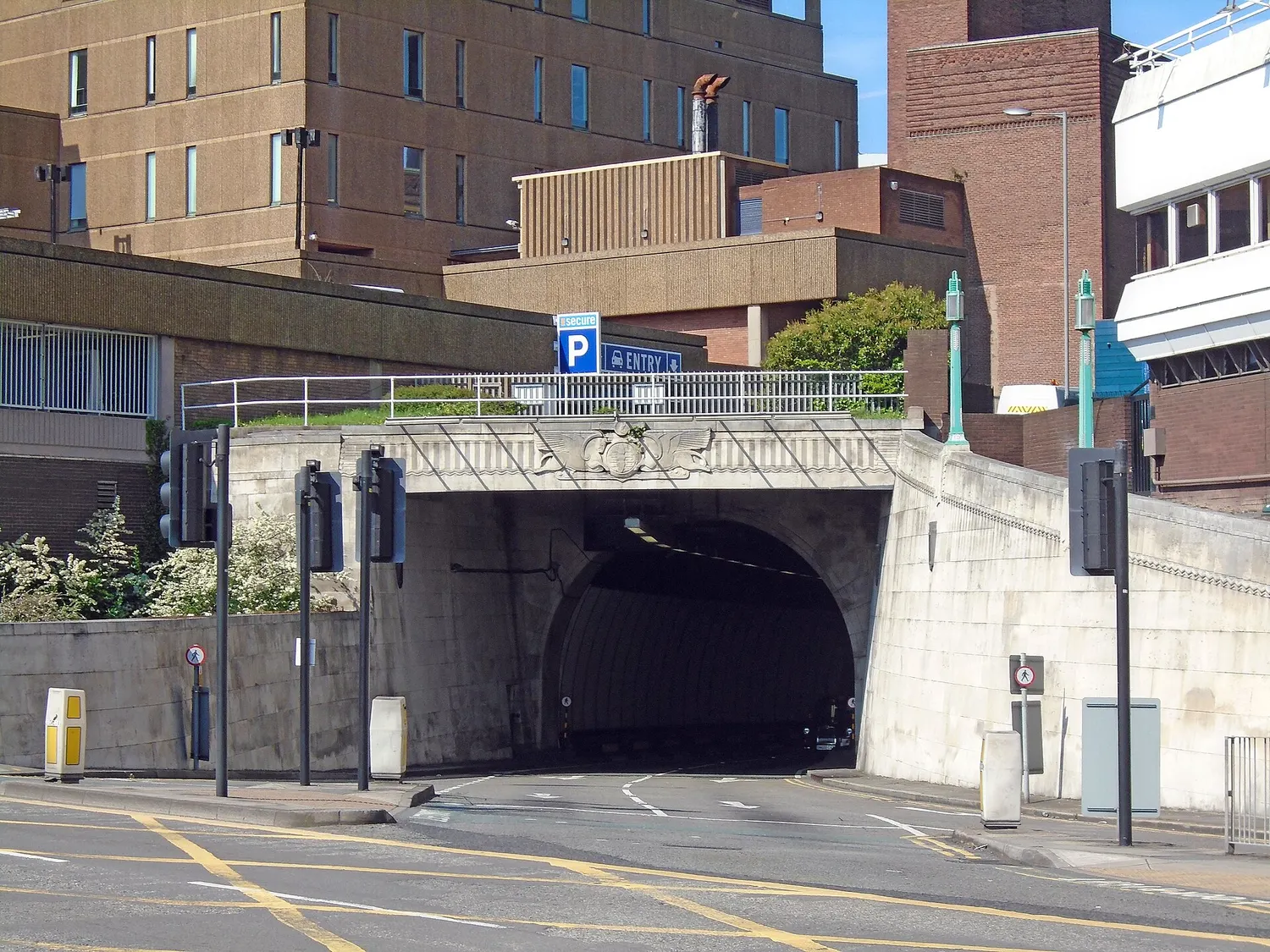
Queensway's dock exit, a second Liverpool portal most drivers bypass. Photo: Rodhullandemu (CC BY-SA 4.0) via Wikimedia Commons.
Kingsway, and the machine that got stuck
Queensway worked, and that was the problem. Traffic kept growing, and by the 1960s the tunnel was near its practical limit.
A six-lane bridge was considered. A tunnel won, for two practical reasons: it could be built in phases to spread the cost, and the Wallasey approach could use an old railway cutting to reach Wirral's M53.
Work began in 1966. A pilot tunnel went through the sandstone first, then the Mersey Mole arrived: a laser-guided machine, 35 tonnes and 45 feet long, previously used building the Mangla Dam in Pakistan.
Merseyside was not Pakistan. Water mixed with grit, and the Mole broke down mid-river, unable to go forwards or backwards. Freeing it meant a month-long operation to replace its 10-tonne main bearing, under the Mersey, in the dark.
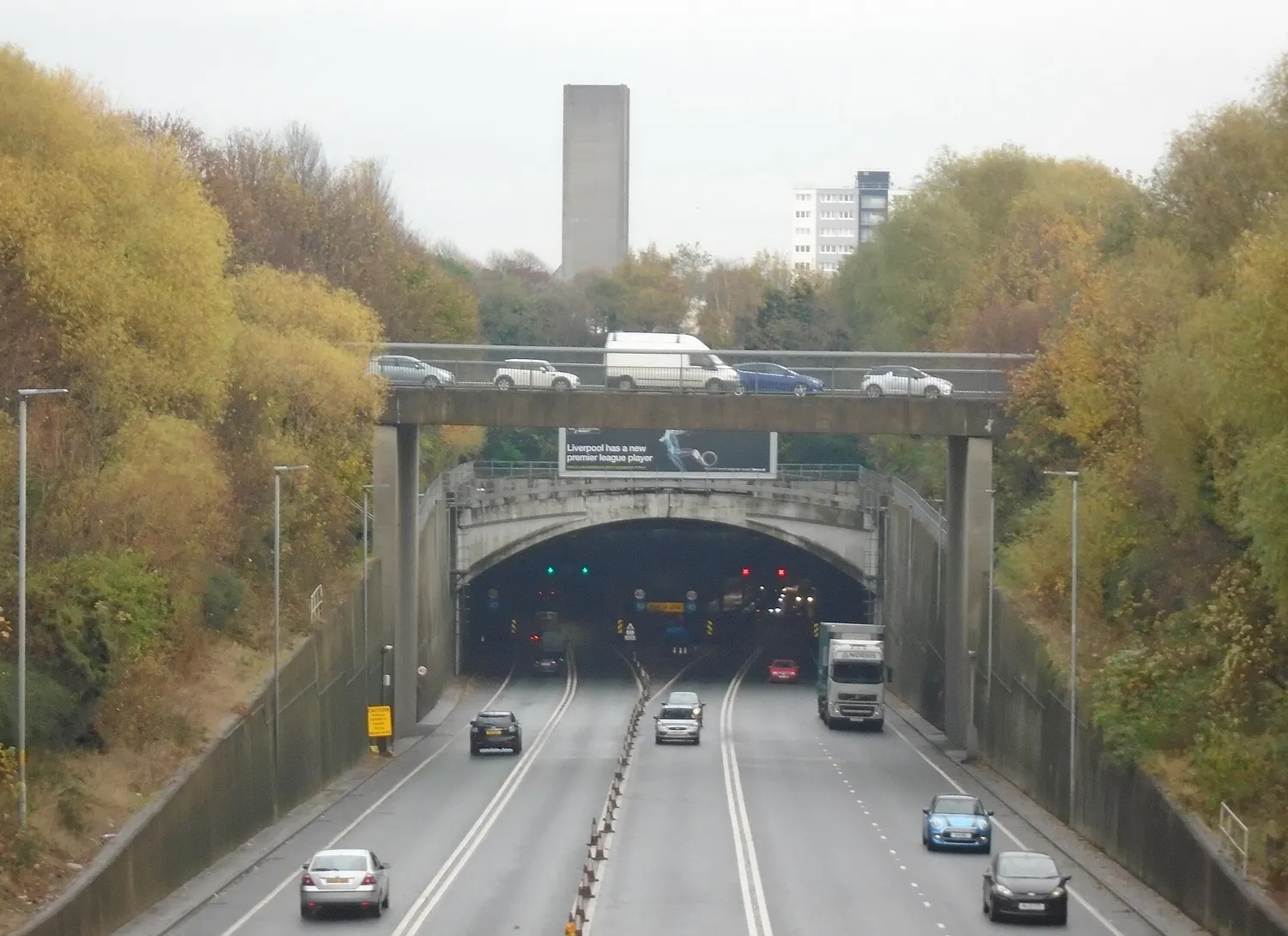
The Wallasey portal. Photo: Rodhullandemu (CC BY-SA 3.0) via Wikimedia Commons.
Eight workers lost their lives building Kingsway.
Queen Elizabeth II opened the first tube on 24 June 1971: 1.5 miles between Liverpool and Wallasey, two lanes, traffic running both ways through a single bore. The second, more northerly tube opened on 13 February 1974, giving the four lanes drivers use now.
Kingsway eventually took over from Queensway as the busier of the two crossings, largely because of that motorway link.
Three tunnels, three different problems
The three Mersey tunnel crossings, their opening dates and what each was built for
Tunnel
Opened
Connects
Built for
Mersey Railway tunnel
1886
Liverpool and Birkenhead
Victorian rail
Queensway
1934
Liverpool and Birkenhead
The arrival of the motor car
Kingsway
1971, second tube 1974
Liverpool and Wallasey
Post-war traffic and the M53
Why you are still paying a toll
Photo: Rodhullandemu (CC BY-SA 3.0) via Wikimedia Commons.
Both road tunnels are owned by the Liverpool City Region Combined Authority and run by Merseytravel. The standard Class 1 toll is £2.40.
Liverpool City Region residents can pay a reduced rate on personal journeys through a pre-paid T-FLOW account. We have not quoted the discounted figure here because Merseytravel does not state it in plain text on its tolls page; check the current rate before you rely on it.
The question locals ask is why there is still a toll ninety years on. Merseytravel's answer is that the borrowing will not be paid off until 2048, and that the debt is not only construction cost. It also covers money borrowed for maintenance and improvements before the Tunnels Act 2004, after which toll income was set to cover upkeep without further borrowing.
Rates and eligibility change, so check Merseytravel's tolls page rather than this one before travelling.
You can go inside
Mersey Tunnel Tours run from the George's Dock Building and take you behind the road tunnel: the original control room, the ventilation plant, and the spaces under the carriageway.
When we checked on 26 August 2026:
Tuesday, Wednesday and Thursday at 5pm, and Saturday at 10am
About two hours, and £14 per person
Over 10s only, with one adult per two children
Saturday tours were sold out until October 2026
There are a lot of stairs. One lift covers the first 100 steps but may not be working
James Street is the nearest Merseyrail station, which is a neat detail: it is also where the 1886 tunnel starts. Moorfields is a short walk too. Book through Merseytravel.
The Old Haymarket monument is back
When Queensway opened, matching Rowse monuments stood at the Liverpool and Birkenhead entrances. Liverpool's was removed during road changes in the 1960s.
Merseytravel announced on 5 June 2026 that a reinstated monument and a new public space at Old Haymarket were complete, more than 60 years after the original went. The work also conserved the two Art Deco toll booths, brought back the site's Venetian glass mosaic, and added a bronze tactile map of the tunnel network.
It is the easiest bit of tunnel history to go and look at, and it is free.
What to see next
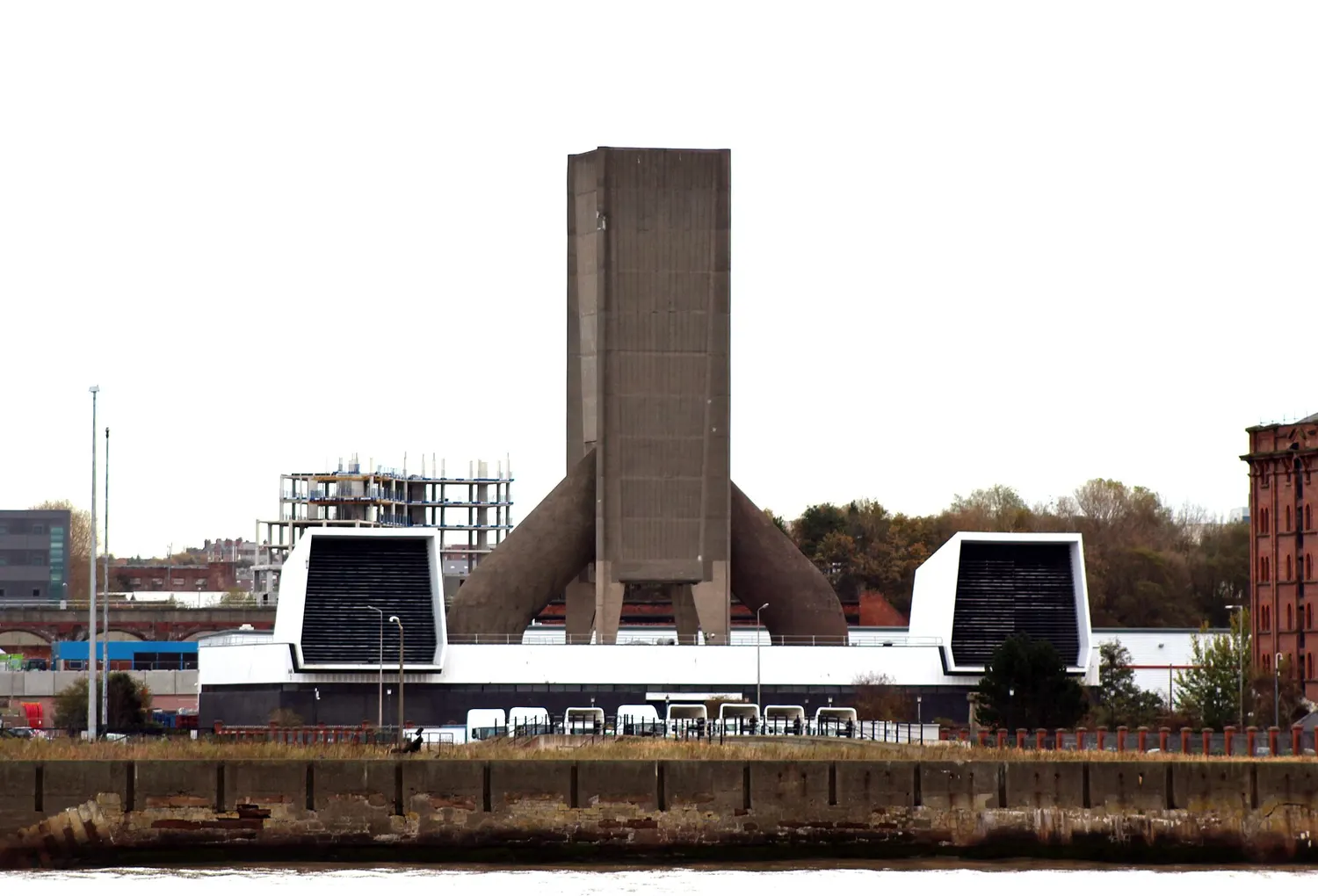
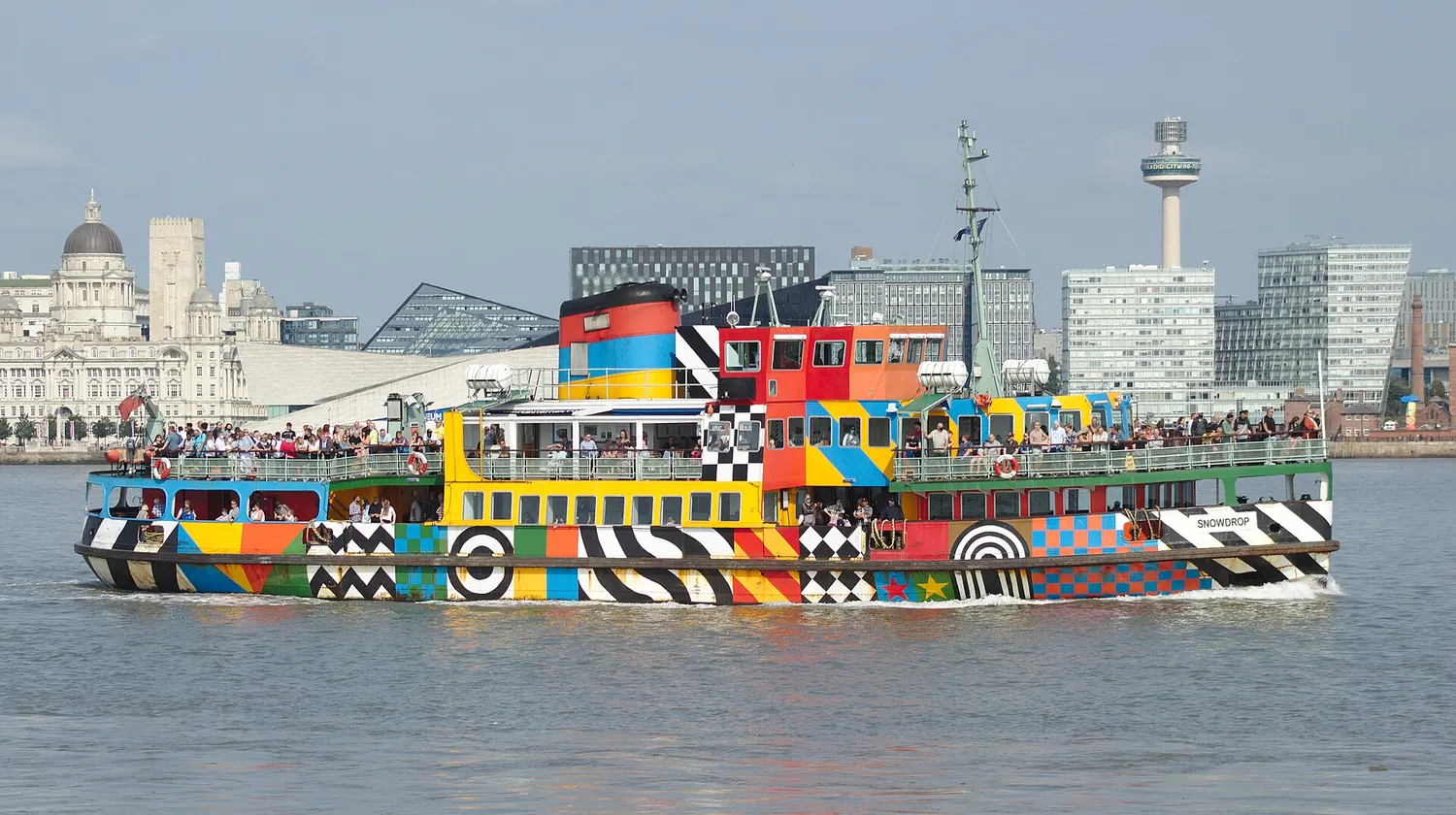
If you want to make a walk of it, start at the Pier Head for the George's Dock Building, then cut up to Old Haymarket for the monument. The Mersey Ferry gives you the view the tunnel builders were trying to replace, and you can see the Kingsway ventilation shafts from the water.
The Mersey Ferry from Birkenhead monks in 1150 to the Zeebrugge Raid, The Beatles, Gerry Marsden and the new Royal Daffodil, plus today's fares and times.
Three separate crossings. The Mersey Railway tunnel between Liverpool and Birkenhead opened in 1886. The Queensway road tunnel, also to Birkenhead, opened on 18 July 1934. The Kingsway Tunnel to Wallasey opened on 24 June 1971, with its second tube following on 13 February 1974.
Which is the oldest Mersey tunnel?
The Mersey Railway tunnel, opened in 1886, nearly half a century before the first road tunnel. It still carries trains today as part of the Merseyrail Wirral Line, so the oldest crossing is also the one most people use without thinking about it.
How much is the Mersey Tunnel toll?
The standard Class 1 toll is £2.40. Liverpool City Region residents can pay a lower rate on personal journeys through a pre-paid T-FLOW account. Rates and eligibility change, so check Merseytravel before travelling.
Why do you still pay a toll on the Mersey Tunnels?
Merseytravel says the borrowing behind the tunnels is not scheduled to be repaid until 2048. That debt covers more than construction: it includes money borrowed for maintenance and improvements before the Tunnels Act 2004. Toll income also funds upkeep.
Can you go inside the Queensway Tunnel?
Yes, on a Mersey Tunnel Tour from the George's Dock Building. Tours run Tuesday, Wednesday and Thursday at 5pm and Saturday at 10am, take about two hours and cost £14 per person. Children must be over 10. Saturday tours were sold out until October 2026 when we checked.
Comments
Join the conversation with your L1Local Community account. Keep it civil and on topic.
Liverpool this week
New places, local news, things to do and our latest guides. Weekly.
Comments
Join the conversation with your L1Local Community account. Keep it civil and on topic.