His half-brother lived in Toxteth. His nephew was born here. Their Liverpool home was later destroyed by German bombs. Then comes the part nobody has managed to prove: Adolf Hitler himself.
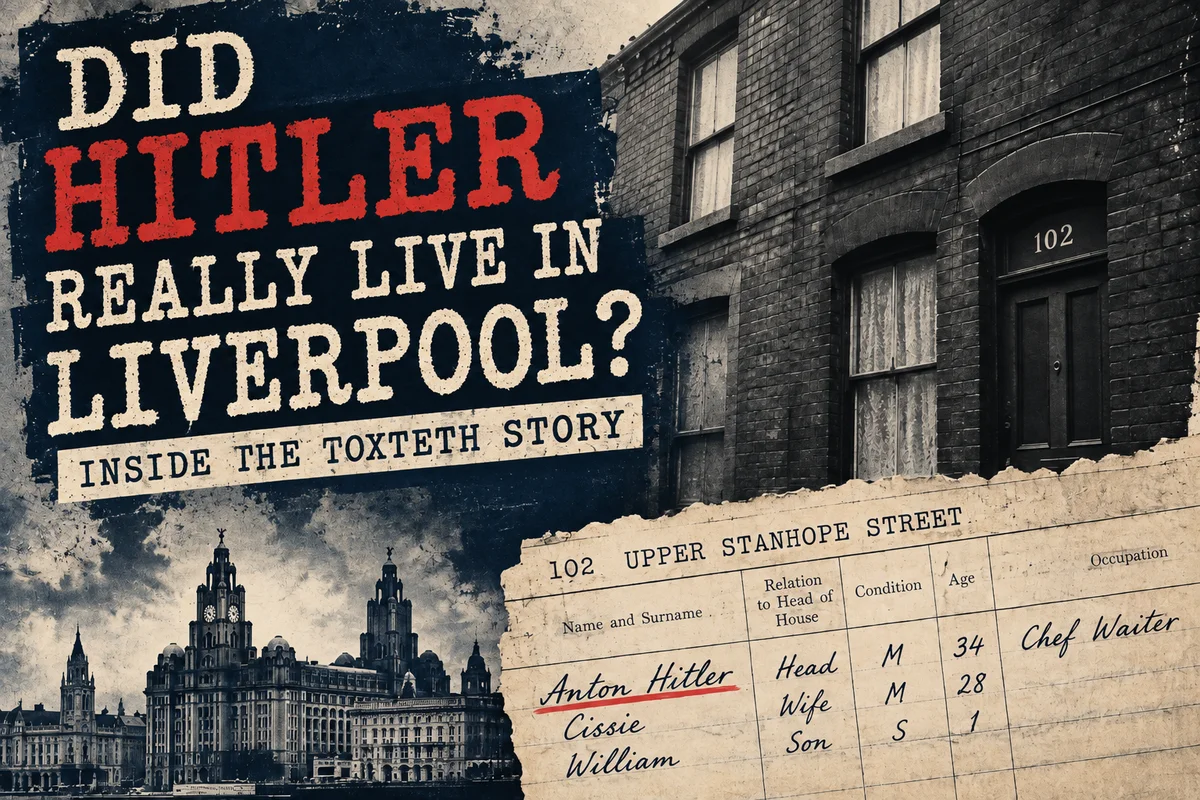
In April 1911, Alois Hitler was living in a crowded boarding house at 102 Upper Stanhope Street, Toxteth, with his wife Bridget, their baby son and nine other people.
On the census form, even his name was muddled. Adolf Hitler’s half-brother appeared not as Alois, but as Anton Hitler. His occupation was listed as a chef waiter. Bridget appeared as “Cissie”. Their Liverpool-born son William was still an infant.
Nothing on that sheet suggested this ordinary Toxteth household would one day be picked apart by historians searching for one particular missing name.
Adolf.
For decades, Liverpool has repeated the story that the future Nazi dictator arrived here in late 1912, moved into his brother’s Upper Stanhope Street home and spent months wandering the city without work.
Then the story grew.
There were Liverpool pubs. Art galleries. Everton matches. A supposed job at the Adelphi. Even a claim that Liverpool helped create Hitler’s famous moustache.
But underneath all of those stories sits a much simpler problem.
Alois Hitler can be placed in Liverpool by contemporary records. Adolf Hitler cannot.
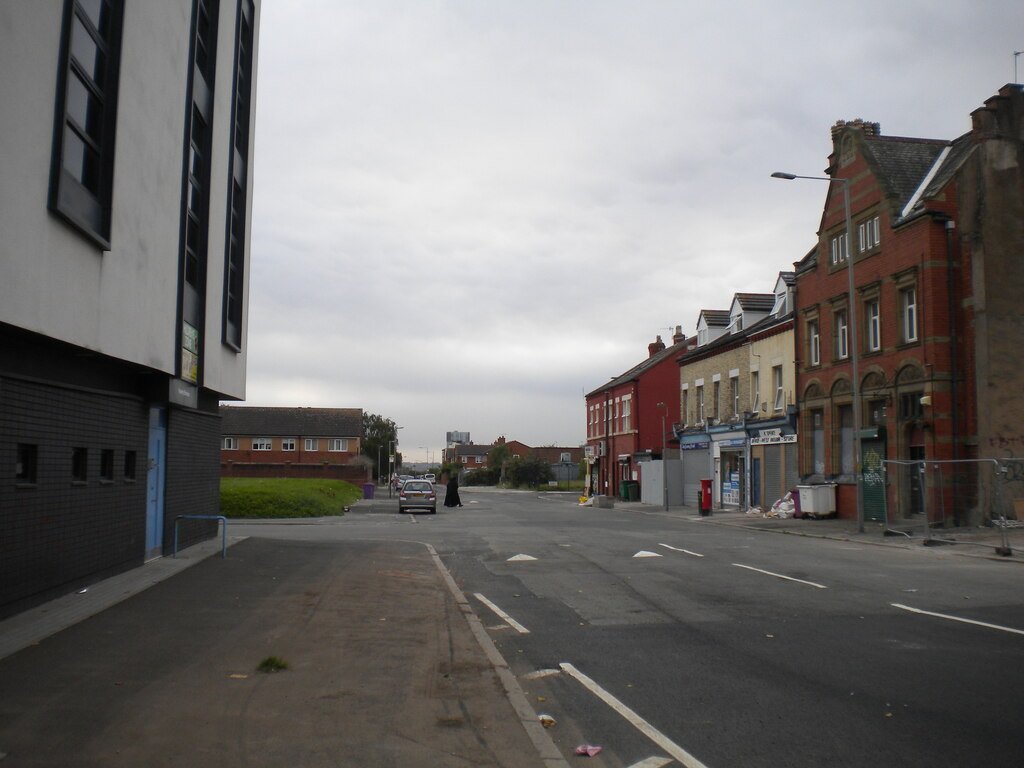
Upper Stanhope Street in Toxteth today. Photo: Richard Vince (CC BY-SA 2.0), via Wikimedia Commons.
The Hitler family really did live in Toxteth
The strongest part of the Liverpool story is also the least dramatic.
It is paperwork.
The 1911 Census of England and Wales places Alois Hitler Jr, Bridget and their infant son at 102 Upper Stanhope Street, Toxteth Park. Findmypast’s examination of the return shows that they shared the property with nine other people.
Alois described himself as Austrian-born and gave his occupation as a chef waiter at a Lyons café.
The strange names on the return are part of what makes the document so useful. Alois appears as Anton Hitler. Bridget appears as Cissie. Their son William is there too, with the German word Sohn, meaning son, written beside his entry.
There is no hindsight in the document. No Nazi Germany. No war. No attempt to build a legend around the surname.
Just a Liverpool household in 1911.
That is why the census matters.
It proves there really was a Hitler family at Upper Stanhope Street.
His early life had already been unsettled. Historian Hugh Trevor-Roper recorded that Alois had been convicted of theft before leaving Austria and moving through Britain and Ireland.
In Ireland he met Bridget Dowling.
They married in London in June 1910 and later settled in Liverpool.
Then, on 12 March 1911, Bridget gave birth to their son.
His name was William Patrick Hitler.
The United States Navy Memorial still records his birthplace as Liverpool, England.
At the time, he was simply a baby in a crowded Toxteth boarding house.
Within two decades, the surname on his birth record would become one of the most notorious in the world.
But before that happened, according to his mother, another member of the family arrived in Liverpool.
Bridget said Adolf Hitler came to stay
Years later, Bridget told a very different story about life at Upper Stanhope Street.
According to her account, Adolf Hitler came to Britain and stayed with the family for several months.
This was not Hitler the dictator.
There was no Nazi Party to lead, no government to control and no reason for anyone in Liverpool to recognise him.
He was a young Austrian who had failed to establish himself as an artist and had little money.
In Bridget’s telling, he was also an awkward houseguest.
She described him arriving in Liverpool, struggling with English, failing to find proper work and spending long stretches wandering around the city.
The story was detailed enough to feel lived-in.
There were arguments.
Domestic irritations.
Clothes.
Food.
His habits.
Even his moustache.
Eventually, according to Bridget, Alois became tired of supporting him and Adolf left.
For a local legend, it was almost too good.
The future dictator of Germany, years before anybody knew his name, sleeping under his brother’s roof in Toxteth.
But there was a problem with the source.
Bridget did not write the story down while it was happening.
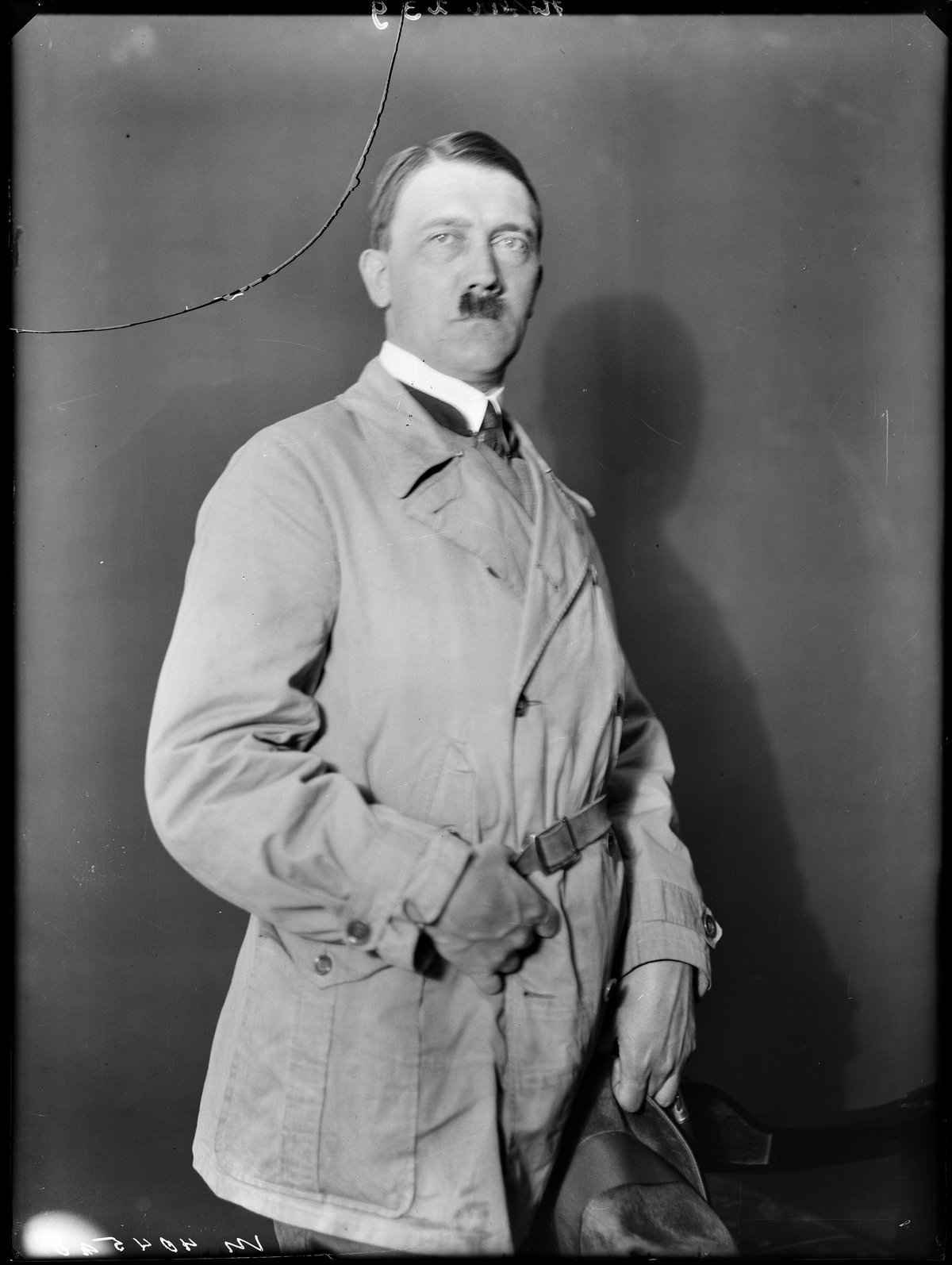
Adolf Hitler, photographed in the 1920s, years after the Liverpool stay described in Bridget Dowling Hitler's memoir. Photo: US National Archives (NARA), no known copyright restrictions, via Wikimedia Commons.
The famous ‘Hitler diary’ was not a diary
The document at the centre of the Liverpool story is called My Brother-in-Law Adolf.
It still exists.
The New York Public Library holds a 225-leaf typescript attributed to Bridget Elizabeth Dowling Hitler in its Manuscripts and Archives Division.
But it was not a diary written in Liverpool in 1912.
It was a memoir produced decades later.
That difference matters.
A diary can show what somebody claimed to see close to the time it happened. A memoir relies on memory, hindsight and, sometimes, later editing.
Bridget’s manuscript had another problem.
Its route into the historical record was unusual.
It was not deposited directly by Bridget as a carefully preserved family document. Historian Hugh Trevor-Roper traced it through the papers of literary agent Edmund Pauker.
The surviving manuscript was undated and unfinished.
Then Trevor-Roper compared it with the version later published.
By 1979, Bridget’s story had attracted enough attention for Hugh Trevor-Roper, historian of Nazi Germany and author of The Last Days of Hitler, to examine it closely.
His question was simple.
Had Adolf Hitler really spent months in Liverpool?
Trevor-Roper did not pretend there was a document showing Hitler’s location on every day of his early adult life. That kind of evidence does not exist.
Instead, he looked for corroboration.
The results were thin.
Established Hitler historians had not previously known about a Liverpool stay.
British immigration authorities had no record placing him here.
Hitler himself did not mention spending months in England.
William Patrick Hitler, who later supplied information about his uncle, apparently did not use the Liverpool story either.
Then Trevor-Roper examined the original typescript.
In a follow-up published in August 1979, he reported substantial differences between the manuscript and the published version.
His conclusion was deeply sceptical.
The memoir contained genuine family material, but he believed parts of the narrative had been constructed, rewritten or embellished.
The Liverpool stay was one of the episodes he doubted.
While Hitler was supposedly in Liverpool, historians place him in Vienna
There is another problem.
This one is harder to explain away.
The United States Holocaust Memorial Museum places Adolf Hitler in Vienna from 1908 until May 1913.
During those years he struggled financially, stayed in a homeless shelter and later lived in a men’s home. He made some money selling paintings and architectural scenes.
Then, in May 1913, he left Vienna for Munich.
That chronology overlaps with the version of the Liverpool story that places Hitler in Toxteth from late 1912 into 1913.
Put the two side by side:
Account
Where was Hitler?
Bridget Hitler’s later memoir
Liverpool for several months
Established historical chronology
Vienna until May 1913
Confirmed move
Munich, May 1913
That does not prove Hitler could never have crossed the North Sea for a short visit.
Historical records are not complete enough for that.
But a brief undocumented journey and a months-long stay are very different claims.
Living in Liverpool for half a year should leave more behind than one later memoir.
One part of Bridget’s version sounds particularly convincing.
Hitler, she suggested, wanted to avoid Austrian military service.
That was a real problem in his life.
Hitler did evade his military obligations to Austria-Hungary. The US Holocaust Memorial Museum records that avoiding punishment over military service was one reason for his move from Vienna to Munich in 1913.
It gives the Liverpool story a believable shape.
A young Austrian is trying to avoid conscription.
His older half-brother is living abroad.
He leaves Austria and hides in Liverpool.
Except the documentary trail leads to Munich, not Toxteth.
The motive is real.
The Liverpool journey remains unproved.
There is no evidence Hitler came to Liverpool to study art
The art story works in much the same way.
Again, it begins with something true.
Hitler wanted to become an artist.
He applied to the Academy of Fine Arts Vienna and was rejected. He later produced paintings and drawings which he sold for money.
Liverpool had established art institutions.
Put those facts close together and the next part of the legend almost writes itself: perhaps Hitler came to Liverpool because he intended to study art here.
But there is no evidence identified for this article that he applied to a Liverpool art school, enrolled at one or travelled to the city for that purpose.
His failed artistic ambitions explain part of his life in Vienna.
They do not put him in Liverpool.
Then Liverpool gave the story a pub
Once Adolf Hitler had been placed inside 102 Upper Stanhope Street, he could be placed almost anywhere else in the city.
Stories linked him with the Poste House.
Others sent him to Peter Kavanagh’s.
Some versions put him at Everton matches.
Another gave him work at the Adelphi Hotel.
Another had him thrown out of the Walker Art Gallery.
The stories sound as though they support one another.
They do not.
They all depend on the same unproved starting point.
Before asking what Hitler drank in a Liverpool pub, you first need evidence that Hitler was in Liverpool.
No contemporary evidence located for this article establishes those episodes.
They belong to Liverpool folklore, not the documented part of the story.
And then there is the moustache
Bridget’s account supplied perhaps the most memorable detail.
She claimed she persuaded Adolf to cut down the sides of his moustache.
That would give an ordinary domestic moment in Toxteth an extraordinary afterlife.
But photographs from the First World War create a problem.
Years after the supposed Liverpool stay, Hitler can still be seen wearing a broader moustache than the small toothbrush style associated with his later political career.
Even if Bridget once told him to trim it, the evidence does not support the idea that Liverpool created Hitler’s famous moustache.
It is another perfect example of why the story survives.
The detail is specific.
The proof is not.
Did Hitler order the Liver Building to be spared?
Eventually the Liverpool story grew again.
A long-running tale claims Hitler admired the Royal Liver Building so much that he ordered Luftwaffe pilots not to destroy it.
There is no credible evidence of such an order.
Liverpool’s docks and surrounding areas were strategic targets during the Second World War. The city suffered repeated German raids because the port was central to Britain’s Atlantic supply lines.
The Liver Building survived.
That survival does not demonstrate personal intervention by Hitler.
The real Luftwaffe connection to the Liverpool Hitler story is found somewhere far less grand.
Back on Upper Stanhope Street.
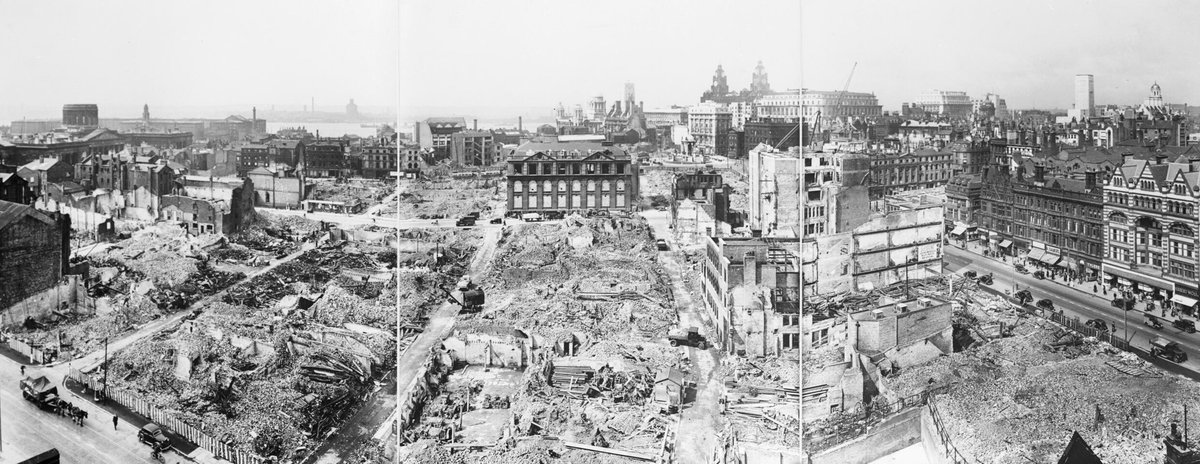
Bomb damage in Liverpool during the Second World War. Upper Stanhope Street was hit in the city's last German air raid, in January 1942. Photo: Imperial War Museums, public domain, via Wikimedia Commons.
German bombs destroyed 102 Upper Stanhope Street
By the time Britain was at war with Nazi Germany, Alois, Bridget and William had long since left the house.
Number 102 was still standing.
Then came 10 January 1942.
German aircraft attacked Liverpool again in what local historical accounts describe as the city’s final German air raid.
Several houses on Upper Stanhope Street were destroyed.
One of them was 102.
There is no evidence the house was deliberately targeted because Alois Hitler had once lived there.
It was simply another Liverpool property caught in the bombing.
The irony came later.
The former Liverpool home of Adolf Hitler’s half-brother had been destroyed by Adolf Hitler’s Germany.
How the River Mersey became Britain's wartime lifeline: the Zeebrugge Raid, the Battle of the Atlantic, the Liverpool Blitz and two world wars of convoys.

Comments
Join the conversation with your L1Local Community account. Keep it civil and on topic.