Guide
Croxteth Hall: The History of Liverpool's Sefton Estate
How the Molyneux family, the Earls of Sefton, built Croxteth Hall over four centuries, what the 1952 fire took, and how the estate came to Liverpool.
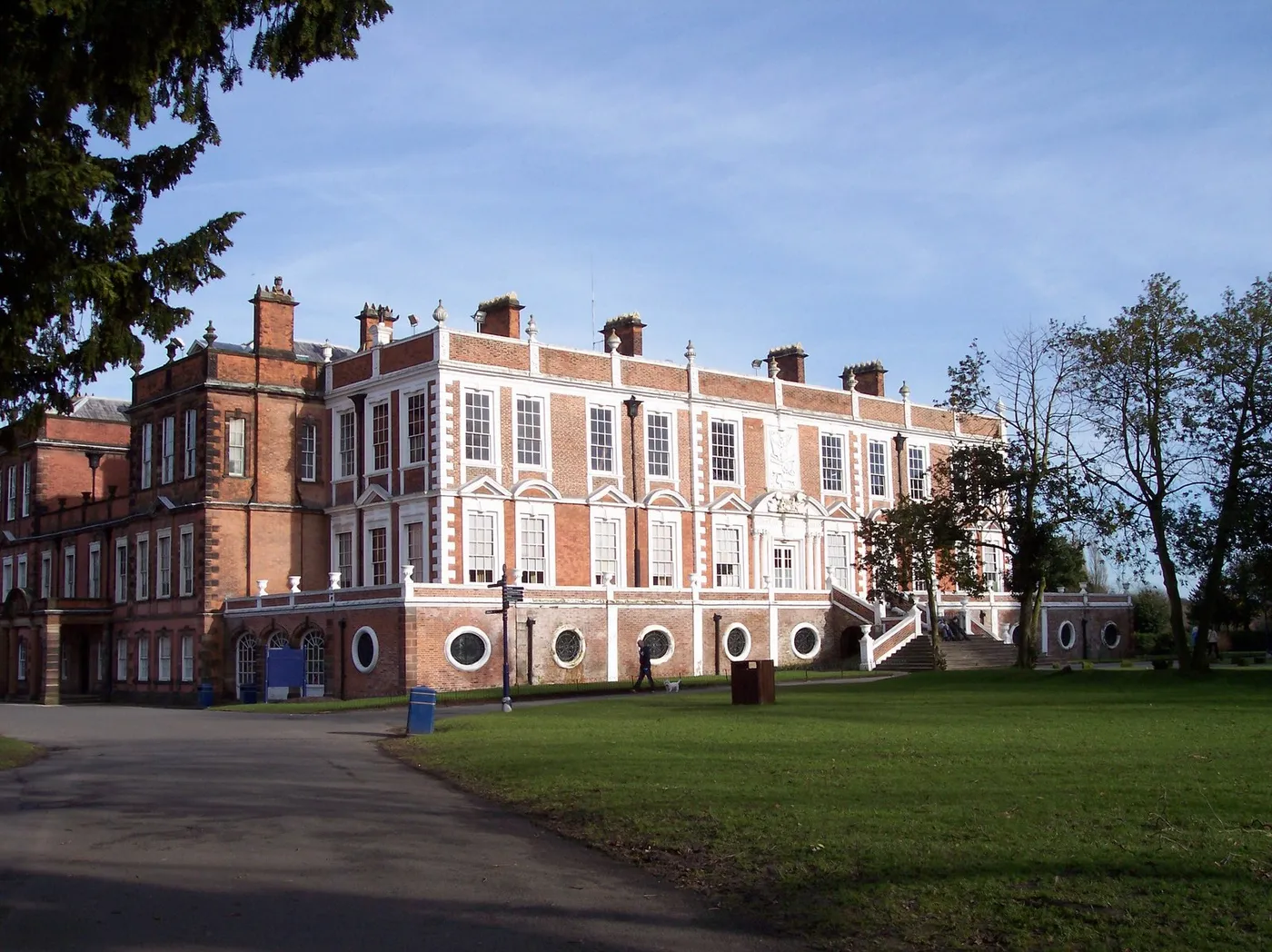
If you have walked the drive at Croxteth or seen the hall from the park, you have probably noticed that it does not look like one building. Red brick meets pale stone, the rooflines do not match, and the front you see first is not the oldest part.
That is because Croxteth Hall was built in stages over more than three hundred years by one family: the Molyneux family, later the Earls of Sefton. This is the short history of how the house and its estate came together, what the 1952 fire took, and how a private country seat ended up owned by the city.
Our practical guide to visiting Croxteth Hall and Country Park covers opening times and prices. This piece is the background.
The Molyneux family at Croxteth
- The Molyneux family held land here from the medieval period. Historic England records the park being granted to William Molyneux in 1507.
- The oldest surviving part of the house dates from about 1575. The grand west front was added in 1702, large Victorian wings in 1874 to 1877, and the north range in 1902 to 1904.
- The family were made Earls of Sefton in 1771. The 2nd Earl leased the land at Aintree where the Grand National began.
- A fire in 1952 gutted the interiors of the oldest wing.
- Hugh Molyneux, the 7th and last Earl of Sefton, died in 1972. The estate passed to Liverpool City Council, which opened the country park and sold part of the land for housing.
- The hall is Grade II* listed and the park is on the national register of historic parks and gardens.
The Molyneux family and the deer park
The Molyneux name runs through medieval Liverpool. The family were connected with the town from the late thirteenth century and later held Liverpool Castle and the constableship of the borough for the Crown.
Croxteth began as a hunting ground. Historic England's register entry for the park records it being granted to William Molyneux in 1507, enclosed as a deer park on the edge of the royal forest of West Derby. For centuries the point of Croxteth was not the house but the land around it: timber, game and grazing.
In 1575 Sir Richard Molyneux built a new house at the centre of that park. Part of it still stands, at the southern end of the east range, and it is the plainest section of what you see today.
A house built in stages
Each generation that could afford to build, built.
In 1702 Richard Molyneux, 4th Viscount Molyneux, added the tall west front with its stone pilasters. For a long time this was the public face of Croxteth, and it is still the part most people picture.
The family were raised to the Earldom of Sefton in 1771. Wealth from land, coal and Liverpool's growth paid for the next round of work. Between 1874 and 1877 the 4th Earl brought in the architect Thomas Henry Wyatt to add south and east wings, and in 1902 to 1904 the 5th Earl added the vast north range, designed by John MacVicar Anderson. That last phase closed the courtyard and turned the house into a fully serviced Edwardian mansion, with the kitchens, sculleries and staff quarters that the tour still goes through.

Racing, shooting and a royal visit
The Seftons were a sporting family, and that left marks well beyond Croxteth.
William Philip Molyneux, the 2nd Earl, known as "Lord Dashalong" for his driving, leased land at Aintree to the Liverpool hotelier William Lynn. Lynn laid out a racecourse there, and the Earl laid its foundation stone in 1829. The Grand National grew out of that ground, and an Aintree grandstand still carries the Sefton name.
Closer to home, Queen Victoria and Prince Albert stayed at Croxteth on 9 October 1851, the night before a state visit to Liverpool. The estate also ran a large shoot and kennels, and the Home Farm that is now Croxteth Park Farm supplied the house.
The 1952 fire
In 1952 a fire broke out in the oldest part of the house and destroyed the interiors of the 1702 west wing.
The outside walls survived, and the wing was later reroofed, but the rooms behind that famous front are not original. This is worth knowing before a visit: the state rooms open to the public are mostly in the Victorian and Edwardian ranges, which is why the tour can feel more late nineteenth century than Tudor.
The last Earl and the bequest to Liverpool
Hugh William Osbert Molyneux, the 7th Earl of Sefton, had no children. When he died in 1972 the earldom ended with him.
He and his wife, Josephine, Countess of Sefton, had already decided what would happen to Croxteth. The hall, its contents and the surrounding land passed to the City of Liverpool. The Countess, the last member of the family to live in the house, stayed connected to it until her death in 1980.
Liverpool City Council opened the grounds as Croxteth Country Park and began showing the hall to the public. Roughly half of the wider estate was sold for development, which is how the private Croxteth Park housing estate came to sit next to the old parkland. The split still causes confusion, because "Croxteth Park" now means both the historic park and a modern suburb.
Croxteth on screen
The mixed architecture that makes Croxteth hard to date also makes it useful to film crews, because one estate can stand in for several periods.
ITV's 2002 version of The Forsyte Saga used the house, and it has since appeared in Peaky Blinders as a grand institutional setting. If you follow filming in Liverpool, Croxteth turns up more often than its size suggests.
Visiting the history today
The country park is free and open all year. The hall opens on selected dates, the walled garden and Croxteth Park Farm have their own hours, and the Sefton collection of rooms is only part of what the estate now does: it also holds a Myerscough College land-based campus and a working farm.
For current opening times, prices and travel, use our Croxteth Hall and Country Park guide. For where Croxteth sits as a neighbourhood, see our area page for Croxteth.
Comments
Join the conversation with your L1Local Community account. Keep it civil and on topic.