Royal Liver Building and the Three Graces: How Liverpool Built Its Waterfront Skyline
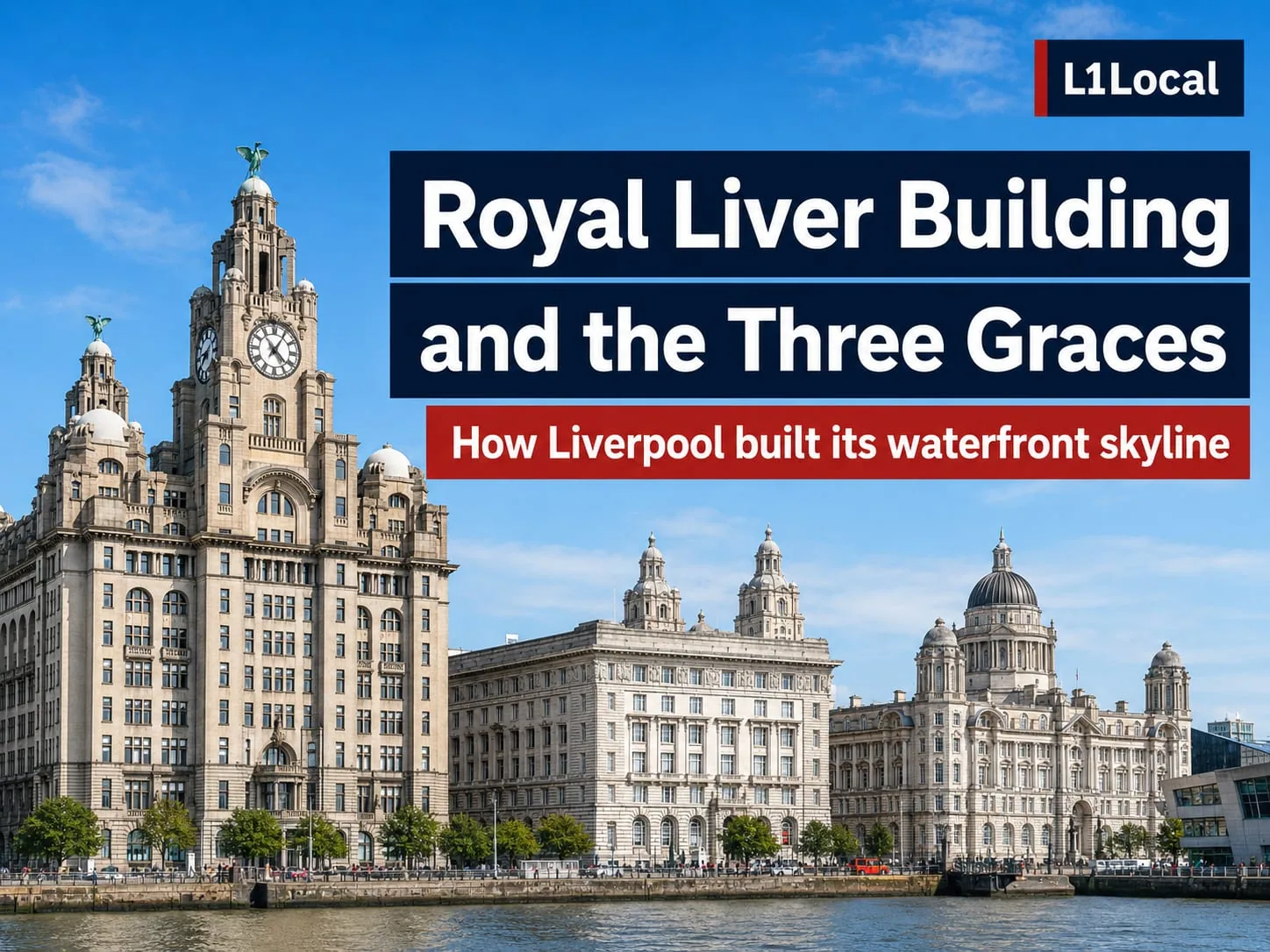
How the Royal Liver Building, Cunard Building and Port of Liverpool Building transformed Liverpool's Pier Head, with the stories behind the Liver Birds.
By Brian K · 28 Aug 2026 · Updated 22 Sep 2026 · 10 min read
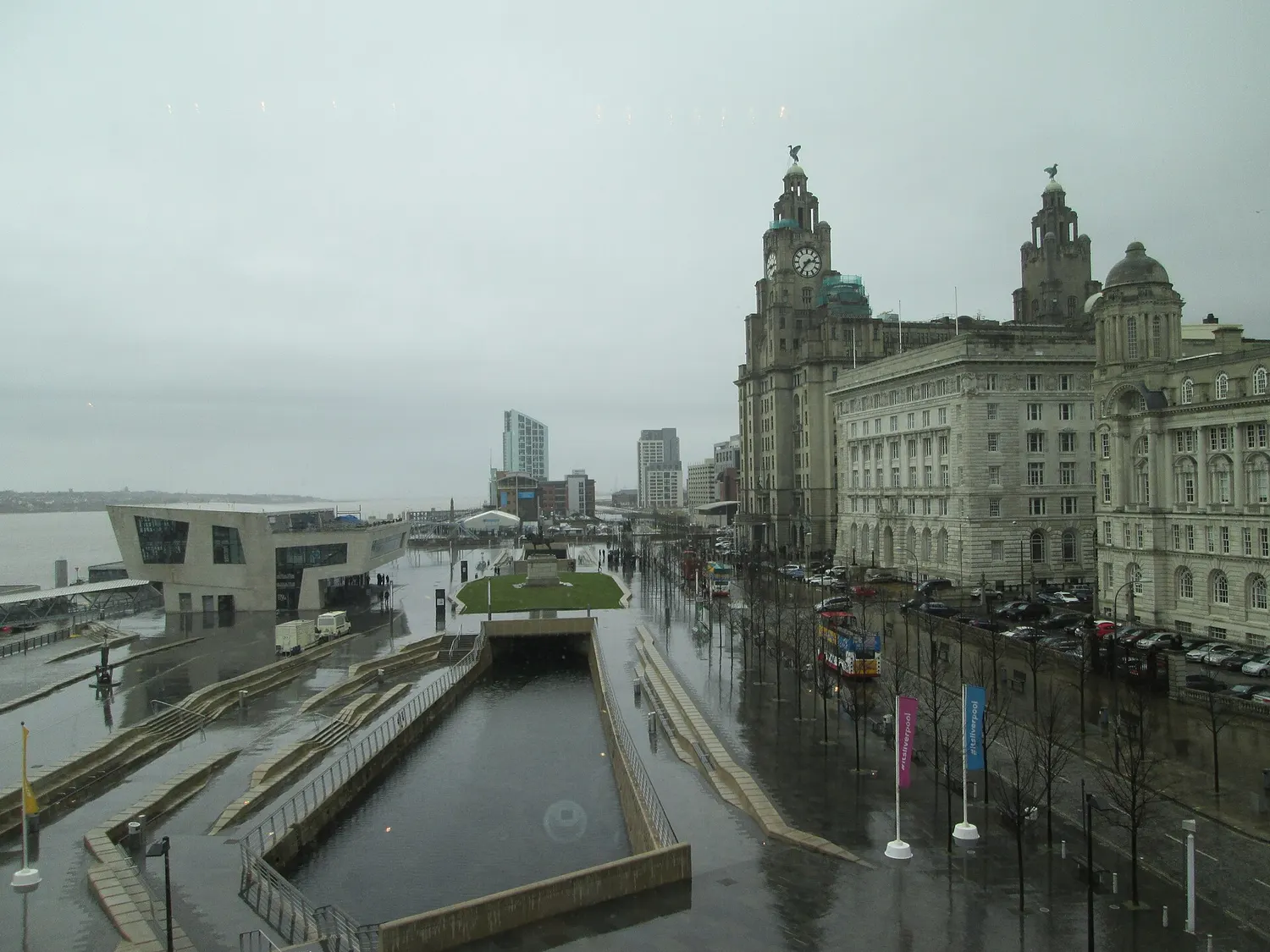
Before the Royal Liver Building, Cunard Building and Port of Liverpool Building stood at the Pier Head, part of the site was water. George's Dock occupied the ground until it was filled in at the end of the 19th century.
Within about 12 years, three separate organisations built headquarters there. One ran Liverpool's docks. One had grown from a working-class friendly society. The third carried passengers and freight across the Atlantic.
Only later did people start treating the buildings as a set called the Three Graces. Their shared position and pale stone make them look planned as one group, but each building tells a different part of Liverpool's story.
How the Three Graces were built
George's Dock opened in 1771 and was filled in during 1899, creating part of the land used for the Pier Head buildings.
The Port of Liverpool Building was built first, between 1904 and 1907.
The Royal Liver Building followed. Work began in 1908 and the building opened in 1911.
The Cunard Building completed the group between 1913 and 1916.
The Royal Liver Building is Grade I listed. The Cunard and Port of Liverpool buildings are Grade II* listed.
All three remain in use. Royal Liver Building 360 and the British Music Experience give the public access to parts of the group.
Liverpool's former UNESCO World Heritage status ended in 2021, but the buildings' individual listed status remains in place.
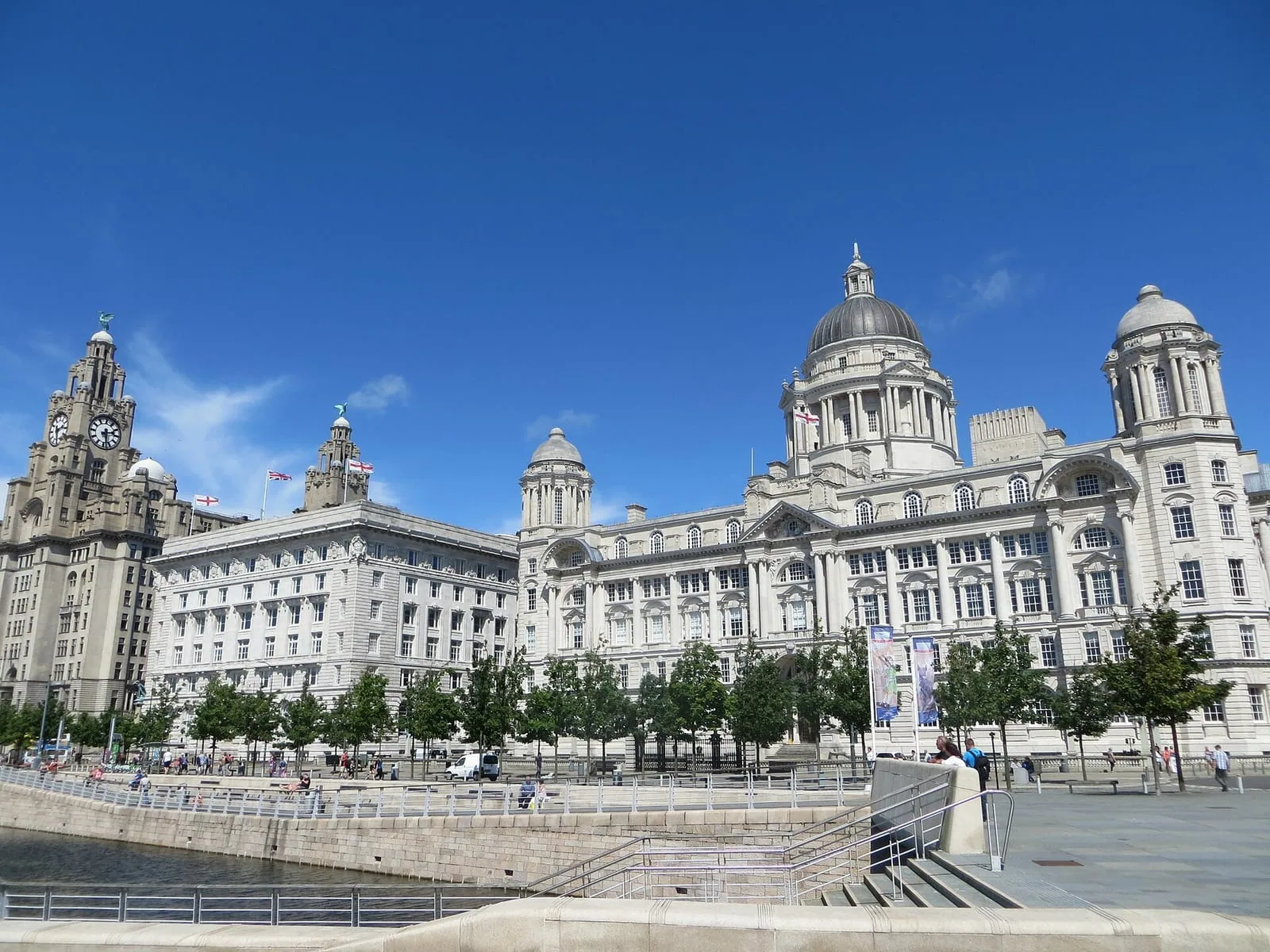
The Three Graces at the Pier Head. From left: Royal Liver Building, Cunard Building and Port of Liverpool Building. Photo: Colin Hepburn, CC BY-SA 2.0, via Wikimedia Commons.
Before the Three Graces there was George's Dock
George's Dock opened in 1771. Ships and smaller vessels used water that would later become some of Liverpool's most photographed land.
By the late 19th century, the dock no longer suited the port's needs. It was filled in during 1899, creating valuable ground beside the Mersey. A National Museums Liverpool historic character study identifies the former dock site beneath the later Pier Head buildings.
The change was more than architectural. Liverpool replaced part of its working dock system with buildings for the organisations that administered, insured and organised the business generated by the port.
The Port of Liverpool Building came first
The first Grace was built for the Mersey Docks and Harbour Board between 1904 and 1907. Arnold Thornely and F.B. Hobbs designed it with Briggs and Wolstenholme.
The building has a reinforced concrete frame covered with Portland stone. Its huge central dome and Edwardian Baroque detail make it easy to identify from the river. The Historic England list entry for the Port of Liverpool Building records its Grade II* status and first listing date of 12 July 1966.
Inside, the main hall rises through the centre of the building. Stained-glass panels referred to places linked with Liverpool's global trading network and the British Empire. A surviving Historic England archive image records a panel labelled Ceylon, the colonial name then used for Sri Lanka.
Those details show that this was never meant to look like an ordinary office. It presented Liverpool's port as the centre of an international system.
The Royal Liver Building grew from a friendly society
The organisation behind the Royal Liver Building began far from the Pier Head. Working men formed what became the Royal Liver Friendly Society in Liverpool in 1850. Research collected by Royal Liver Memories traces its early work providing burial cover for families paying small regular sums.
By the early 20th century, the society had grown into a large financial organisation. It commissioned a headquarters that would show its scale and confidence beside the Mersey.
The reinforced concrete frame allowed a different type of height and mass from the older load-bearing buildings around Liverpool. The tower reaches about 322 feet, or 98 metres, to the top of its spires. L1Local's guide to Liverpool's tallest buildings places it in the longer story of the city's changing skyline.
The clocks marked a royal coronation
Each Royal Liver clock face is about 25 feet, or 7.6 metres, across. That makes the dials larger than those on the Elizabeth Tower at the Palace of Westminster.
The clocks were started at 1.40pm on 22 June 1911, timed to coincide with the coronation of King George V. The building officially opened on 19 July that year.
Calling the dials “bigger than Big Ben” is common but imprecise. Big Ben is the nickname associated with the great bell, not the clock face.
The Liver Birds and the stories around them
The two copper birds above the clock towers were designed by German-born sculptor Carl Bernard Bartels. They turned an old Liverpool civic symbol into figures visible from the river.
The symbol itself is much older than the building. Birds appeared on Liverpool's seals for centuries before the towers opened in 1911.
Today, the birds are commonly called Bella and Bertie. One faces the Mersey and one faces the city. Stories that one watches sailors while the other protects people on land, or that Liverpool would disappear if they flew away, are local folklore. They are not documented instructions from the architect.
Bartels' own life took a harder turn than the birds he made. He had lived in England since 1887 and was a naturalised Briton by the time the First World War broke out, but he was still interned on the Isle of Man as an enemy alien, then repatriated to Germany after the war, leaving his English-born wife and children behind. He later returned to England and worked as a carver until his death in 1955. Liverpool City Council awarded him the Freedom of the City posthumously on 9 March 2011, during the building's centenary year.
The Cunard Building put ocean travel inside an office
The last Grace was built for the Cunard Steamship Company. William Edward Willink and Philip Coldwell Thicknesse designed the Portland stone building in the style of an Italian palace.
The class divisions of ocean travel began before passengers boarded a ship. First, second and third-class customers moved through different parts of Cunard's organisation on land.
The British Music Experience now occupies part of the building. Rooms once connected with transatlantic travel now hold instruments, costumes and displays about British music.
Three buildings, three parts of the port economy
Seen together, the buildings explain how Liverpool's port economy worked in the early 20th century.
The Port of Liverpool Building represented dock management and administration.
The Royal Liver Building represented insurance and a friendly society that had grown into a major financial organisation.
The Cunard Building represented passengers, freight and transatlantic shipping.
They also carry more difficult history. Liverpool's wealth and institutions developed through Atlantic trade and Britain's colonial system. The imperial names in the Port of Liverpool Building's stained glass make part of that relationship visible.
The Three Graces were built after Britain's role in the transatlantic slave trade had legally ended. That does not separate them from a city whose wealth, population and commercial power had developed through earlier Atlantic and imperial trade.
The Port of Liverpool Building survived the Blitz
Liverpool's docks were vital to wartime supplies, making the waterfront a major Luftwaffe target. A bomb exploded in the Port of Liverpool Building during the May Blitz in 1941, badly affecting its eastern side.
The building survived. Its owners say most of the original stained-glass windows were destroyed during the bombing, with two surviving. The Mersey Docks and Harbour Board continued to use the building until moving to Seaforth in 1994.
The buildings were listed in 1966
All three buildings were first listed on 12 July 1966. The Royal Liver Building is Grade I listed. The Cunard Building and Port of Liverpool Building are Grade II* listed.
Those protections do not depend on Liverpool's former UNESCO status. They continue under UK heritage law.
Liverpool gained and lost World Heritage status
UNESCO added Liverpool Maritime Mercantile City to the World Heritage List in 2004. The designated area included the Pier Head.
UNESCO removed Liverpool from the list in 2021. It said major development in the historic docklands had damaged characteristics it considered essential to the site's global significance.
The decision did not remove the individual listed-building status of the Three Graces.
The Three Graces are still working buildings
The buildings have survived partly because they have found new uses.
The Royal Liver Building remains an office building and also contains Royal Liver Building 360. Its guided tour includes the clock tower and a viewing platform. Check the official site for current times, prices and access information before travelling.
Its ownership changed again in July 2025. Food group Princes, which had rented office space in the building since the 1980s, bought the Royal Liver Building for £57m from Corestate Capital and former Everton owner Farhad Moshiri, financed through HSBC. The purchase was part of a wider £83m UK property push that also covered a new Princes facility in Leeds. Princes was founded on Liverpool's docks in 1880 and is making the building its corporate headquarters while keeping the existing tenants in place.
This is an affiliate link, so L1 Local may earn a commission if you book through it, at no extra cost to you. The booking page says children under five are not permitted and that levels above the visitor centre are currently not wheelchair accessible. Check the official Royal Liver Building 360 site as well before paying, because times, prices and access arrangements can change.
The Cunard Building contains offices, event space and the British Music Experience. The Port of Liverpool Building remains mainly commercial office space.
They were never a matching set
The Three Graces work visually because of their scale, pale façades and position beside the Mersey. Look closer and their differences are clear.
The Port of Liverpool Building is dominated by its central dome. The Cunard Building borrows from Italian Renaissance palaces. The Royal Liver Building is taller, more vertical and closer to the new commercial skyscrapers of its time.
There was no single architect designing a matching trio. Three institutions competed for attention on neighbouring plots, and Liverpool gained a waterfront group that now looks more coordinated than its origins suggest.
Use L1Local's Liverpool waterfront guide to place the Pier Head within a longer walk, then check Royal Liver Building 360 directly if you want to go inside one of the Three Graces.
Walk Liverpool's waterfront from Pier Head through Royal Albert Dock and Kings Dock to the marina, with museum and Tate closures, access and transport covered.
Comments
Join the conversation with your L1Local Community account. Keep it civil and on topic.