# Home Bargains at 50: How Tom Morris Built a £4.5bn-a-Year Retail Empire from Old Swan
In 1976, 21-year-old Tom Morris opened a discount shop in Old Swan. Fifty years later, the Liverpool company behind it turns over more than £4.5 billion a year, employs around 29,000 people and operates more than 600 stores.
Liverpool has not entirely accepted the transformation.
Plenty of people still call it Home and Bargain.
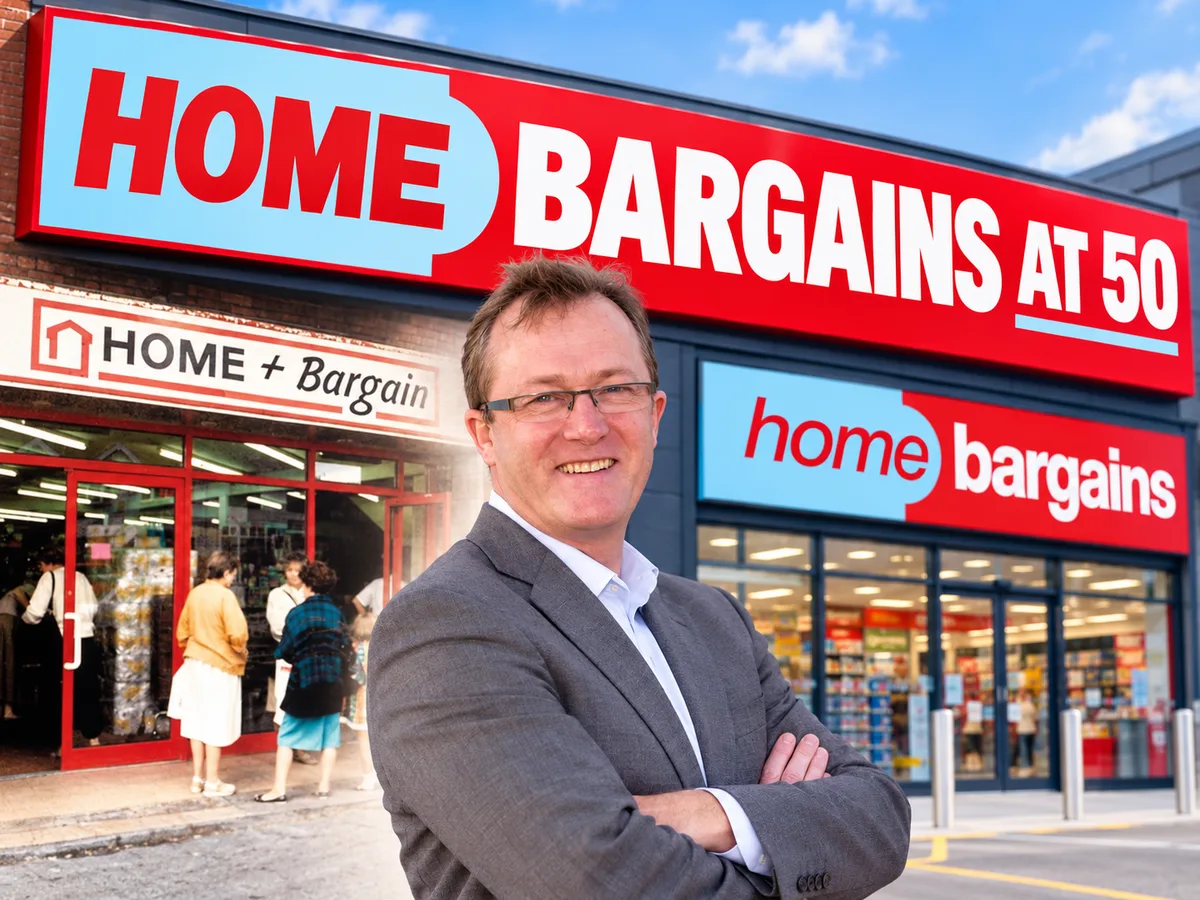
That was the name above the original shops before the company became Home Bargains in 1995. For its 50th anniversary in 2026, the old branding even returned temporarily to the Bold Street store.
Behind that familiar name is one of Liverpool's biggest business stories. A family retailer grew from a single local shop into a national chain without floating on the stock market, selling itself to private equity or turning its founder into a celebrity.
The machinery behind the growth was considerably less glamorous: buying, software, warehouses, property, automation and the ability to move enormous quantities of low-priced goods efficiently.
Home Bargains looks simple from the shop floor.
Building it was not.
Before Home Bargains, there was V's
Cheap retail was already part of the Morris family world.
Tom Morris senior ran V's on Scotland Road. The name referred both to his wife, Veronica, and to "value". His son grew up around a Liverpool shopkeeping business where price was already part of the proposition.
Tom was one of seven children.
When he opened his own shop in Old Swan at 21, it was not the launch of a national masterplan. It was a small Liverpool retail business that would be expanded one branch at a time.
The family became part of the machinery as it grew.
Tom's brother Joe eventually became operations director. Another brother, Ed, who had a doctorate in computing, developed software for the company. Anton Morris, a graphic designer, worked on its branding.
That combination is revealing. Buying, operations, technology and presentation were not separate stories bolted onto the company later. They developed inside the business as it expanded.
T. J. Morris Limited was incorporated in 1980, four years after the first shop opened. Home Bargains' own history describes the subsequent growth as organic, with the retailer expanding from the cash generated by the business rather than through a takeover-fuelled rush for scale.
There was no dramatic overnight transformation.
There were more shops.
Then more again.
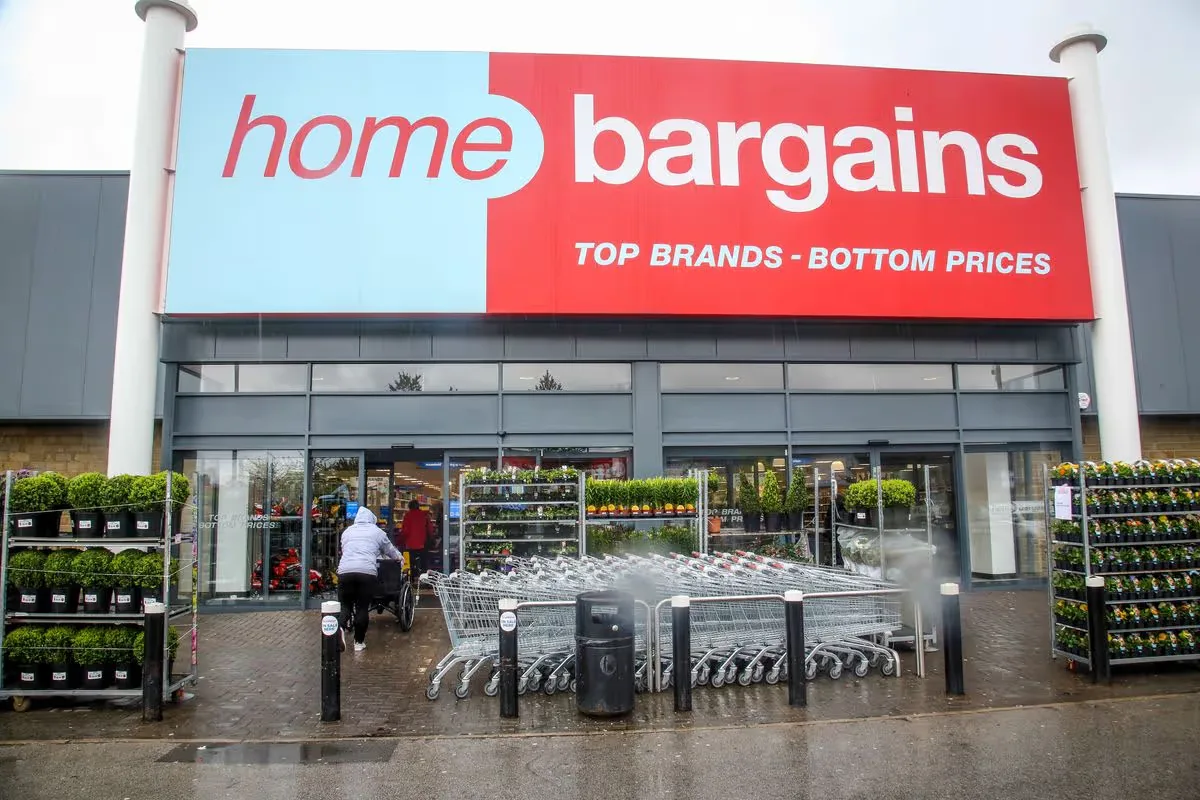
A modern Home Bargains store. The "Top Brands, Bottom Prices" slogan sits on the sign.
The formula: things you need and things you did not expect to find
Home Bargains has never fitted neatly into one retail category.
It sells food but is not a supermarket. It sells toiletries and cleaning products but is not a chemist. It carries toys, homeware, garden products and seasonal lines, yet it is not a traditional department store. Nor was it built around the rigid single-price model associated with the old pound-shop sector.
Its strength came from mixing routine purchases with surprise.
A shopper could go in for shampoo, washing powder and biscuits, then find toys, branded confectionery, garden products or a seasonal line that might be gone on the next visit.
The customer knows roughly what Home Bargains is for.
They do not know exactly what will be there.
Older descriptions of the business put the range at roughly 70% regular lines and 30% changing or one-off stock. The exact balance will have shifted over time, but the commercial logic remains easy to recognise.
Regular products give people a reason to return.
Changing stock gives them a reason to look around.
The buying operation sits in the middle of that model. The Competition and Markets Authority has noted that T. J. Morris deals directly with a wide range of grocery suppliers and can operate on a one-off contractual basis.
That creates an opportunity when manufacturers or wholesalers have surplus stock, discontinued lines, packaging changes, seasonal overproduction or simply a large quantity they want moved quickly.
Scale gives a retailer negotiating power.
Speed gives it another kind.
A buyer who can make a decision, take a huge quantity and get it into hundreds of shops quickly is more useful to a supplier than one who needs weeks of committee meetings.
Home Bargains has long summed up the proposition as "Top Brands, Bottom Prices".
The difficult part is not printing a low price on a shelf label. It is buying cheaply enough, and running the rest of the operation tightly enough, to make money after wages, rent, rates, energy, transport and stock losses have been paid.
That is where the warehouses enter the story.
It grew like a logistics company disguised as a shop chain
The customer sees shelves of washing powder, biscuits, pet food, toys and toiletries.
Behind them sits a system of pallet cranes, conveyors, warehouse software, picking locations and lorries moving stock around the country.
Home Bargains' head office and distribution operation at Axis Business Park in Gillmoss became one of the engines of its expansion. The company dates the opening of its first highly automated Liverpool distribution centre and national training centre to 2008.
This was not simply a bigger shed with more shelving.
Trade reports described high-bay storage, pallet cranes, mini-load systems, conveyors and thousands of picking locations. One expansion created capacity for more than 42,000 pallets, with 11 pallet cranes feeding ground-level picking areas and another system handling tens of thousands of totes.
That industrial scale helps explain something that is otherwise easy to miss about discount retail.
Small savings become enormous when they are repeated millions of times.
A few seconds removed from a warehouse pick, better trailer utilisation, fewer stock errors or a faster replenishment cycle can be worth more across a national chain than a flashy advertising campaign.
Home Bargains built systems around those repetitions.
Gillmoss remains the registered office of T. J. Morris and continues to support the store network. It is also a physical reminder that the company's national expansion was not managed from a London headquarters. A large part of the operation stayed rooted in Liverpool.
Then the scale changed again.
Gillmoss was the breakthrough. Omega is the new monster.
The biggest Home Bargains logistics investment is now at Omega Business Park in St Helens, close to the M62.
The company opened the roughly one-million-square-footdistribution centre in 2025 after investing around £400 million.
Automation partner WITRON says up to 80% of stock picking there can be automated.
The first store deliveries left the facility in May 2025.
Home Bargains is already preparing the next stage. A new distribution centre in Doncaster is being built to support future expansion, with the site expected to become fully operational in 2028 and eventually capable of serving more than 300 stores.
The physical journey is striking.
One shop in Old Swan.
A highly automated logistics base in Gillmoss.
Then a million-square-foot distribution centre built to feed a national network.
The shops are the visible part of Home Bargains. Logistics made the scale possible.
Home Bargains in numbers
Measure
Latest figure
Founded
1976, Old Swan
Founder
Tom Morris, aged 21
Stores at 30 June 2025
632
Group turnover, year to June 2025
£4.545bn
Group pre-tax profit, year to June 2025
£523m
Group employees
29,232
Long-term store ambition
800 to 1,000
Omega distribution centre
Around 1 million sq ft
Omega investment
Around £400m
The latest T J Morris Group accounts show how far the business has travelled. Turnover reached about £4.545bn in the year to 30 June 2025, with pre-tax profit of about £523m.
The retail operating company, T. J. Morris Limited, reported turnover of £4.541bn and operating profit of about £492m.
This is no longer a regional bargain chain with a large footprint.
It is one of Britain's major privately controlled retailers.
Growing without handing over control
Home Bargains has also taken a different financial route from many British retail chains.
A 2019 Guardian profile described the company as debt-free at the time and noted that it owned many of its stores while competitors were wrestling with large debt piles and property costs.
The modern group structure is more complicated, so that description should not be treated as a blanket statement about every financial obligation Home Bargains has today. But the historical pattern is clear: the company spent decades expanding without a private-equity takeover or stock-market flotation dictating a different timetable.
Its latest accounts show substantial retained value. The retail company reported about £1.5bn of net assets at June 2025, while the wider group reported roughly £2.65bn.
Family control changes the clock.
A listed retailer has shareholders watching quarterly performance. A heavily leveraged business has lenders and repayments. A privately controlled family company can choose to put money into another warehouse, buy property, relocate a store or fund automation that may take years to deliver its full return.
Home Bargains has repeatedly spent heavily on the boring infrastructure that customers rarely see.
That patience is one of the reasons Gillmoss and Omega belong in the same story as the shops.
Tom Morris never became the product
For the founder of a business this large, Tom Morris remains unusually absent from public life.
He has never made himself the face of Home Bargains. He gives few interviews and is far less publicly recognisable than founders of many much smaller companies.
When the business has needed a public voice, his brother Joe has often been more visible.
The family structure also survived the transition from local chain to national retailer. Home Bargains still describes itself as privately owned and family run, and Companies House records Thomas Joseph Morris as the person with significant control of T J Morris Group Limited.
Many retail founders eventually sell to a larger group, private equity or public shareholders.
The Morris family kept control while the company became enormous.
That has made them exceptionally wealthy. Recent reporting has put the family's fortune at close to £7bn.
The more interesting achievement is the company underneath that number.
Plenty of retailers have chased the value market. Fewer have managed to keep growing while protecting margins, investing in infrastructure and retaining control.
Cheap prices were not enough
The timing undoubtedly helped.
The 2008 financial crisis pushed more shoppers towards value. The later cost-of-living squeeze made discount retail even more mainstream. Aldi, Lidl, B&M and Home Bargains all benefited from consumers becoming less loyal to traditional full-price shopping.
But "people like cheap things" is not a business model.
Wilko collapsed in 2023. Poundland has faced major pressure and restructuring. Discount retail can fail just as spectacularly as any other part of the high street when costs, debt, property, stock and expansion stop working together.
Home Bargains has so far continued in the opposite direction.
Group turnover rose by about 7.9% in the year to June 2025. The retail business increased operating profit from roughly £434m to £492m. The store estate reached 632.
Growth came from new shops, relocations and stronger contribution from existing stores.
There is no single trick hidden in those numbers.
Buy well.
Keep the proposition simple.
Move stock efficiently.
Spend heavily where efficiency compounds.
Open more stores when the economics support it.
Then repeat.
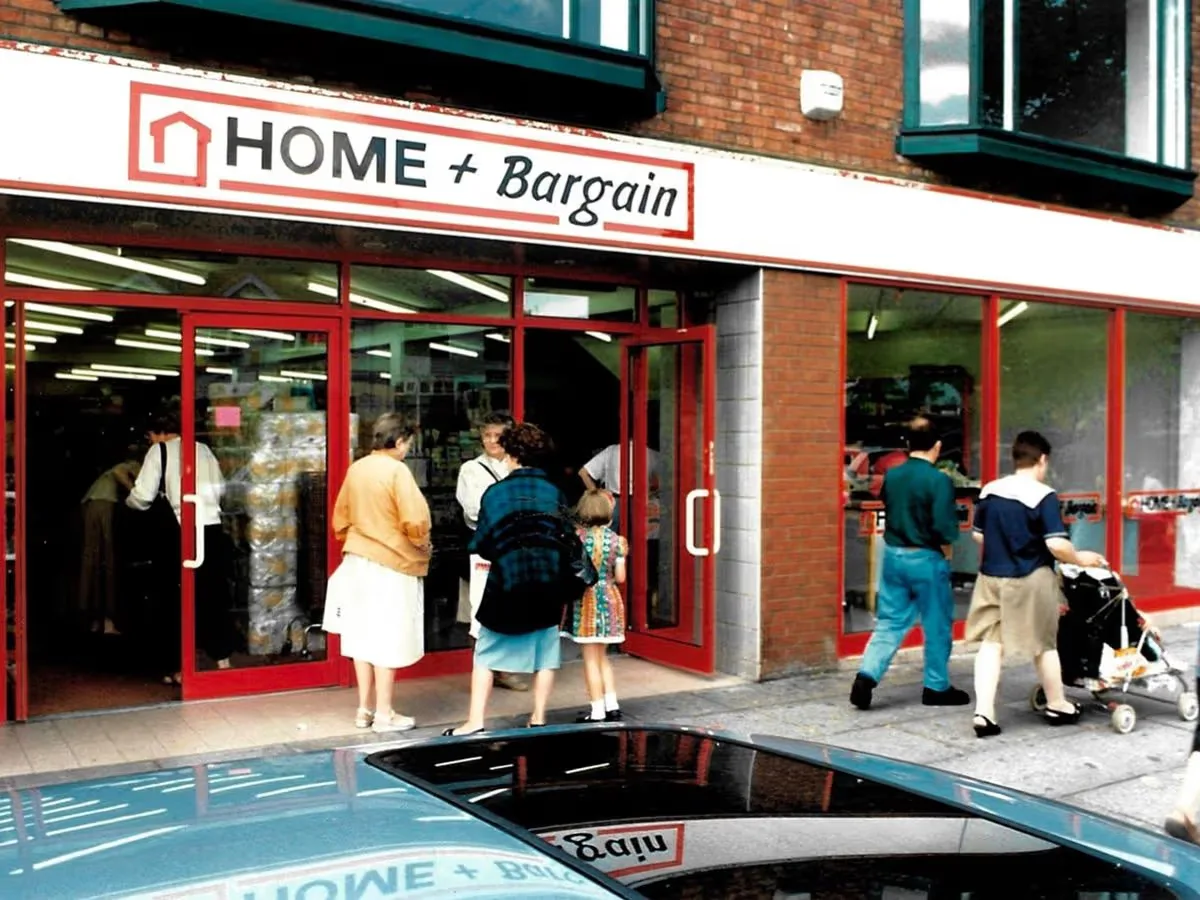
A Home + Bargain shop front. That name was used until the company became Home Bargains in 1995.
Liverpool is still inside the business
Home Bargains is national now, but it is not simply a company that happened to start in Liverpool.
Its registered office remains at Portal Way in Gillmoss, L11. Head-office, buying and logistics functions remain connected to the city region. Its warehouse investment has created an industrial footprint stretching from Liverpool into St Helens.
The company's local identity has survived in a less formal way too.
The official change from Home & Bargain to Home Bargains came in 1995.
Liverpool, broadly speaking, declined to cooperate.
For generations of shoppers, "Home and Bargain" remained the name. In 2026, the company leaned into that history by temporarily restoring the old branding at Bold Street for its 50th anniversary.
It worked because the joke had a real history behind it.
Corporate headquarters can change a sign.
Customers decide what a place is called.
From one Old Swan shop to £4.5bn a year
Liverpool's best-known business stories often involve the docks, shipping, music, football or giant regeneration schemes.
Home Bargains belongs to a different tradition.
It came out of ordinary retail: a shopkeeping family, a local store, buyers choosing toothpaste and biscuits, programmers building internal systems, warehouse teams moving pallets and engineers trying to remove seconds from repetitive jobs.
There was no single moment when the Old Swan shop became a £4.5bn retailer.
It happened in increments.
A better buy.
Another branch.
Another warehouse.
Another system.
Another hundred stores.
Now Home Bargains is targeting 800 to 1,000 stores. Omega is operating in St Helens. Another huge automated distribution centre is being prepared in Doncaster.
The business is almost unrecognisable in scale from the one Tom Morris started at 21.
The name, at least in Liverpool, has proved harder to change.
Fifty years on, plenty of people still call it Home and Bargain.
HMS Mersey opens to visitors at Liverpool Cruise Terminal on 1 August 2026. Here are the free ticket details, access limits, travel advice and ship history.

Comments
Join the conversation with your L1Local Community account. Keep it civil and on topic.